

Cheese and pepper pasta from Rome.
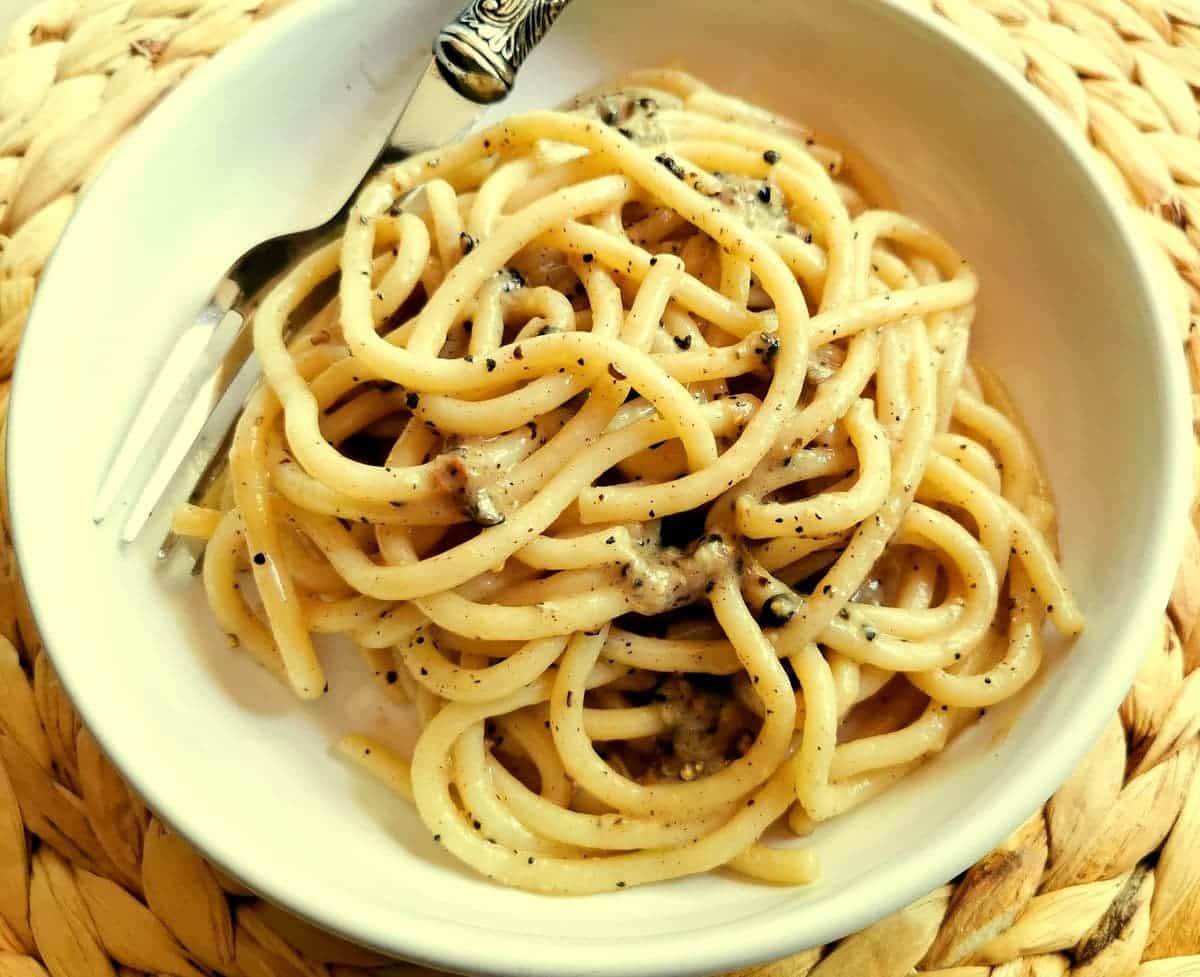
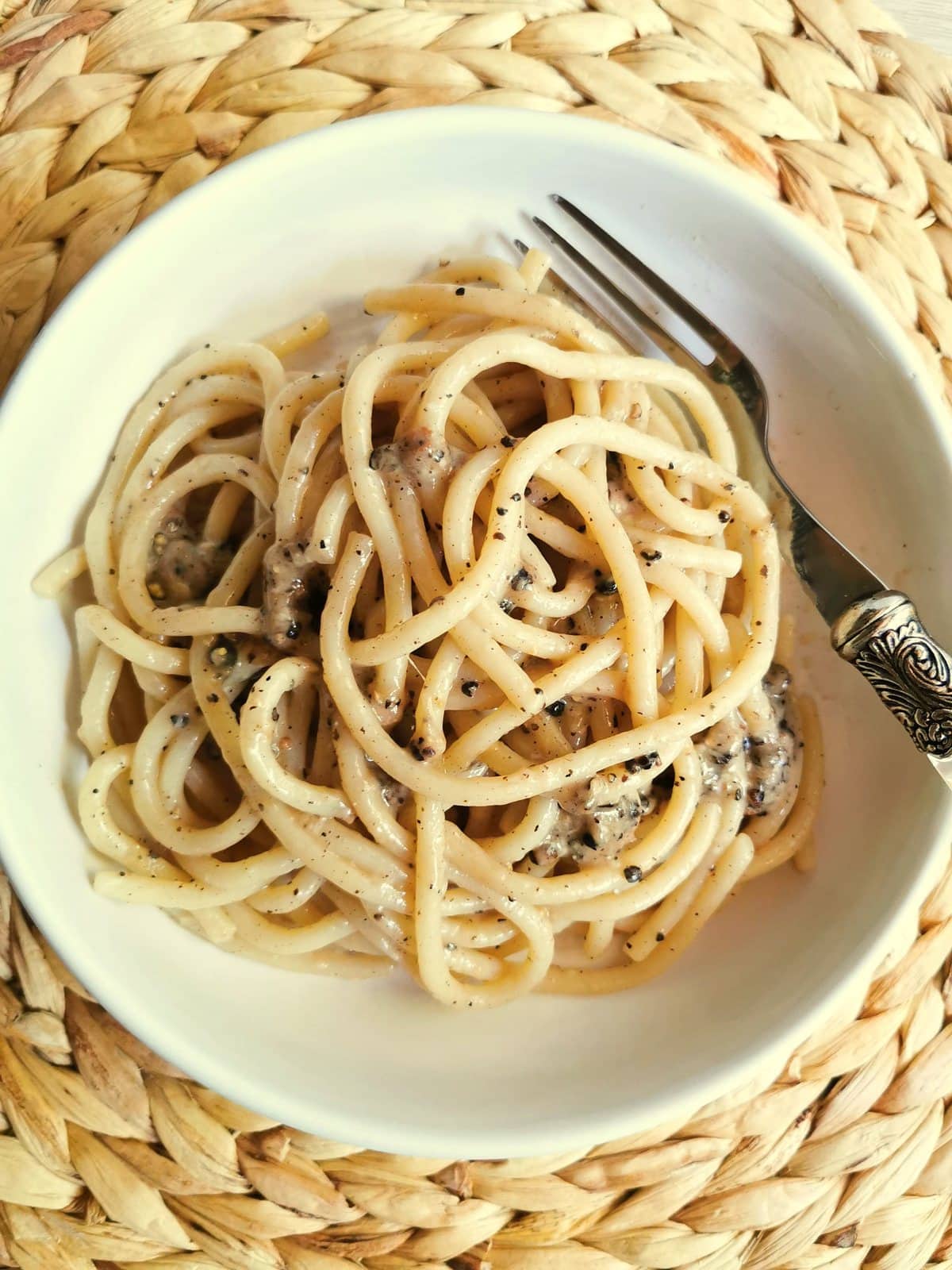
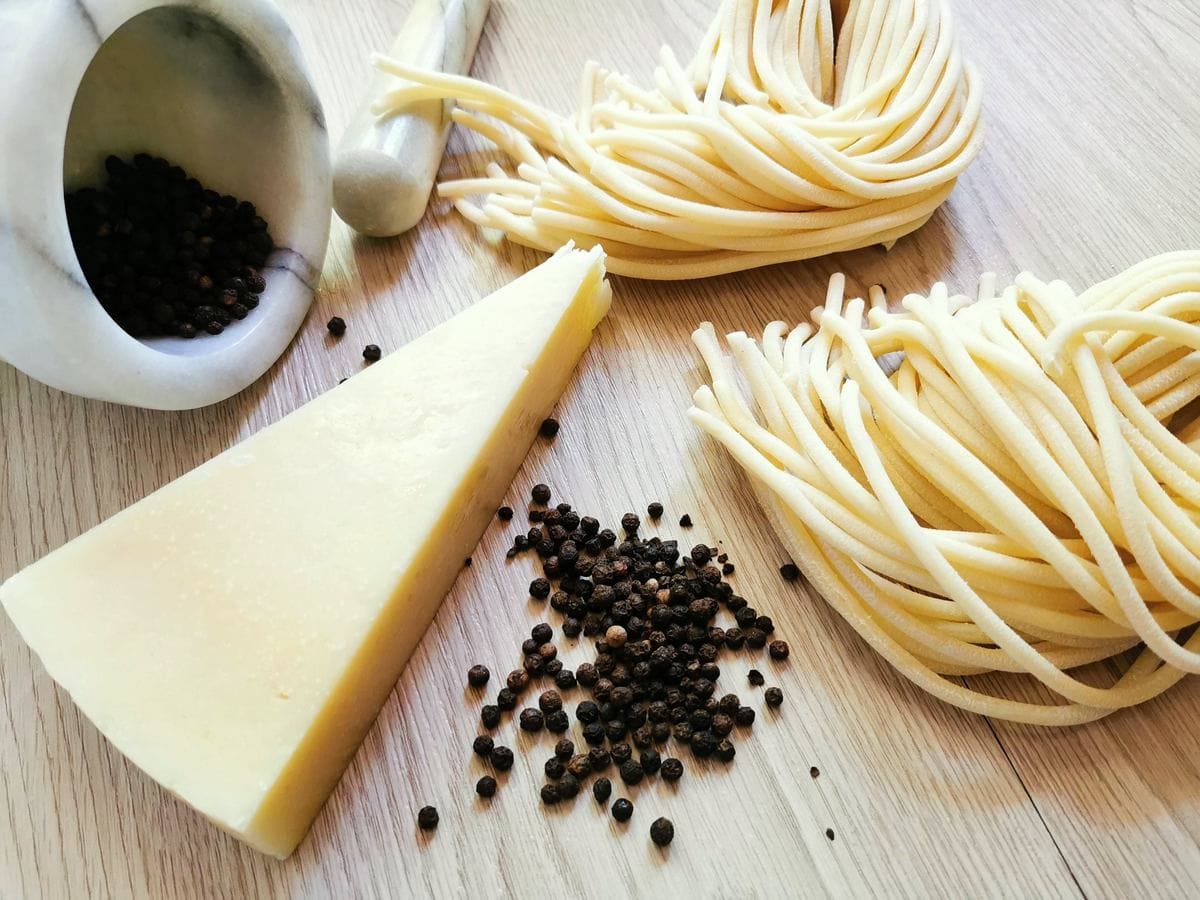
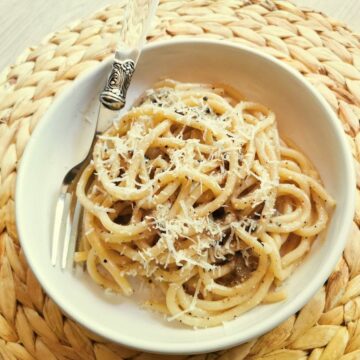
Pasta cacio e pepe is a traditional recipe from the Eternal city, Rome and the Lazio region in general. This easy to make Roman classic has only 3 main ingredients; Pecorino Romano cheese, black pepper corns and, of course pasta! It can be on the table in about 30 minutes, so perfect for a weeknight meal but special enough to serve to guests!
The origins of cacio e pepe.
Like many popular pasta dishes, the roots of this pasta cacio e pepe can be found in the simple food of the peasant population. In this case, mainly the shepherds of the Agro Romano - a term first used in the 15th century to describe the vast rural area of hills and plains that surrounded Rome.
Italian food historians say when shepherds stayed out with their flocks or moved them to different grazing areas, they would carry a number of dried foods to sustain themselves. These included dried tomatoes, dried pork cheek, cacio cheese (pecorino Romano), pepper corns and dried homemade pasta. From these ingredients, they produced simple filling meals like cacio e pepe and all'amatriciana.
Apparently, the pepper corns were included because they helped the shepherds to stay warm during the chilly nights outdoors! Pecorino was the cheese of choice. As a sheep’s milk cheese, it was mostly homemade and once dried, pecorino has a long life. Pasta, of course, added bulk to the meal and was easy and cheap to prepare.
What does cacio e pepe mean?
Basically, cacio e pepe means cheese and pepper. In fact 'cacio' is used to mean cheese in a number of Italian regions. For example, caciocavallo means horse cheese. It got its name because the cheese is matured whilst hanging over a horizontal beam like a saddle horse. In Rome, when they say 'cacio' they refer to Pecorino Romano.
New York's trendiest dish 2016!
It’s interesting that many of the ‘dishes’ we see today on smart Italian restaurant menus in Rome, as well as cities like London and New York, started out as simple fare for the poorer, rural Italian population. I recently read that cacio e pepe was declared New York’s trendiest dish 2016 by Time Out Magazine!!
Mastering cacio e pepe.
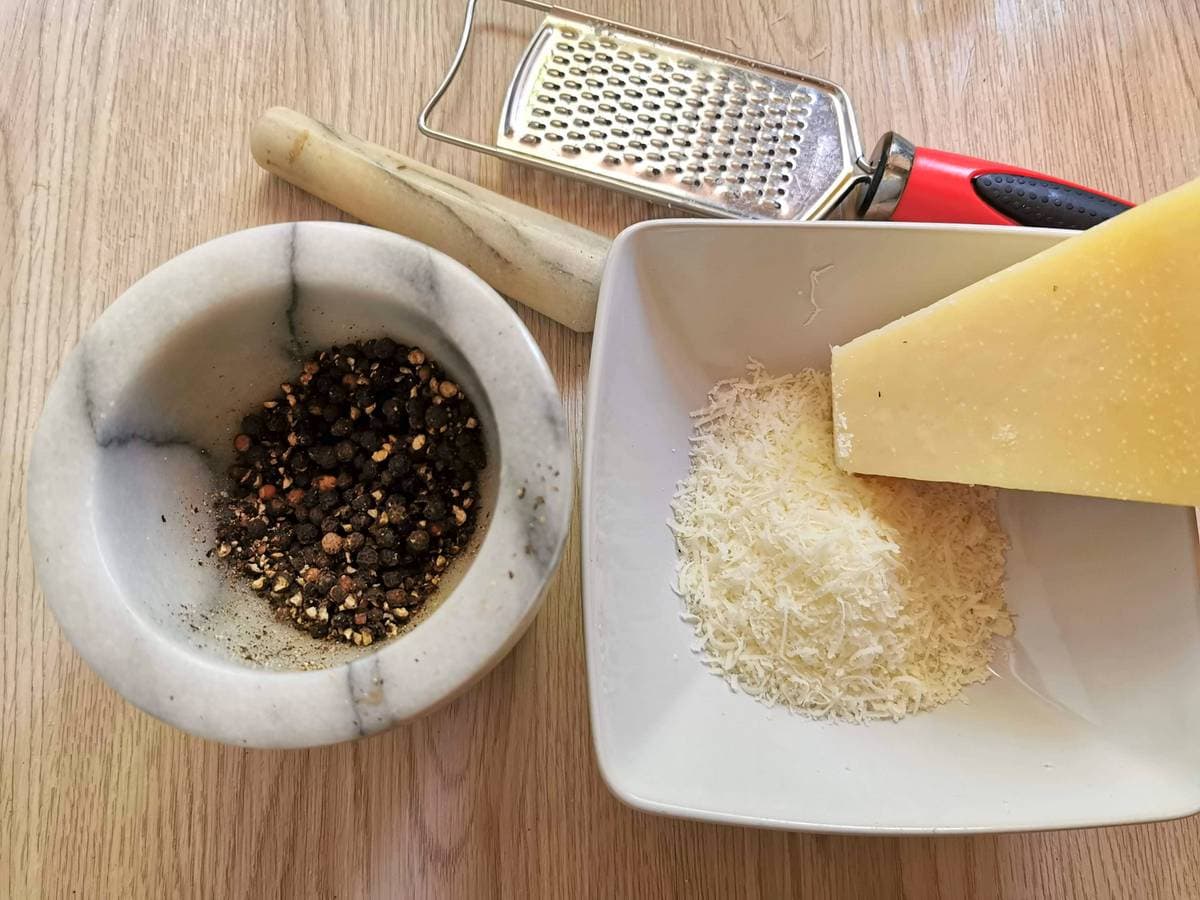
Despite being very trendy, cacio e pepe is far from pretentious. It is easy to make once you have got the hang of it. Plus, it needs only 2 ingredients, apart from the pasta, Pecorino Romano cheese and black pepper corns!
The only trick is to find the perfect balance between the cheese and the pasta. It's important that the dish doesn’t turn out too dry or the sauce too lumpy or liquid. Once you have got that right, this is a dish you can produce in less than 30 minutes, including the time it takes to boil the water for the pasta.
Different ways to make a simple sauce!
Believe it or not, there are different ‘ways’of making this simple dish. In my research, I’ve come across a number of articles, in both Italian and English, on the merits of the different techniques!
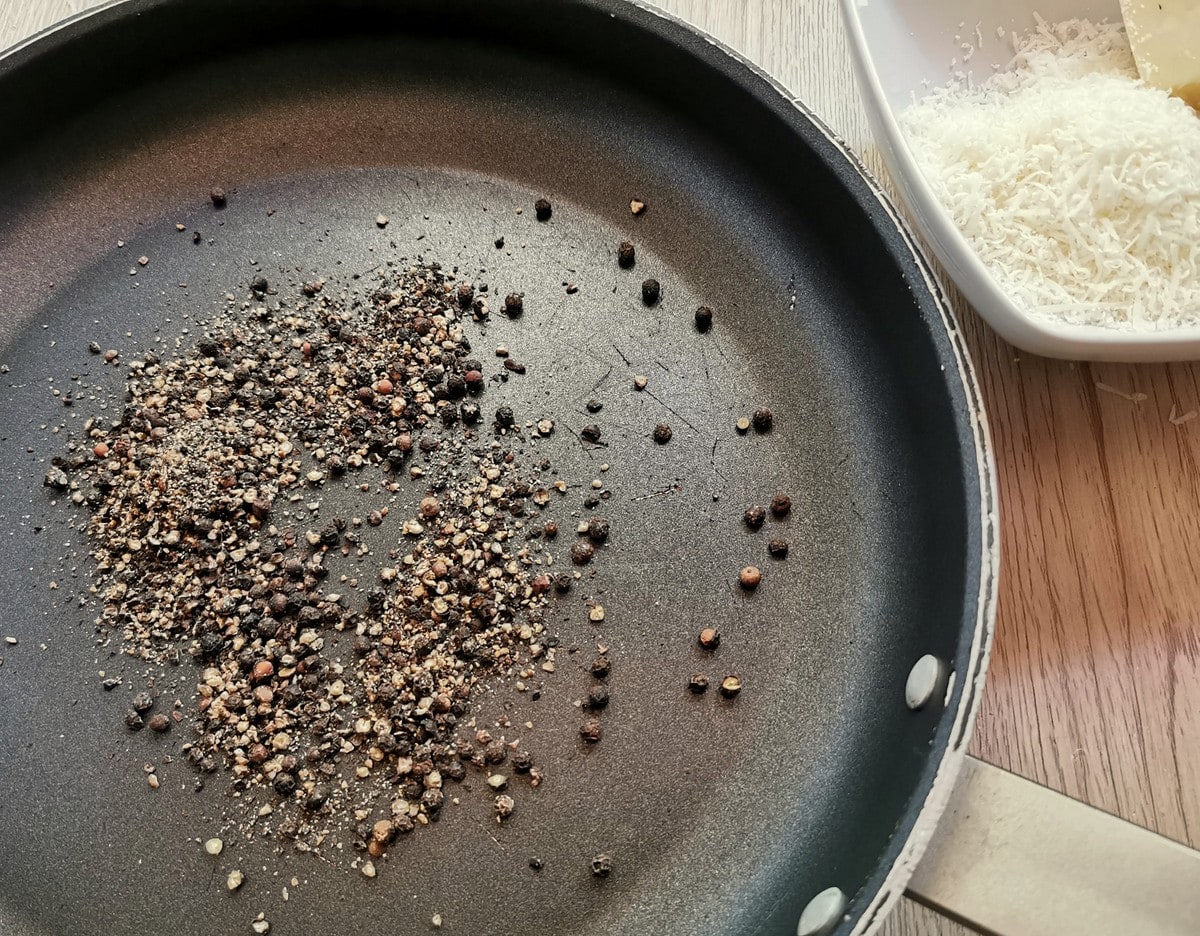
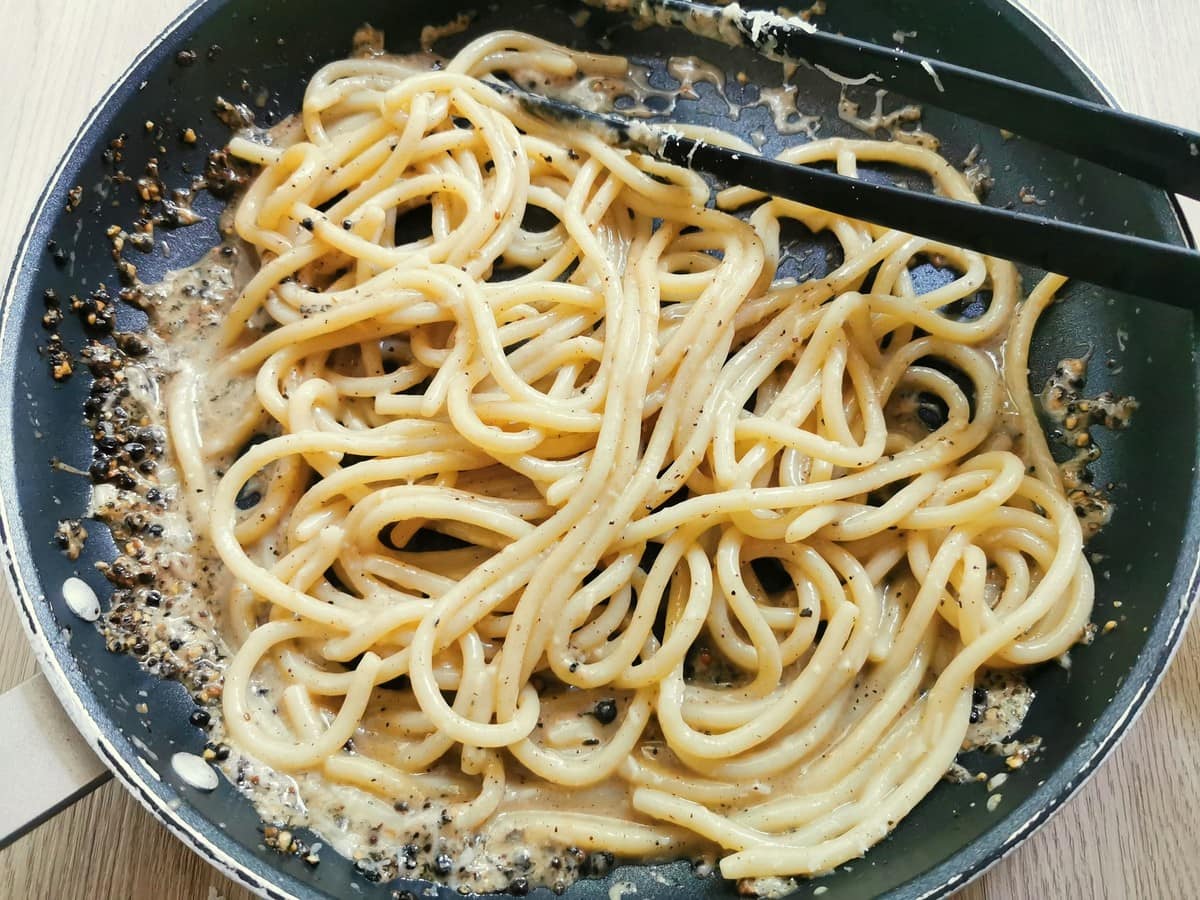
Some people just boil the pasta al dente, and then vigourously mix it with grated pecorino, freshly ground pepper corns and some of the pasta cooking water. This is reserved before draining the pasta and gives the dish a creamy consistency. This is what I did, although I cooked the pepper in a dry frying pan to bring out the flavour first.
Pasta au poivre!
Others advocate mixing the cheese together with the ground pepper and some of the pasta cooking water in a bowl before adding the pasta to it. Another variation involves adding a little butter or oil to the pasta before mixing in the cheese, cooking water and pepper. In general, cacio e pepe may need a bit of practice to get right. But, once you do, you are bound to fall in love with this pepper pasta. To me it’s pasta au poivre!
What kind of pasta should you use?
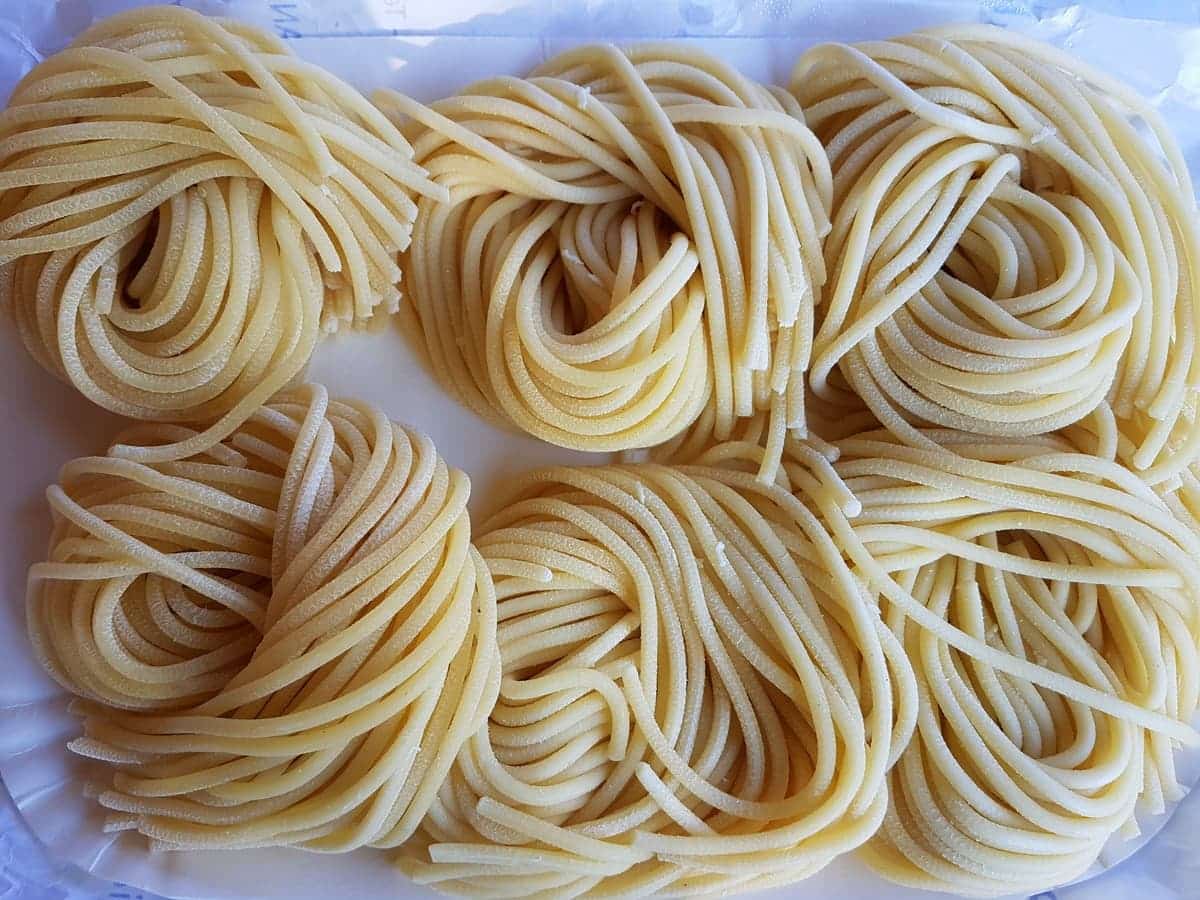
There are also different views on which pasta works best in this recipe. In Rome and Lazio, they often make cacio e pepe with either thick long pasta such as bucatini , spaghetti alla chitarra (called tonnarelli in Rome), lombrichelli or even just normal spaghetti (although some Roman chefs think normal spaghetti is a no no!) Others prefer to use short tubes like penne or rigatoni or something in between such as pici, short hand rolled thick spaghetti.
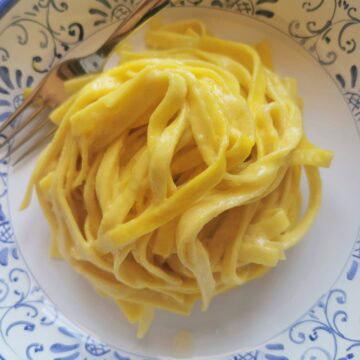
In the past, I have used bucatini and tonnarelli to make cacio e pepe. For this post, I used fresh lombrichelli which some friends sent me from Lazio. It's actually very similar to tonnarelli. Obviously, it’s great to be able to make cacio e pepe with traditional pasta. However, even if you have no other choice but normal spaghetti, don’t despair. It will definitely taste great anyway!
How to stop the cheese from clumping.
Some people have a problem with getting the Pecorino to melt without clumping. This could depend on the quality of the cheese, especially if it's not Italian Pecorino Romano. One way to avoid this is to mix the cheese with some hot pasta cooking water until it melts before adding them both to the pan.
Cacio e pepe pasta is not vegetarian.
Although this recipe traditionally has no meat or seafood in it, cacio e pepe is not vegetarian. This is because Pecorino Romano is made using animal rennet. The same is true for Parmigiano. To make this recipe vegetarian, you will need to use a different hard cheese.
If you do try this cacio e pepe recipe from Rome, I’d love to hear what you think. Please write a comment here on the blog or post a comment on the Pasta Project Facebook page.
Your feedback means a lot to me!
Buon appetito!
Other Traditional Roman Pasta Recipes.
Save this recipe for later?
If you want to save this recipe for later, you can print it, bookmark this page or save it to Pinterest.
Pin for later.
This recipe was first published in 2017 but has been updated with new photos and text.
Pasta Cacio e Pepe

Ingredients
- 400 g lombrichelli or tonnarelli (14oz) also made with spaghetti alla chitarra, bucatini or thick spaghetti
- 200 g Pecorino Romano cheese (7oz) freshly grated
- Freshly ground black pepper corns about 4 teaspoons Don’t grind too fine.
- Salt for boiling the pasta
Instructions
- Dry fry the roughly ground pepper corns in a small frying pan until they start to release their aroma.
- Put a pot of water onto boil for the pasta. Use a bit less water than you would normally. Add salt once it starts to boil and bring to the boil again.
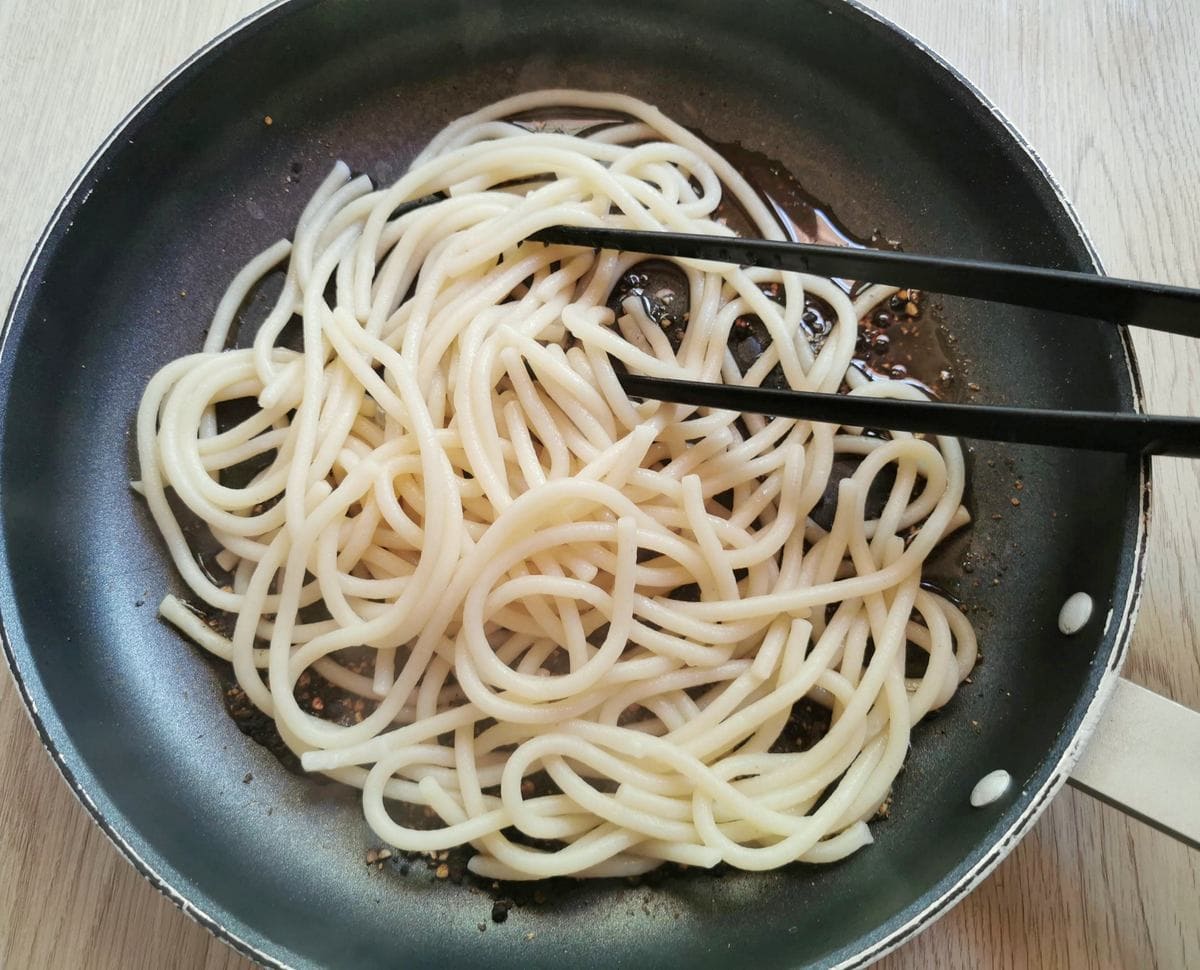
- Cook the pasta al dente according to the instructions on the packet. Take a ladleful of the pasta cooking water and add to the pepper corns. Then keep aside another cupful of the cooking water, drain the pasta and add it to the pan with the peppercorns. I drain the pasta 'wet' meaning it should still have some water with it. Mix the pasta with the pepper.
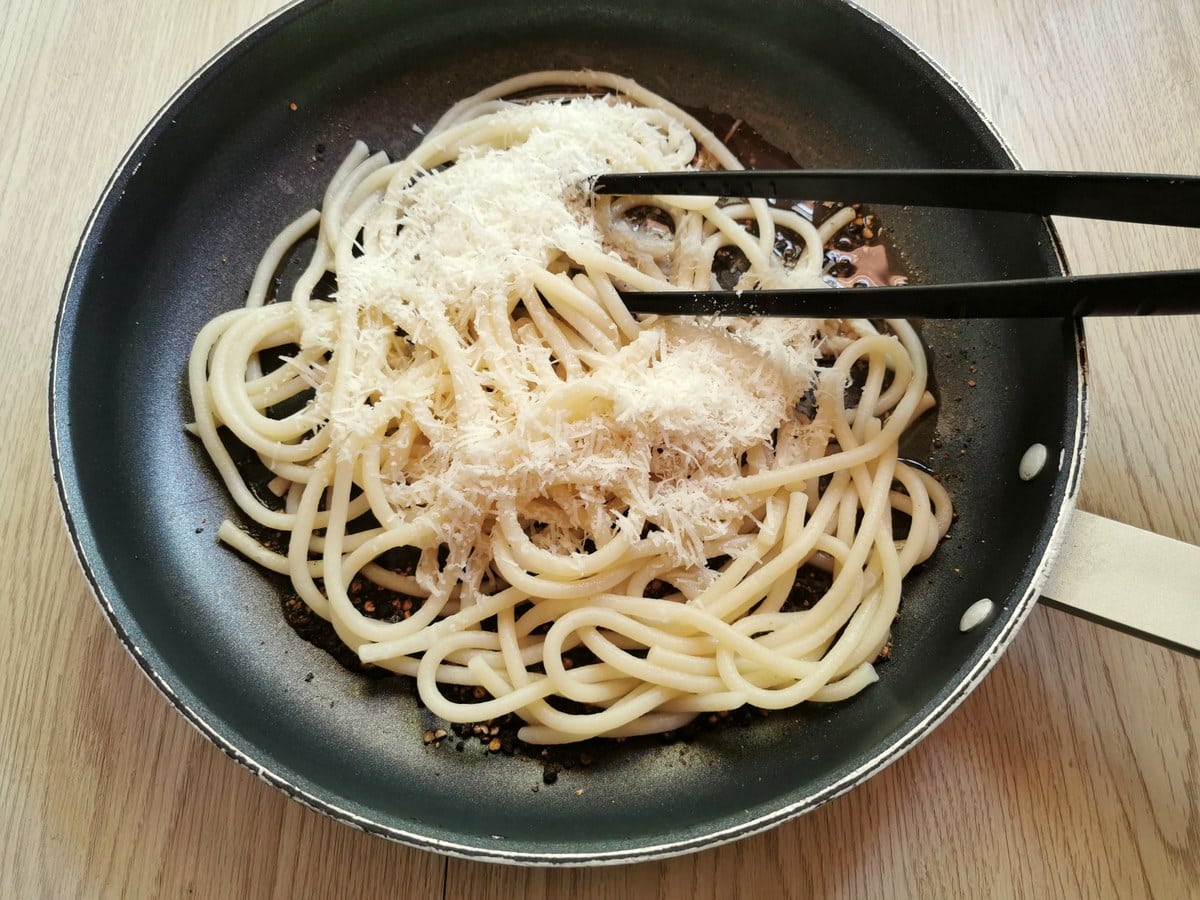
- Add the grated pecorino continue mixing very well until the cheese starts to become creamy.
- If too dry add a little more of the cooking water. If too liquid add more cheese.
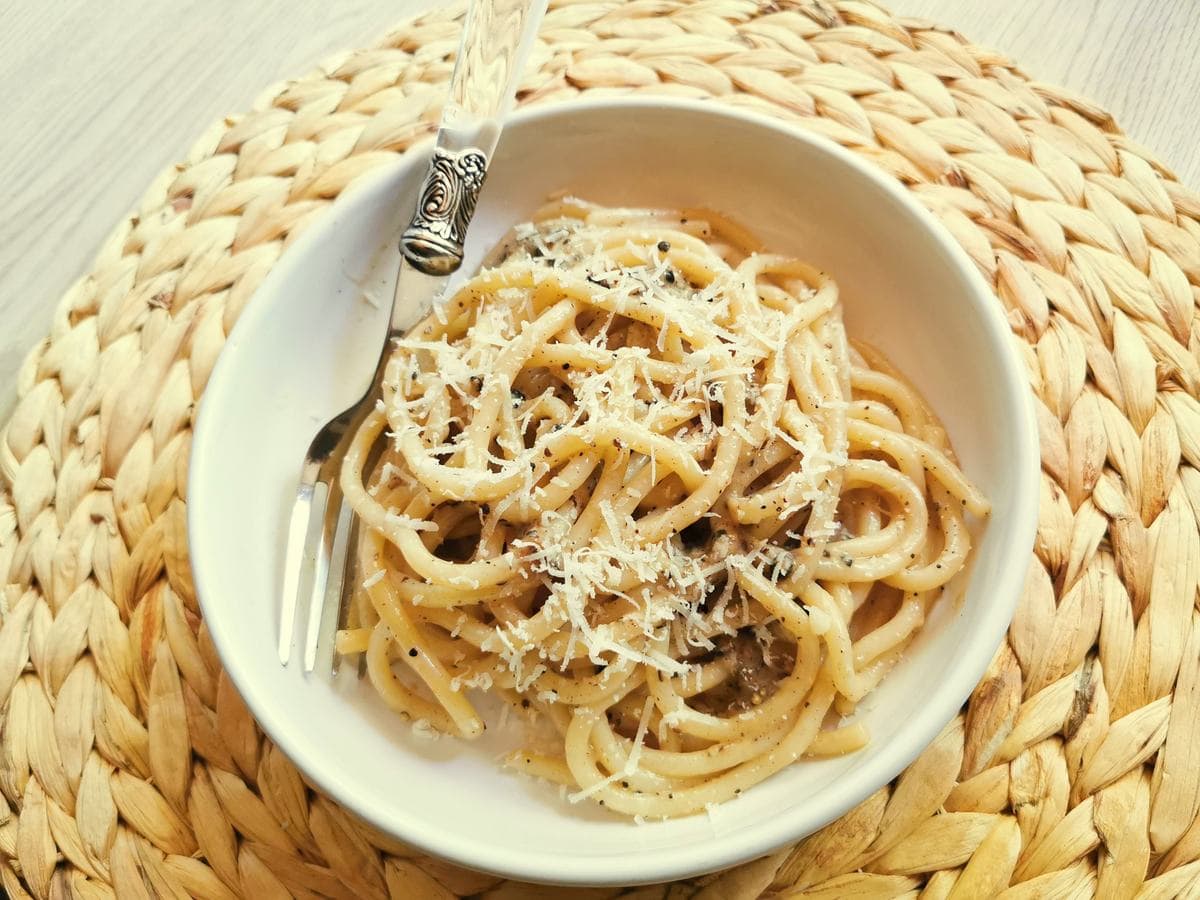
- Serve on heated plates, topped with more grated pecorino and another generous sprinkling of pepper.
Notes
Add the pasta and toss well while adding more water if necessary, until you have a sauce that coats each strand of pasta. Don’t worry if it takes a while to come together – keep mixing and it should happen.
It is also recommended to use less water than usual when cooking the pasta (about half), because this will result in cooking water that is rich in starch and will make it easier to obtain a creamy result.
Nutrition
If you are interested in learning how to make homemade pasta and different types of gnocchi, check out my shop page for some great video online courses from my friends in Rome! Nothing beats learning to make pasta from Italians! Plus while you’re there why not order a copy of one of my pasta recipe cookbooks or checkout some recommended pasta making tools?
Kushigalu says
Love this traditional pasta recipe. Making it for dinner tonight. Thanks for sharing
Colleen says
I love the simplicity of this dish, but the flavor is divine! Toasting the peppercorns first is the best idea. Thanks for this amazing recipe!
Emily says
This is one of my all time favorite pasta recipes! You can never go wrong with pasta cacio e pepe!
Relle says
Who would have thought there were so many different ways to make pasta. Thanks for sharing. Love it.
Candice says
I always love your recipes and this one is no different. Such a great, low-ingredient recipe we will definitely be making again. Thank you!
Laura says
We love Cacio e Pepe at home, so easy and delicious! Never tried frying the pepper before but will definitely try next time!
Shelley says
So interesting that this age-old dish is now totally TRENDY! And also that the shepherds used to include the peppercorns to help stay warm on chilly nights! Besides great recipes, you always have such fantastic background info and "fun facts" - i learn so much from you! Another winner!
Maria says
This looks delicious! I love Pasta Cacio e Pepe. Never thought to cook the pepper first. Can't wait to try this version.
Taleen | Just As Tasty says
I LOVE cacio e pepe and can't wait to make this for dinner sometime soon! Delicious!
Sean says
What a delightful look at a simple, and deservedly classic pasta dish! I love that you dove into the variations while still focusing squarely on the roots of the recipe. I feel like this recipe doesn't get enough credit (despite being rather on-trend in 2016, as you say!) - not only does it feature pecorino Romano so nicely, but it helps us to remember that black pepper is a truly special ingredient that deserves to star in more recipes!
Angela says
The simplicity of this pasta is what makes it so worth cooking often. Just a few ingredients and wonderful spaghetti dinner is ready.
Amanda says
Cacio e pepe is one of my favorites, and this version is delicious! I love that you toast the pepper first. It adds so much flavor. Can't wait to make it again!
Stine Mari says
I love those specks of pepper in Pasta Cacio e Pepe. Thanks for the reminder that I need to make this again - a simple and flavorful dish!
Nart at Cooking with Nart says
Looks good and so easy to make! Gotta give this one a try 🙂
Emily Liao says
This pasta was so delicious! And the Romano cheese was the cherry on top. Will definitely be making again for dinner.
Jennifer says
I could eat delicious pasta dishes everyday, and this cacio e pepe is one of my favorites. I love how you made the recipe so easy to make. It was delicious.
Andrea Metlika says
What a simple and delicious pasta dish. Cant wait to try this.
Beth says
This is so delicious! My family loved this recipe! Can't wait to make this again!
Dannii says
You can't beat a simple pasta dish and this looks delicious.
Margaret Mifsud says
Very interesting I'm. A fan of pasta ..... so tnx for ides
admin says
Hi Margaret, I'm very happy you like this recipe! It is always nice to meet other pasta fans! I try to post 2-3 new recipes every week, so please come back and visit again soon. There are many more delicious recipes to come. Happy weekend from Italy! Jacqui