
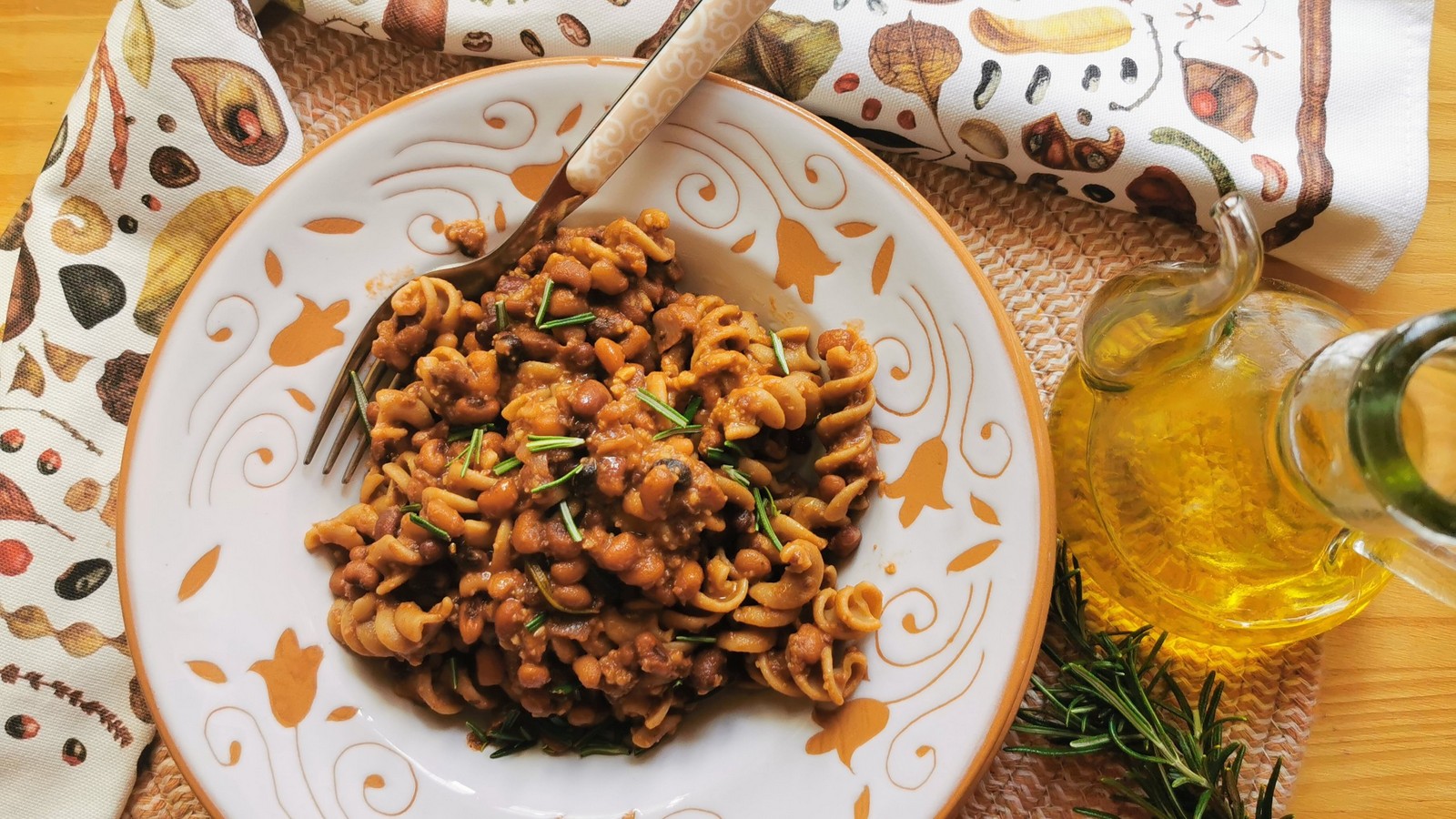
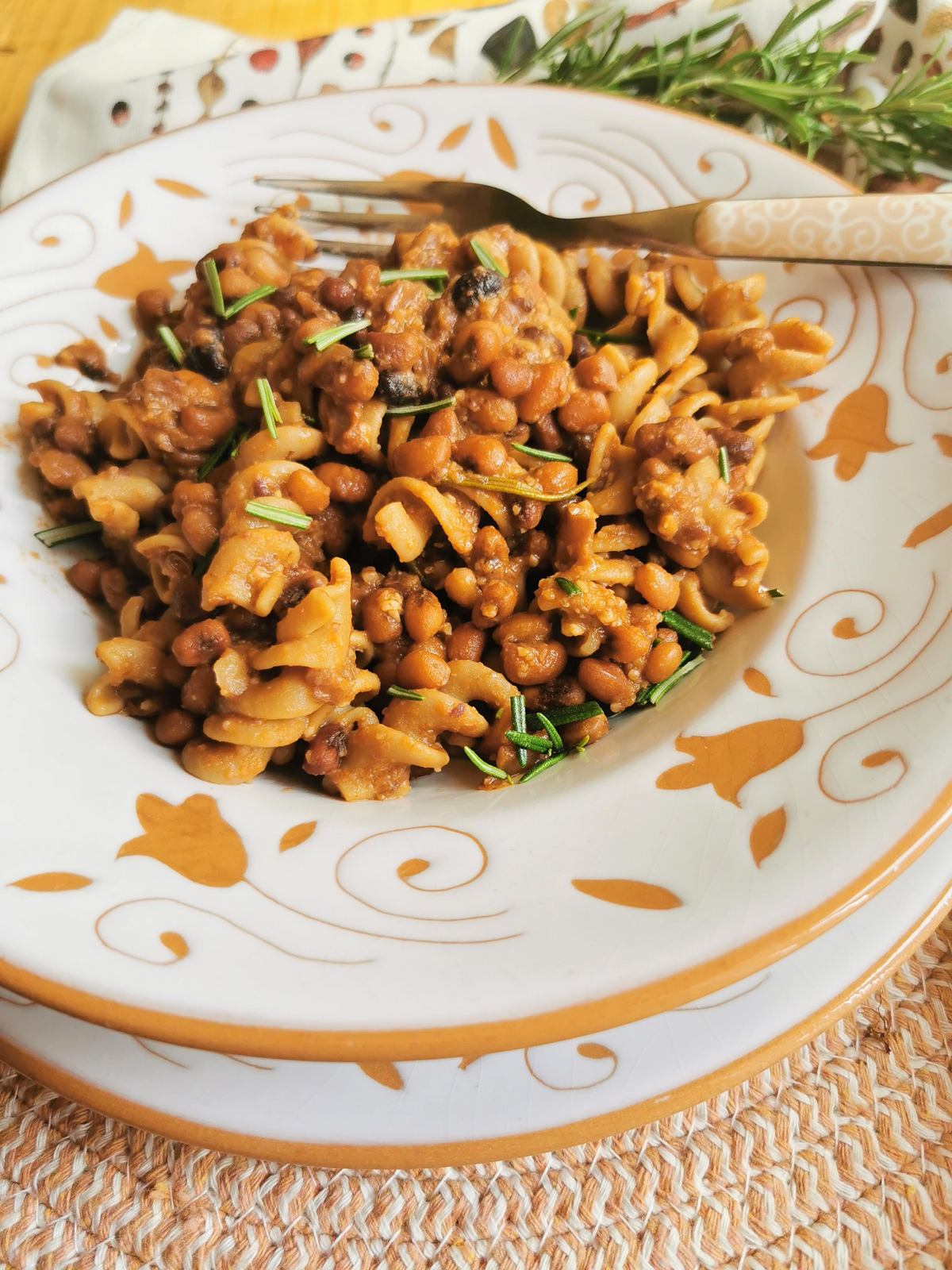
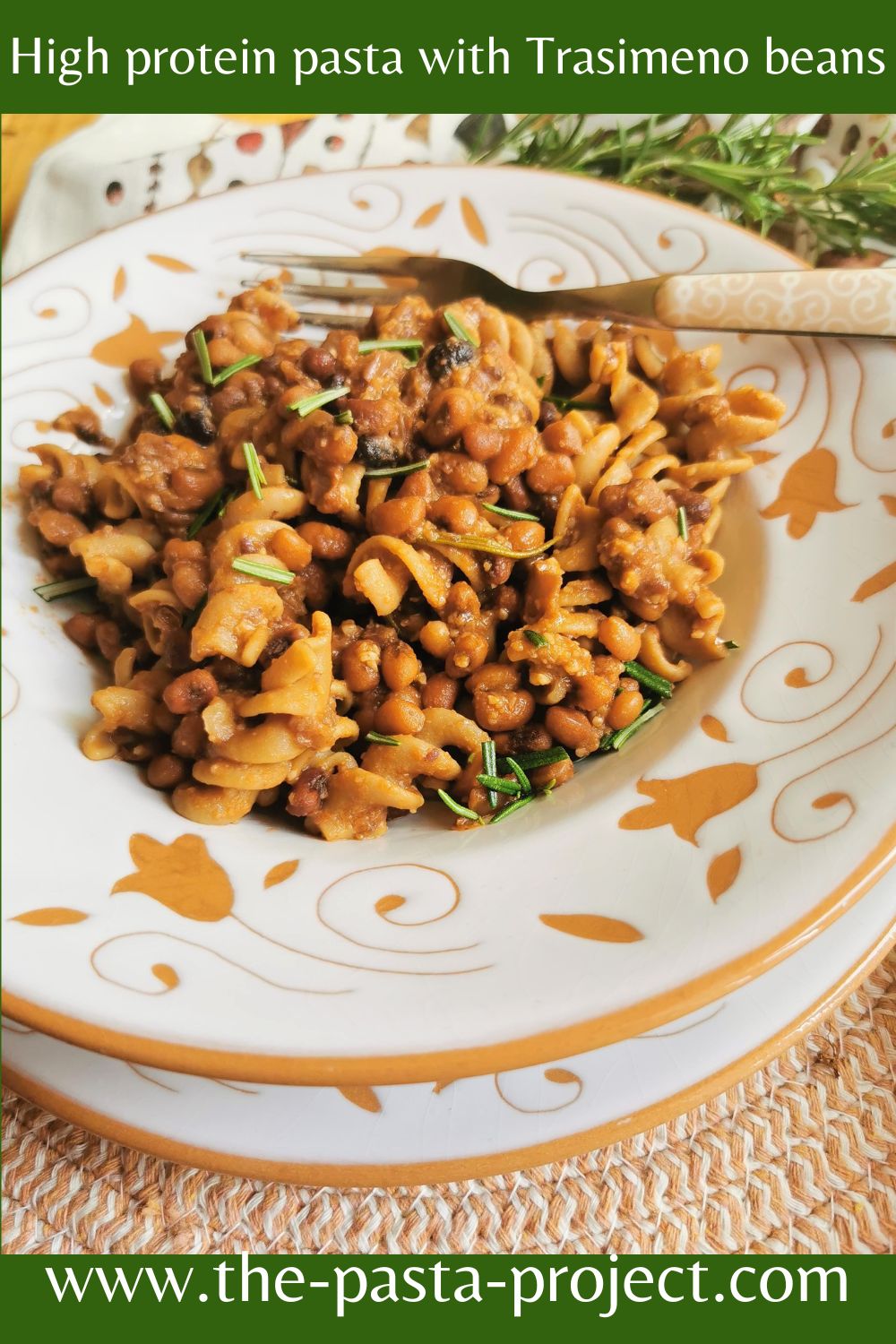
This easy high protein pasta recipe is based on a traditional pasta and beans recipe from Umbria, Central Italy. The fusilli pasta has 38% more protein and 50% more fiber than normal pasta. The beans are tiny local beans from Lake Trasimeno in Umbria that are similar to black-eyed peas.
Together with just a couple of other ingredients they make a super nutritious and delicious vegan pasta dish that’s great as a quick weeknight dinner main course or as a side dish.
What are Trasimeno beans?
Trasimeno beans (fagiolini di Trasimeno) are actually rare, small, nutrient-dense cowpeas, originally from Africa and nowadays only found in the Lake Trasimeno area in Umbria.
Said to have been introduced to Umbria in Etruscan times, these slow food legumes are loved for their tender, buttery, and slightly nutty flavor and creamy texture. You can find them for sale in a mixture of colours or just cream. I used the mixed colours for this high protein pasta recipe.
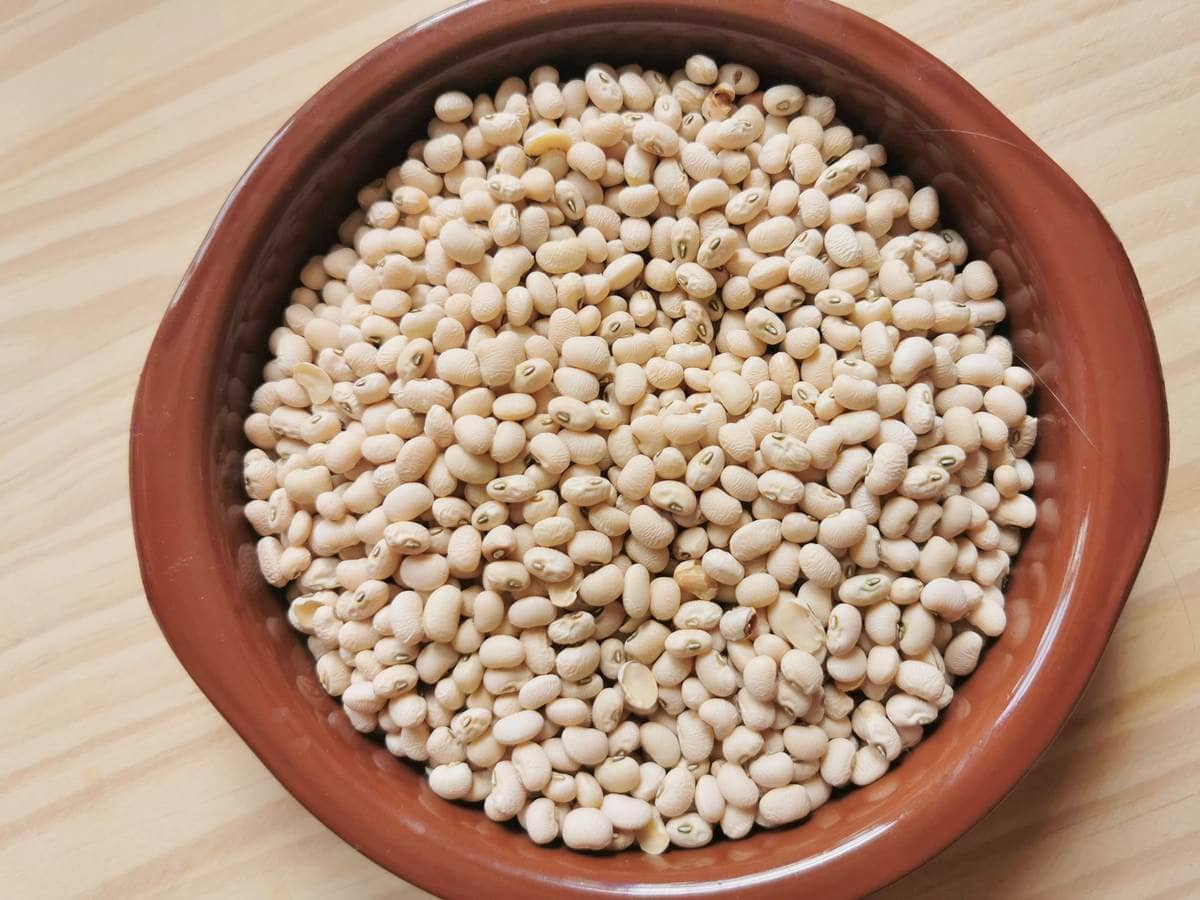
These beans contain high levels of protein, fiber, and iron. Belonging to the same family as black-eyed peas, these tiny beans used to be one of the main sources of protein for the local population.
However, after the Second World War, cultivation of Trasimeno beans dropped off due to the depopulation of the rural areas, as well as the fact that it’s very labour intensive, time consuming, and altogether not very profitable. In fact, Fagiolini di Trasimeno survived becoming extinct only thanks to the crops grown by the local families for their own consumption.
In recent years, some small farmers have started to recultivate Trasimeno beans. They have also started reintroducing them on the market aided by the efforts of the Department of Agriculture of the Univeristy of Perugia, the Council Trasimeno-Medio Tevere, and of the Slow Food Foundation for Biodiversity, that created a Presidium in 2000 (the first in Umbria) to promote the beans.
High protein pasta.
This easy high protein pasta recipe is doubly rich in protein, not only because of the beans but also the pasta. I used Garofalo’s high protein pasta which is a relatively new product line. This pasta is made with only durum wheat semolina flour and defatted wheat germ, whereas other high protein pastas include ingredients like beans, chickpeas, lentils etc.
According to the company’s website this pasta contains 19 grams of protein and 12g fiber in every 3.5oz serving. It’s also rich in other nutrients such as potassium, iron, zinc, magnesium and phosphorus.
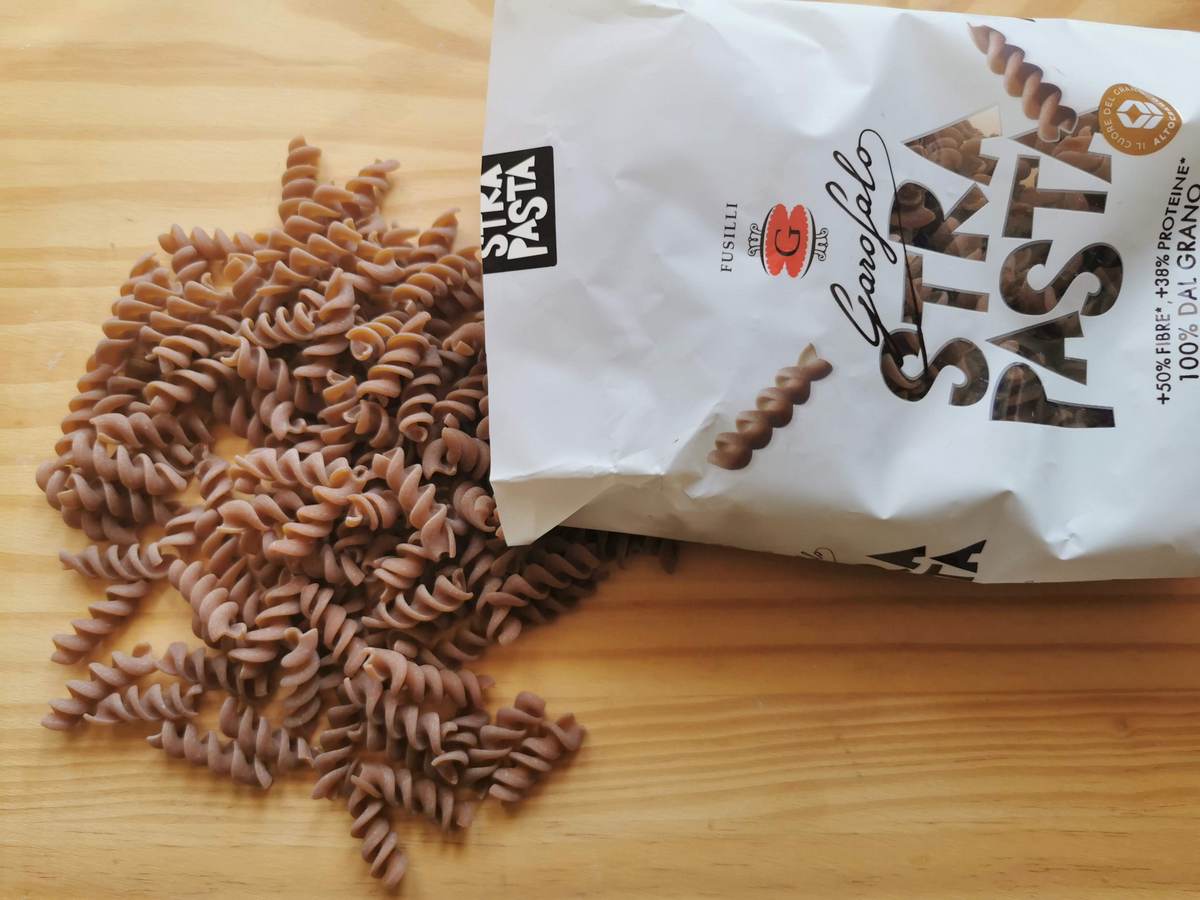
The choice of pasta was my own and my opinion of it is my own. This isn’t a sponsored post I just wanted to use a high protein type of pasta, and I had read good things about Garofalo’s StraPasta range. I can’t compare with other brands as I haven’t tried other high protein pasta, but I will be trying others and making more high-protein pasta recipes in the future.
However, I can say that although this high protein pasta is similar in colour to wholewheat pasta, the flavor isn’t as intense but still nuttier and heartier than normal pasta. It paired so well with the Trasimeno bean sauce.
Ingredients and substitutions for this high protein pasta recipe
Main ingredients.
The pasta: As mentioned above, I used high protein pasta from Garofalo’s StraPasta range. There are quite a few other pasta companies producing high protein pastas which can be used instead.
Pasta alternatives: I recommend a short pasta shape like fusilli or penne for this recipe. Of course, you can use regular pasta, chickpea pasta, red lentil pasta or other gluten free pasta instead.
The beans: This vegan recipe is based on one from Umbria that uses Trasimeno beans. Of course, these beans are rare and mostly only found in Umbria. Some companies sell these beans online and ship overseas. I also found an American company that sells the seeds.
Bean alternatives: Since Trasimeno beans are a close relative to black-eyed peas, you can use the latter instead. Alternatively, other field peas, black beans, pinto beans, small white beans or chickpeas.
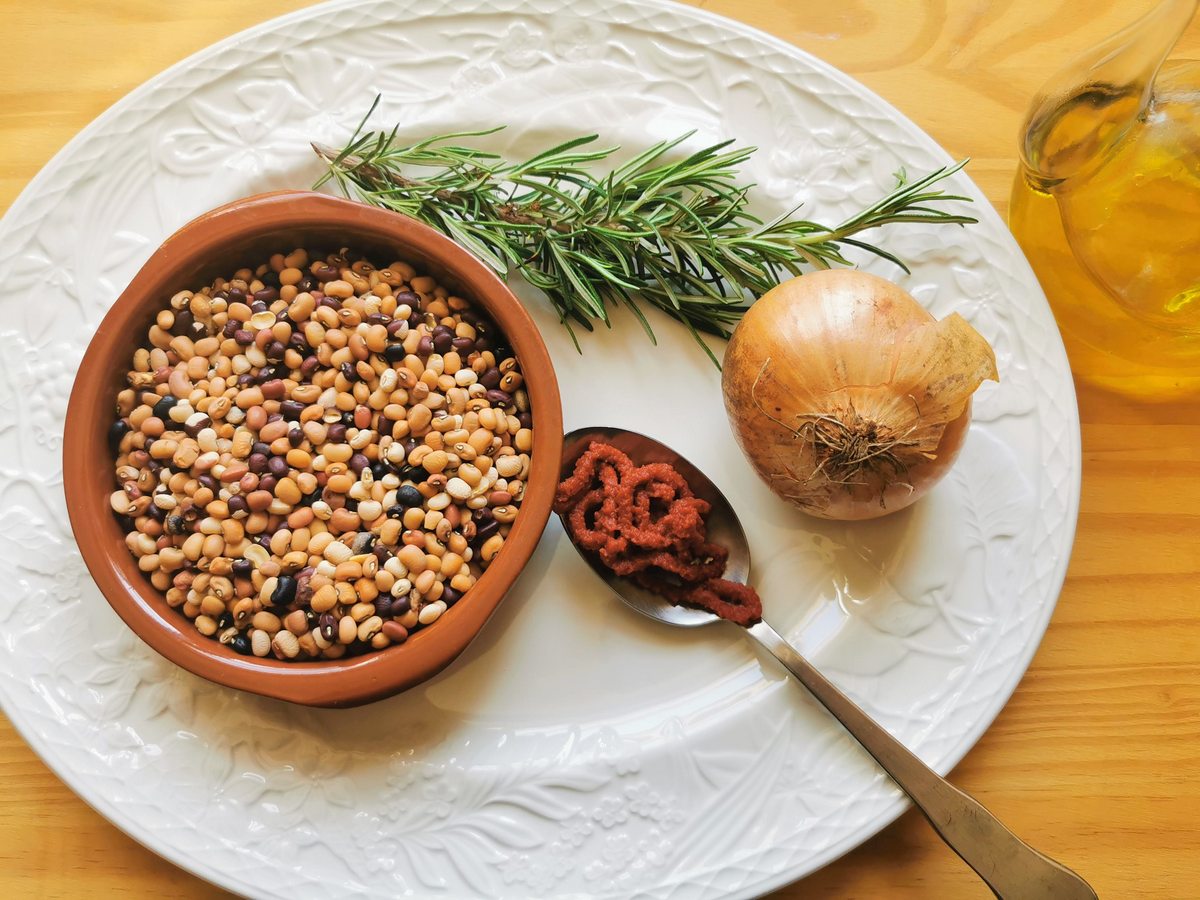
Other ingredients.
Onion: I used a medium sized yellow onion. You could also use a white onion. The latter are generally slightly sweeter and milder than yellow onions. But both work well with the beans.
Tomato concentrate (tomato paste): Just a tablespoon of tomato concentrate adds a lovely colour and umami flavor to the Trasimeno beans sauce. For a more intense tomato flavor, you can use some cut up sun-dried tomatoes. In fact, I would like to include these next time.
Rosemary: Fresh rosemary is one of my favorite herbs to use with legumes like in my pasta with lentils soup (also from Umbria). Fresh herbs taste so much better than dried, but you can use dried rosemary if fresh isn’t available.
Bay leaves: Bay leaves add a wonderful warm aromatic flavor to stews and soups. I like to use them in slow cooked meat ragus like my Genovese ragu. I have made this high protein pasta recipe with and without bay leaves. So they are optional, depending on how much you like the flavor they impart.
Olive oil: Here in Italy, we use olive oil a lot, especially in sauces, soups and stews. The better the oil the better the flavor it adds to the dish. Since this recipe has just a handful of other ingredients. I recommend a good quality olive oil, particularly extra virgin.
Step by Step instructions.
Neither Trasimeno beans or black-eyed peas need to be soaked before cooking because they have a thinner skin and are smaller than other beans. They also cook faster. However, to reduce cooking time, you can soak for 1-2 hours or overnight if you wish. What you need to do is to rinse the beans to be sure there is no debris or stones.
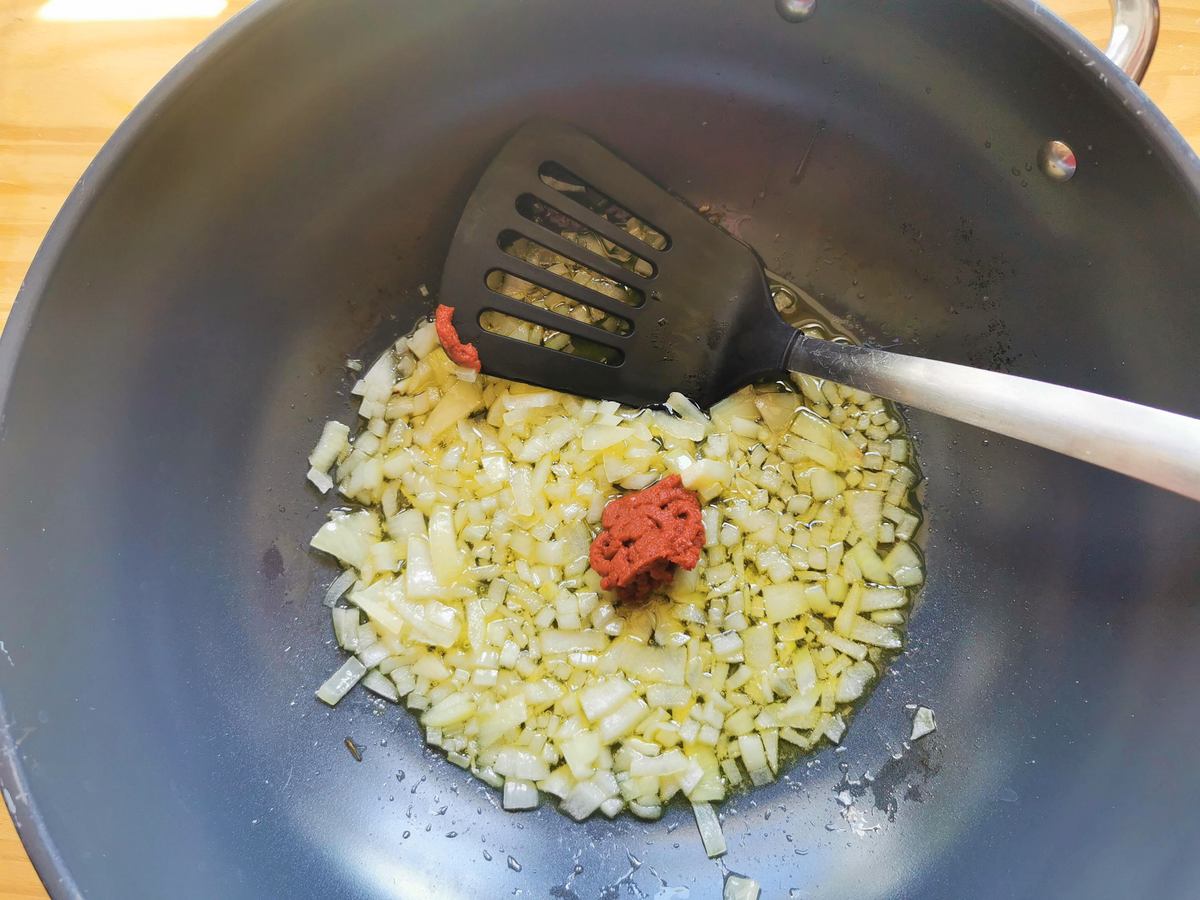
1) Peel and slice the onion and sauté it in heated olive oil over a medium heat until it softens (about 1-2 minutes). Add the tomato concentrate and mix it into the onion.
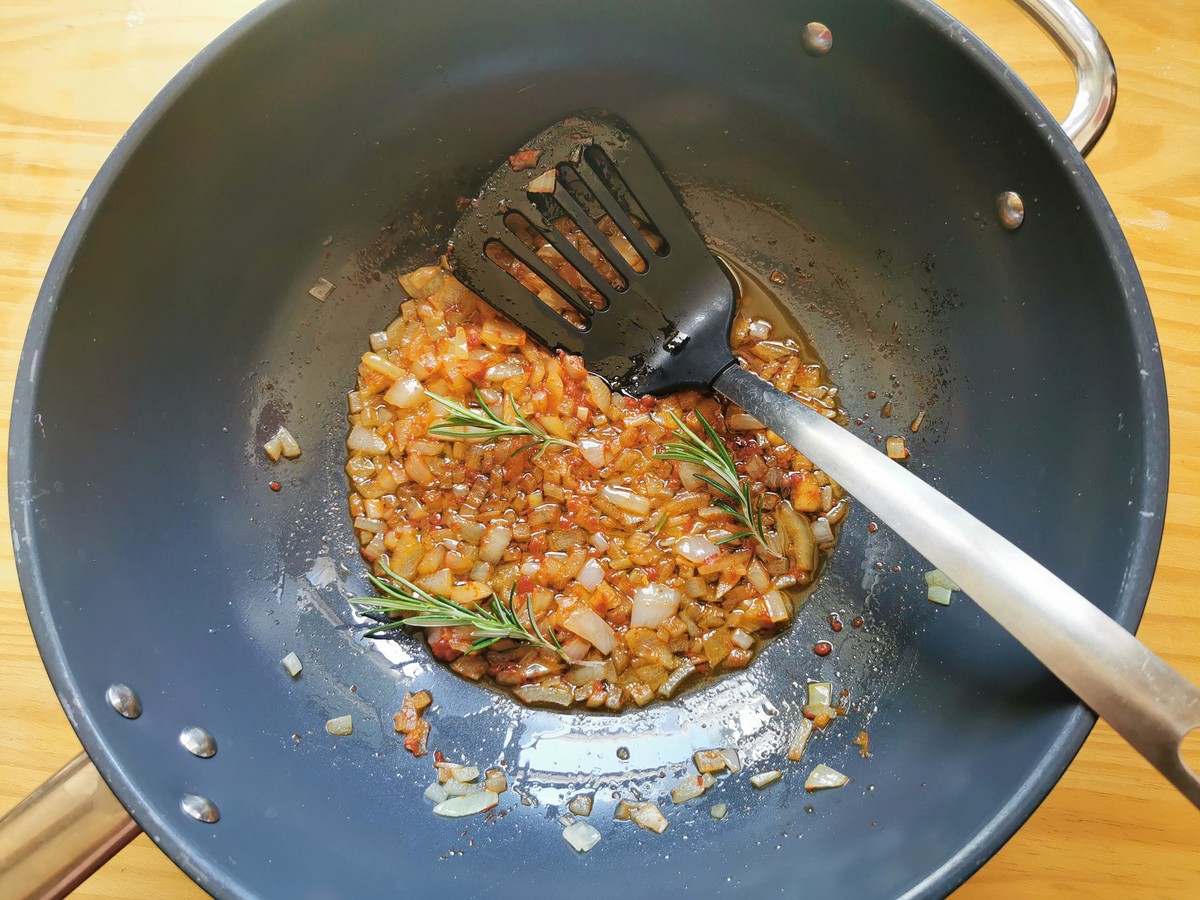
2) Next add some fresh rosemary, bay leaves (if using) and salt to taste. Then put in the Trasimeno beans.
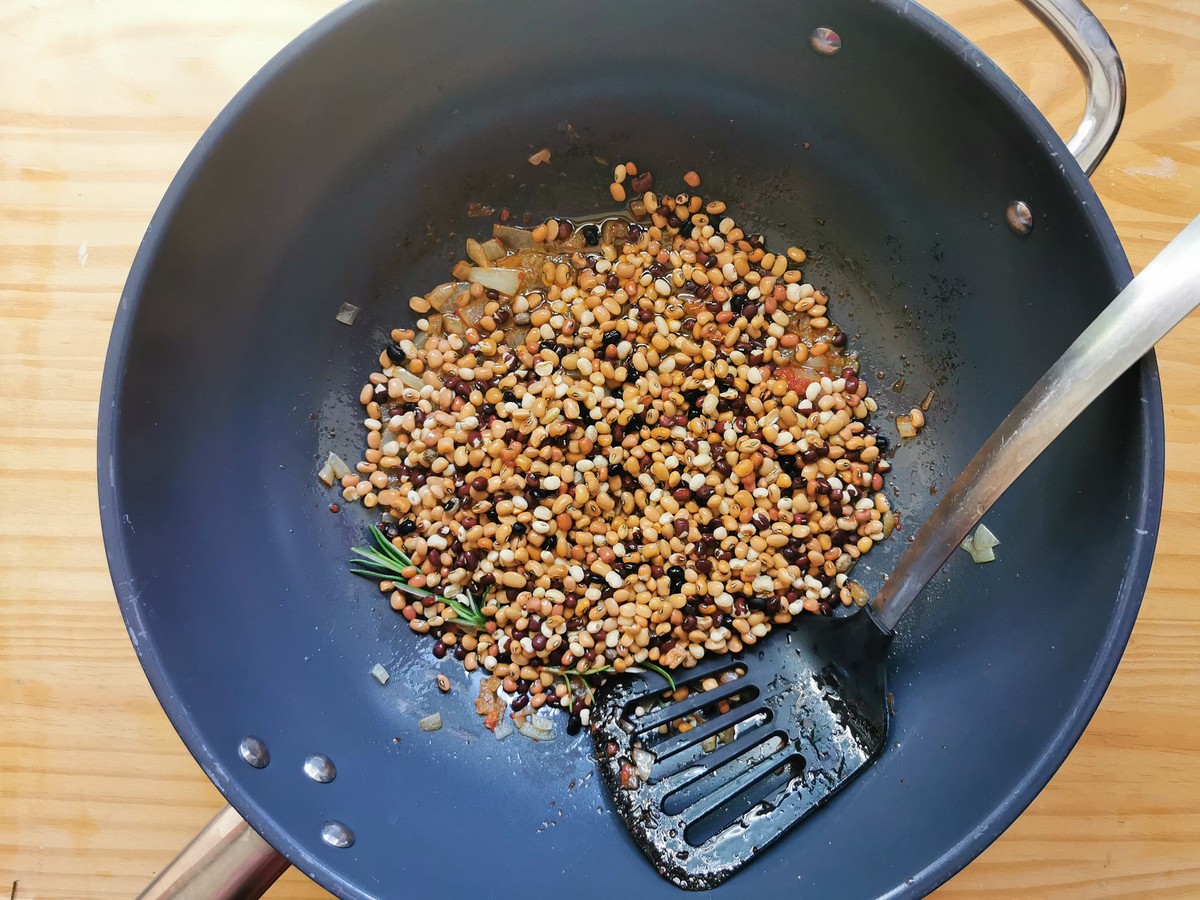
3) Mix the beans with the onion over a low heat and then pour in the water.
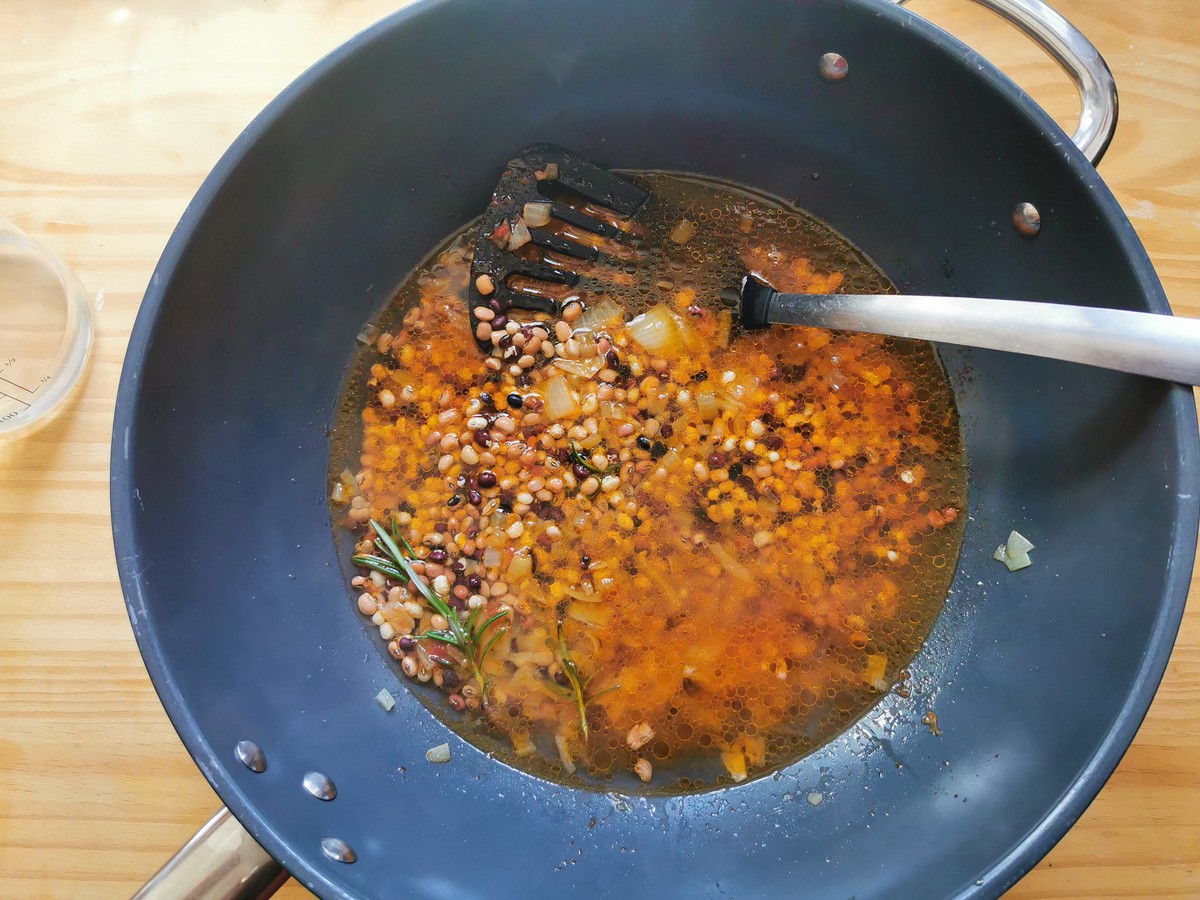
4) Simmer the beans on a low-medium heat until cooked, stirring occasionally and adding more water if necessary.
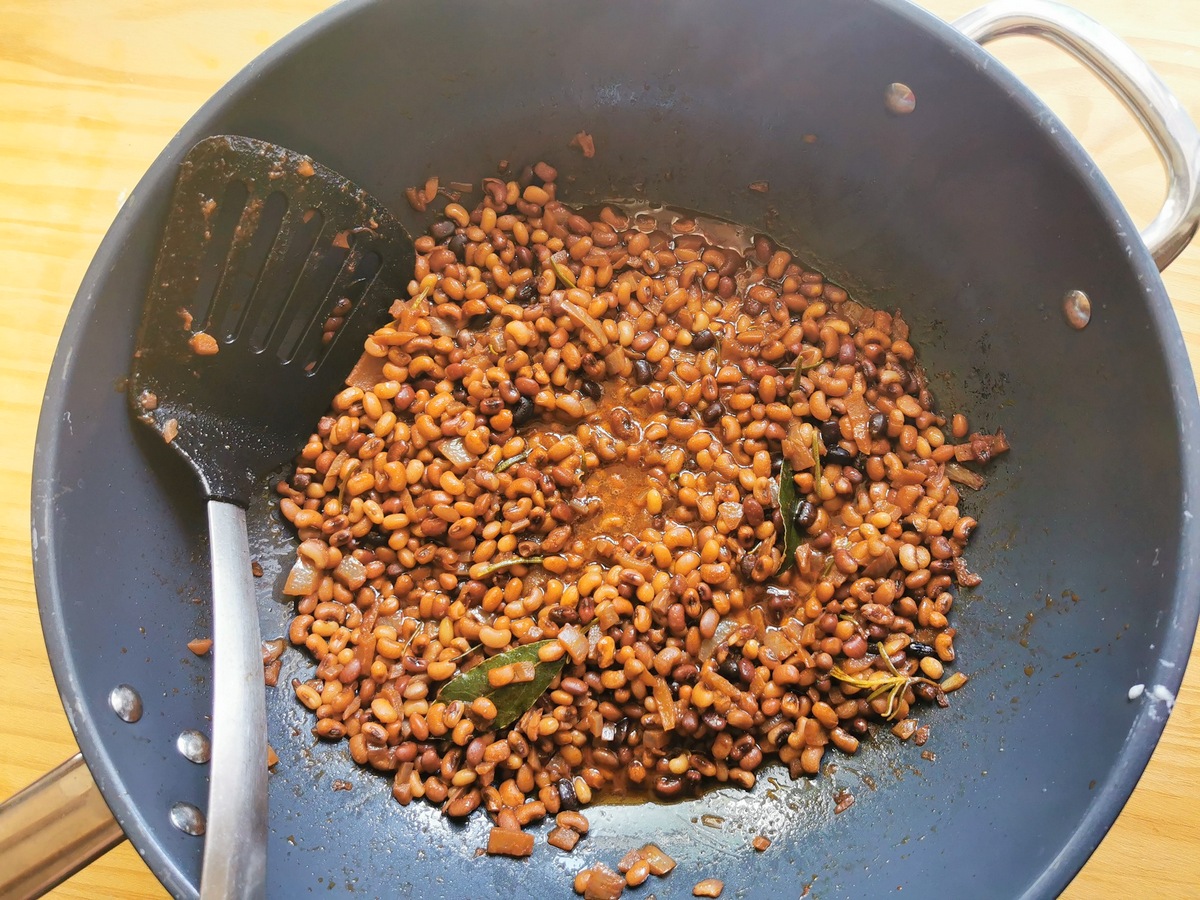
5) When the beans are cooked, remove one third of them and a little of the liquid. Puree the beans with the cooking liquid in a food processor or put them in a deep bowl and use an immersion blender. Return the creamy bean purée to the pan.
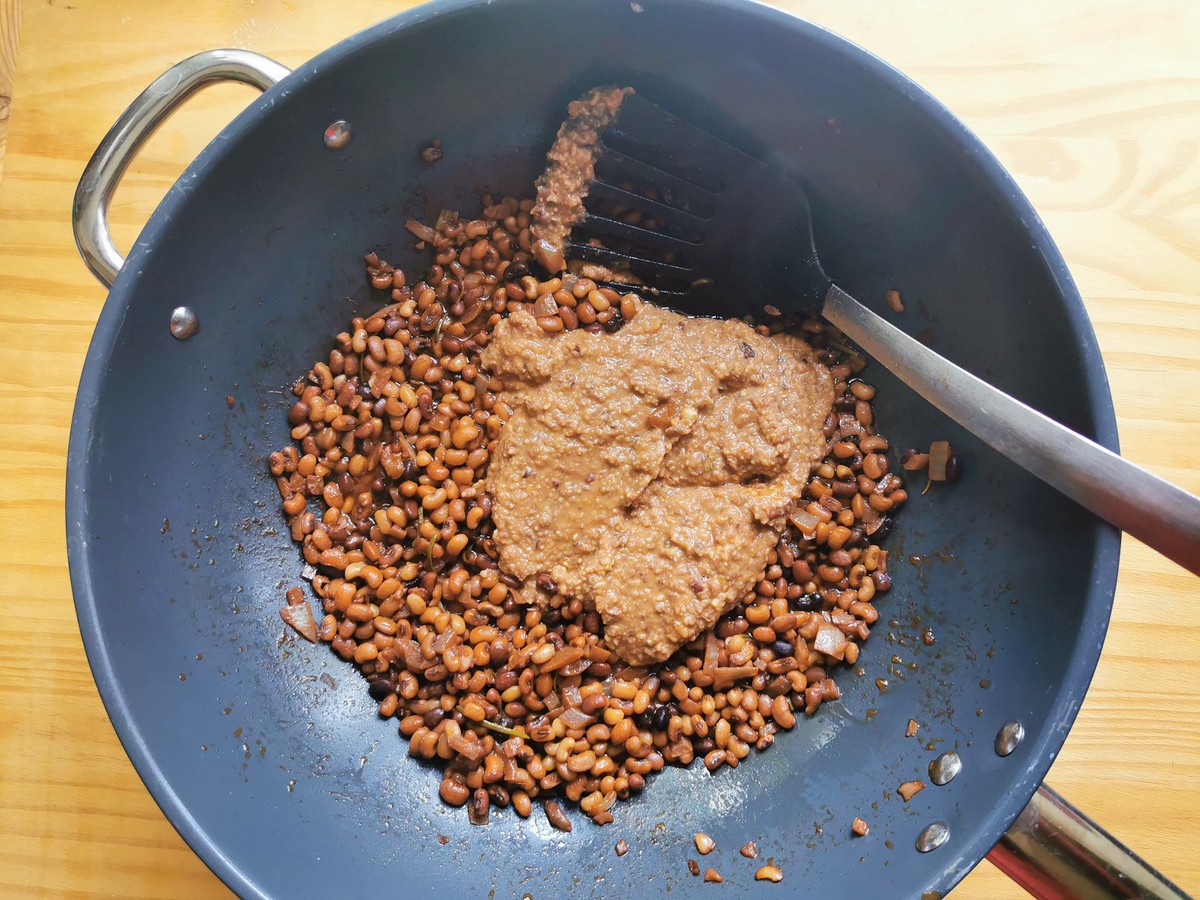
6) Mix the bean purée into the rest of the beans and simmer while you cook the high protein pasta.
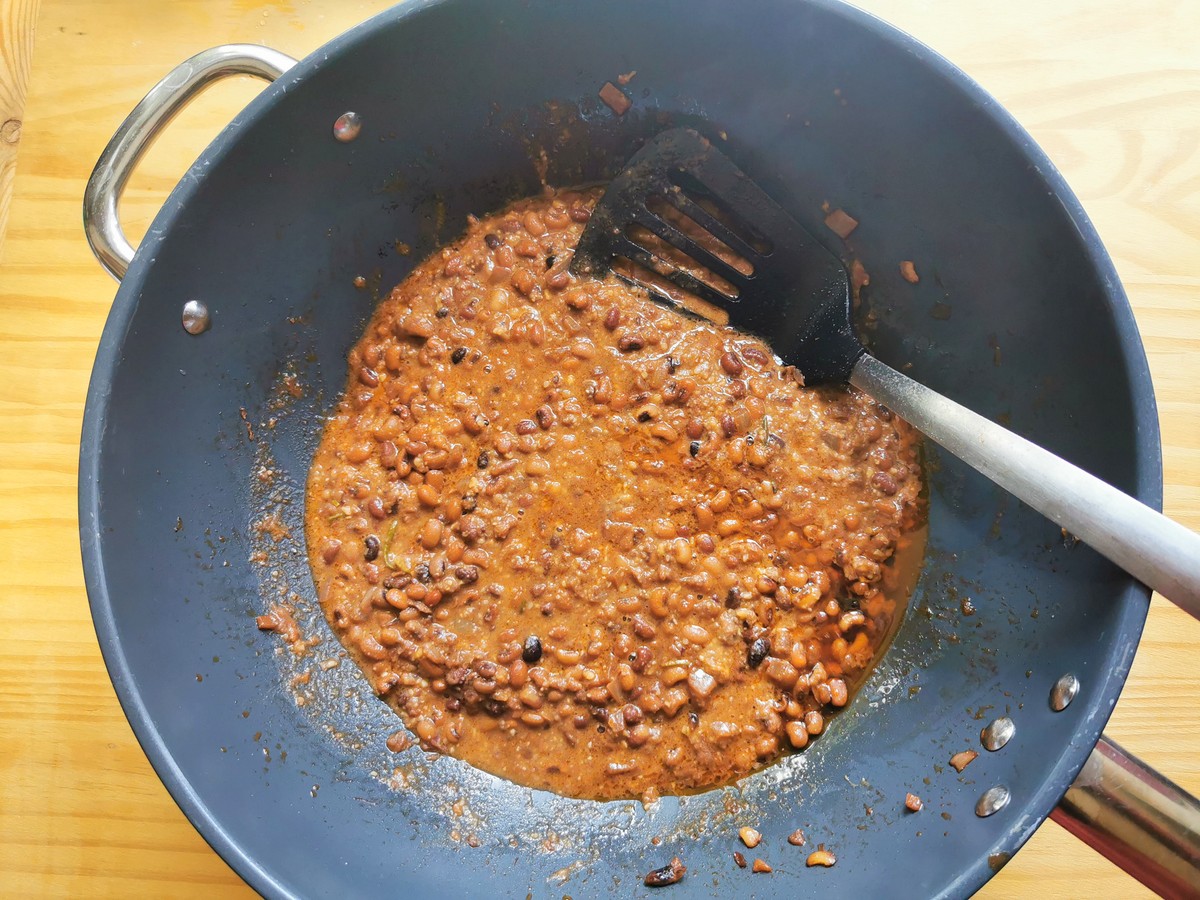
7) For the next step, cook the pasta al dente in salted boiling water according to the package instructions. Save a cup of the pasta water and drain the pasta. Add it to the Trasimeno bean sauce.
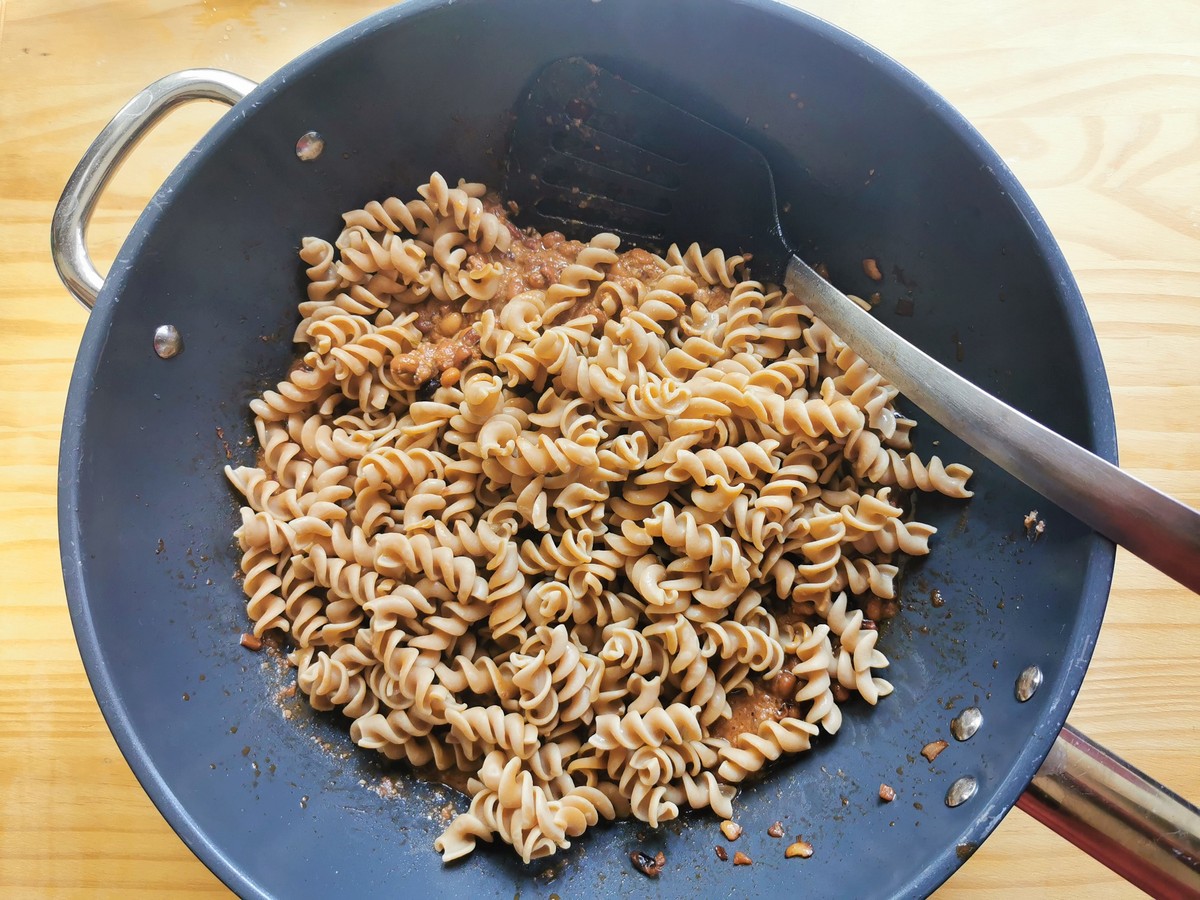
8) Mix the high protein pasta and bean sauce together. You can add some of the saved pasta cooking water if the pasta sauce seems dry.
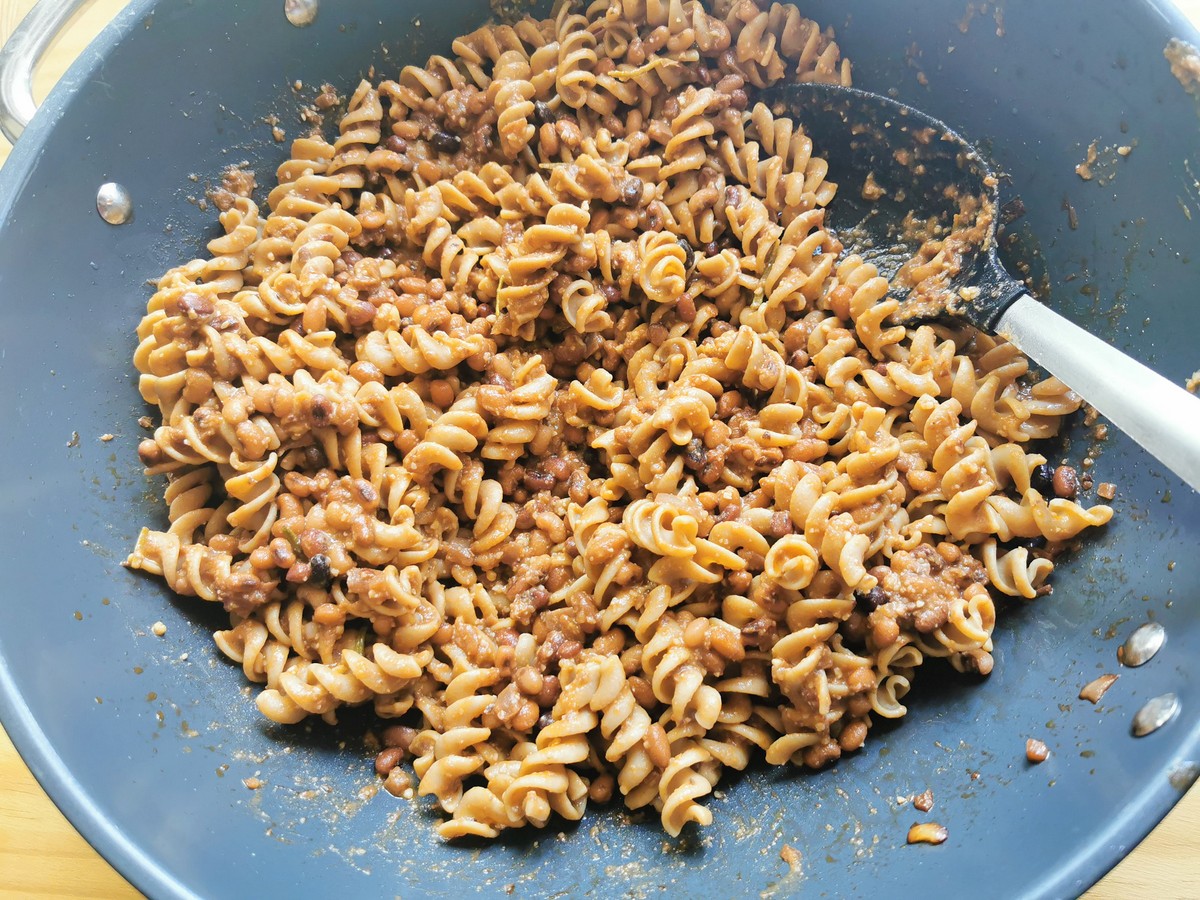
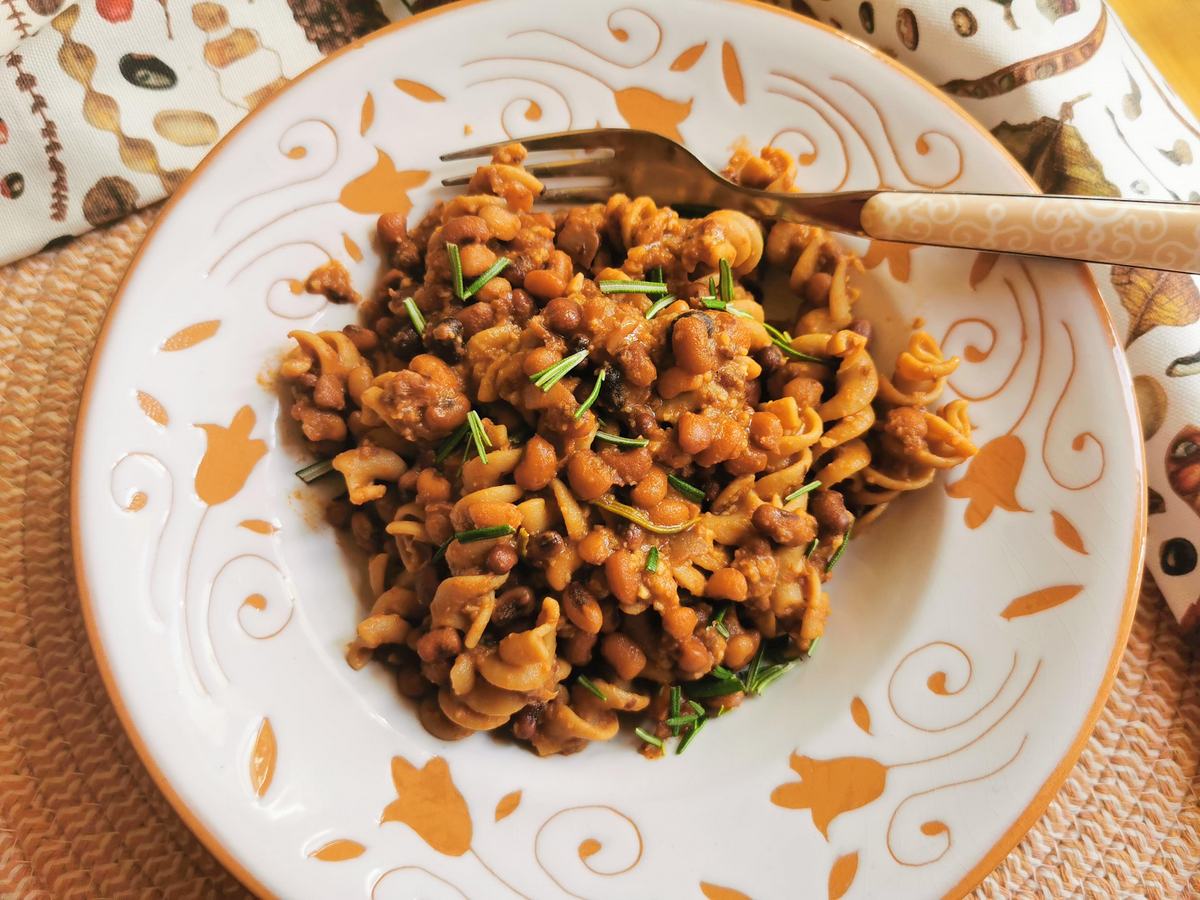
Serve immediately with some fresh rosemary leaves, freshly ground black pepper and a drizzle of olive oil.
What to do with leftovers.
You can keep leftover high protein pasta and beans in a sealed airtight container in the fridge for up to 2-3 days. Leftovers can be reheated on the stove top or in the microwave with a little water or broth. Alternatively, put the leftovers in a baking dish and bake with some grated hard cheese on top in the oven.
N.B. Adding normal hard cheese like Parmigiano isn’t vegetarian or vegan friendly. You can use a vegetarian parmesan cheese or vegan cheese instead. Alternatively, breadcrumbs make a great option as a vegan topping to baked pasta.
Let me know what you think.
I have made this easy high protein pasta recipe a number of times since discovering it. I love both the flavor and the fact that it’s so nutritious with a high fiber and protein boost from just plant-based protein.
It makes a hearty easy weeknight meal for the whole family. You can serve it on its own which is great for busy weeknights but also as a side dish.
If you make this recipe, I’d love to hear how it turns out and if you liked it. So, please leave a comment here on the blog or on The Pasta Project Facebook page.
Looking forward to hearing from you!
Buon appetito!
Pin for later.
Other pasta recipes for easy meals.
- Vegan tomato and garlic spaghetti alla Maratea
- Pasta with smoked salmon and zucchini
- Maltagliati pasta with creamy mascarpone
- Seven Ps pasta recipe from Tuscany
Easy high protein pasta recipe with Trasimeno beans from Umbria.

Equipment
- 1 large pot to cook pasta
- 1 deep skillet or frying pan
- 1 sharp knife to chop onion
Ingredients
- 12 ounces high protein pasta
- 9 ounces small beans or black-eyed peas
- 1 onion (yellow or white)
- 1 sprig fresh rosemary
- 2 bay leaves optional
- salt for pasta and to taste
- freshly ground black pepper.
- 4 tablespoons extra virgin olive oil
- 1 tablespoon tomato concentrate (paste)
Instructions
- Rinse the beans to be sure there is no debris or stones. Boil 1Lt (2 pints) water in a saucepan or kettle.
- Peel and chop the onion and sauté it in heated olive oil over a medium heat until it softens (about 1-2 minutes). Add the tomato concentrate and mix it into the onion.
- Next add some fresh rosemary, bay leaves (if using) and salt to taste. Then put in the Trasimeno beans. Mix the beans with the onion over a low heat and then pour in enough of the hot water to just cover the beans.
- Simmer the beans on a low-medium heat until cooked (about 30 minutes), stirring occasionally and adding more water if necessary. Taste test for doneness. Your beans may need longer.
- When the beans are cooked, remove one third of them and a little of the liquid. Purée the beans with the cooking liquid in a food processor or put them in a deep bowl and use an immersion blender. Return the bean purée to the pan.
- Mix the bean purée into the rest of the beans and simmer while you cook the high protein pasta.
- Cook the pasta al dente in salted boiling water according to the package instructions. Save a cup of the pasta water and drain the pasta. Add it to the Trasimeno bean sauce.
- Mix the high protein pasta and bean sauce together. You can add some of the saved pasta cooking water if the pasta sauce seems dry.
- Serve immediately with some fresh rosemary leaves, freshly ground black pepper and a drizzle of olive oil.

Ramona sebastian says
I love a good high protein meal and I love a good pasta so I will definitely be making this dish for me and my family! Thank you for sharing this recipe, I cannot wait to try this out soon!
Jacqui says
Thanks for your comment Ramona. This is definitely a high protein pasta recipe worth trying. I'm sure you will enjoy it!
Marianne Hossler says
Where is the amount of Tomato concentrate listed?
Jacqui says
Thanks for your question Marianne. It seems I included the quantity of tomato concentrate in the main article ingredient notes but left it out of the ingredient list in the recipe instructions. I have corrected it now. It's one tablespoon. I hope you enjoy this recipe!
Nicole says
I love that extra kick of protein in this. It's so tasty, too.
Jacqui says
Thanks for your comment Nicole! I love the extra protein kick of this recipe too!
Lora says
This was such a hearty and satisfying pasta dish with a nice protein boost. The Umbrian pasta and beans inspiration makes it feel simple, rustic, and really flavorful.
Jacqui says
I'm happy you liked this high protein pasta and beans Lora. Definitely one of my favorite ways to make an Italian classic!
Jessie says
I struggle to get enough protein as a vegetarian. This super easy to make and tasty too.
Jacqui says
Thank you for your review Jessie. This is definitely a great recipe for vegetarians. It's so high in protein and other nutrients!
Tanya says
I made this for dinner last night and it was so comforting and satisfying! I loved how hearty and flavorful it turned out with such simple ingredients. The high-protein fusilli and those little Umbrian beans were such a delicious combination, and so happy to know how nutritious it was too. Will be making this again soon!
Jacqui says
Thanks for your feedback Tanya. I'm so glad you enjoyed this high protein pasta with beans recipe. I agree, this is really a comforting and satisfying dish.