
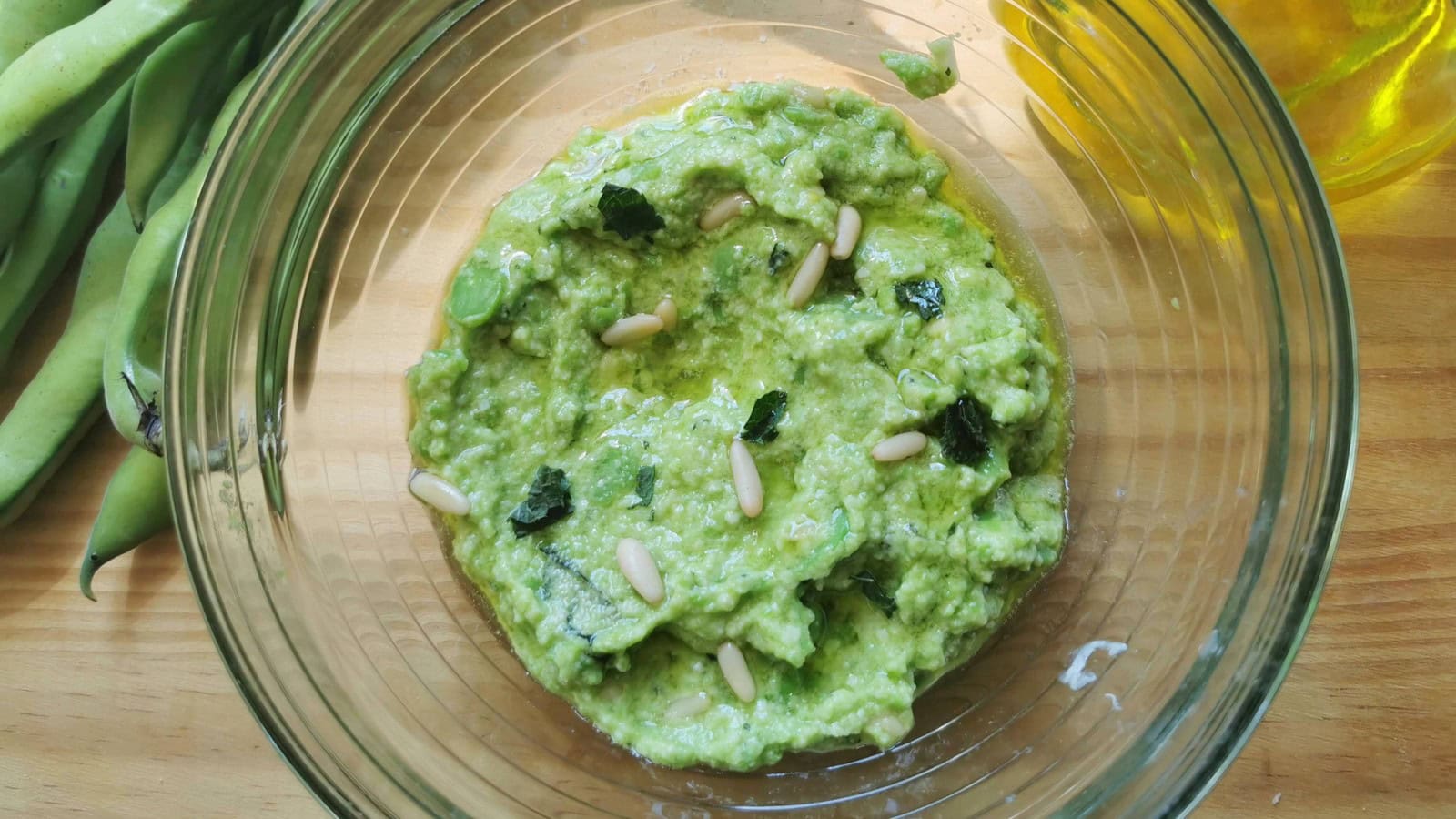
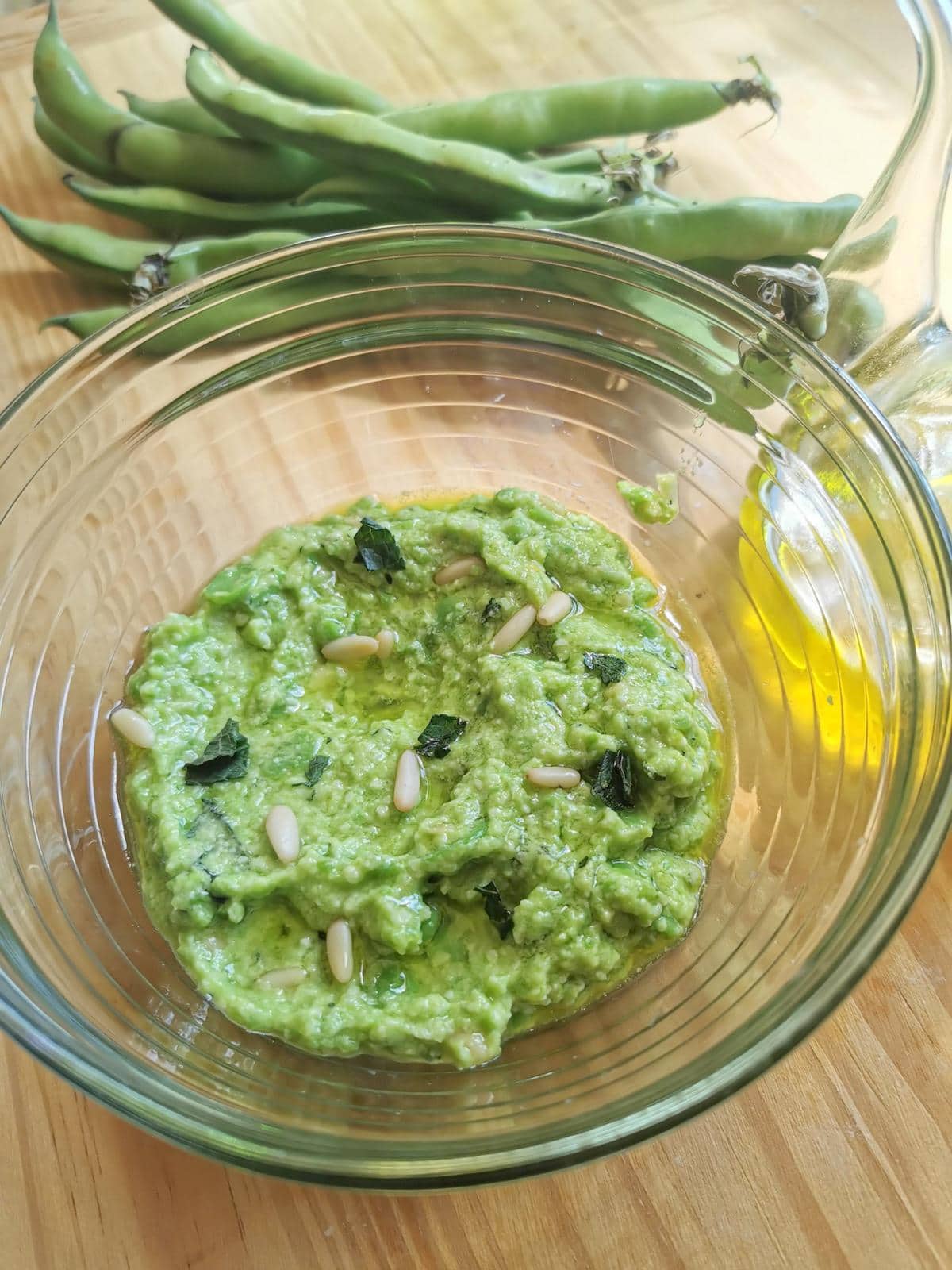
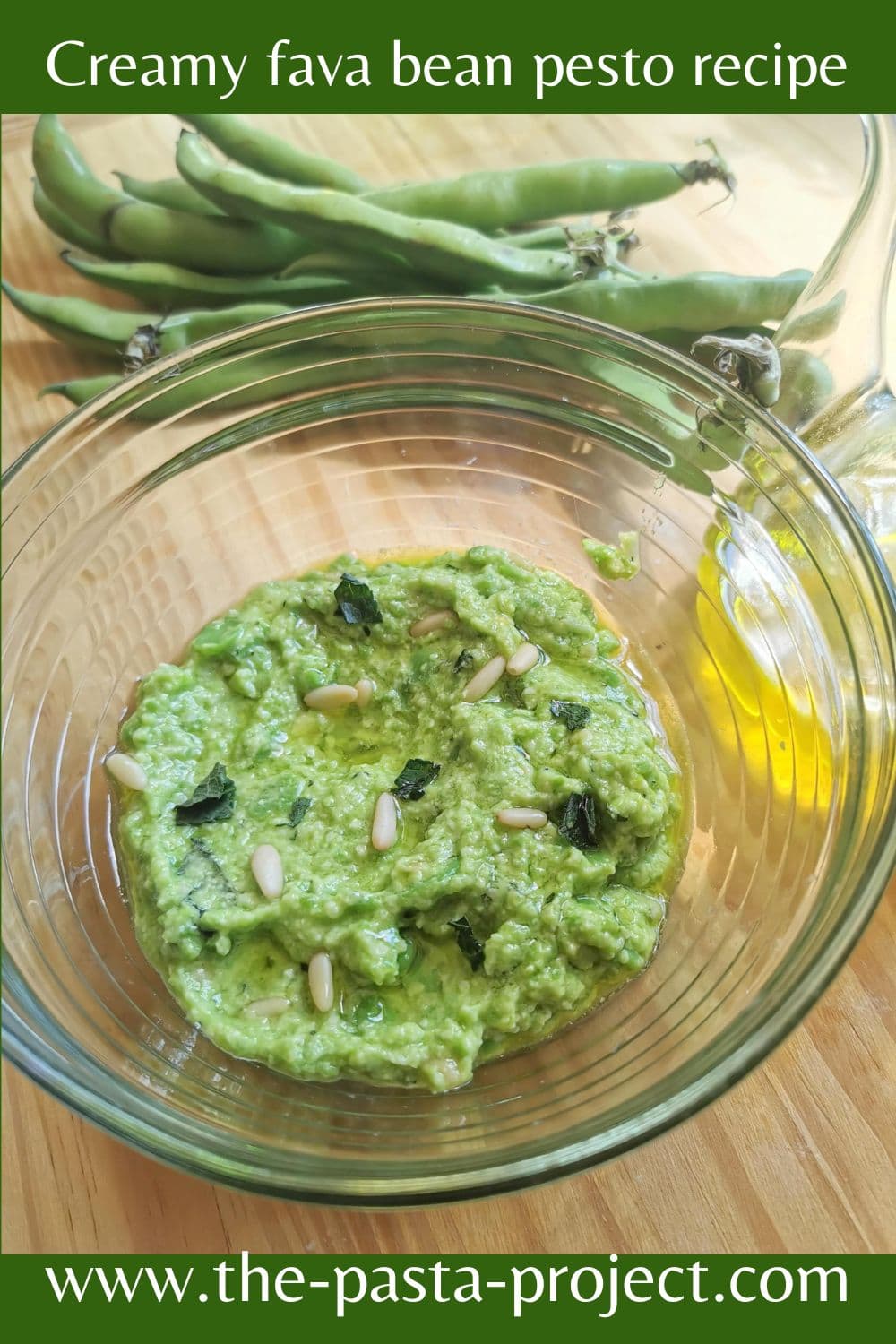
Fresh fava beans (broad beans) are a favorite spring ingredient in the Italian kitchen. This creamy fava bean pesto recipe comes from Liguria, particularly the coastal area called the Riviera di Levante.
Known locally as marò or pesto di fave, this is an ancient recipe made with fresh fava beans, garlic, mint, pecorino, pine nuts and extra virgin olive oil. This pesto is delicious on bruschetta and as a pasta condiment.
Where is the Levante Riviera.
The Levante Riviera is a 130 kms stretch of coast in Eastern Liguria that is one of the most attractive stretches of coastline in Italy. It occupies the coastal area between the regional capital of Genova to the west and the border with Tuscany to the south, just beyond the port city of La Spezia.
Named after the Levante east wind, it is where many well-known Ligurian towns and villages are located including Portofino, the Cinque Terre, Camogli, Recco and Portovenere.
The food in the Riviera di Levante.
As well as this creamy fava bean pesto, this part of Italy has a unique kitchen which includes foods and recipes from inland Liguria and seafood. Among the most well-known dishes from this area are fish and seafood soups such as bagnun di acciughe and ciuppin, and focaccia, farinata and panissa (the last two made from chickpeas).
Plus, this part of Liguria is also home to much loved sauces like basil pesto alla Genovese, typically served with trofie, the pasta I used with my fava bean pesto, and walnut sauce traditionally eaten with pansotti pasta. Here you can also find unique and ancient pasta types such as corzetti, silk handkerchief pasta and testaroli.
Fava beans (broad beans) in the Italian kitchen.
In Italy, fresh fava beans start to appear in March and are an important ingredient on March 19, the feast of Saint Joseph (Festa di San Giuseppe). The connection between fava beans and Saint Joseph comes from a ‘miracle’ that occurred in Sicily in the Middle Ages, when a very bad drought was causing famine in Sicily.
People were starving and prayed to St. Joseph for rain. The story goes that after a few days, the rains actually came so, the farmers could plant a crop of fava beans and the people were saved
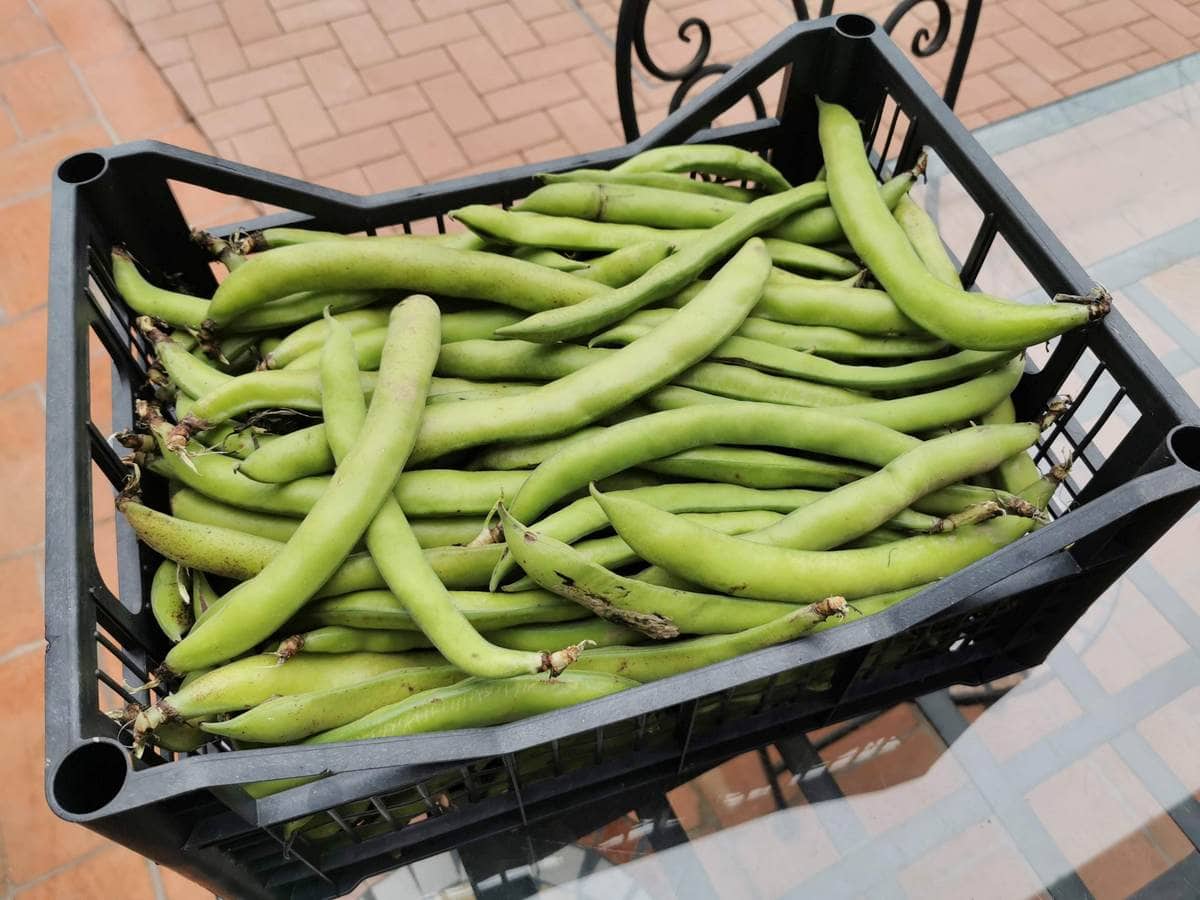
In southern Italy and Sicily, macco di San Giuseppe, a fava bean-based soup, features on countless tables on March 19; and fave are a common item used in the decorating of Saint Joseph altars, alongside other symbols of abundance and renewal, such as bread, flowers, fruits and vegetables.
There are many regional fava bean recipes. You can find this popular spring legume used in pasta like this Sicilian pasta with fave and ricotta, stewed as a side dish, added to risotto or even raw in salads.
Dried fava beans are also fried and eaten as an appetizer. In Puglia, they purée dried fava beans with wild chicory and serve it as a spread on toast or bruschetta.
Fava beans are healthy too.
Fava beans are said to be full of nutrients and offer many health benefits. I have read, they contain fiber, folate, and manganese, among many other nutrients. Some experts believe fava beans may also help decrease body weight or lower cholesterol, making this fava bean pesto a nutritious addition to any meal.
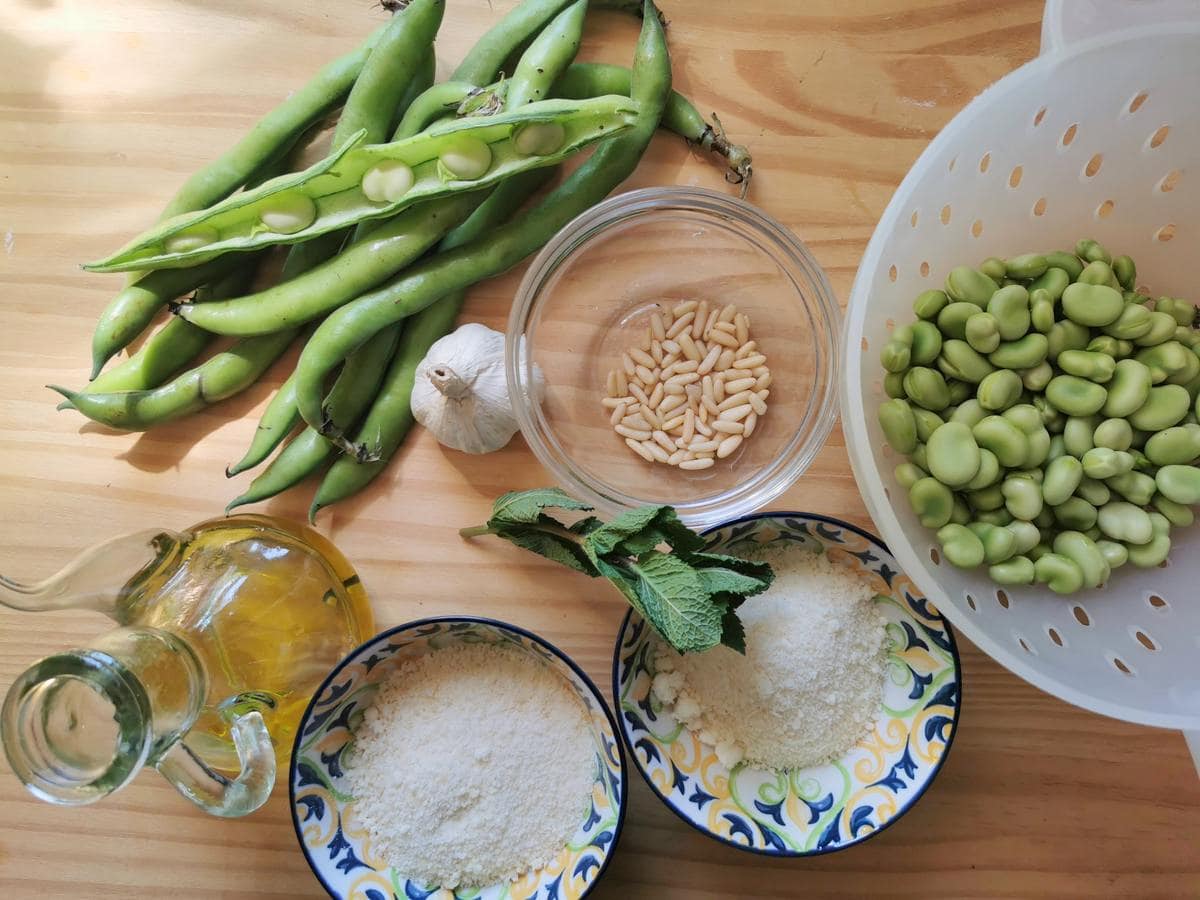
Ingredients for creamy fava bean pesto from Liguria.
Fava beans: Although you could use frozen or canned fava beans for this recipe, fresh are definitely more flavorful and give the pesto a fresher taste. Also, frozen or canned beans won’t have the bright green color of the fresh ones. However, fresh beans require a bit more preparation.
Garlic: I used 2 small garlic cloves. You can use less depending how garlicky you like your pesto. In Liguria, they use a local type of garlic called aglio di Vessalico. This garlic is more delicate in flavor than normal garlic. But normal garlic is fine.
Mint: Mint is often paired with fava beans in other recipes. It adds a fresh summer flavor to the pesto. The mint needs to be fresh not dried. Fresh marjoram or fresh basil are possible alternatives to mint but the flavors will differ.
Pecorino and Parmigiano: The recipe I followed called for both cheeses. Of course, you can use just one. The pecorino is traditionally pecorino sardo from Sardinia but pecorino Romano is fine too.
NB: Neither Pecorino nor Parmigiano Reggiano are vegetarian friendly as they are made with animal rennet. To make this recipe vegetarian use a hard cheese or parmesan cheese made with plant or microbial rennet.
Pine nuts: Like basil pesto alla Genovese, fava bean pesto often has pine nuts in it. But, pine nuts aren’t always easily available and can be expensive. You can use peeled almond slithers instead or leave the nuts out for a nut free version.
Extra virgin olive oil: Because fava bean pesto isn’t cooked, extra virgin olive oil is an important part of the flavor profile, so it's important to use a good quality one.
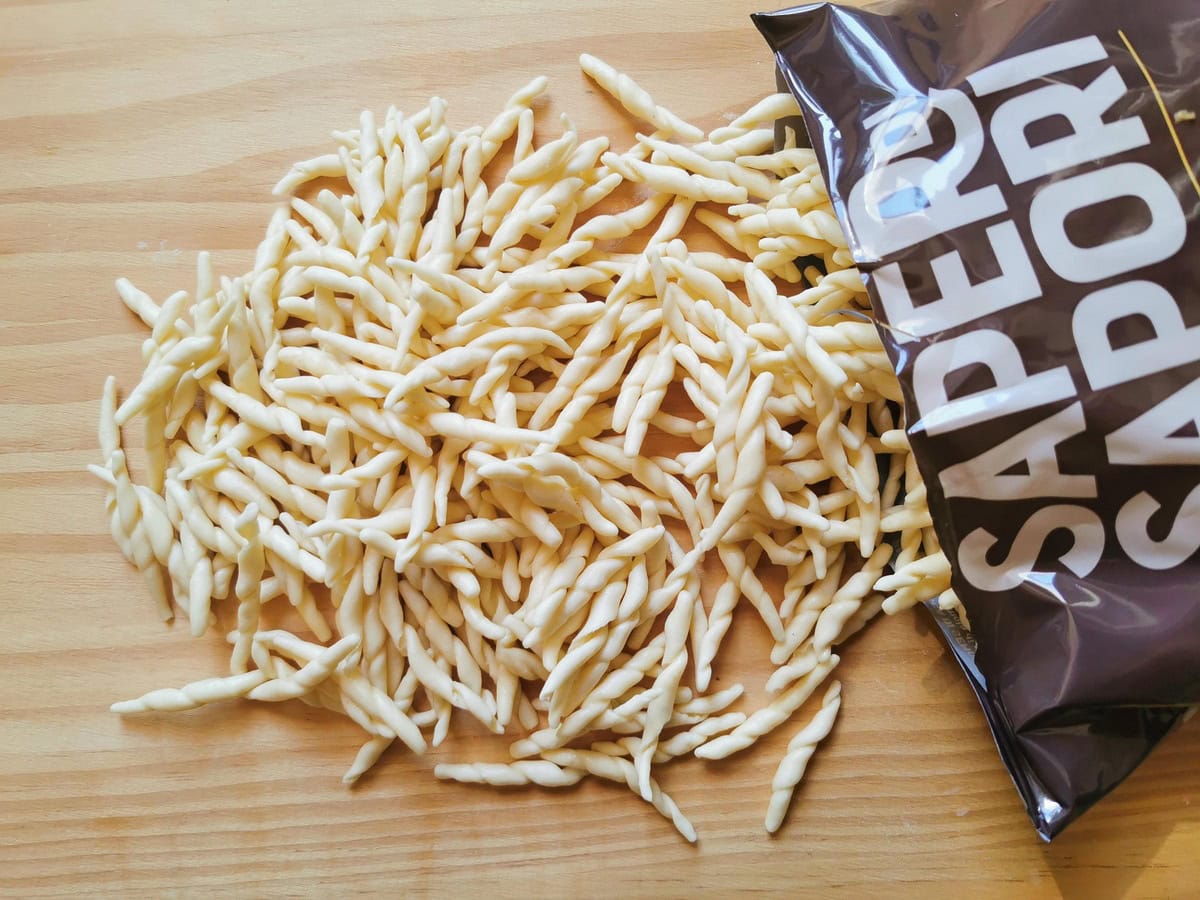
The pasta.
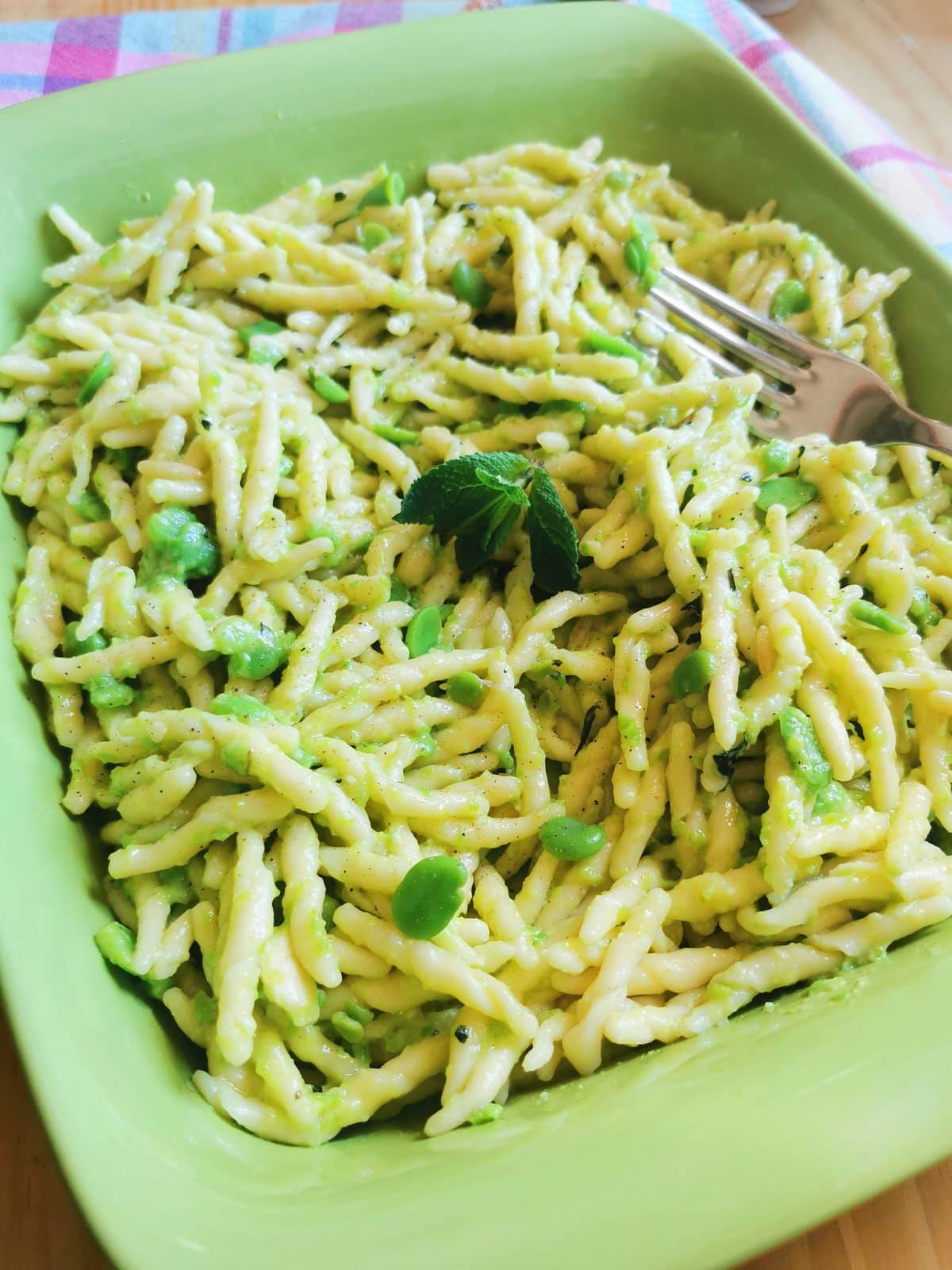
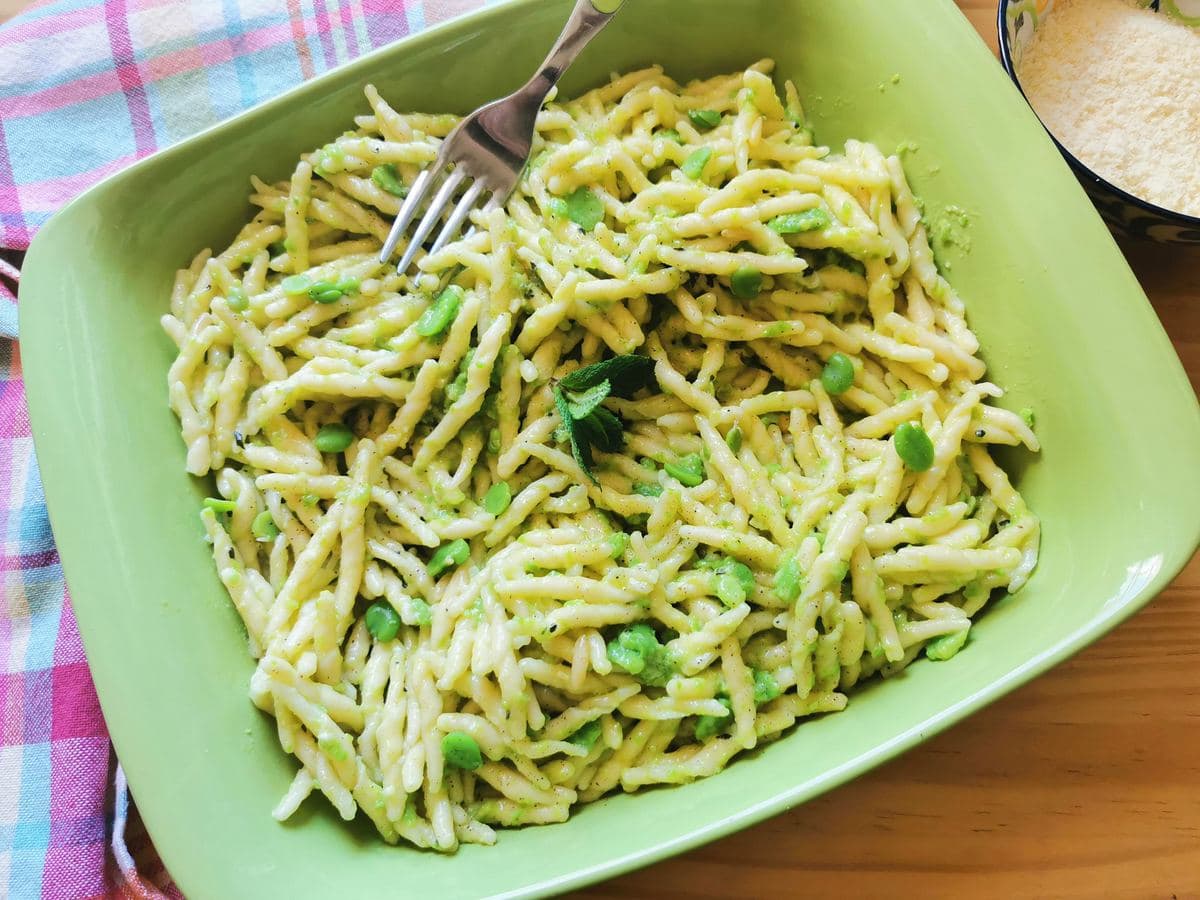
If you are serving this pesto with pasta, you have many options you can use. I used trofie a slim short pasta from Liguria that’s traditionally paired with pesto (also basil pesto). Alternatively, you can use other short pasta types such a small penne or fusilli .
Step by step instructions.
First prepare your fresh fava beans. Start by removing them from their inedible green pods. Next, boil the beans for 30 seconds before transferring them to a bowl with cold water. This will soften the waxy outer coating, making it easier to peel off. I found the best way to ‘peel’ them is to cut a small slit in the top and then just squeeze the bean out through the slit.
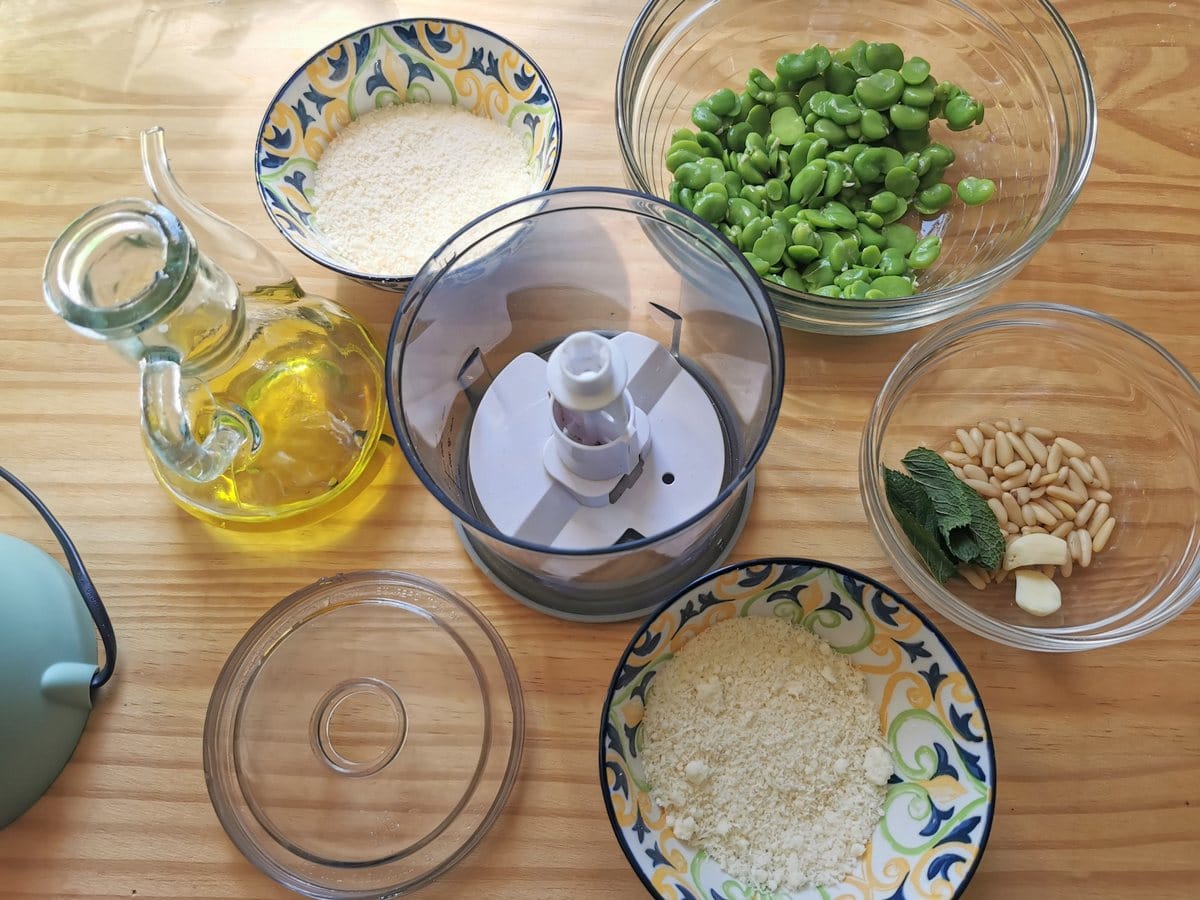
2) Peel the garlic and wash the mint leaves
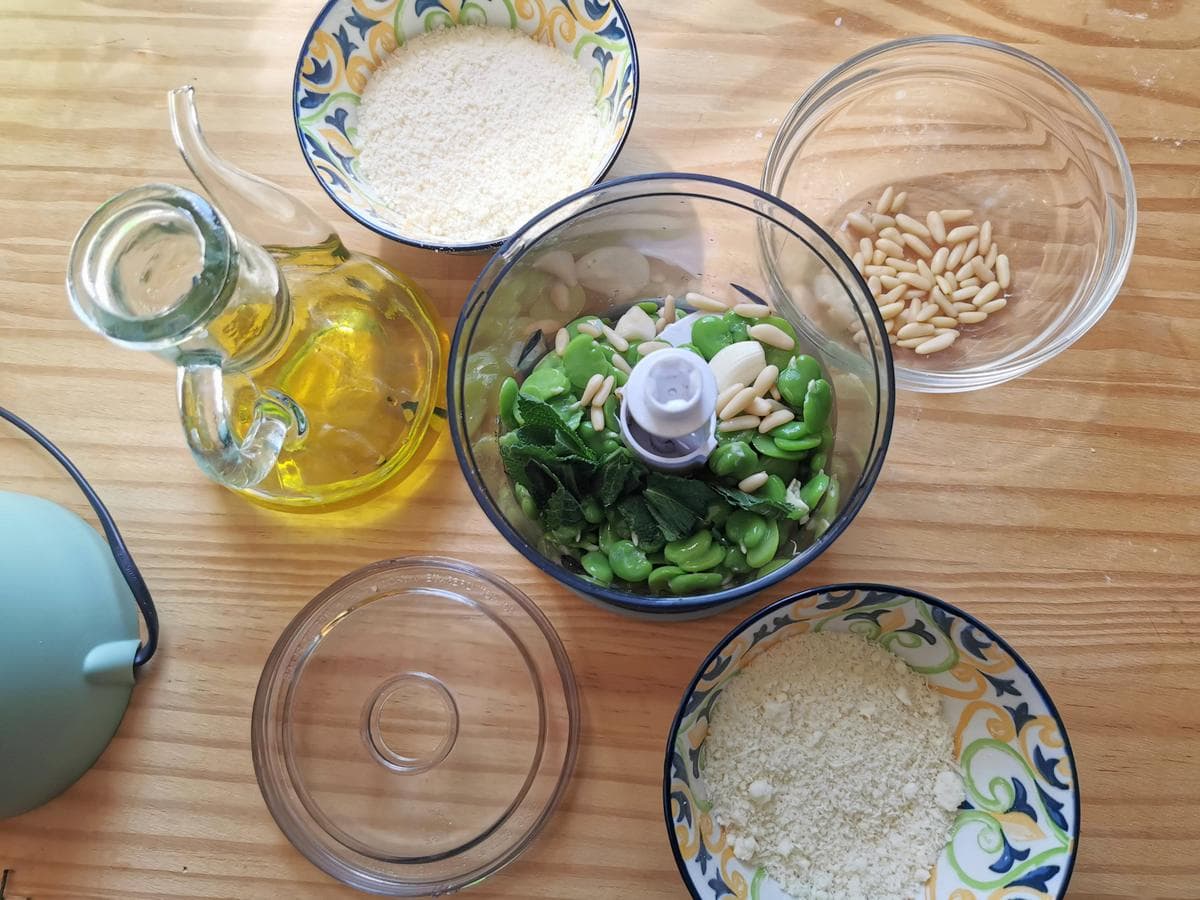
3) Place the peeled fava beans into a blender or food processor. Add the garlic, a pinch of coarse salt and pine nuts and some of the olive oil. Use short pulses to ‘mash’ the beans. I like to keep aside a few peeled fava beans to add to the dish when I serve this pesto with pasta.
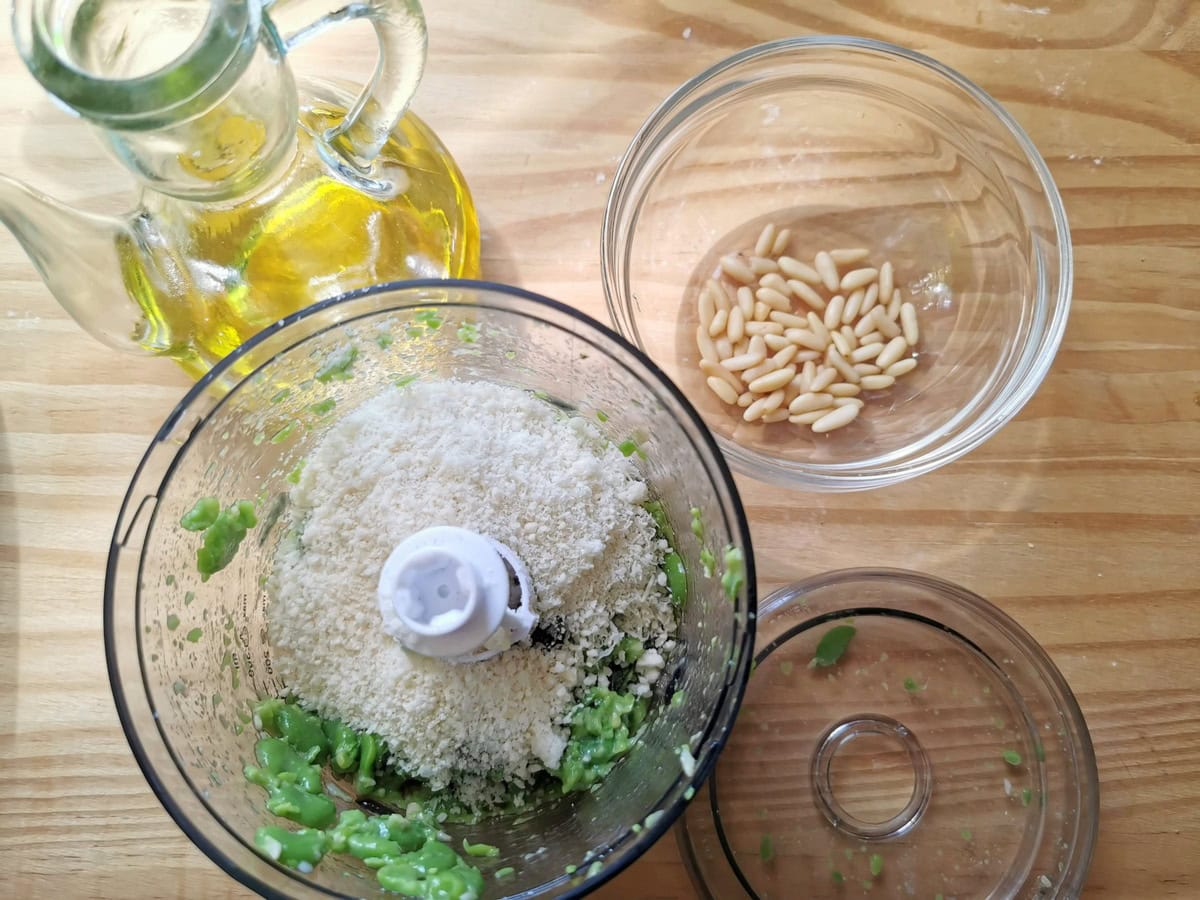
4) Add the cheese and some mint leaves and more olive oil and continue to use short pulses until you have a rough purée. If you prefer your pesto smoother, you can add a little warm water or more olive oil and pulse some more.
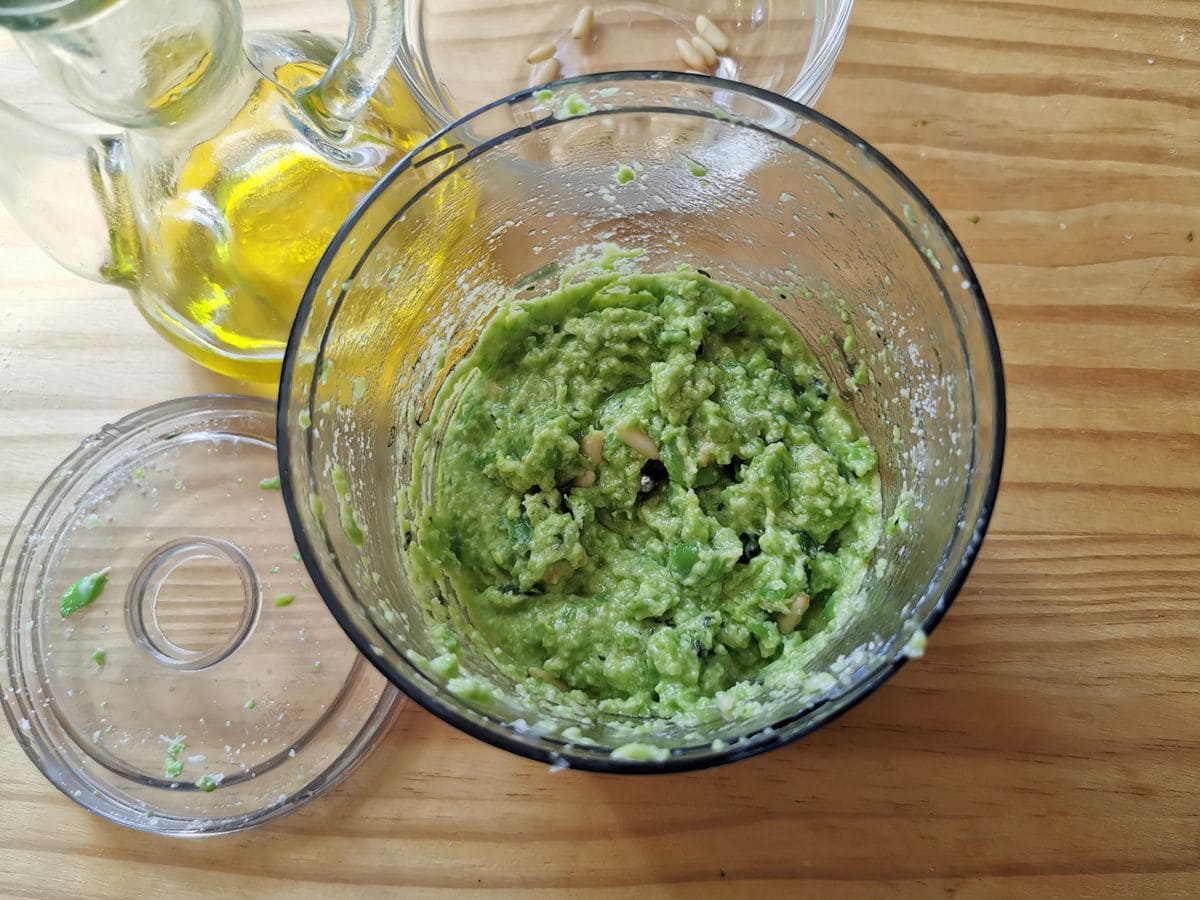
5) You can serve your fava bean pesto immediately mixed with some cooked al dente pasta and a little pasta water. Alternatively, keep it in a sealed glass jar in the fridge for an hour or so to allow the flavors to meld and the pesto to become a little colder and fresher. Then serve on bruschetta or toasted bread.
What to do with leftovers.
Fava bean pesto is a fresh sauce and unfortunately it does not last very long. It is best made shortly before using, but you can preserve it in the fridge for a couple of days in a closed glass jar and under a thin layer of extra-virgin olive oil. You can also freeze leftover pesto.
Let me know what you think.
This creamy fava bean pesto is a super spring recipe. It's easy to make, nutritious and delicious. If you make this recipe, I'd love to know what you think. So, please leave a comment here on the blog or on The Pasta Project Facebook page.
Looking forward to hearing from you!
Buon appetito!
Pin for later.
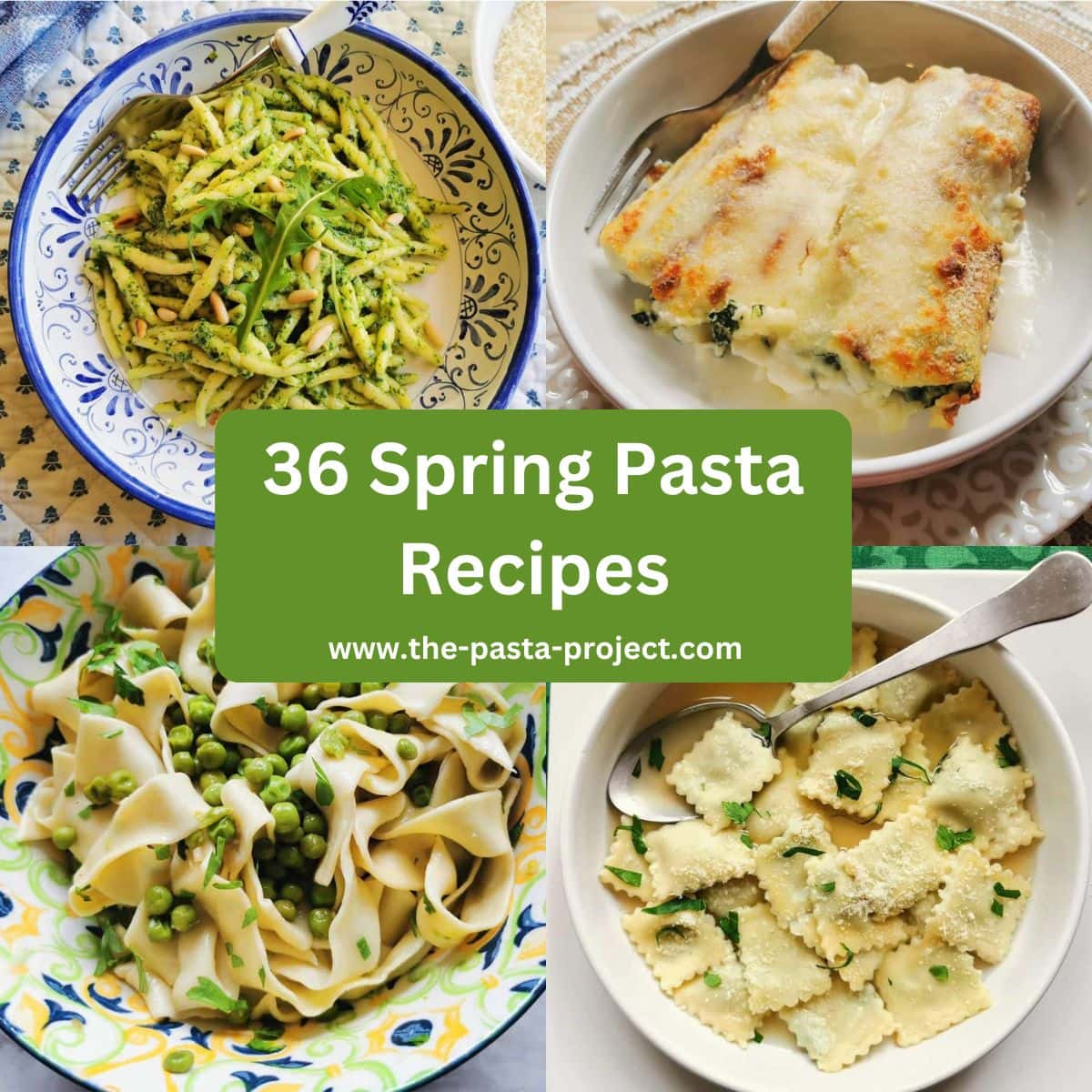
Other fava bean and spring pasta recipes to try.
Creamy fava bean pesto (marò) recipe from Liguria

Equipment
- 1 food processor or blender to make pesto
- 1 large pot to boil beans and cook pasta if making.
Ingredients
- 7 ounces fresh fava beans I kg (2.2 lbs) in pods for 7 ounces (200g) peeled beans
- 1.2 ounces Pecorino grated
- 1.2 ounces Parmigiano Reggiano grated
- 2 garlic cloves peeled
- 5-7 fresh mint leaves
- 2.7 fluid ounces extra virgin olive oil. you may need more
- 1 tablespoon pine nuts or almonds
Pasta if using
- 12 ounces trofie pasta (12oz) or small penne or fusilli
- salt to cook pasta and to taste
- freshly ground black pepper. to taste
Instructions
- First prepare your fresh fava beans. Start by removing them from their inedible greenpods. Next, boil the beans for 30 seconds before transferring them to a bowl with cold ice water. This will soften the waxy outer coating, making it easier to peel off. I found the best way to ‘peel’ them is to cut a small slit in the top and then just squeeze the bean out through the slit.
- Peel the garlic and wash the mint leaves
- Place the peeled fava beans into a blender or food processor. Add the garlic, a pinch of coarse salt and pine nuts and some of the olive oil. Use short pulses to ‘mash’the beans.
- Add the cheese and some mint leaves and more olive oil and continue to use short pulses until you have a rough purée. If you prefer your pesto smoother, you can add a little warm water or more olive oil and pulse some more.
Serving pesto with pasta
- You can serve your fava bean pesto immediately mixed with some cooked al dente pasta and a little pasta water. Add some fresh mint leaves and a few saved beans before sering.
Serving on bruschetta or toast
- Keep the pesto in a sealed glass jar in the fridge for an hour or so to allow the flavors to meld and the pesto to become a little colder and fresher. Then serve on bruschetta or toasted bread.

Tim says
Delicious pesto. The flavor is so bright and flavorful.
Jacqui says
Thanks for your review Tim. I agree a really delicious pesto!
Vanessa says
I’ve never tried a pesto with fava beans before, but it’s so creamy! It has a really fresh, unique flavor that’s a nice change from the usual basil version.
Jacqui says
I'm so pleased you liked this fava bean pesto Vanessa. I agree, it's really fresh and creamy and makes a nice change from basil pesto!
Faith says
So light and fresh! We love this on pasta and will make it again.
Jacqui says
Thanks for your review Faith. This fava bean pesto is definitely super light and fresh!
Beth says
Delicious! And we loved that it was a healthier version!
Jacqui says
I'm happy you liked this pesto Beth. Yes, it's pretty healthy too!
Cici says
This pesto recipe was incredible. I wanted to try something new and this hit the spot. So much flavor and easy to make!
Jacqui says
Thanks for your feedback Cici. I'm so pleased you like this fava bean pesto! I agree, so much flavor and easy to make!