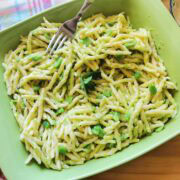
Creamy fava bean pesto (marò) recipe from Liguria
Known locally as marò or pesto di fave, this fava bean pesto is an ancient recipe from Liguria made with fresh fava beans, garlic, mint, pecorino, pine nuts and extra virgin olive oil. This pesto is delicious on bruschetta and as a pasta condiment.
Servings: 4
Calories: 298kcal
Equipment
- 1 food processor or blender to make pesto
- 1 large pot to boil beans and cook pasta if making.
Ingredients
- 7 ounces fresh fava beans I kg (2.2 lbs) in pods for 7 ounces (200g) peeled beans
- 1.2 ounces Pecorino grated
- 1.2 ounces Parmigiano Reggiano grated
- 2 garlic cloves peeled
- 5-7 fresh mint leaves
- 2.7 fluid ounces extra virgin olive oil. you may need more
- 1 tablespoon pine nuts or almonds
Pasta if using
- 12 ounces trofie pasta (12oz) or small penne or fusilli
- salt to cook pasta and to taste
- freshly ground black pepper. to taste
Instructions
- First prepare your fresh fava beans. Start by removing them from their inedible greenpods. Next, boil the beans for 30 seconds before transferring them to a bowl with cold ice water. This will soften the waxy outer coating, making it easier to peel off. I found the best way to ‘peel’ them is to cut a small slit in the top and then just squeeze the bean out through the slit.
- Peel the garlic and wash the mint leaves
- Place the peeled fava beans into a blender or food processor. Add the garlic, a pinch of coarse salt and pine nuts and some of the olive oil. Use short pulses to ‘mash’the beans.
- Add the cheese and some mint leaves and more olive oil and continue to use short pulses until you have a rough purée. If you prefer your pesto smoother, you can add a little warm water or more olive oil and pulse some more.
Serving pesto with pasta
- You can serve your fava bean pesto immediately mixed with some cooked al dente pasta and a little pasta water. Add some fresh mint leaves and a few saved beans before sering.
Serving on bruschetta or toast
- Keep the pesto in a sealed glass jar in the fridge for an hour or so to allow the flavors to meld and the pesto to become a little colder and fresher. Then serve on bruschetta or toasted bread.
Notes
I like to keep aside a few peeled fava beans and mint leaves to add to the dish when I serve this pesto with pasta.
I used trofie a slim short pasta from Liguria that’s traditionally paired with pesto (also basil pesto). Alternatively, you can use other short pasta types such a small penne or fusilli .
You can preserve this pesto in the fridge for a couple of days in a closed glass jar and under a thin layer of extra-virgin olive oil. You can also freeze leftover pesto.
NB Neither Pecorino nor Parmigiano Reggiano are vegetarian friendly as they are made with animal rennet. To make this recipe vegetarian use a hard cheese or parmesan cheese made with plant or microbial rennet.
To make this recipe gluten free, use a gluten free pasta.
Nutrition facts are calculated without the pasta.
Nutrition
Calories: 298kcal | Carbohydrates: 8g | Protein: 9g | Fat: 26g | Saturated Fat: 6g | Polyunsaturated Fat: 3g | Monounsaturated Fat: 16g | Cholesterol: 15mg | Sodium: 464mg | Potassium: 163mg | Fiber: 2g | Sugar: 0.2g | Vitamin A: 161IU | Vitamin C: 2mg | Calcium: 210mg | Iron: 1mg