

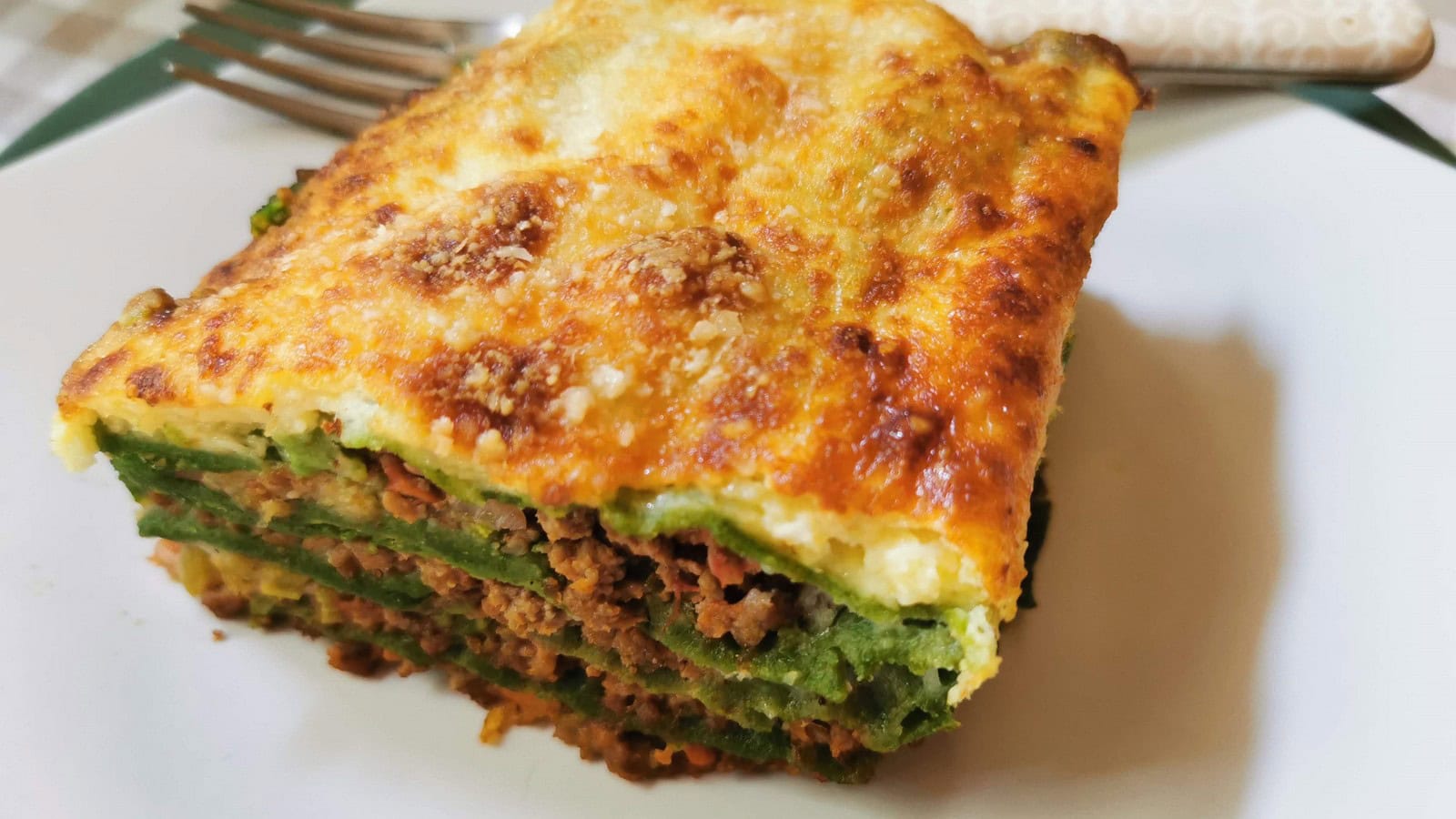
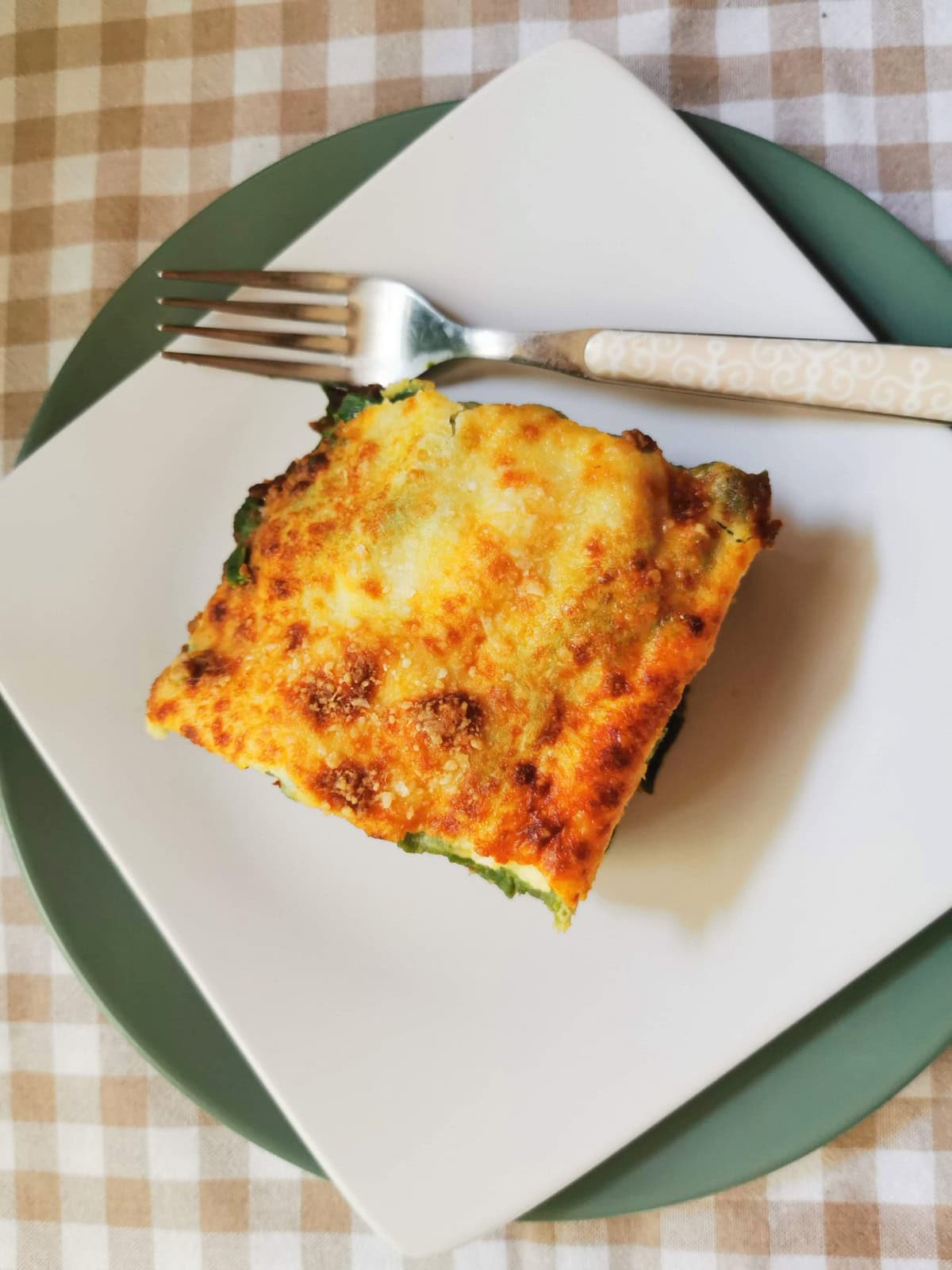
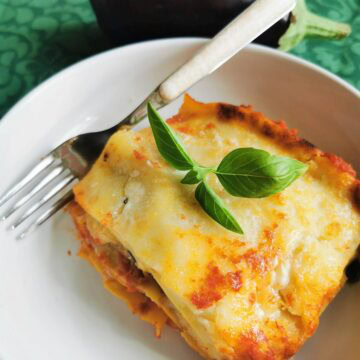
Lasagne al forno with Bolognese sauce is probably one of the best known and most loved Italian baked pasta dishes. This recipe is based on the official version of lasagne verdi alla Bolognese from the Italian Academy of Cuisine. It's made with homemade green pasta sheets, béchamel sauce and Bolognese ragu.
A little lasagne al forno history
The origins of baked lasagna actually date back to the times of Ancient Rome and Greece. The Greek word ‘laganon’ and the Latin word ‘laganum’ were used to describe square or rectangular sheets of ‘pasta’ made from wheat flour. These were baked in the oven or on the fire and stuffed with meat.
The Roman ‘cookbook’ Apicius (a collection of Roman recipes compiled in 1st century AD) includes a ‘lagana’ formed by thin sheets of dough stuffed with meat and cooked in the oven. But, of course this only vaguely resembled the lasagne al forno we know today.
Although lasagne pasta was popular in the Middle Ages, it wasn’t made with eggs until the invention of egg pasta in Northern Italy in the Renaissance period. Béchamel sauce was also not invented until the Renaissance and tomato sauce didn’t enter the equation until the 18th century. So, it was only then that lasagne al forno started to look like the much-loved dish of today!
Different Italian versions of lasagne al forno.
Here in Italy, two regions claim the invention of baked lasagna, Emilia-Romagna and Campania (Naples). However the Neapolitan version includes ingredients such as meatballs, sausage, hard boiled eggs and ricotta cheese rather than béchamel, as well as other cheeses like provola and pecorino.
Also, the lasagne pasta used in Naples has ruffled or wavy edges (lasagne ricce). Because it’s such a rich dish, Neapolitan lasagna is mostly made on special occasions, especially at Carnival time. This dish was traditionally served on Mardi Gras as a kind of last blow out before Lent, as it was filled with many ingredients that were banned during Lent.
Green lasagne al forno in Emilia Romagna.
Neapolitan lasagne al forno is magnificient, but the dish most non-Italians call baked lasagna or just lasagna is the one from Emilia-Romagna. This classic Italian lasagna recipe is made with Bolognese ragu, a creamy béchamel sauce and normal lasagne sheets which are often homemade, but can also be bought fresh or dried.
I used homemade green spinach pasta sheets as in the official recipe for lasagne al forno from the Italian Academy of Cuisine. You can also use homemade or fresh normal lasagne sheets or dried pasta. Dried lasagne sheets will need to be half-cooked before assembling the final dish.
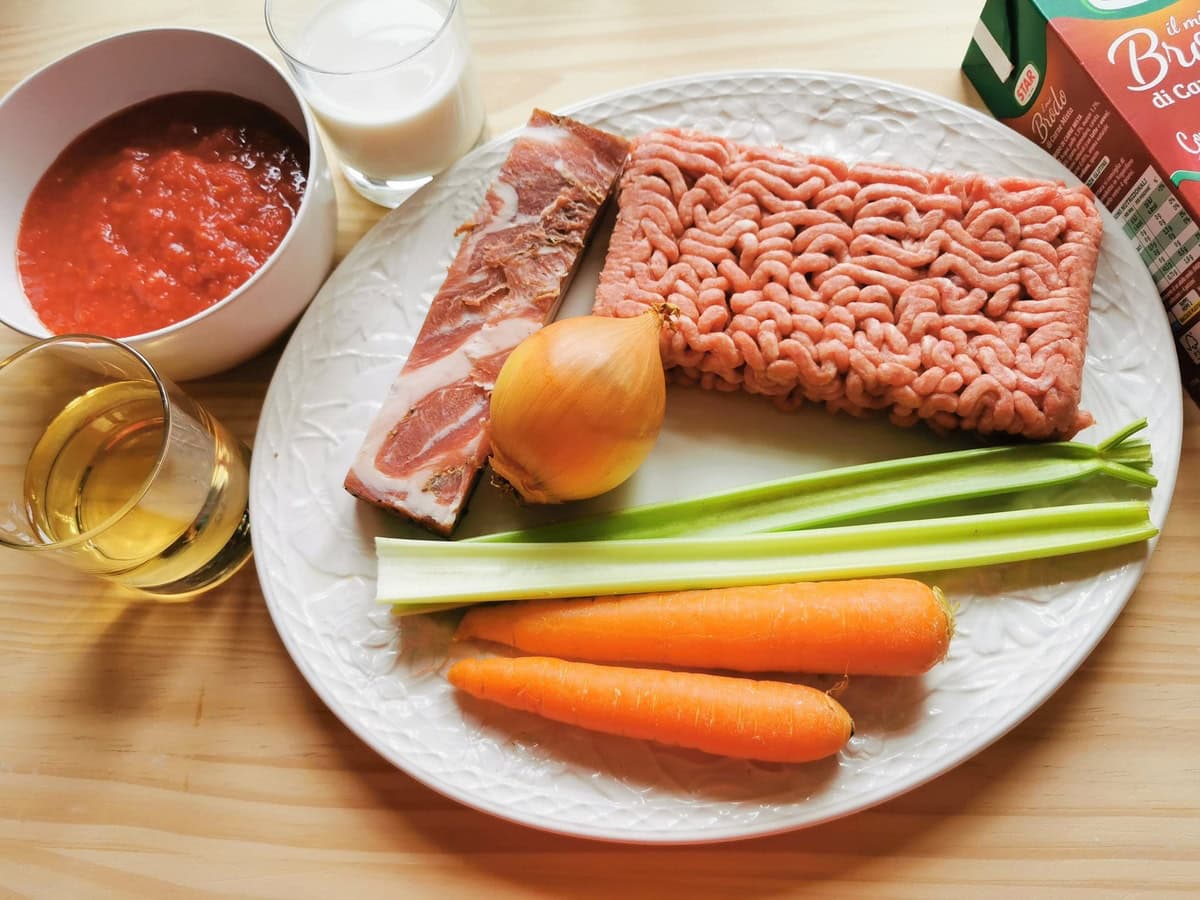
Ingredients for lasagne al forno with Bolognese.
For the Bolognese.
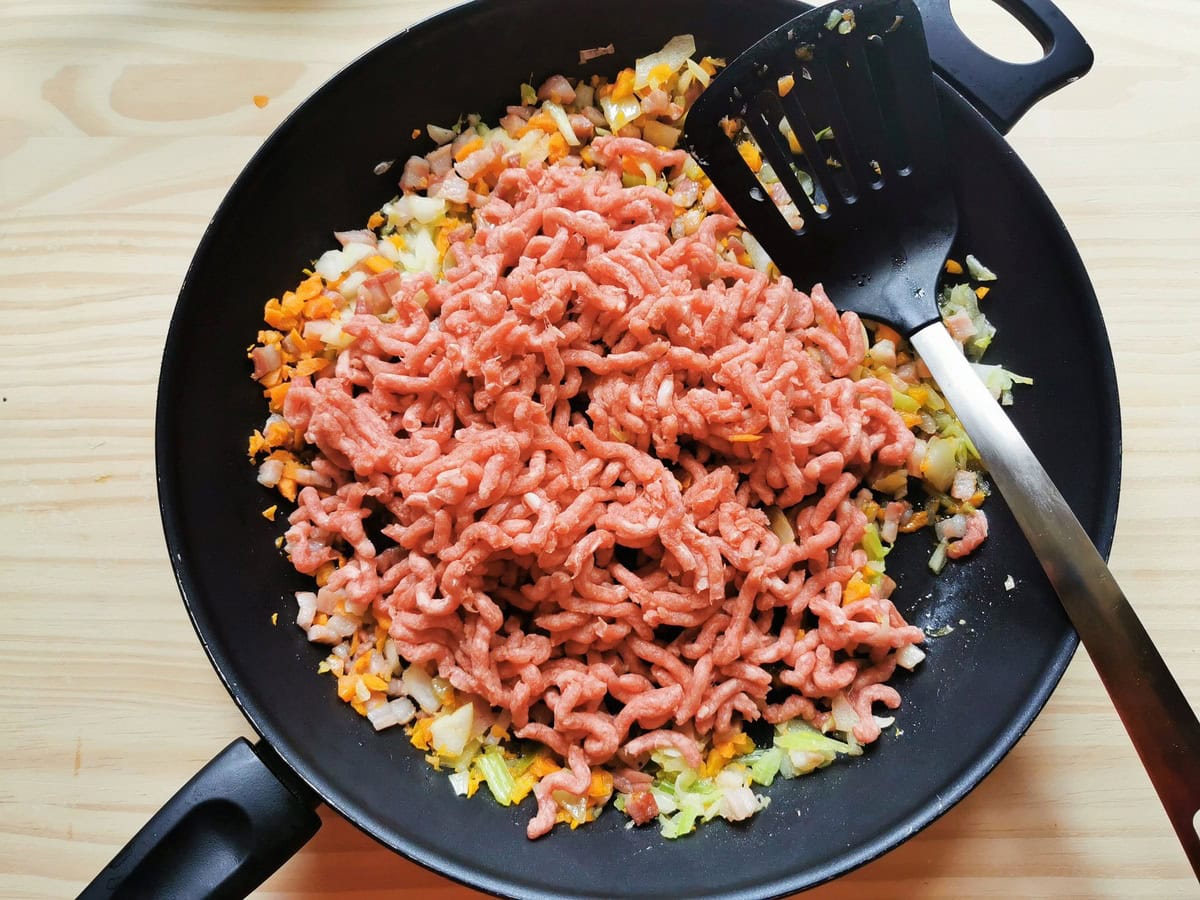
Ground Beef : It's better to use a good quality coarsley ground beef, preferrably not lean because the fat adds flavor and keeps the meat moist. The best cuts are shoulder or chuck, brisket, plate or flank.
Pancetta: Fresh unsmoked pancetta is the most commonly used in Italy for ragu. Italians call it pancetta dolce, meaning sweet. I buy pancetta in slabs but you can also use ready cubed pancetta.
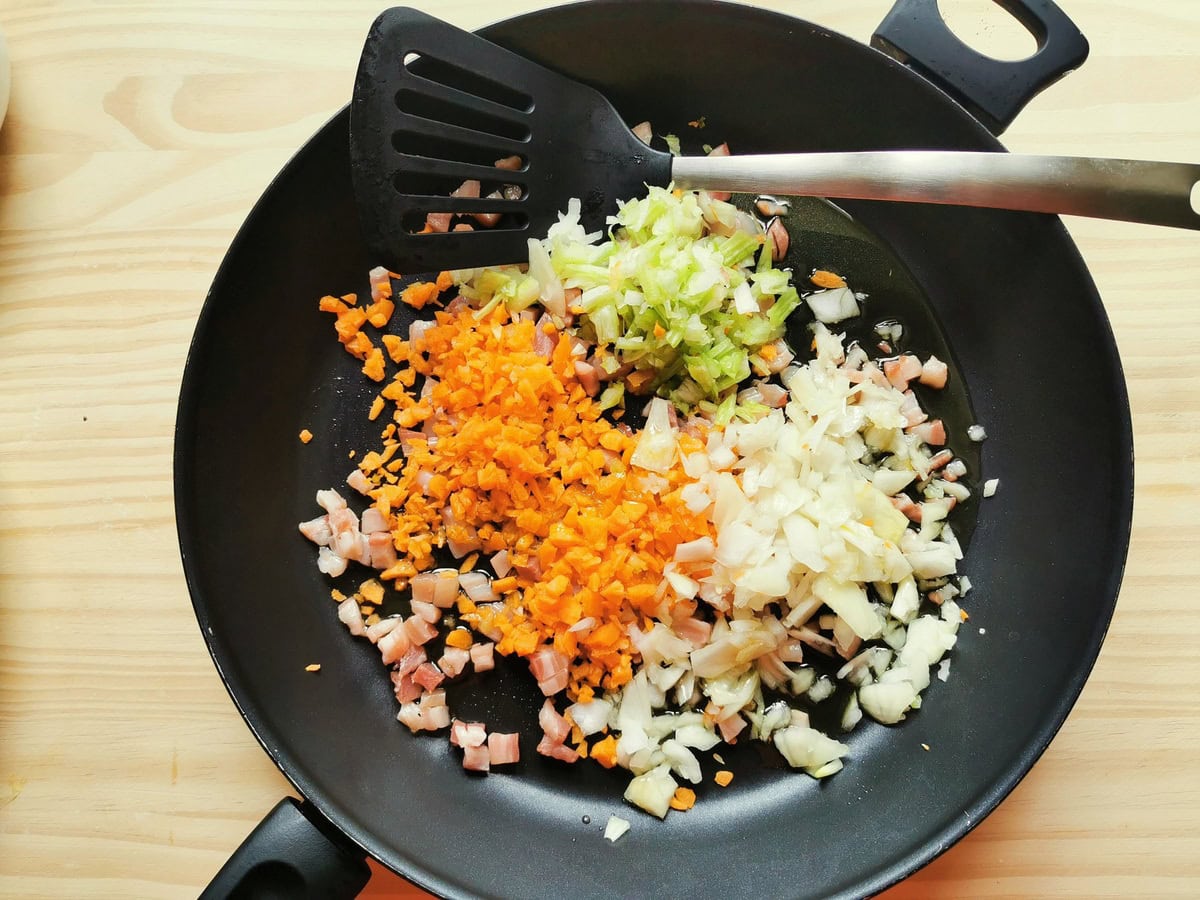
Aromatics: The base for bolognese is a soffritto (mire poix) of carrots, onions and celery. Traditional Bolognese doesn't include garlic or hebs like parsley or rosemary.
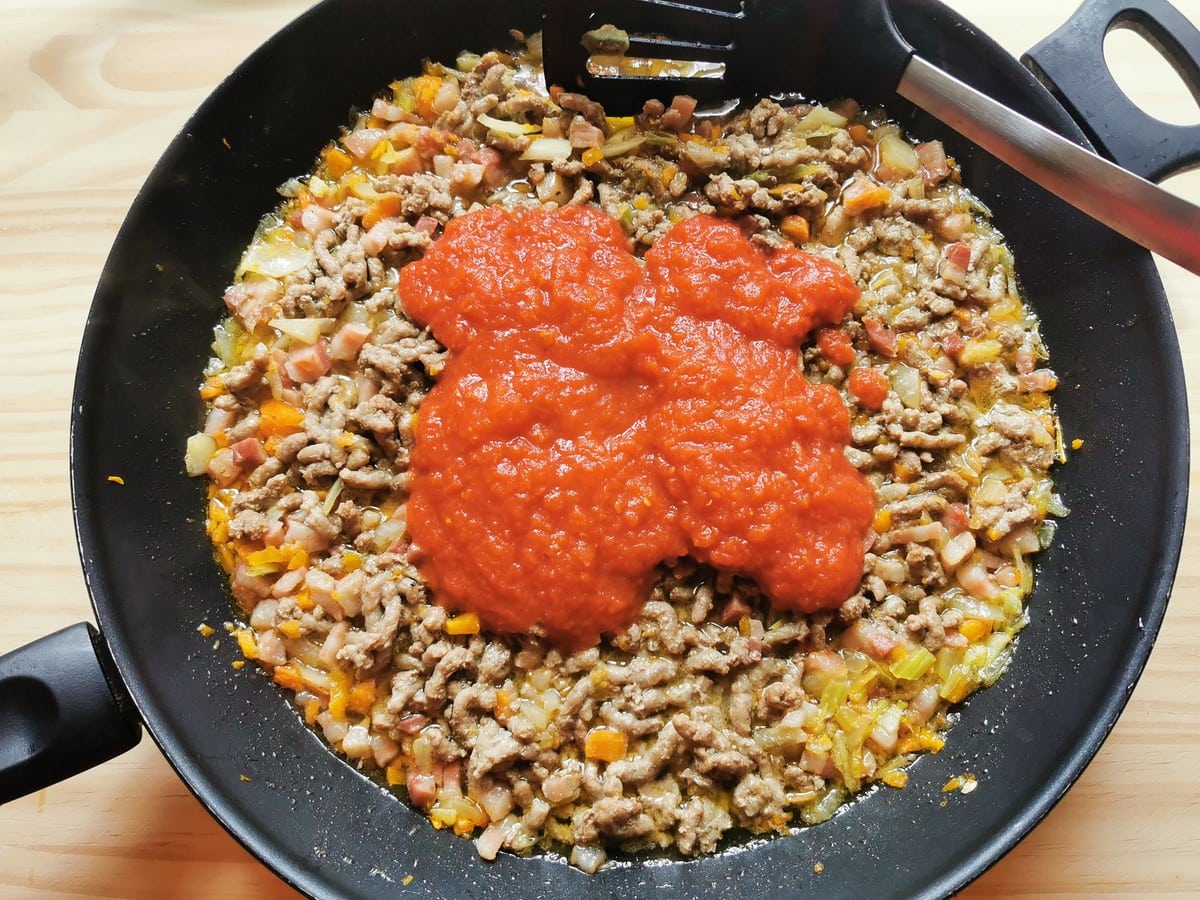
Tomatoes: Italians use canned peeled or chopped tomatoes or passata for this ragu. Fresh tomatoes can be too watery. You can also add a little tomato paste for a more intense tomato flavor.
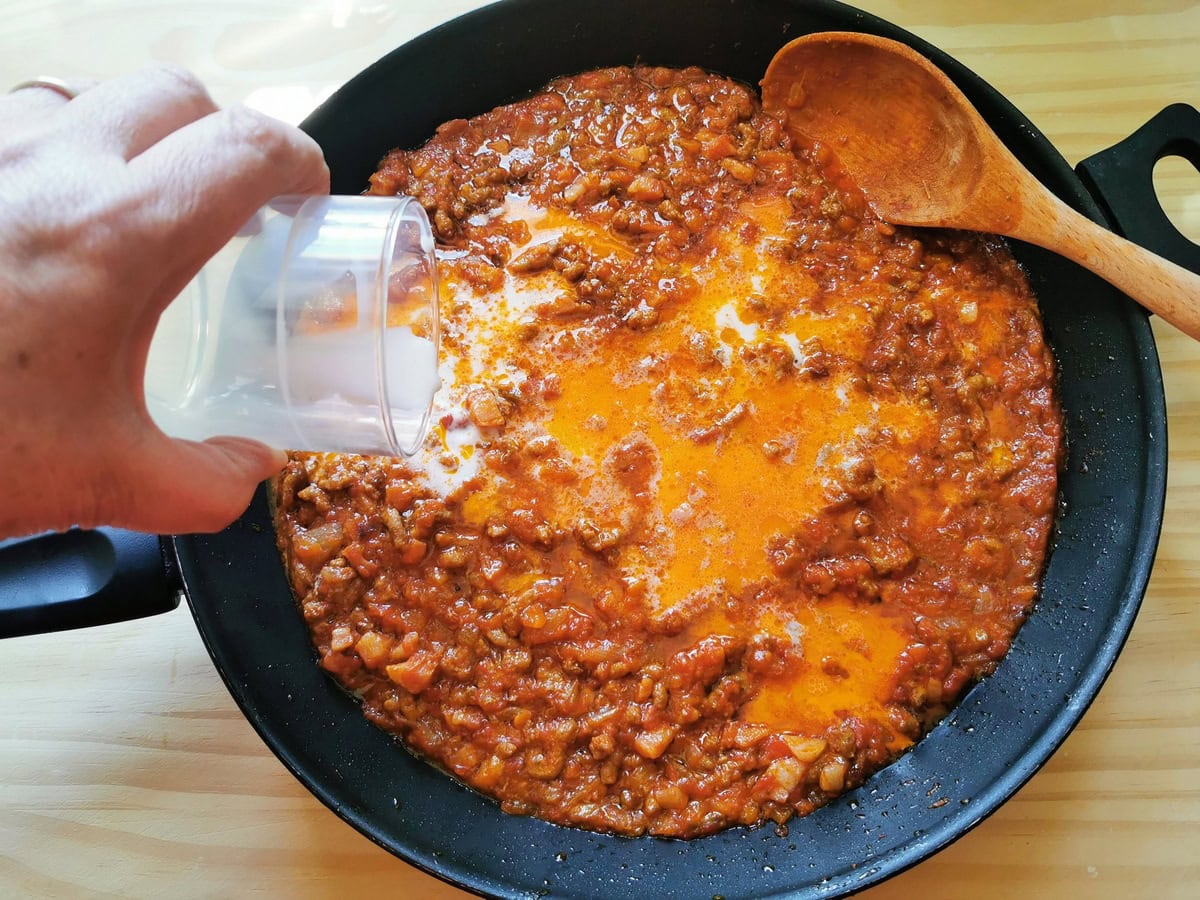
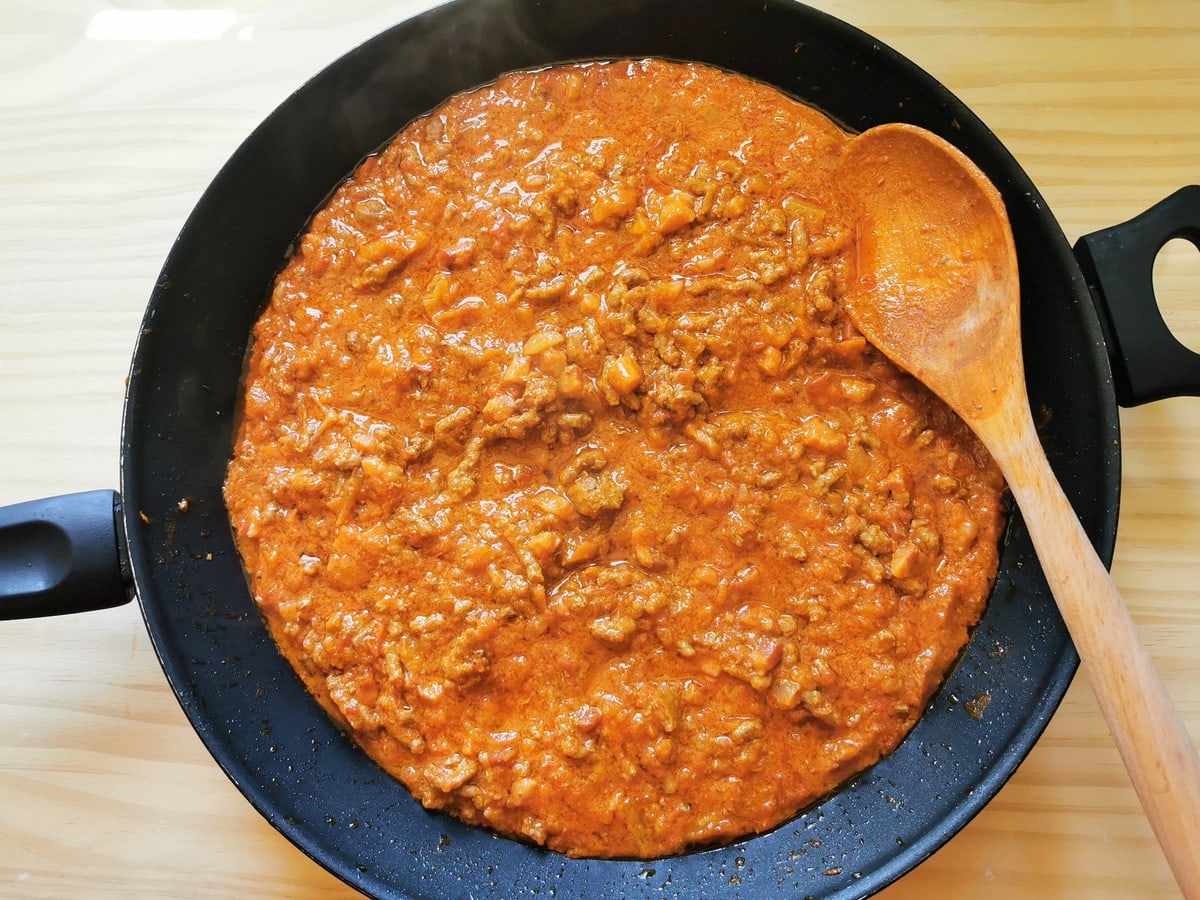
Milk: Milk is optional but it's traditionally added to reduce the acidity of the tomatoes and gives Bolognese its characteristic orangey colour.
Broth: You can use a light beef stock or vegetable broth (or stock cubes). You will need about a cup but maybe more if the sauce dries out.
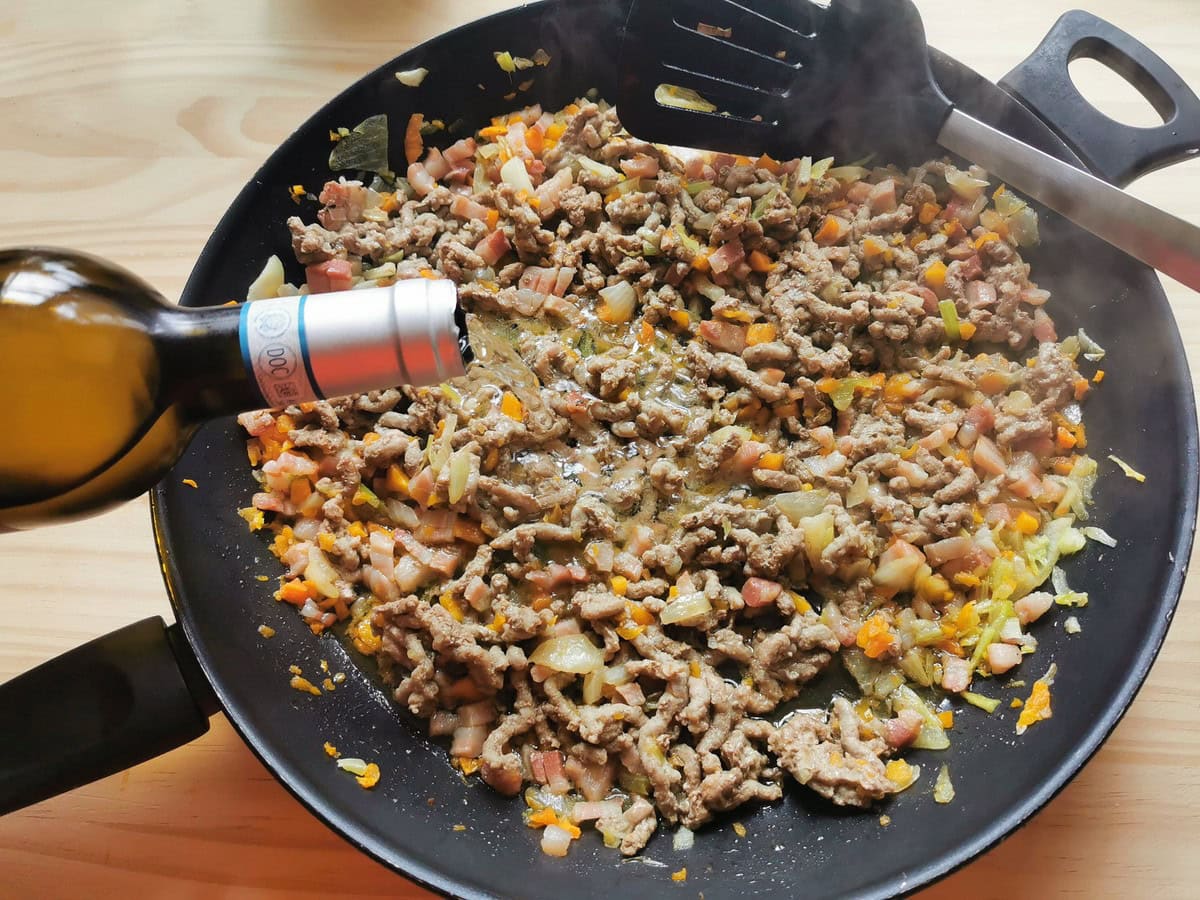
Wine: You can use a dry white wine such as sauvignon blanc or pinot grigio or a medium bodied red wine like merlot or chianti. I used a dry white Soave wine from the area I live in.
How to make the Bolognese sauce.
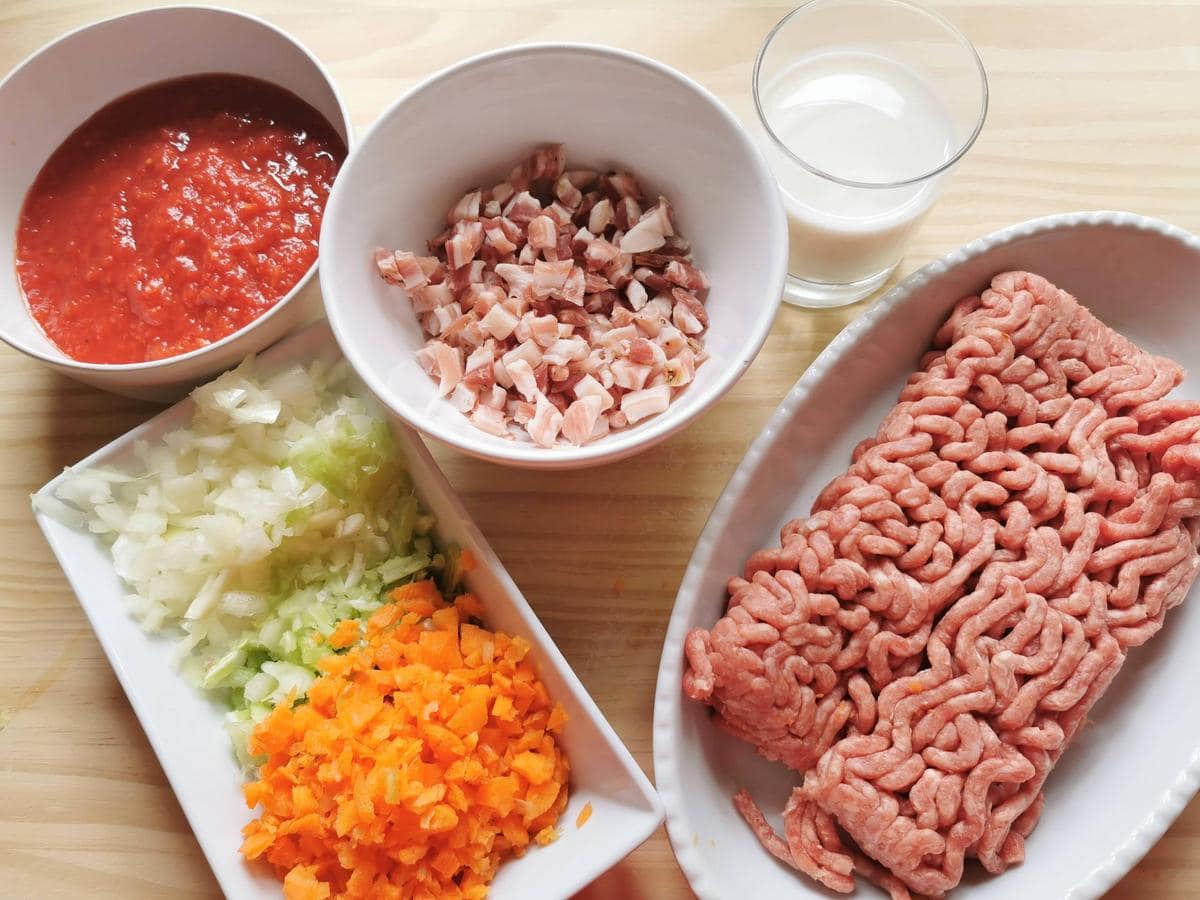
1. Finely chop the onion, celery, and carrot (do not use a food
processor).
2. Sauté the chopped pancetta with a little olive oil. Add the vegetables to the oil and pancetta and cook over a low heat, stirring constantly with a wooden spoon until softened but not browned.
3. Raise the heat to medium and add the ground meat, break it up, then cook for about ten minutes until it sizzles and browns.
4. Add the wine; cook over a medium heat until it has completely evaporated. Add the tomato paste (if using) and passata. Mix well and add a cup of hot broth (or water) and then simmer, covered, for about 2 hours.
5. Add milk if using. Mix again and simmer for another hour. Season with salt and pepper before serving.
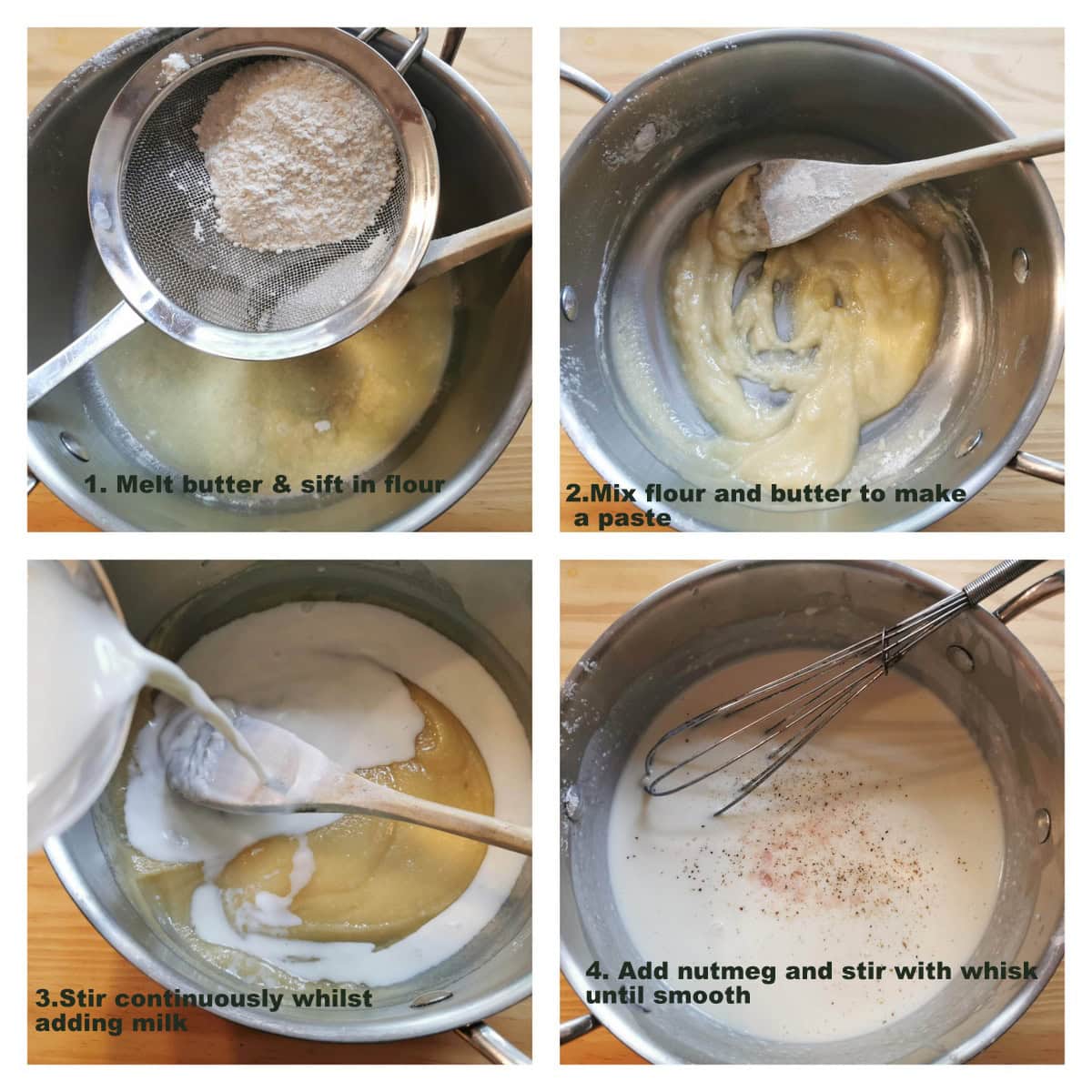
Ingredients and instructions for béchamel (white sauce).
Milk: Use whole milk to make béchamel. Skimmed milk is too watery. I like to use an organic milk for its flavor and nutritional value.
Butter: Italians mostly use unsalted butter. If you use salted butter, don't add salt to the béchamel.
Flour: You will need the same weight of flour as butter. For lasagne al forno, I use 75g (about 2.5 oz) of each. The flour is white soft wheat flour such as Italian '00' flour or all-purpose flour.
Nutmeg: Freshly grated nutmeg has much more flavor than ready grated.
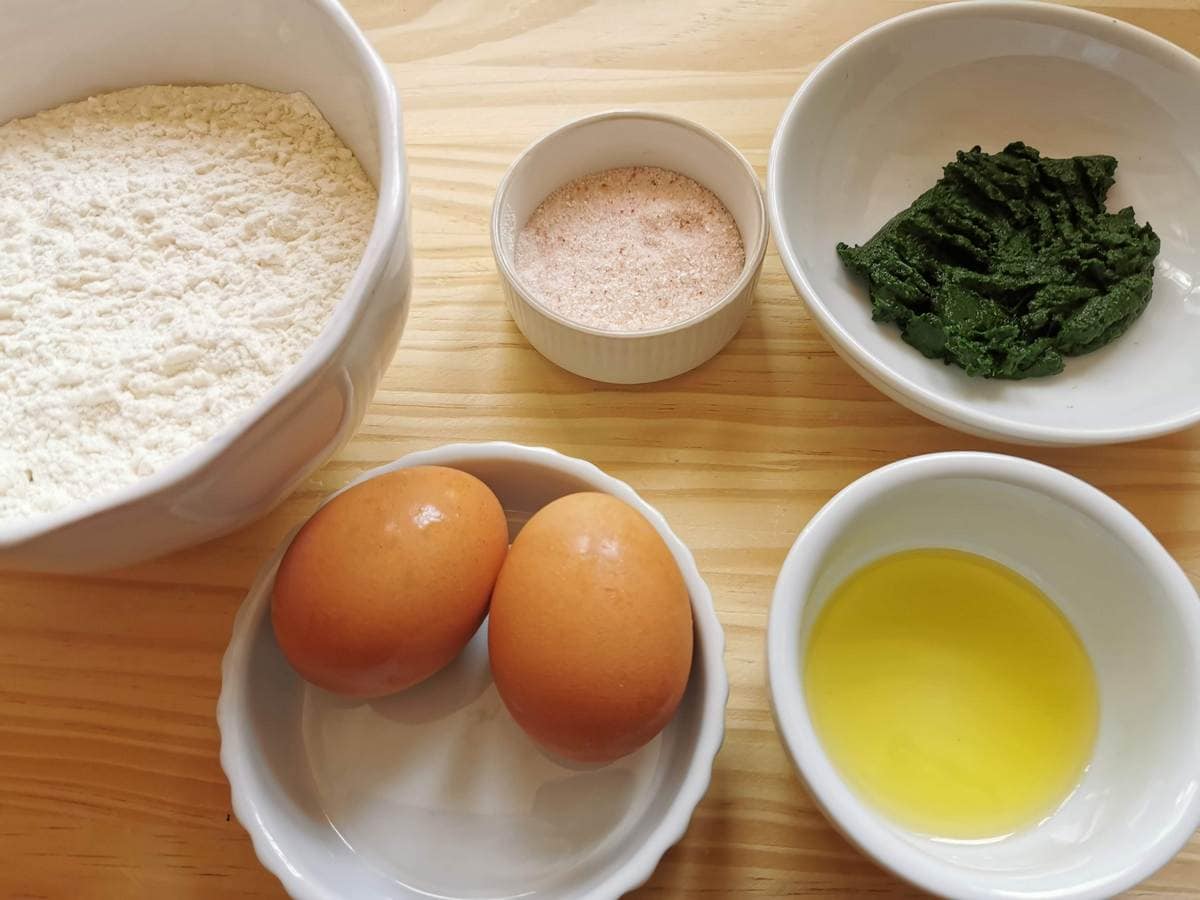
Ingredients for the homemade green lasagne sheets.
Flour: Use Italian '00' flour or all-purpose flour for the pasta dough and some semolina hard wheat flour for dusting.
Eggs: I like to use large organic eggs for their flavor, color and nutritional value. You may need to add an extra egg if using small eggs.
Spinach: Wilted fresh spinach is better than frozen spinach which has a lot of wter. However, you will need to squeeze as much water out of the spinach as possible and purée it with a food processor.
Other ingredients: A little salt and a tablespoon of olive oil.
How to make green lasagne sheets.
The first step to making the green homemade pasta is to wilt the spinach in a pan. Then you need to drain it well and chop it. I usually squeeze the cooked spinach in a tea towel to get as much liquid out of it as possible. Once the spinach is chopped, then purée it in a food processor until smooth.
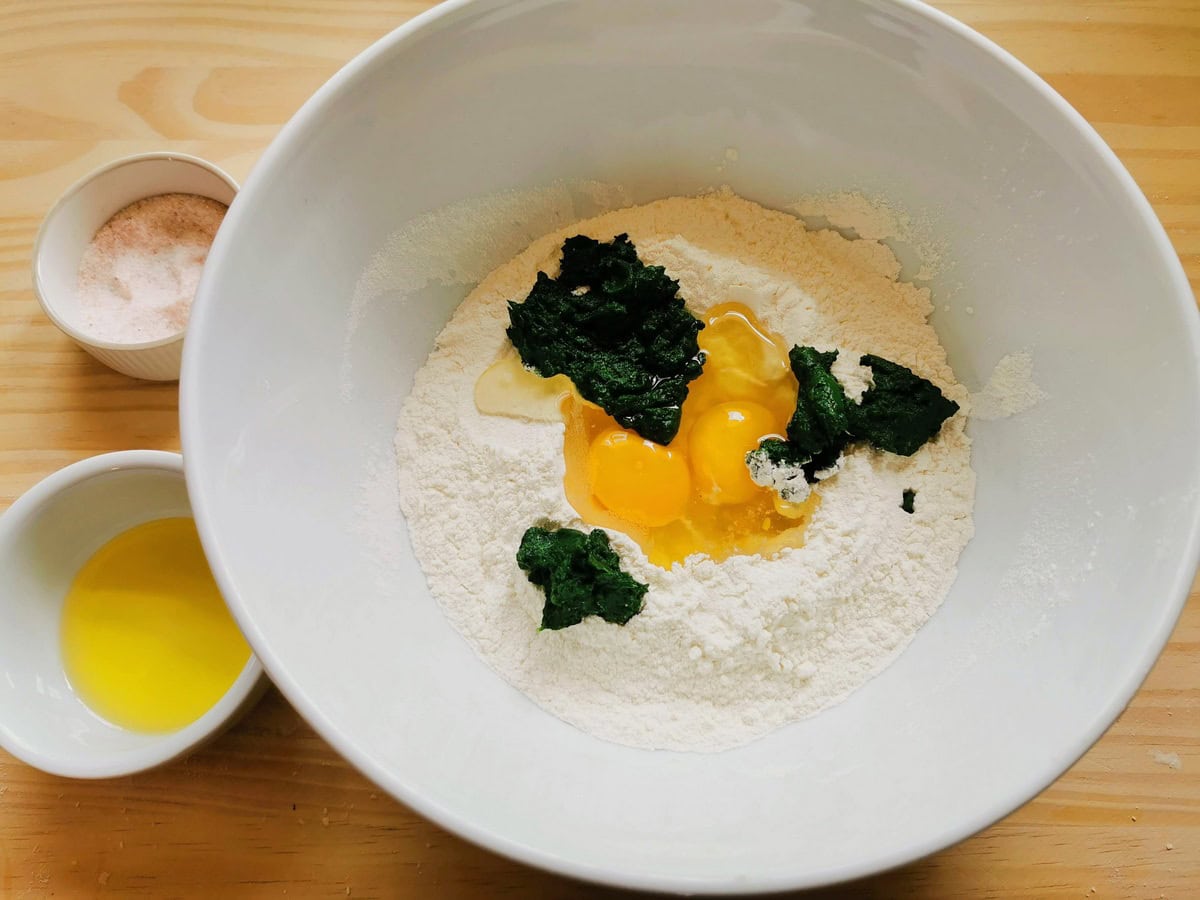
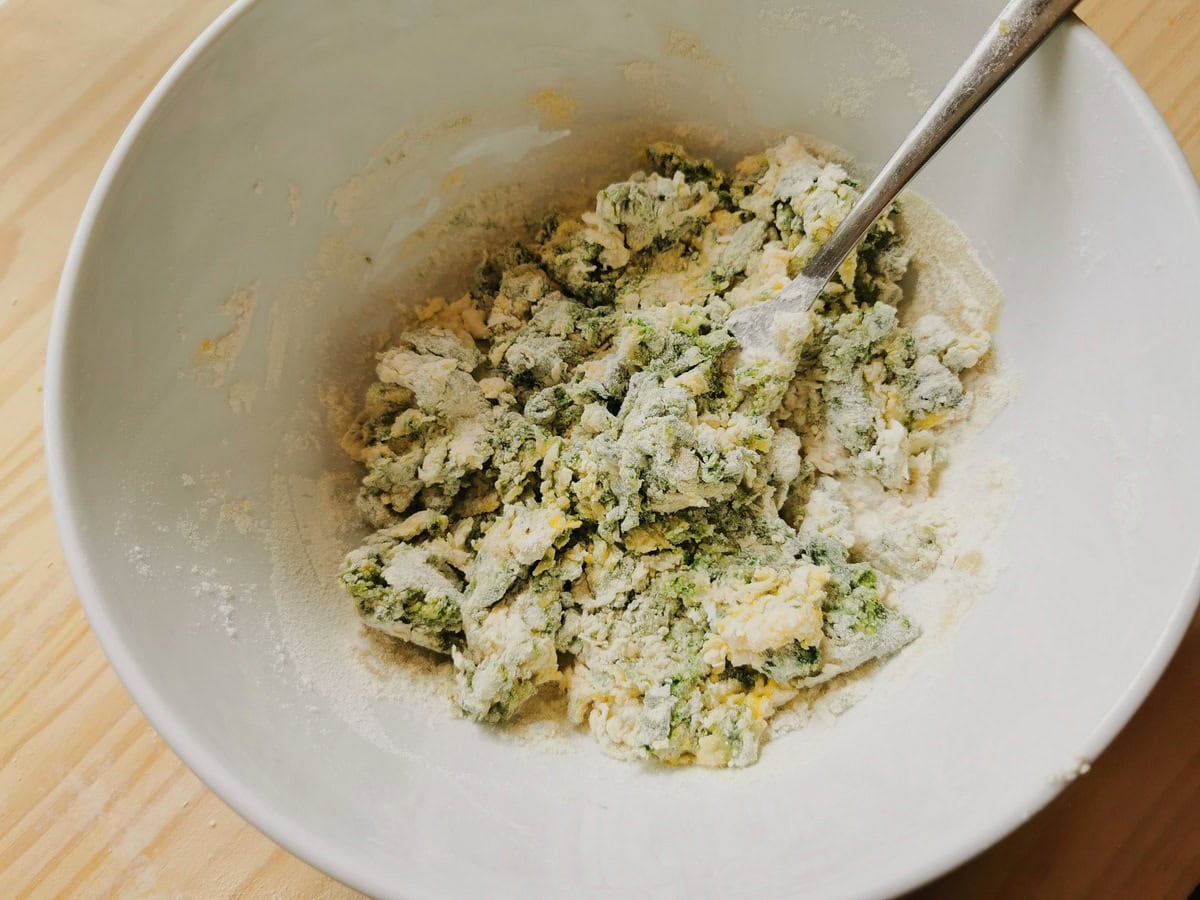
1) Sieve the flour into a bowl, add the eggs and spinach, a pinch of salt and a tablespoon of olive oil. Beat the eggs with a fork and then mix the flour, eggs and spinach together until you have the beginnings of a dough.
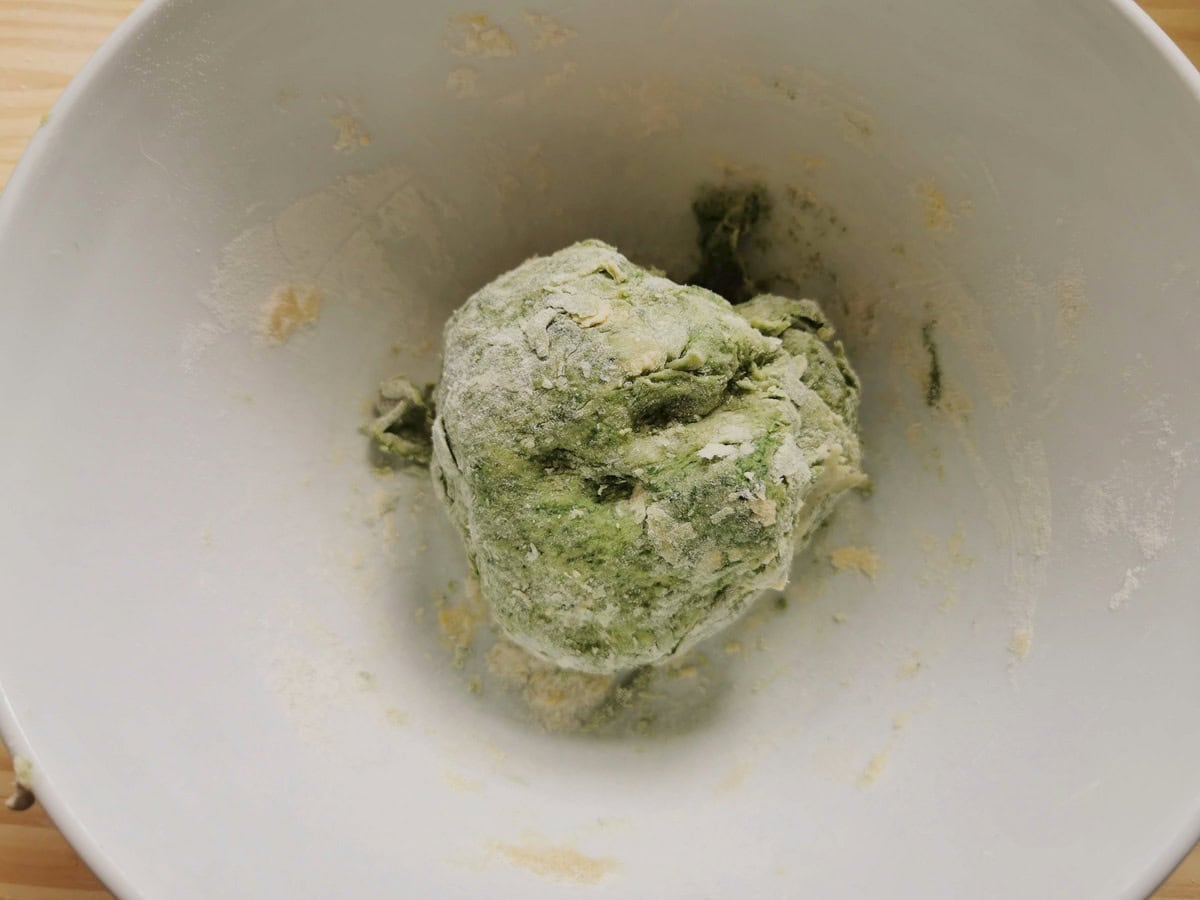
2) Next, use your hands to knead the dough in the bowl until it no longer sticks to the side of the bowl.
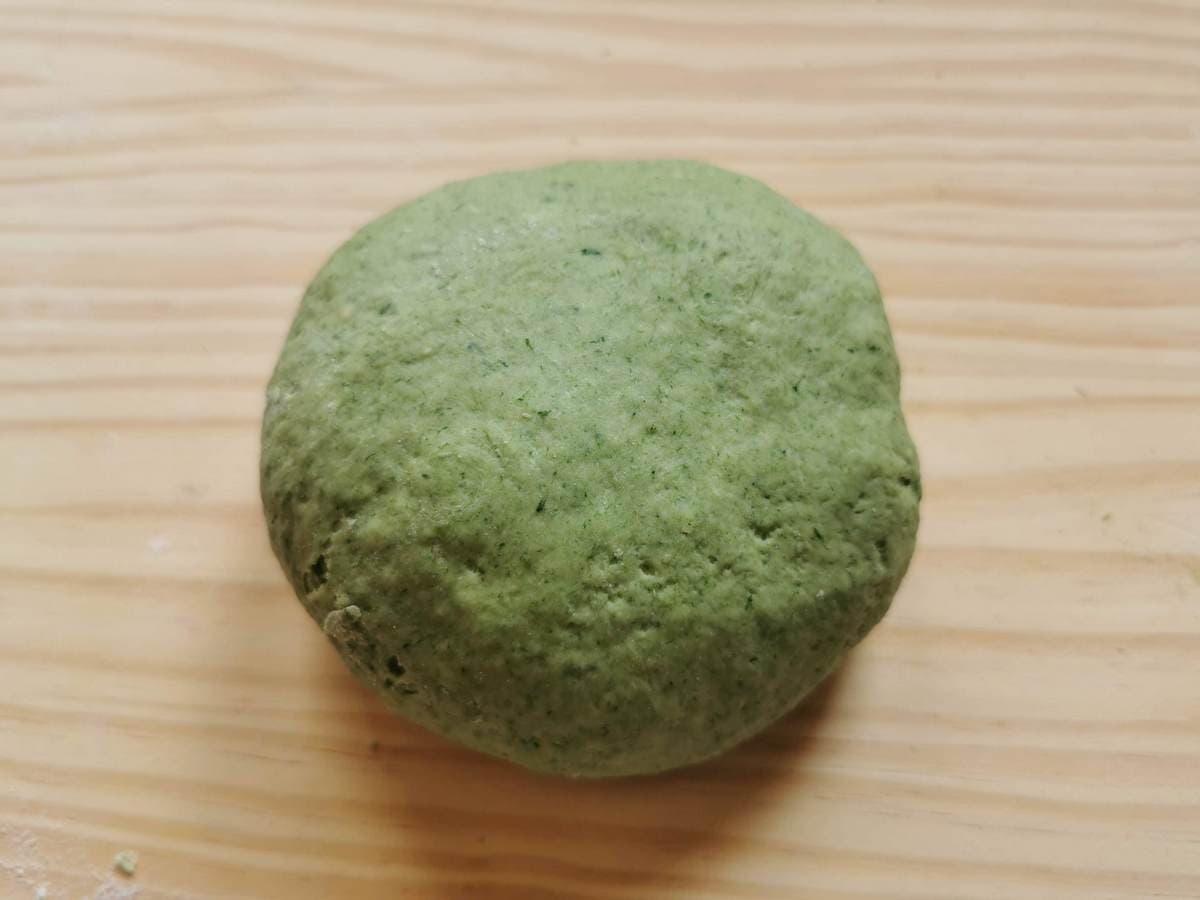
3)Turn the pasta dough out onto a well-floured work top and knead for 10 minutes until the dough is soft and pliable. Then roll the dough into a ball, wrap it in plastic wrap (clingfilm) and let it rest for about 30 minutes..
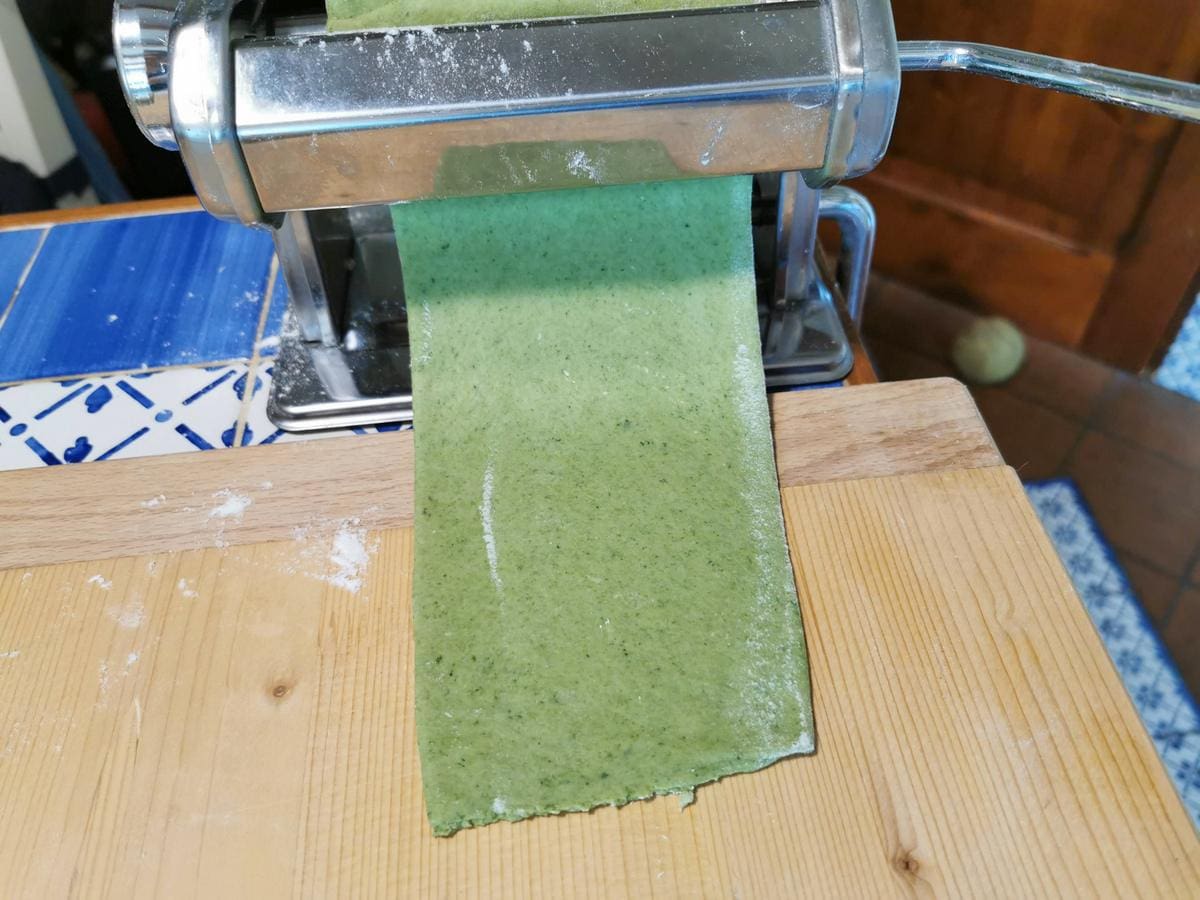
4) Cut off about a quarter of the dough, flatten it slightly with your hands or a rolling pin, then pass it through your pasta machine 3 times through the widest setting. I fold the dough sheet into thirds the first 2 times I pass it through the widest setting. Then pass it through the next settings until the sheet is thin enough to make lasagna with.
On my machine the widest setting is 7. I passed it though 7 (3 times), then 5, then 3.
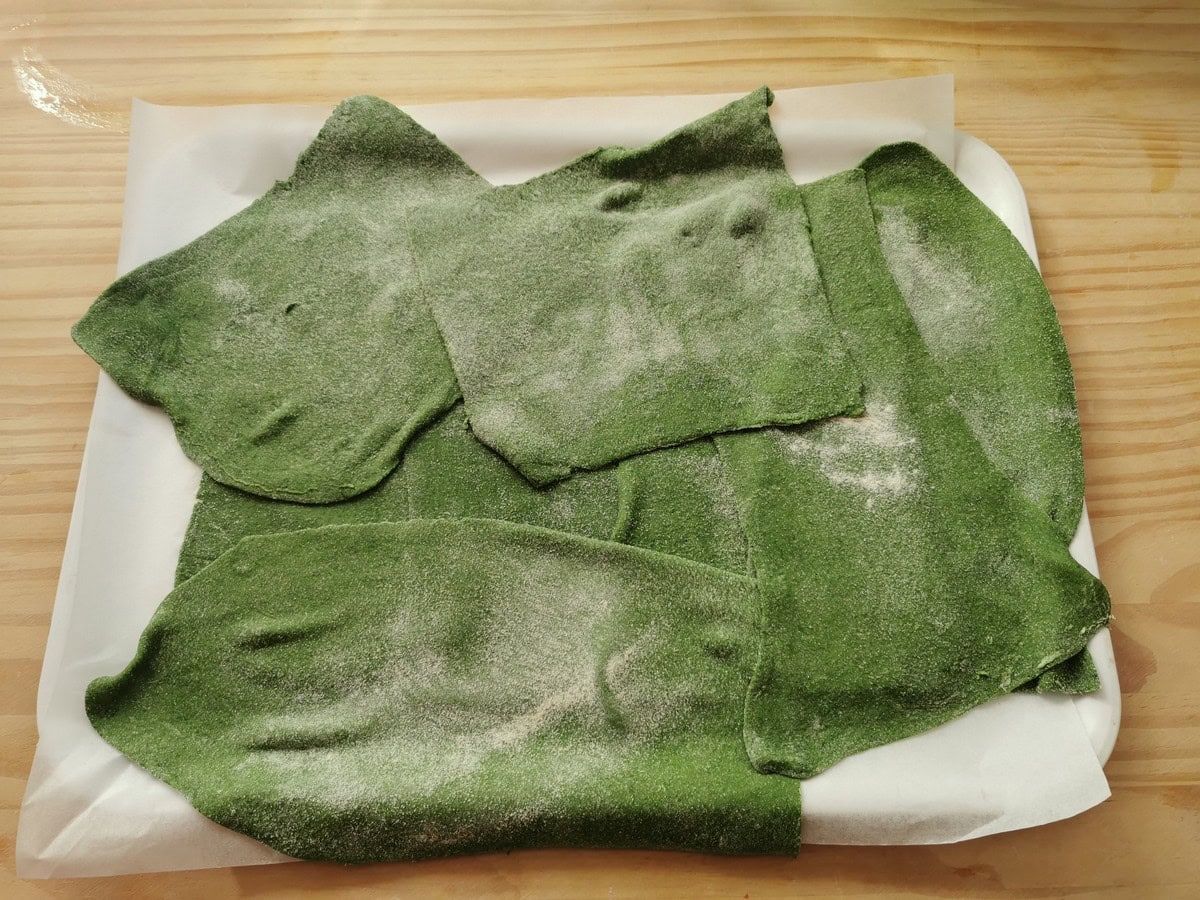
5) Finally, transfer the dough sheet to a floured work top and cut to the size you want, if necessary. Lay ready lasagne sheets on a flour dusted tray while you finish making them all and are ready to assemble your lasagne al forno with Bolognese.
How to assemble and bake your lasagne al forno.
Once your green pasta sheets, Bolognese sauce and béchamel sauce are all ready, it's time to assemble your lasagna.
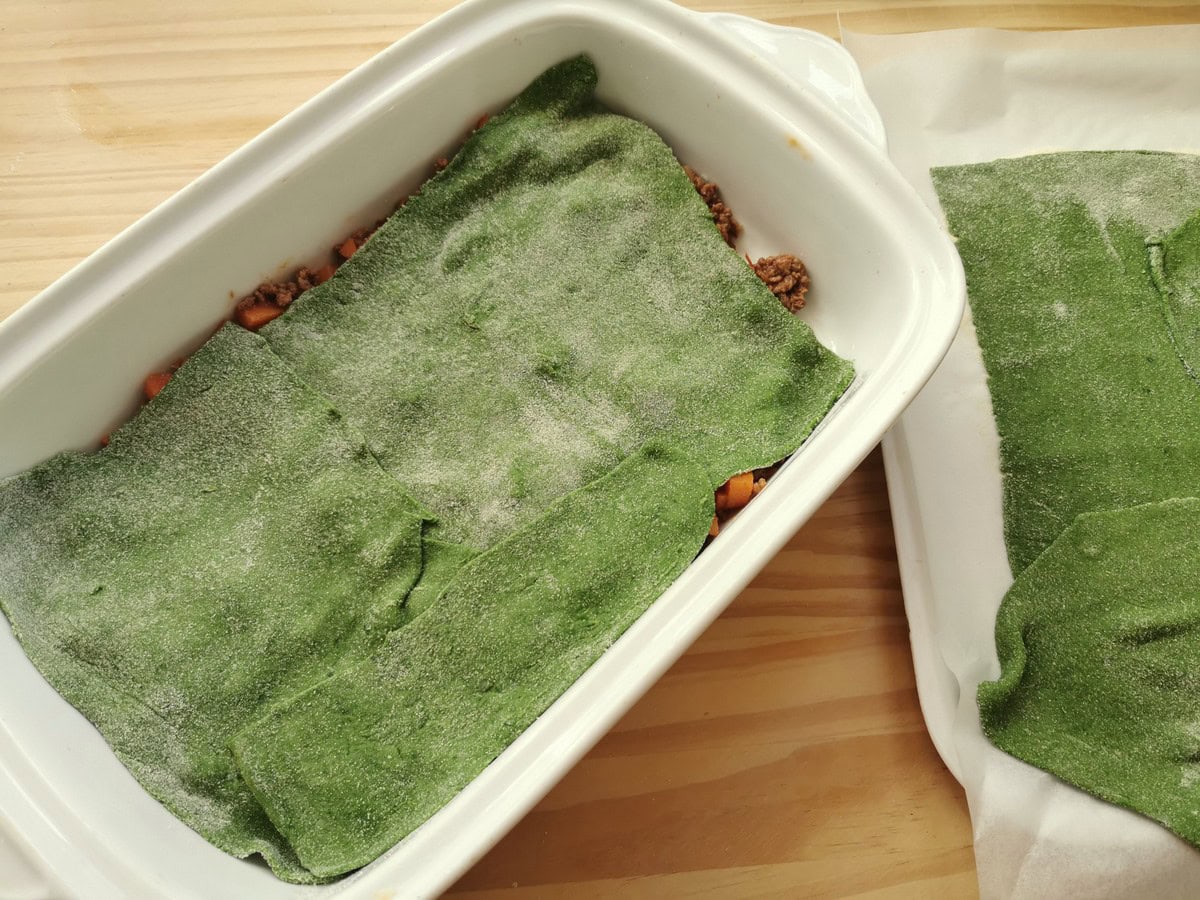
1) Spread a layer of Bolognese sauce over the bottom of a buttered rectangular oven dish. Then cover the sauce with lasagne sheets.
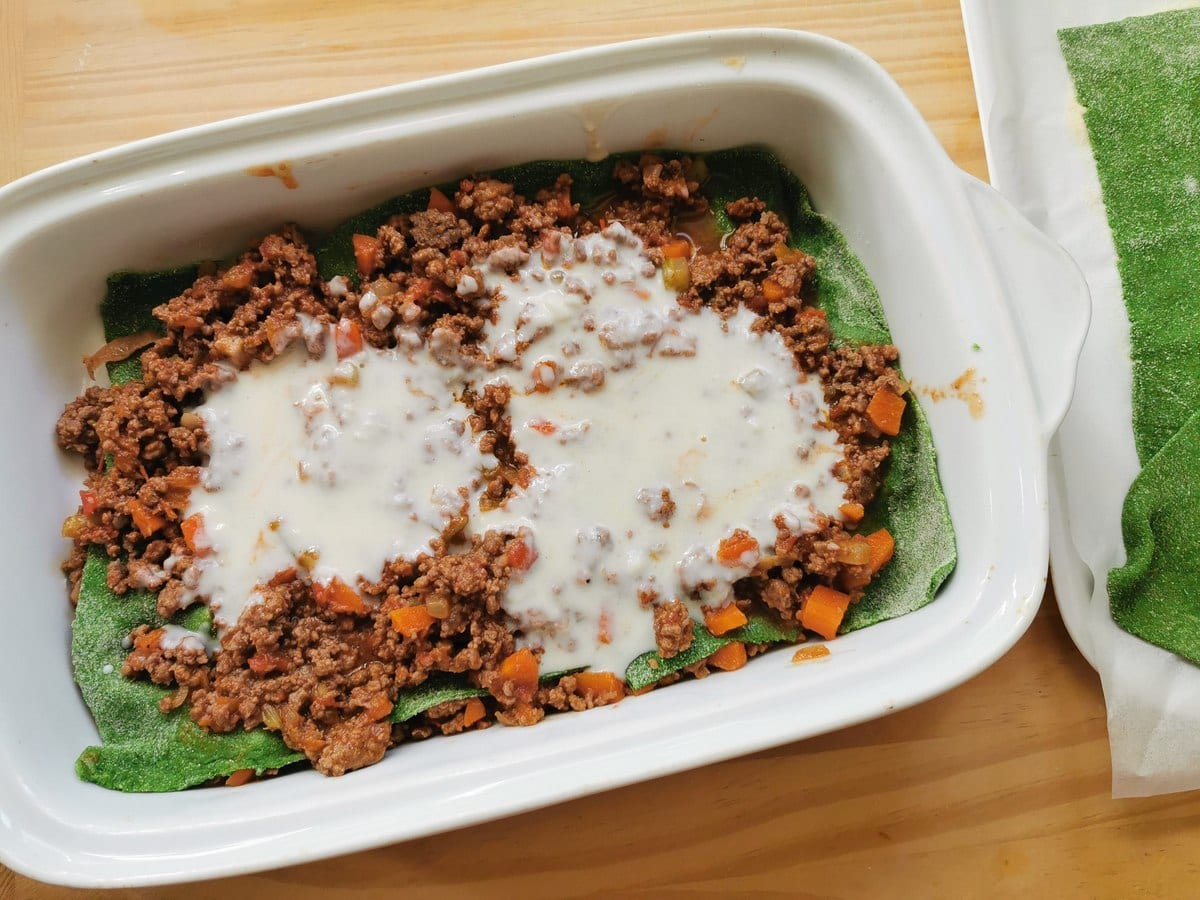
2) Make another layer of Bolognese sauce on top of the lasagne sheets. Add a thin layer of béchamel sauce and some grated Parmigiano Reggiano (parmesan cheese). Cover this layer with more lasagne sheets, then Bolognese, béchamel and grated cheese. Continue until you have 4-6 layers, depending on the size of your oven dish.
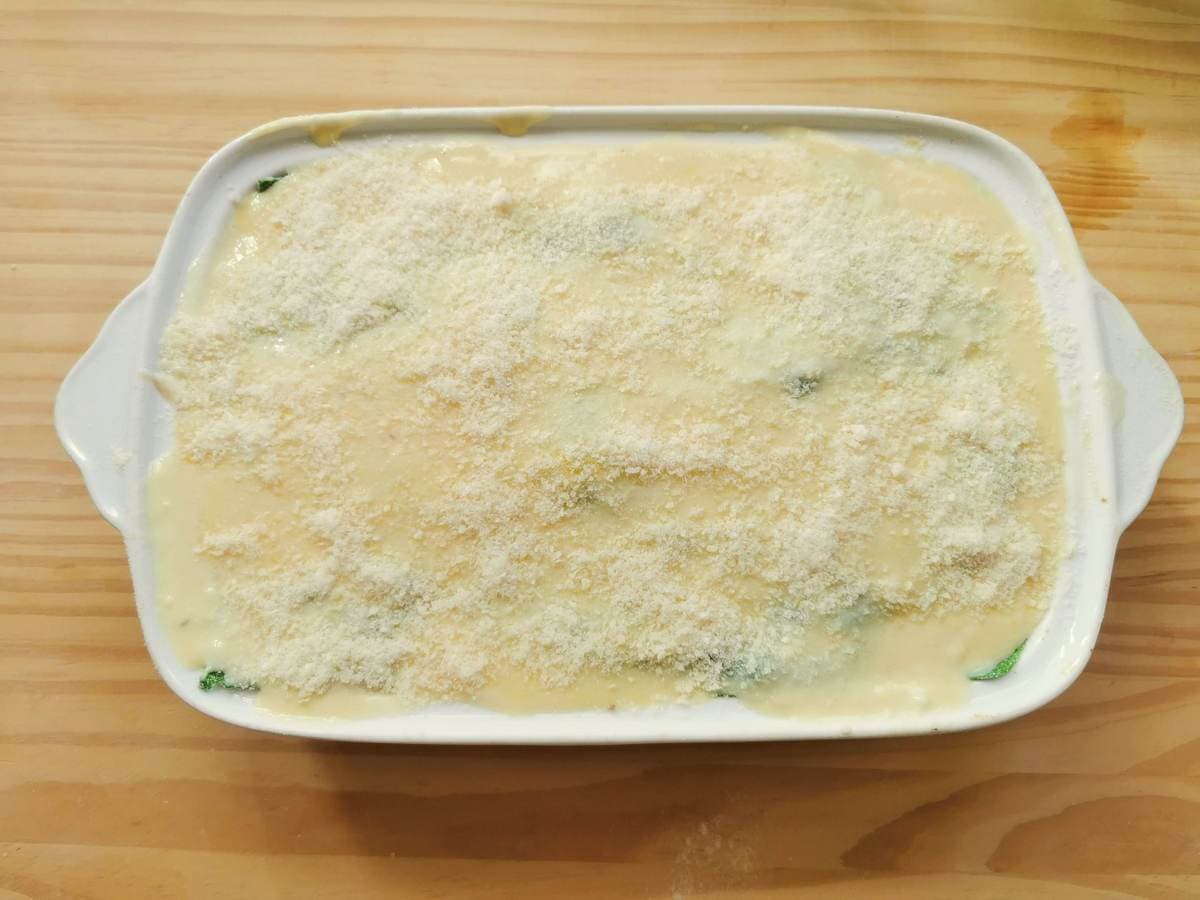
3) Cover the top of the last layer of green lasagne sheets with the rest of the béchamel and a generous sprinkling of Parmigiano.
4) Bake your lasagna in a preheated oven at 180°c (356°F) for about 30 minutes. If you want the top to be a little more golden brown, put the lasagna under the grill for just 1-2 minutes.
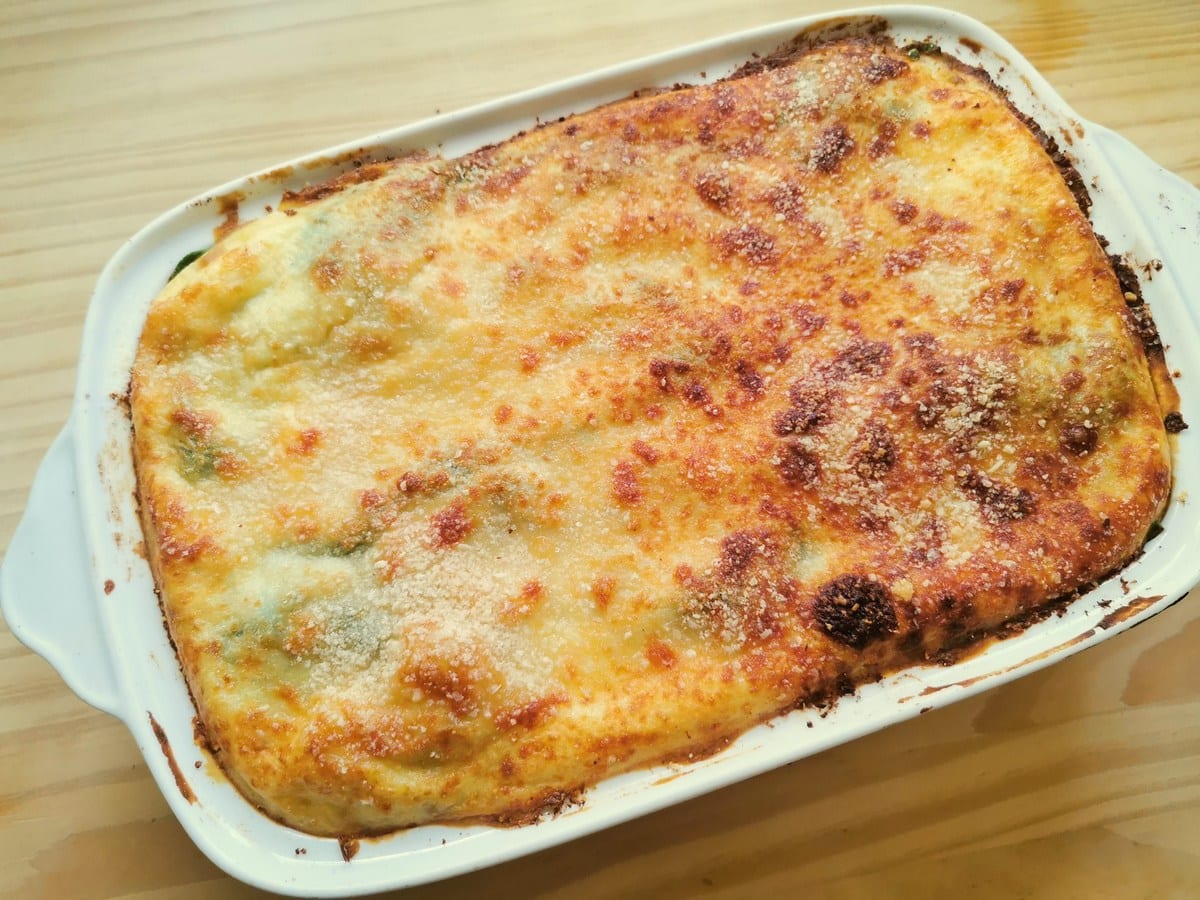
5) Let the baked lasagne al forno rest for 5-10 minutes before cutting and serving. The Italian Academy of Cuisine states that a perfect serving of lasagna remains 'in piedi', meaning it holds together well when portioned.
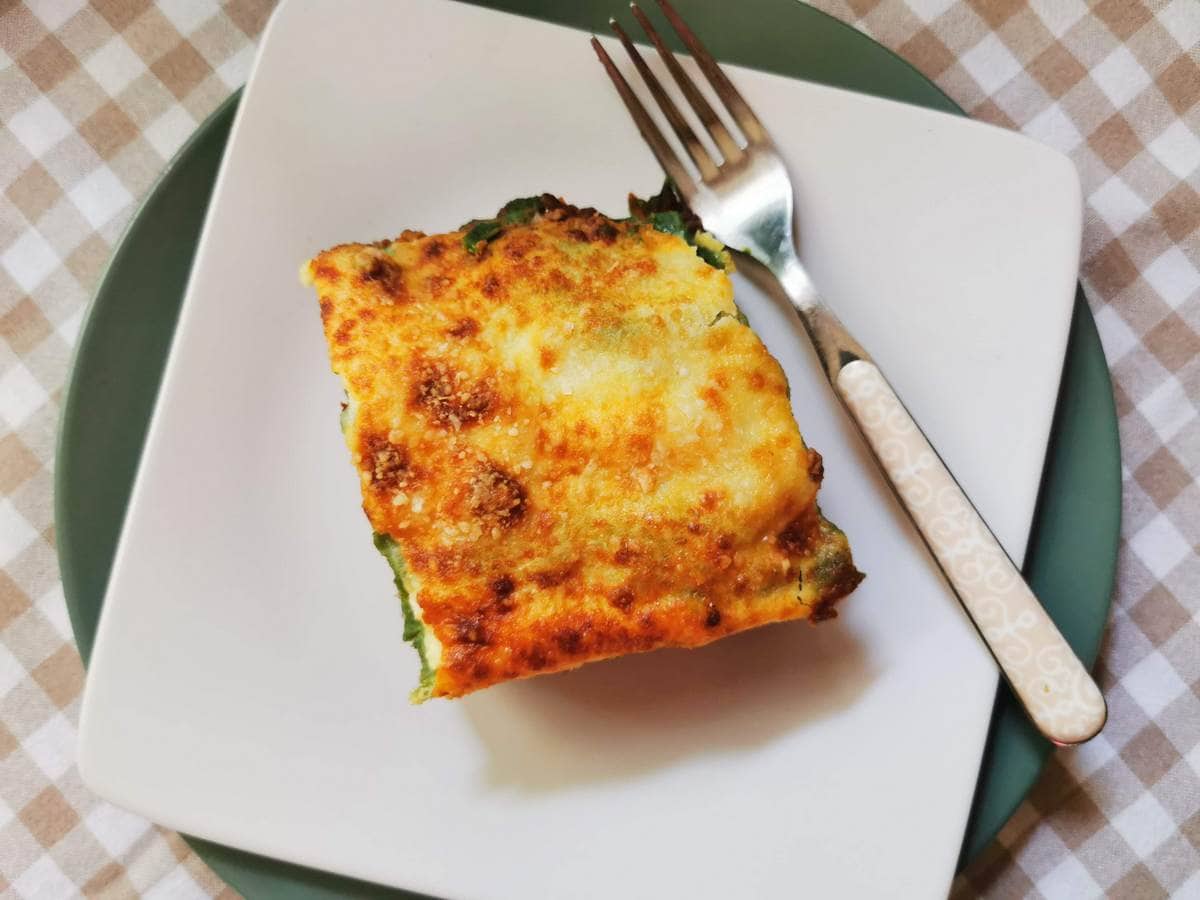
What to do with leftovers.
If you have leftover cooked lasagna you can keep it in the fridge for 3-4 days in an airtight container. Reheat covered in aluminum foil in the oven, or in the microwave until hot all the way through.
FAQs
As long as all the components (ragu, béchamel and pasta) are room temperature, you can keep an assembled but uncooked lasagna in the fridge for up to 24 hours before cooking.
Yes, you can keep an uncooked lasagna in the freezer for up to 3 months. Let it thaw in the fridge for 24 hours before baking. If you forget to defrost your lasagna, then add an extra 30-40 minutes to the cooking time and keep it covered with foil until the internal temperature reaches at least 70°c (160°F)
From pesto to vincisgrassi.
Lasagne al forno is made in other Italian regions too. However, they each add a local touch to the dish. In some areas, for example, the meat sauce is often replaced by mushrooms.
In Liguria, they make baked lasagna with pesto. Here in Veneto they use red radicchio from Treviso. Whilst in Umbria and Marche there is a particular version of lasagna al forno called vincisgrassi. For this they enrich the meat sauce the meat sauce with chicken or pork giblets.
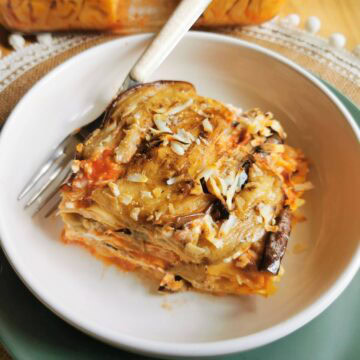
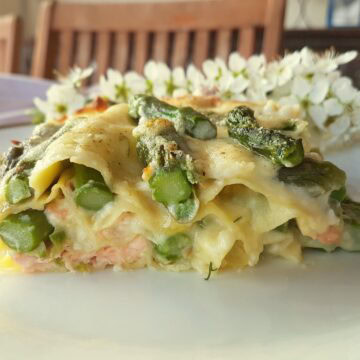
The meat sauce is replaced by porcini mushrooms, truffles and pecorino cheese in the Apennine mountains. In Sicily, there is also an ‘alla Norma’ version, with eggplant. And last but not least here in Veneto, asparagus lasagna is a popular spring recipe.
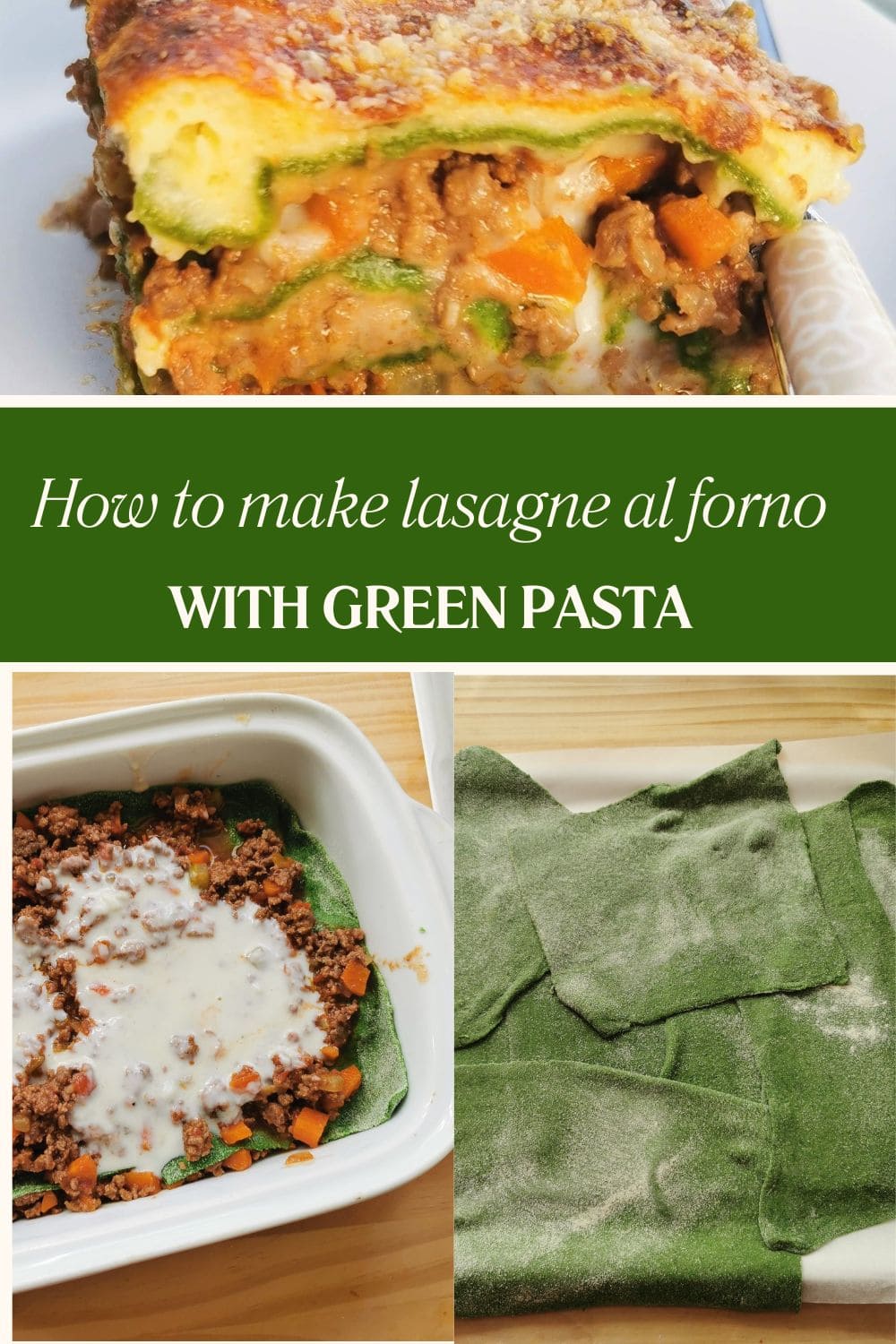
Homemade is best!
You can make this lasagne al forno with store bought pasta and ready-made béchamel for a quicker meal prep. However, making your own pasta and béchamel will definitely have the best results and is so worth the effort.
Let me know what you think.
If you make this baked lasagne al forno with Bolognese recipe, I’d love to hear how it turns out and if you liked it. Please leave a comment here on the blog or on The Pasta Project Facebook page.
Looking forward to hearing from you!
Buon appetito!
NB This recipe was originally published in 2018 but it has been updated to include how to make homemade spinach pasta, new photos and new instructions.
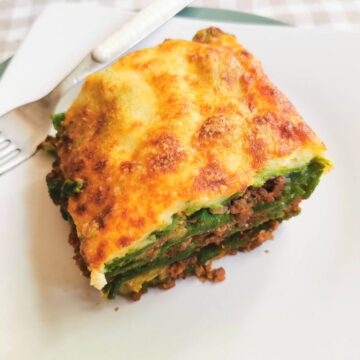
Lasagne al forno with Bolognese and green pasta sheets

Ingredients
For bolognese
- 3 tablespoon extra virgin olive oil
- 1 onion peeled and finely chopped
- 2 carrots washed and finely chopped
- 2 celery stalks washed and finely chopped
- 14 ounces ground beef or beef and pork mixed
- 6 ounces pancetta cut into cubes.
- 3.5 floz white or red wine ( I used white)
- 6 floz fresh whole milk (optional)
- 6 floz beef or chicken stock
- 14oz g tomato passata
- salt to taste
- pepper to taste
- 1 tablespoon tomato concentrate (optional)
For the béchamel (white sauce)
- 2.5 ounces all purpose flour or Italian '00' flour
- 2.5 ounces butter unsalted
- 1.5 pints fresh milk 750 ml (you may need more)
- 1 pinch salt
- ½ teaspoon grated nutmeg
For the pasta
- 14 ounces lasagne sheets ready made
- 2 large eggs
- 12 ounces Italian '00'; flour or all purpose flour
- 1.5 ounces cooked spinach chopped and puréed about 200g (7 ounces) raw.
- 1 tablespoon Olive oil
To finish the dish
- 3 ounces Parmigiano Reggiano freshly grated
Instructions
Make the bolognese (this takes 2-3 hours)
- Fry the peeled and chopped vegetables in a little olive oil with the pancetta cubes until the vegetables soften. (Some Italian chefs insist that the meat and vegetables be fried separately as they require different levels of heat) But I cooked them together.
- Add the ground beef to the vegetables and pancetta. Break the beef up with a wooden spoon and fry until nicely browned.
- Add the wine and continue stirring. When the alcohol has evaporated, add the passata, tomato concentrate (if using) and the stock. Mix everything together.
- Lower the heat and leave to simmer partially covered for about 2 hours, stirring occasionally.
- Add salt and pepper to taste.
- Add the milk, stir and continue to let the sauce simmer for another 30 minutes.
- If you think the sauce is too liquid you can remove the cover completely till it reduces. But if you are using fresh or uncooked pasta the sauce needs to be a little liquid.
Make the béchamel (white sauce)
- Melt the butter in a saucepan over low heat, incorporate the sifted flour and mix everything with a wooden spoon or whisk until you have a paste (roux)
- Cook the roux until it is golden, and at this point add the milk a little at a time, plus a pinch of salt and a ½ teaspoon of grated nutmeg. Continue to stir until the sauce reaches the consistency you want.
Cook the pasta
- If you are using dried pasta sheets partly cook them in boiling salted water. You may want to add a little olive oil to the water so they don't stick together or cook them one at a time!
Make green pasta sheets
- The first step to making the green pasta is to wilt the spinach in a pan. Then you need to drain it well and chop it. I usually squeeze the cooked spinach in a tea towel to get as much liquid out of it as possible. Once the spinach is chopped, then purée it in a food processor until smooth
- Sieve the flour into a bowl, add the eggs and the spinach, a pinch of salt and a tablespoon of olive oil. Beat the eggs with a fork and then mix the flour, eggs and spinach together until you have the beginnings of a dough. Next, use your hands to knead the dough in the bowl until it no longer sticks to the side of the bowl.
- Turn the pasta dough out onto a well-floured work top and knead for 10 minutes until the dough is soft and pliable. Then roll the dough into a ball, wrap it in plasticwrap (clingfilm). Let it rest for 30 minutes.
- Cut off about a quarter of the dough, flatten it slightly with your hands or a rolling pin, then pass it through your pasta machine 3 times through the widest setting. I fold the dough sheet into thirds the first 2 times I pass it through the widest setting. Then pass it through the next settings until the sheet is thin enough to make lasagne sheets with.
- On my machine the widest setting is 7. I passed it though 7 (3 times), then through setting 5, then 3.
- Finally, transfer the dough sheet to a floured work top and cut to the size you want for your oven dish. Lay ready sheets on a flour dusted tray until ready to make your lasagne al forno.
Finish the dish
- Then butter a rectangular baking dish and spread a thin layer of Bolognese sauce over the bottom. Cover the sauce with a layer of lasagne sheets, then cover them with a layer of sauce, some béchamel and a sprinkling of grated cheese.
- Then put another layer of pasta, then bolognese sauce, béchamel and cheese and so on until the ingredients are used up, leaving some béchamel for the final layer.
- Cover the last pasta layer with just béchamel sauce, grated cheese and some butter flakes.
- Bake your lasagne al forno in a preheated oven at 170-180 °c (338-356°F)for about thirty minutes. When the surface is golden and the pasta is cooked (check using a fork) remove from the oven. If using uncooked pasta it's a good idea to cover the dish with aluminium foil for the first 15 minutes as otherwise the top may get golden before the pasta is cooked.
- Allow the lasagne al forno to sit for 5-10 minutes before serving.
Notes
Nutrition
Have a look at these other Emilia-Romagna pasta recipes for more delicious pasta recipes like this one!
Jim says
I made this Lasagna for our Thanksgiving gathering back in November where we served it as a first course. The guests all raved how delicious it was and asked me to make sure I include it again for next years gathering.
Personally, I thought this Lasagna was perfect. The fluffy béchamel sauce, the tender spinach flavored pasta, and the delicious Bolognese came together so beautifully and created such a wonderful lasagna. I followed Jacqueline's recipe exactly, though I did triple if for the large crowd.
Your attention to tradition is appreciated.
Thank you for sharing!
Jacqui says
Thanks for your review Jim! I'm thrilled your lasagna turned out so well and was a hit with your guests!
Amy says
I would love to make this for Dec 23 when my kids come home, but I also don’t want to be fussing and messy kitchen as they arrive. Could I make this ahead and freeze it?
Jacqui says
Hi Amy, thanks for your question. I have never frozen a lasagne al forno but many Italians do. Apparently you can freeze it cooked or uncooked. In both cases, the dish needs to be room temperature before freezing, well wrapped before freezing so it doesn't ice, defrosted in the fridge the night before and cooked (or reheated) at 180°c (356 °F).
Amy says
Thanks,it’s in the freezer ready to bake! I’m excited to try it
Jacqui says
Do let me know how it turns out! Merry Christmas!
Steve says
Amazed after all the time in Italy you use Imperial measurements. I am 65 years old and have never understood imperial measurements. Love your page and writing. Having spends a lot of my life in Veneto region I can really appreciate your method of describing great food.
Jacqui says
Hi Steve, thanks for your comment. I'm happy you love my page and writing. Re the measurements: actually, you should be able to choose between metric and imperial on every recipe on my site. I usually give both. There's a button to click above the ingredient lists in the recipe instructions section.
Esme says
This was absolutely delicious! My friends enjoyed it and asked for the recipe.
Jacqui says
Thanks for the feedback Esme. I'm so glad this lasagna recipe was a hit with your friends.
Liz says
Now THIS recipe is the epitome of comfort food! It was perfect on a chilly November evening and just delicious!!!
Jacqui says
Thanks for your comment Liz! I agree nothing beats a homemade lasagna on a chilly evening! Perfect comfort food.
Nora says
So rich and authentic, this lasagne al forno tasted straight out of Italy!
Jacqui says
I'm very happy to read that you enjoyed this Italian lasagne al forno Nora! It really is as authentic as it gets.
Peggy says
Lasagne is my kids' favorite dinner and this recipe was delicious. It disappeared in one sitting. Will make again for sure!
Jacqui says
My kids and grandkids love lasagna too Peggy, and this version is always a hit!
Naomi says
Delicious lasagna recipe! I made it over the weekend, and my family loved it. Such a unique recipe. Thank you!
Jacqui says
I'm so glad your family enjoyed this lasagne al forno Naomi. My family love it too!