

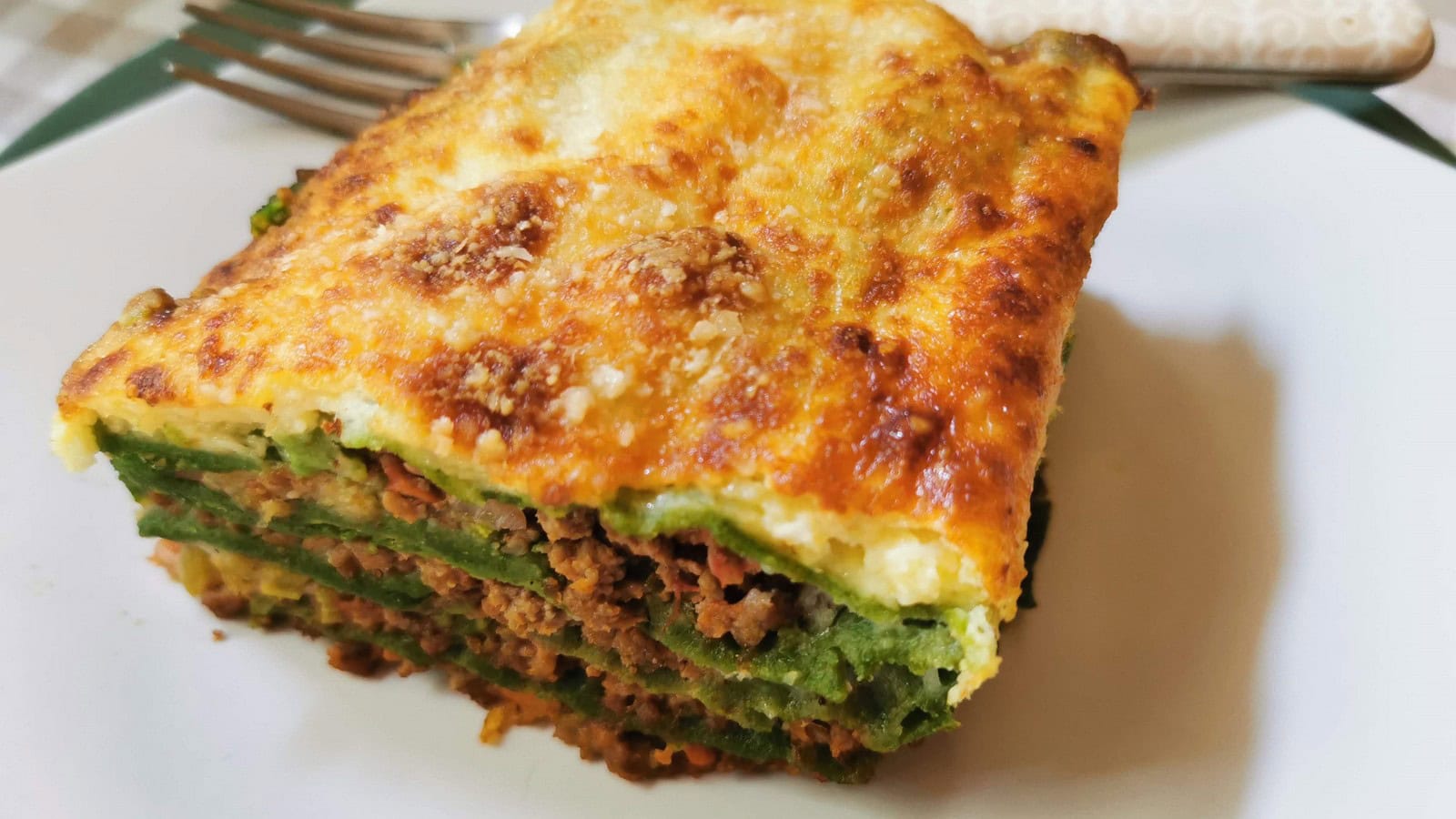
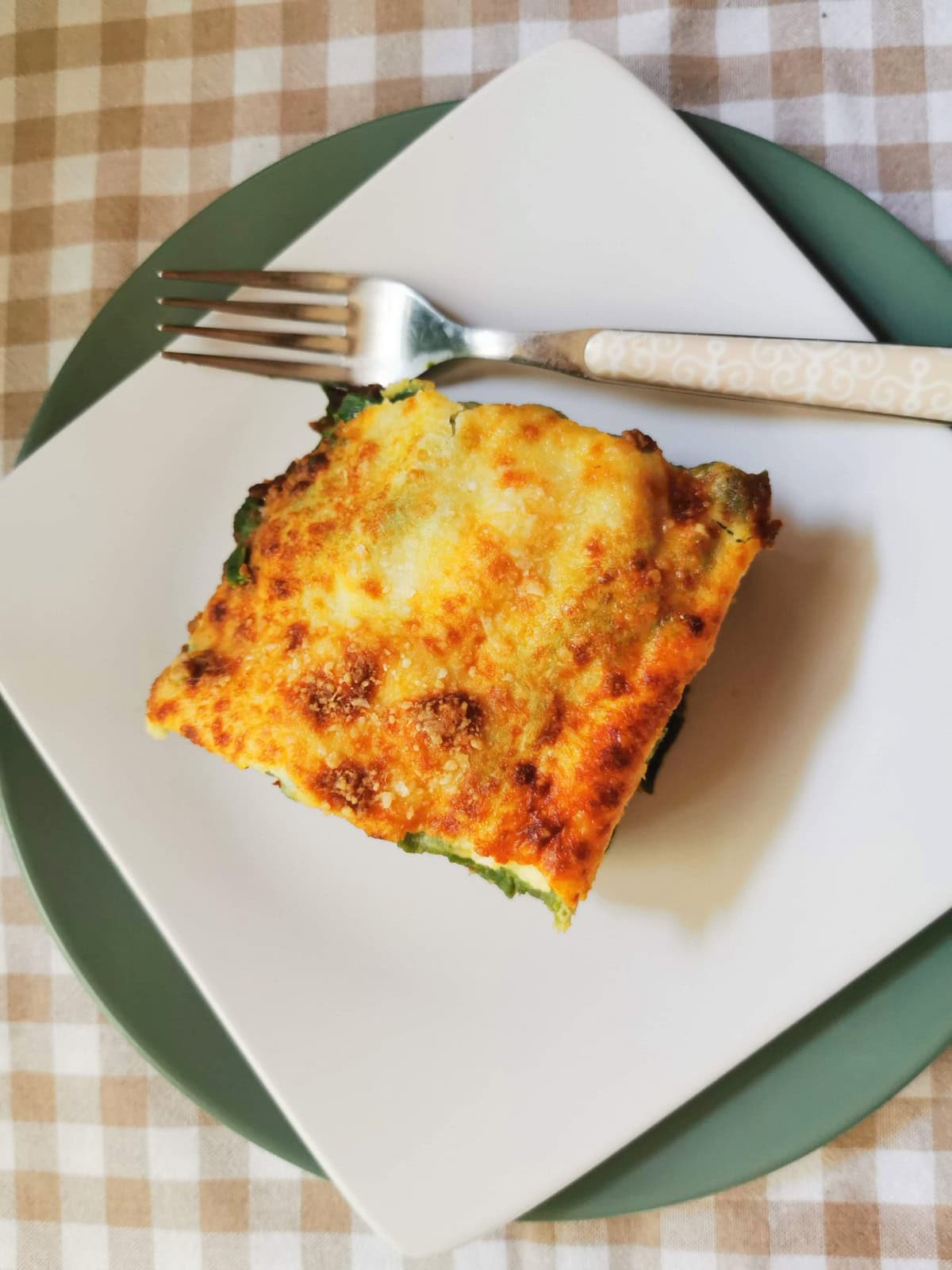
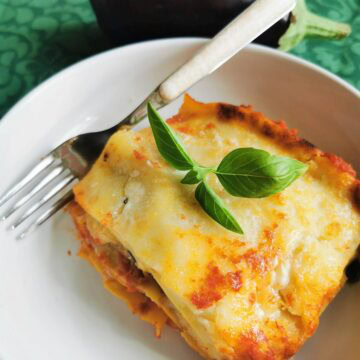
Lasagne al forno with Bolognese sauce is probably one of the best known and most loved Italian baked pasta dishes. This recipe is based on the official version of lasagne verdi alla Bolognese from the Italian Academy of Cuisine. It's made with homemade green pasta sheets, béchamel sauce and Bolognese ragu.
A little lasagne al forno history
The origins of baked lasagna actually date back to the times of Ancient Rome and Greece. The Greek word ‘laganon’ and the Latin word ‘laganum’ were used to describe square or rectangular sheets of ‘pasta’ made from wheat flour. These were baked in the oven or on the fire and stuffed with meat.
The Roman ‘cookbook’ Apicius (a collection of Roman recipes compiled in 1st century AD) includes a ‘lagana’ formed by thin sheets of dough stuffed with meat and cooked in the oven. But, of course this only vaguely resembled the lasagne al forno we know today.
Although lasagne pasta was popular in the Middle Ages, it wasn’t made with eggs until the invention of egg pasta in Northern Italy in the Renaissance period. Béchamel sauce was also not invented until the Renaissance and tomato sauce didn’t enter the equation until the 18th century. So, it was only then that lasagne al forno started to look like the much-loved dish of today!
Different Italian versions of lasagne al forno.
Here in Italy, two regions claim the invention of baked lasagna, Emilia-Romagna and Campania (Naples). However the Neapolitan version includes ingredients such as meatballs, sausage, hard boiled eggs and ricotta cheese rather than béchamel, as well as other cheeses like provola and pecorino.
Also, the lasagne pasta used in Naples has ruffled or wavy edges (lasagne ricce). Because it’s such a rich dish, Neapolitan lasagna is mostly made on special occasions, especially at Carnival time. This dish was traditionally served on Mardi Gras as a kind of last blow out before Lent, as it was filled with many ingredients that were banned during Lent.
Green lasagne al forno in Emilia Romagna.
Neapolitan lasagne al forno is magnificient, but the dish most non-Italians call baked lasagna or just lasagna is the one from Emilia-Romagna. This classic Italian lasagna recipe is made with Bolognese ragu, a creamy béchamel sauce and normal lasagne sheets which are often homemade, but can also be bought fresh or dried.
I used homemade green spinach pasta sheets as in the official recipe for lasagne al forno from the Italian Academy of Cuisine. You can also use homemade or fresh normal lasagne sheets or dried pasta. Dried lasagne sheets will need to be half-cooked before assembling the final dish.
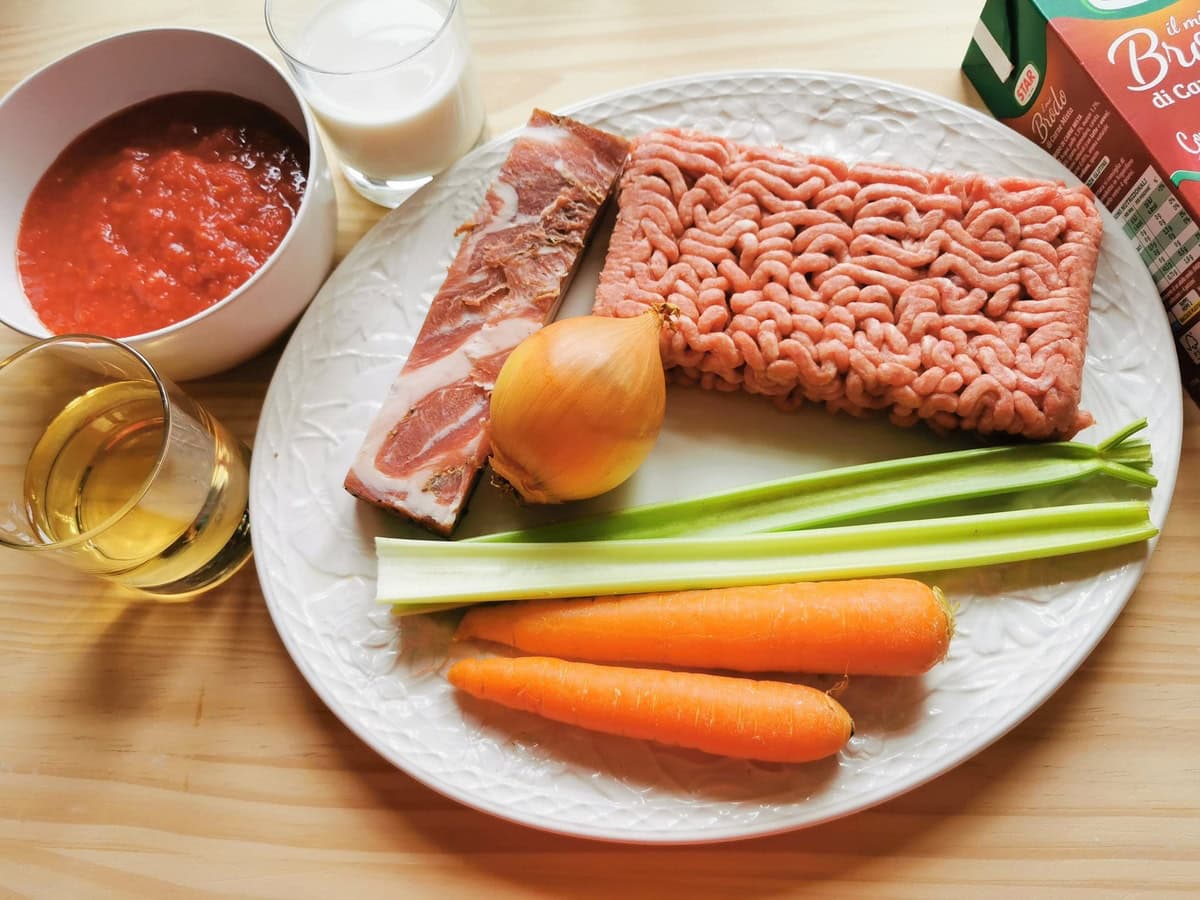
Ingredients for lasagne al forno with Bolognese.
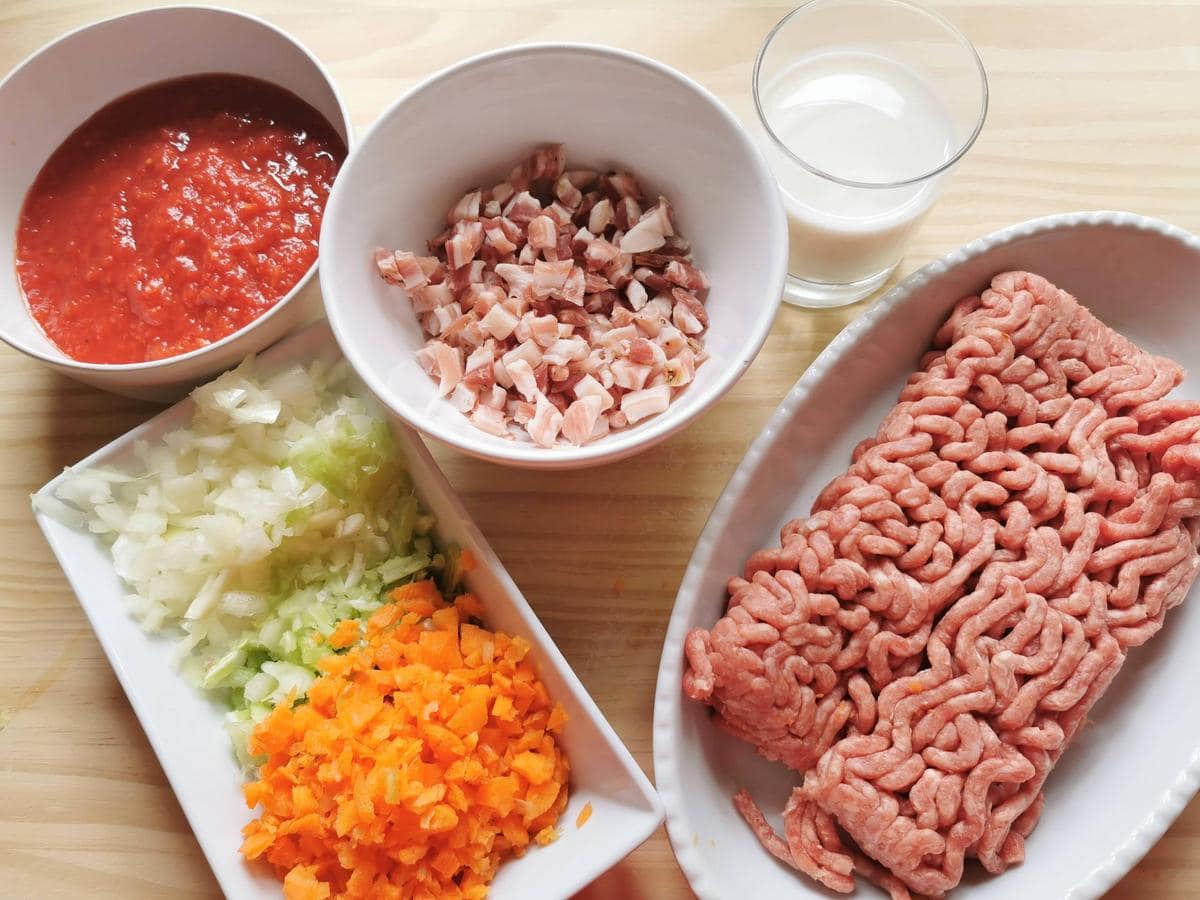
For the Bolognese.
Ground Beef : It's better to use a good quality coarsley ground beef, preferrably not lean because the fat adds flavor and keeps the meat moist. The best cuts are shoulder or chuck, brisket, plate or flank.
Pancetta: Fresh unsmoked pancetta is the most commonly used in Italy for ragu. Italians call it pancetta dolce, meaning sweet. I buy pancetta in slabs but you can also use ready cubed pancetta.
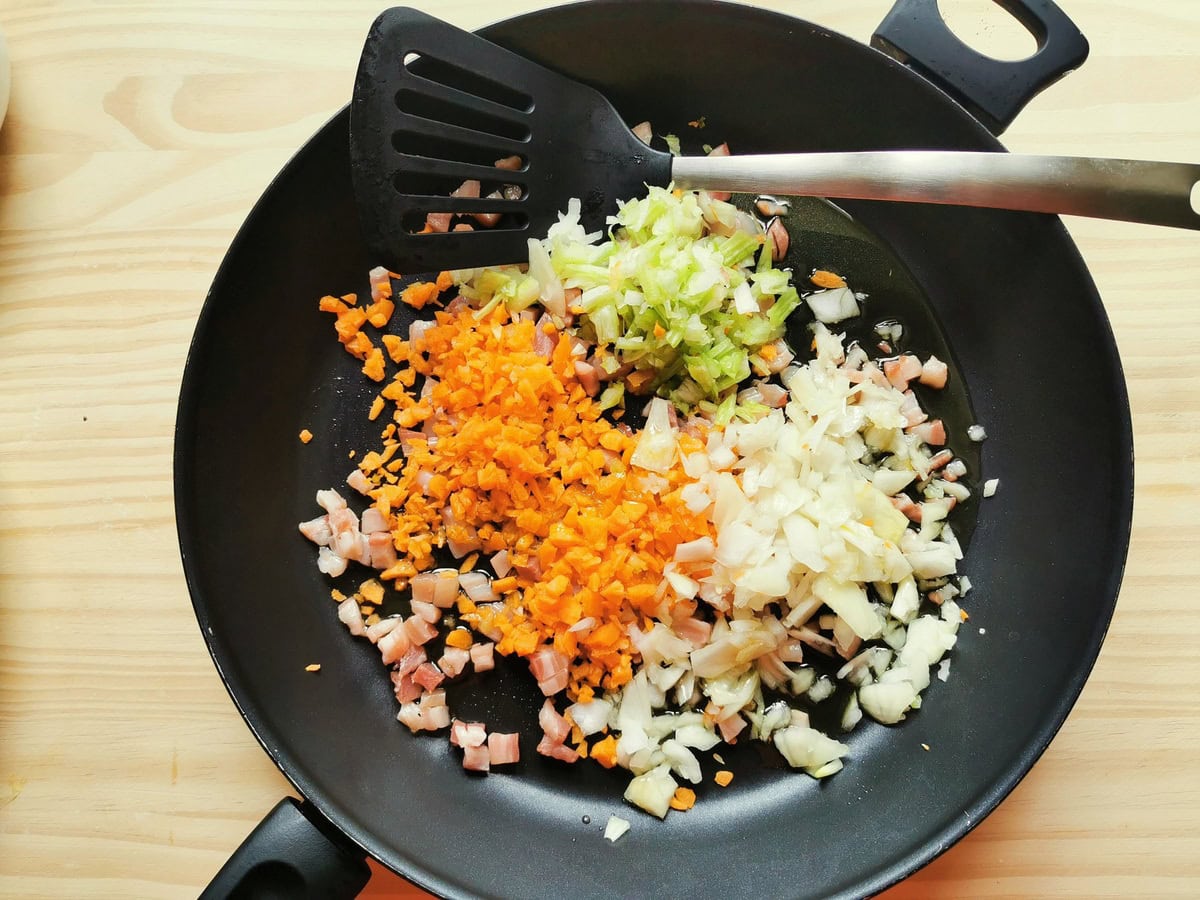
Aromatics: The base for bolognese is a soffritto (mire poix) of carrots, onions and celery. Traditional Bolognese doesn't include garlic or hebs like parsley or rosemary.
Tomatoes: Italians use canned peeled or chopped tomatoes or passata for this ragu. Fresh tomatoes can be too watery. You can also add a little tomato paste for a more intense tomato flavor.
Milk: Milk is optional but it's traditionally added to reduce the acidity of the tomatoes and gives Bolognese its characteristic orangey colour.
Broth: You can use a light beef stock or vegetable broth (or stock cubes). You will need about a cup but maybe more if the sauce dries out.
Wine: You can use a dry white wine such as sauvignon blanc or pinot grigio or a medium bodied red wine like merlot or chianti. I used a dry white Soave wine from the area I live in.
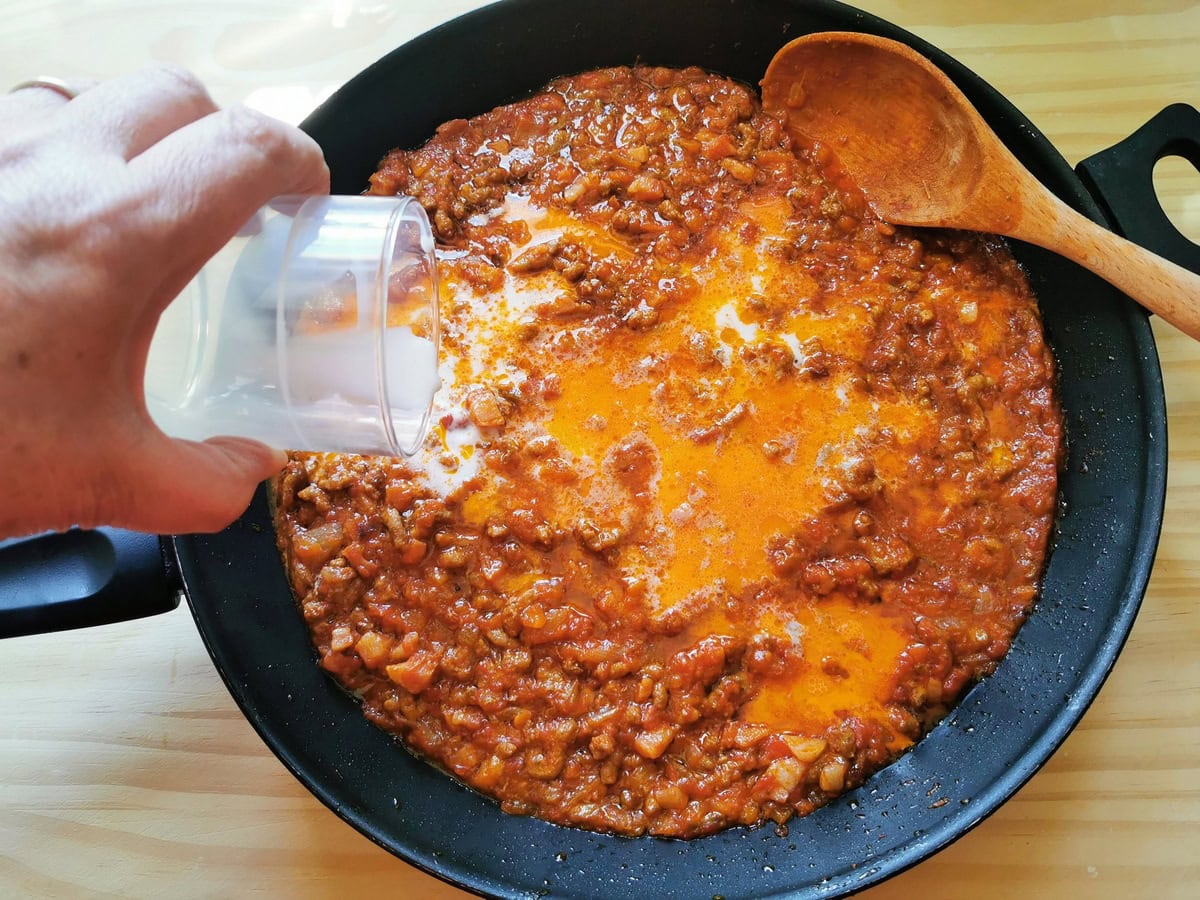
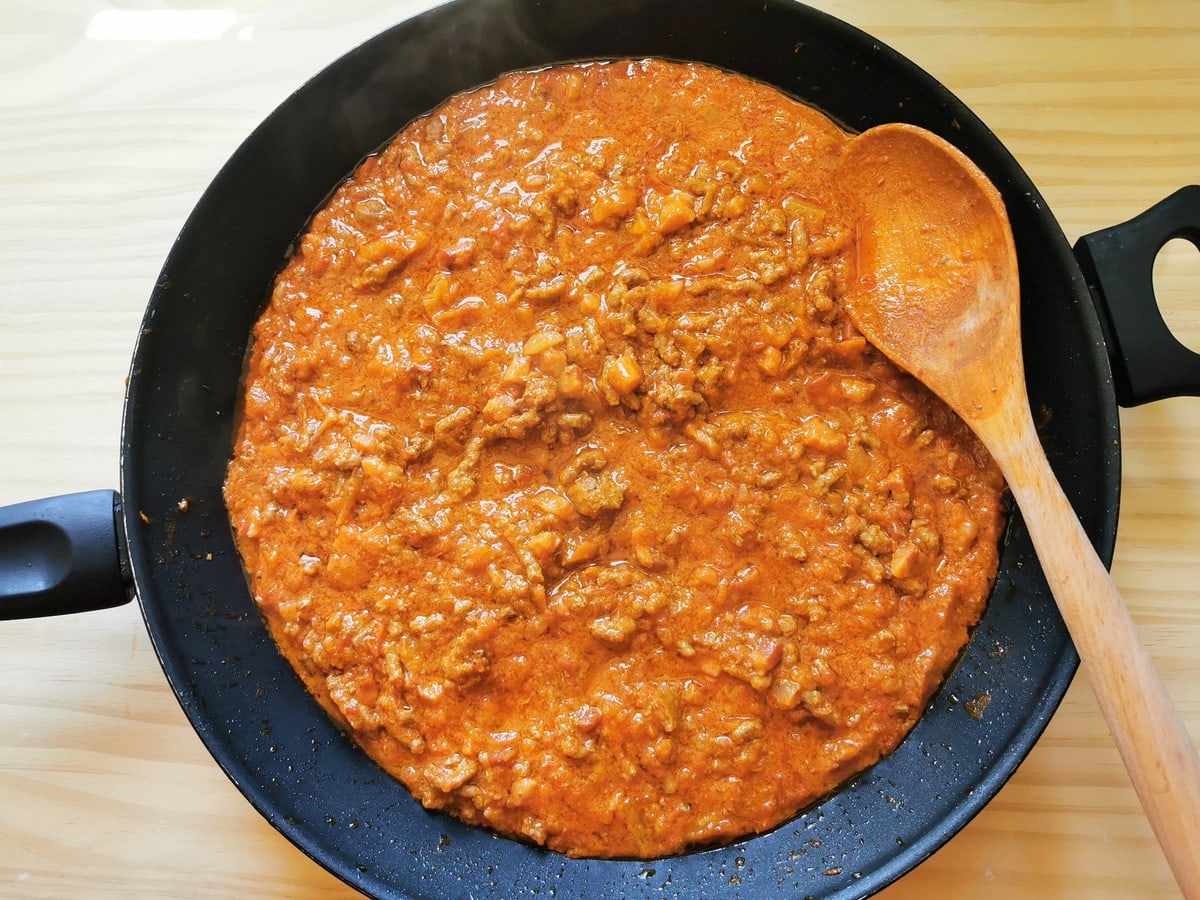
How to make the Bolognese sauce.
1. Finely chop the onion, celery, and carrot (do not use a food
processor).
2. Sauté the chopped pancetta with a little olive oil. Add the vegetables to the oil and pancetta and cook over a low heat, stirring constantly with a wooden spoon until softened but not browned.
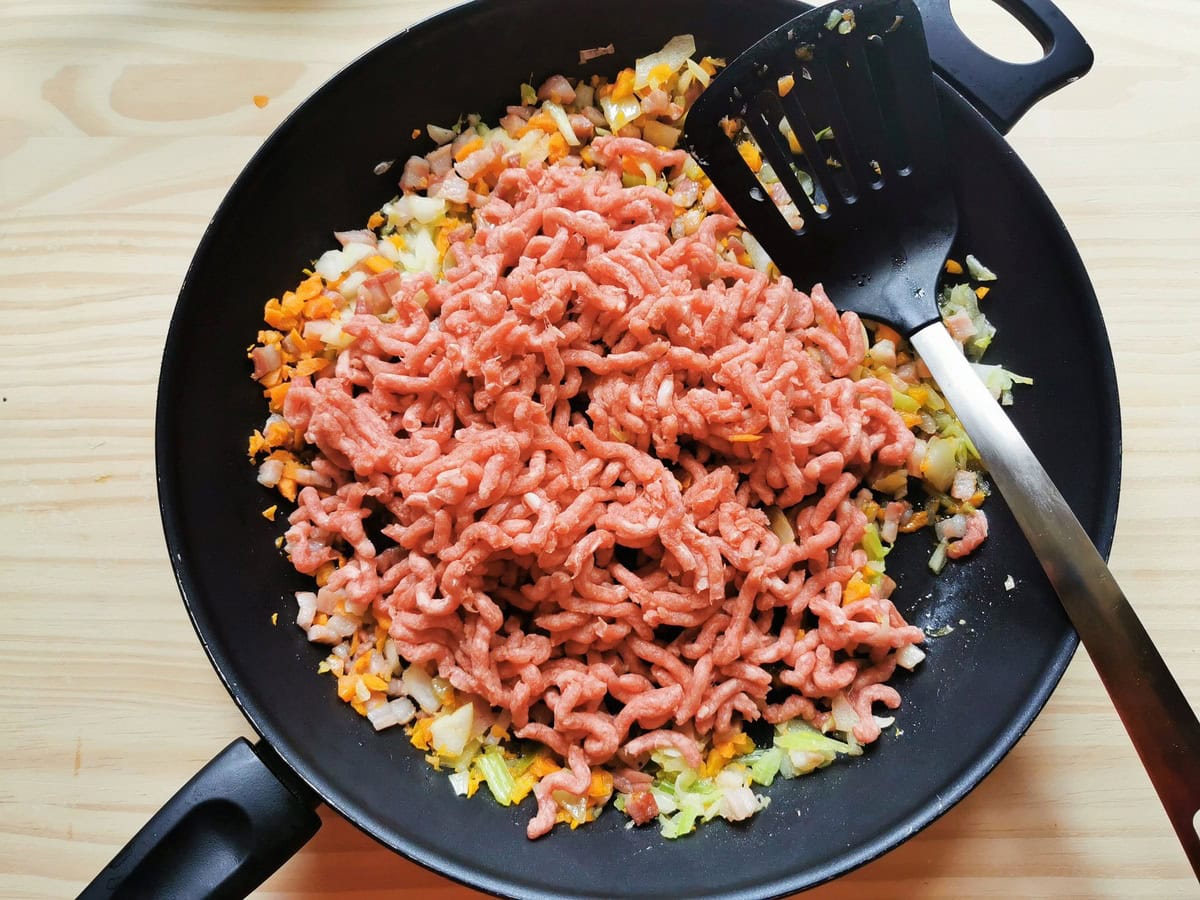
3. Raise the heat to medium and add the ground meat, break it up, then cook for about ten minutes until it sizzles and browns.
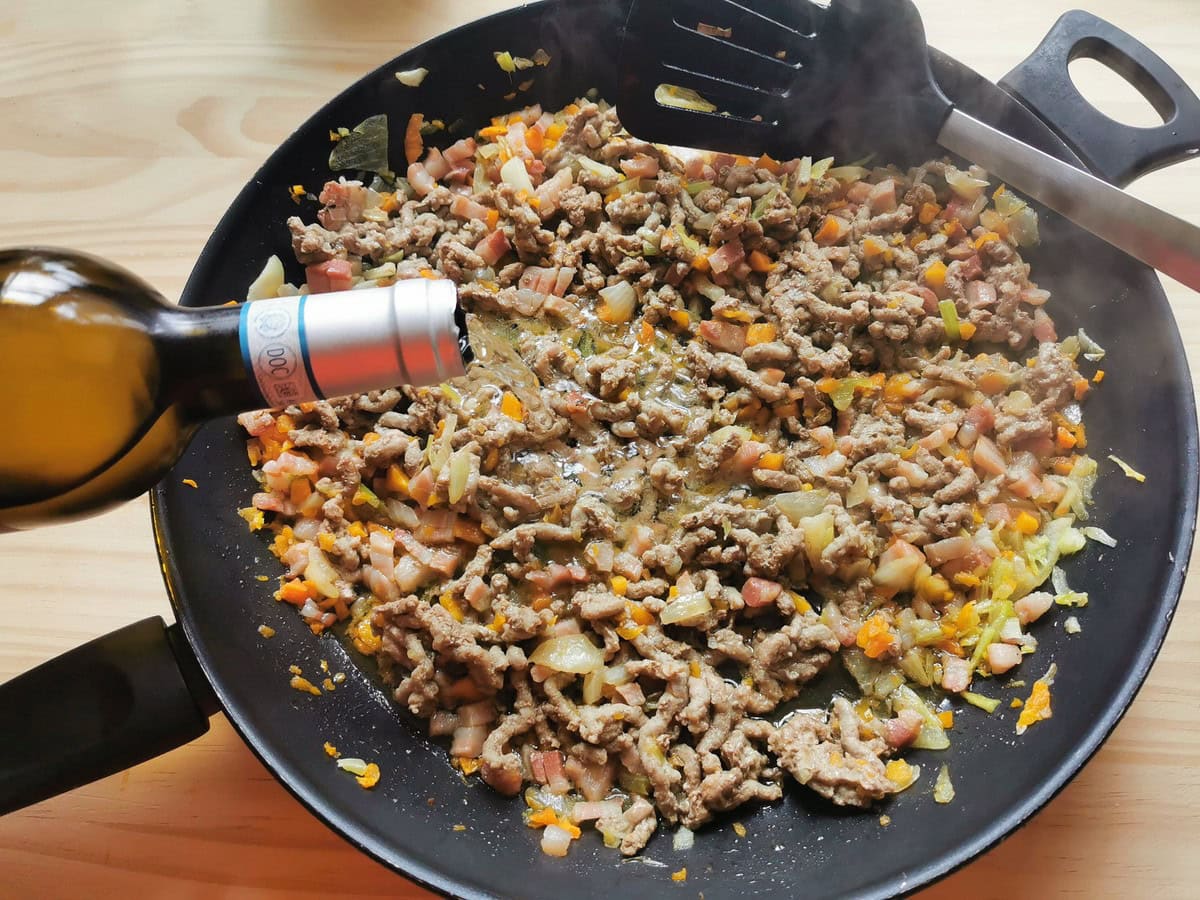
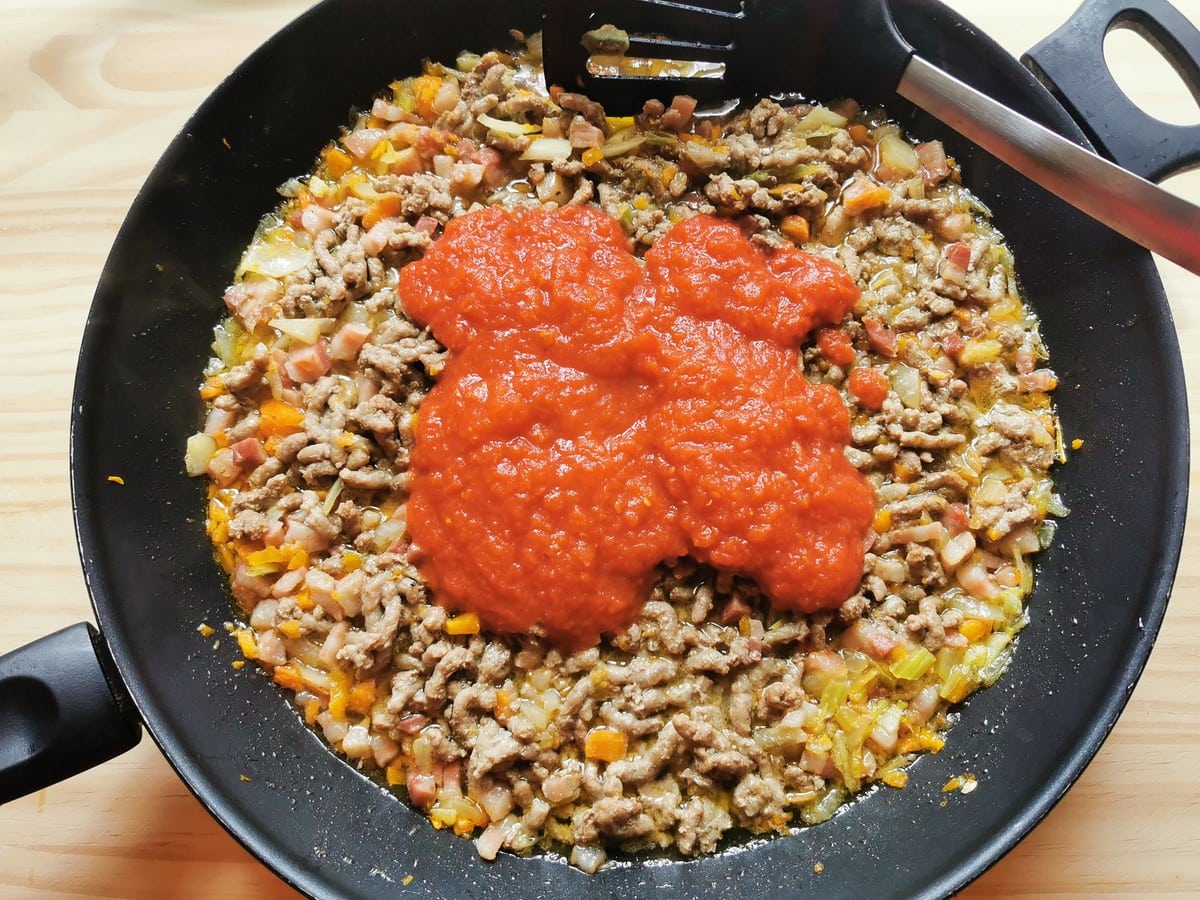
4. Add the wine; cook over a medium heat until it has completely evaporated. Add the tomato paste (if using) and passata. Mix well and add a cup of hot broth (or water) and then simmer, covered, for about 2 hours.
5. Add milk if using. Mix again and simmer for another hour. Season with salt and pepper before serving.
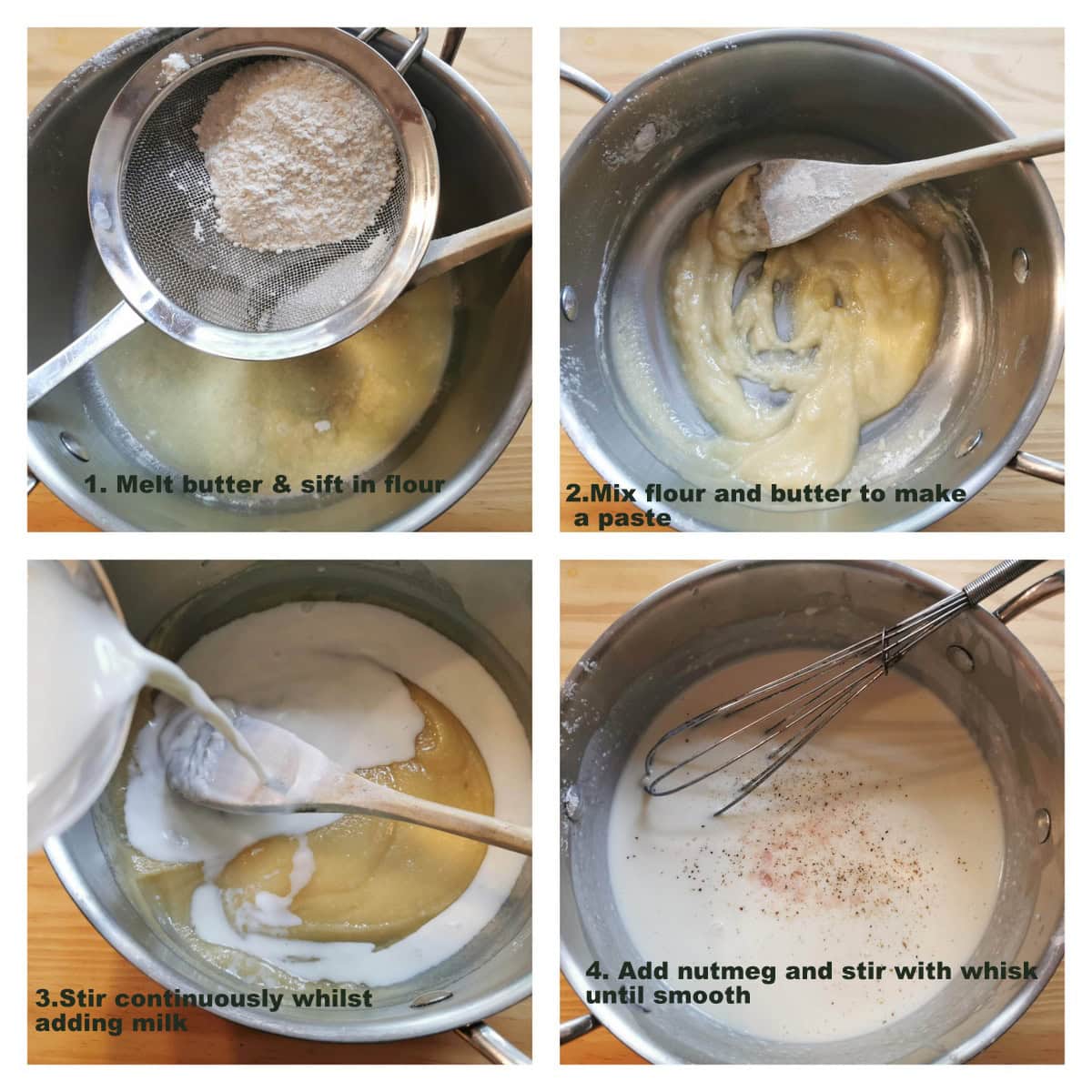
Ingredients and instructions for béchamel (white sauce).
Milk: Use whole milk to make béchamel. Skimmed milk is too watery. I like to use an organic milk for its flavor and nutritional value.
Butter: Italians mostly use unsalted butter. If you use salted butter, don't add salt to the béchamel.
Flour: You will need the same weight of flour as butter. For lasagne al forno, I use 75g (about 2.5 oz) of each. The flour is white soft wheat flour such as Italian '00' flour or all-purpose flour.
Nutmeg: Freshly grated nutmeg has much more flavor than ready grated.
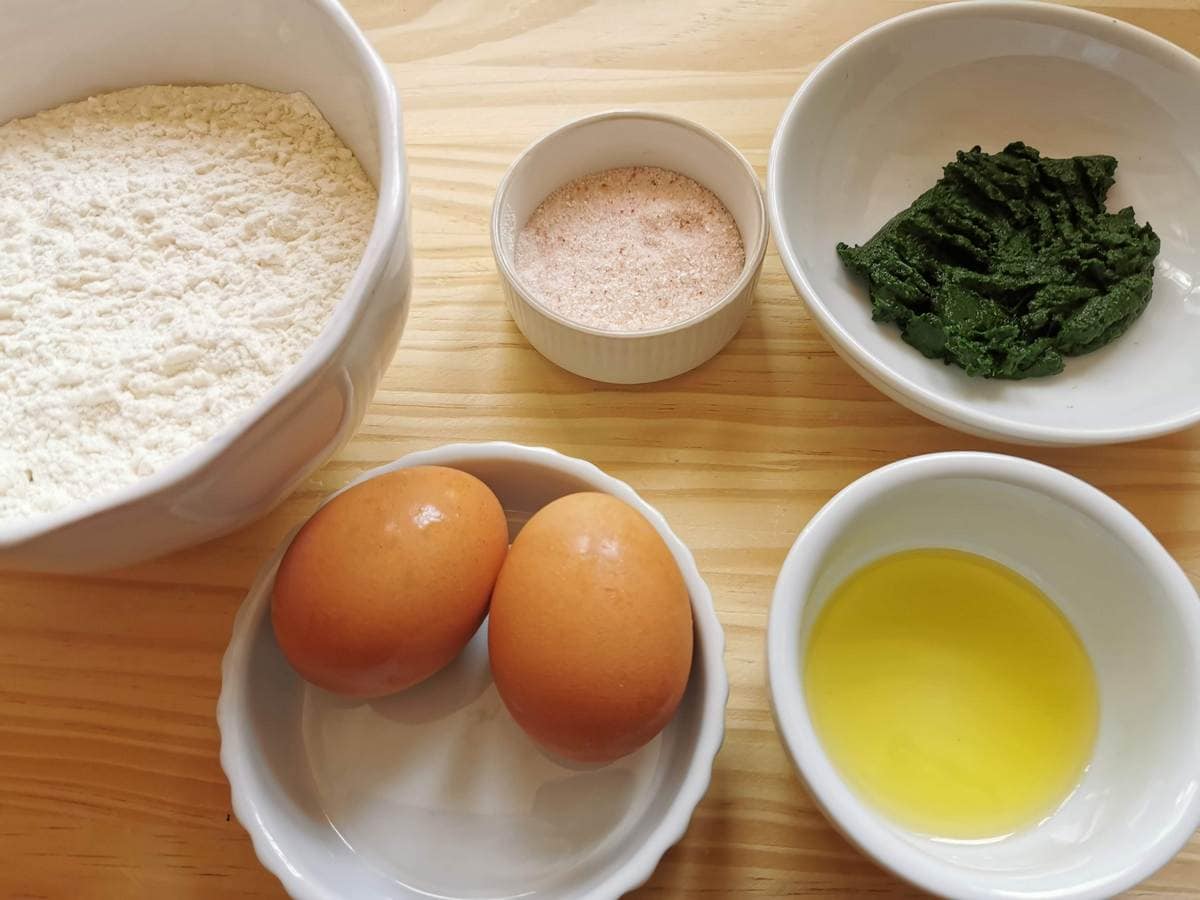
Ingredients for the homemade green lasagne sheets.
Flour: Use Italian '00' flour or all-purpose flour for the pasta dough and some semolina hard wheat flour for dusting.
Eggs: I like to use large organic eggs for their flavor, color and nutritional value. You may need to add an extra egg if using small eggs.
Spinach: Wilted fresh spinach is better than frozen spinach which has a lot of wter. However, you will need to squeeze as much water out of the spinach as possible and purée it with a food processor.
Other ingredients: A little salt and a tablespoon of olive oil.
How to make green lasagne sheets.
The first step to making the green homemade pasta is to wilt the spinach in a pan. Then you need to drain it well and chop it. I usually squeeze the cooked spinach in a tea towel to get as much liquid out of it as possible. Once the spinach is chopped, then purée it in a food processor until smooth.
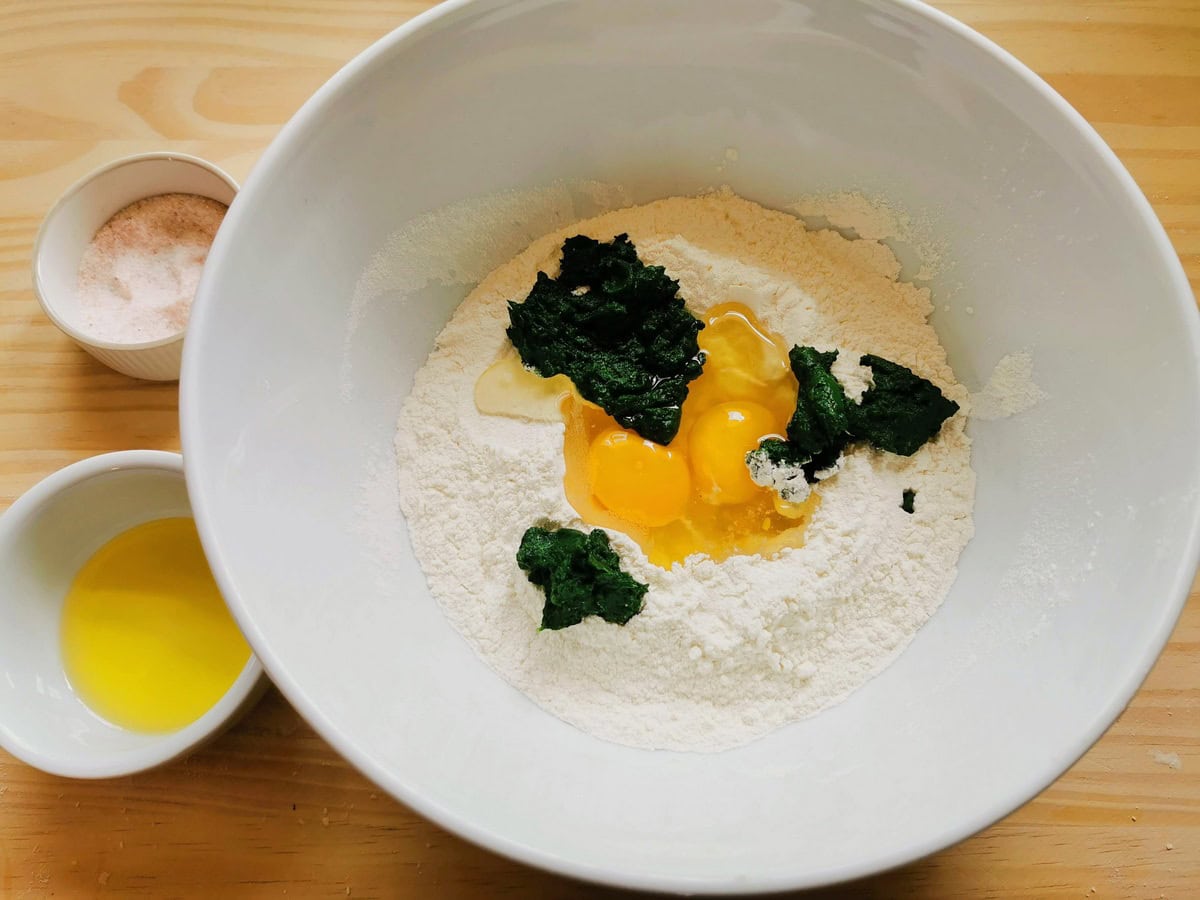
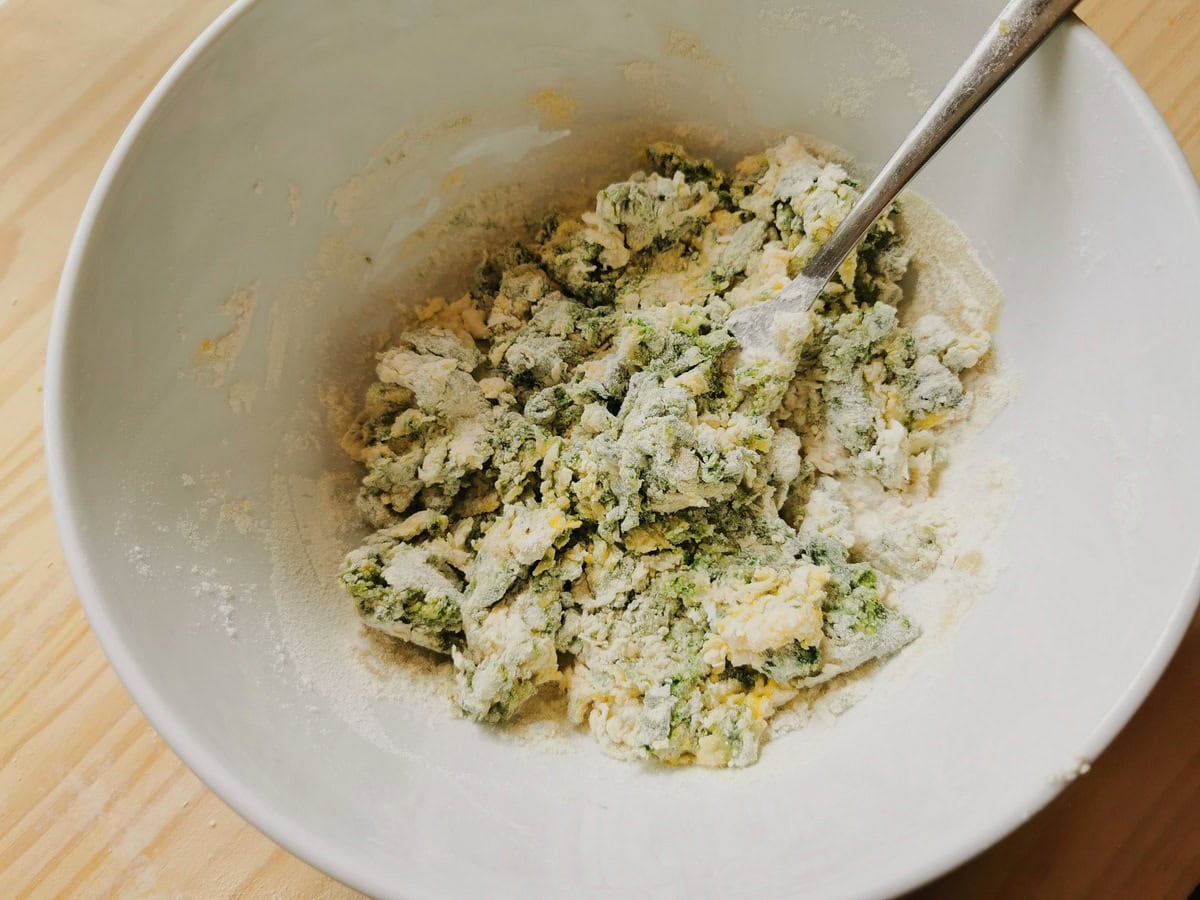
1) Sieve the flour into a bowl, add the eggs and spinach, a pinch of salt and a tablespoon of olive oil. Beat the eggs with a fork and then mix the flour, eggs and spinach together until you have the beginnings of a dough.
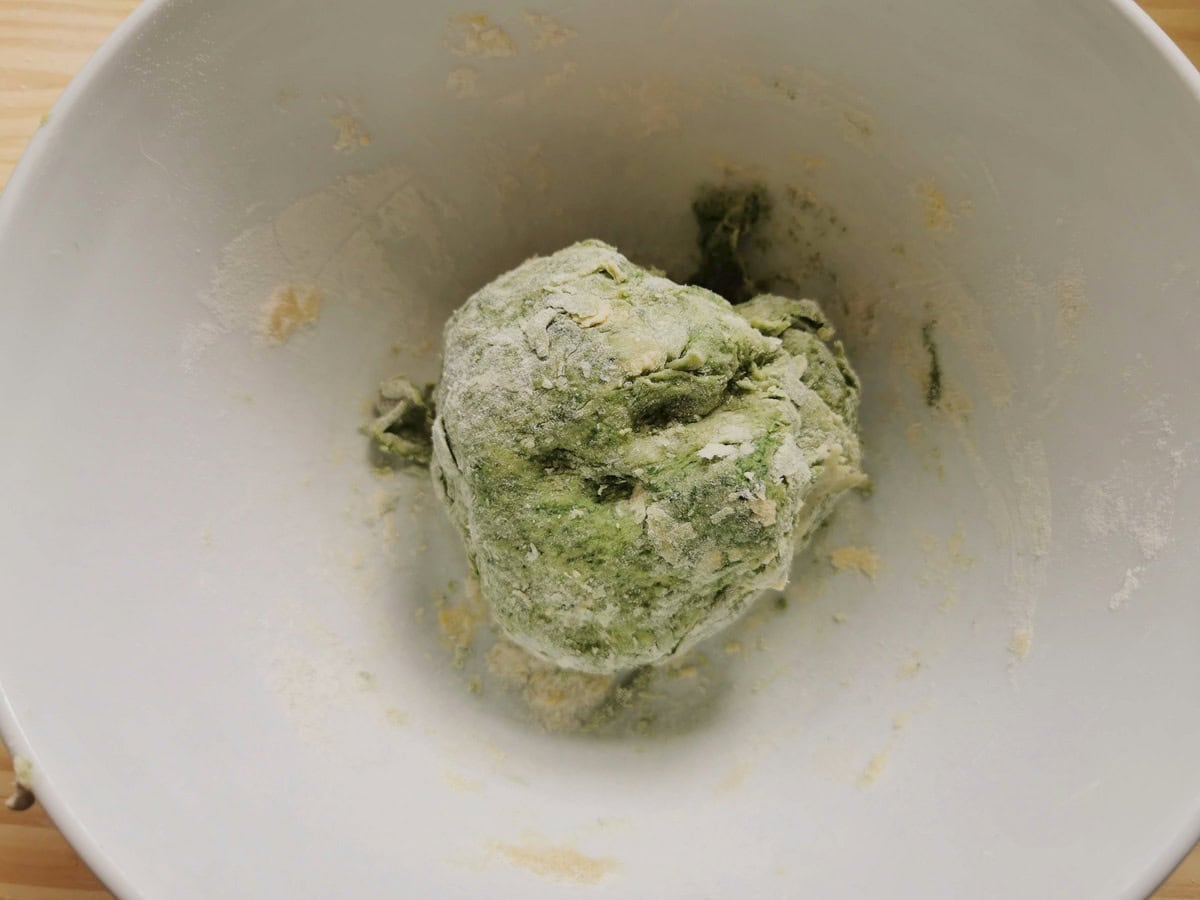
2) Next, use your hands to knead the dough in the bowl until it no longer sticks to the side of the bowl.
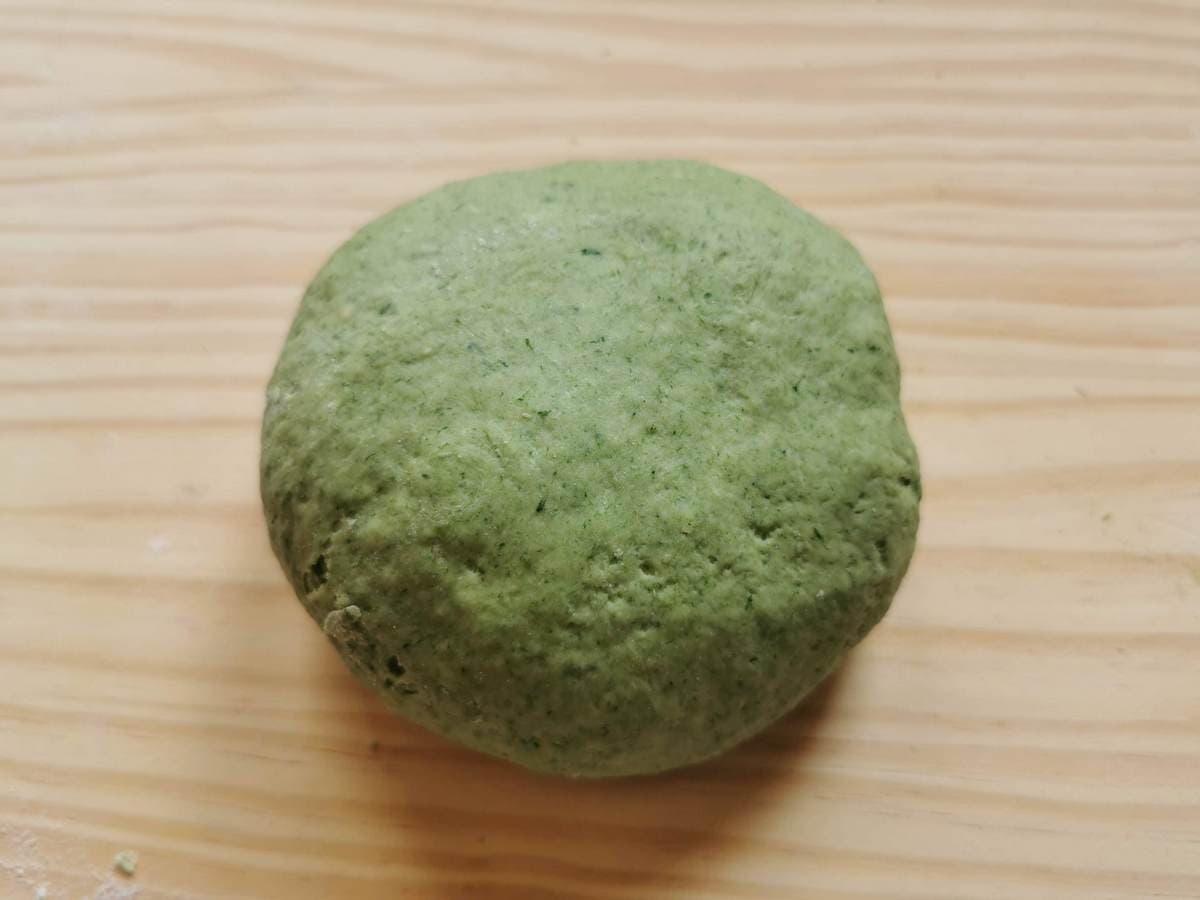
3)Turn the pasta dough out onto a well-floured work top and knead for 10 minutes until the dough is soft and pliable. Then roll the dough into a ball, wrap it in plastic wrap (clingfilm) and let it rest for about 30 minutes..
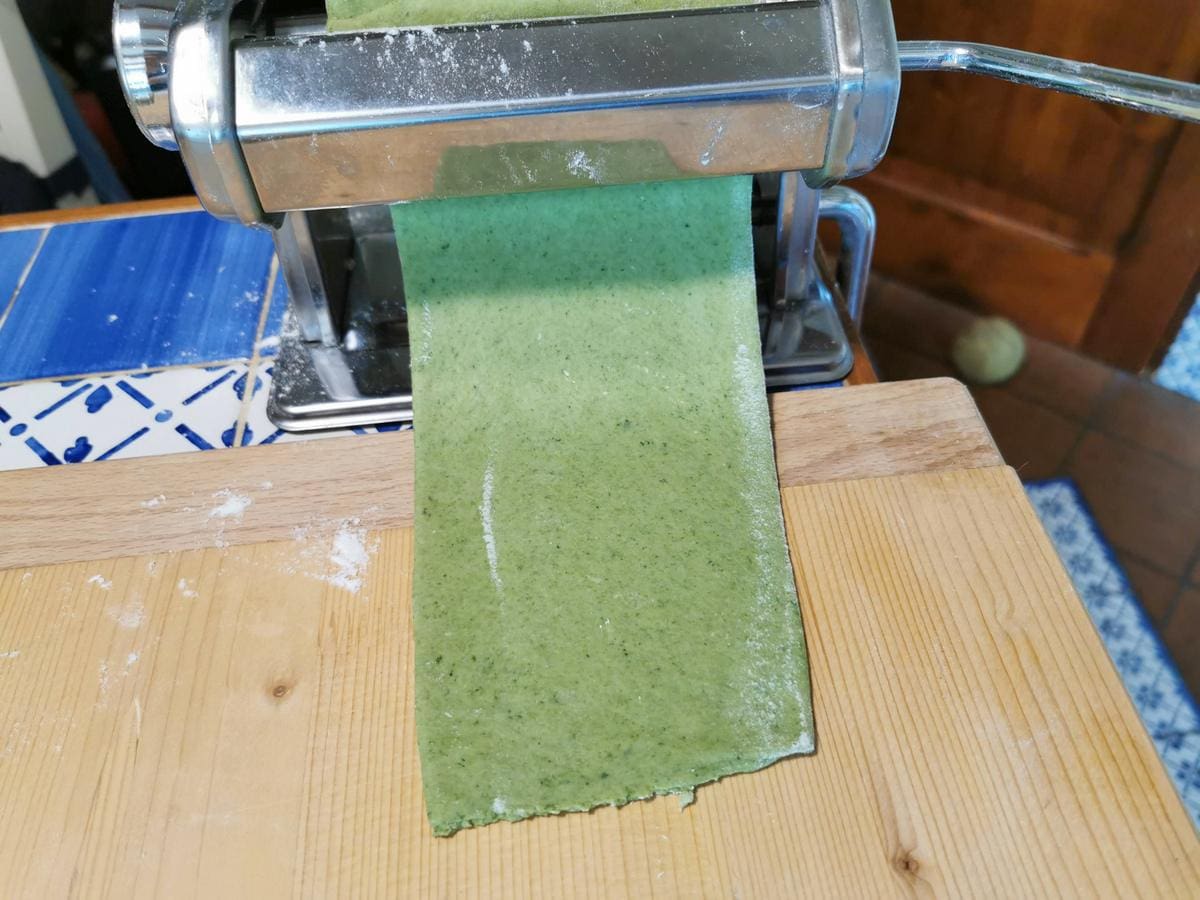
4) Cut off about a quarter of the dough, flatten it slightly with your hands or a rolling pin, then pass it through your pasta machine 3 times through the widest setting. I fold the dough sheet into thirds the first 2 times I pass it through the widest setting. Then pass it through the next settings until the sheet is thin enough to make lasagna with.
On my machine the widest setting is 7. I passed it though 7 (3 times), then 5, then 3.
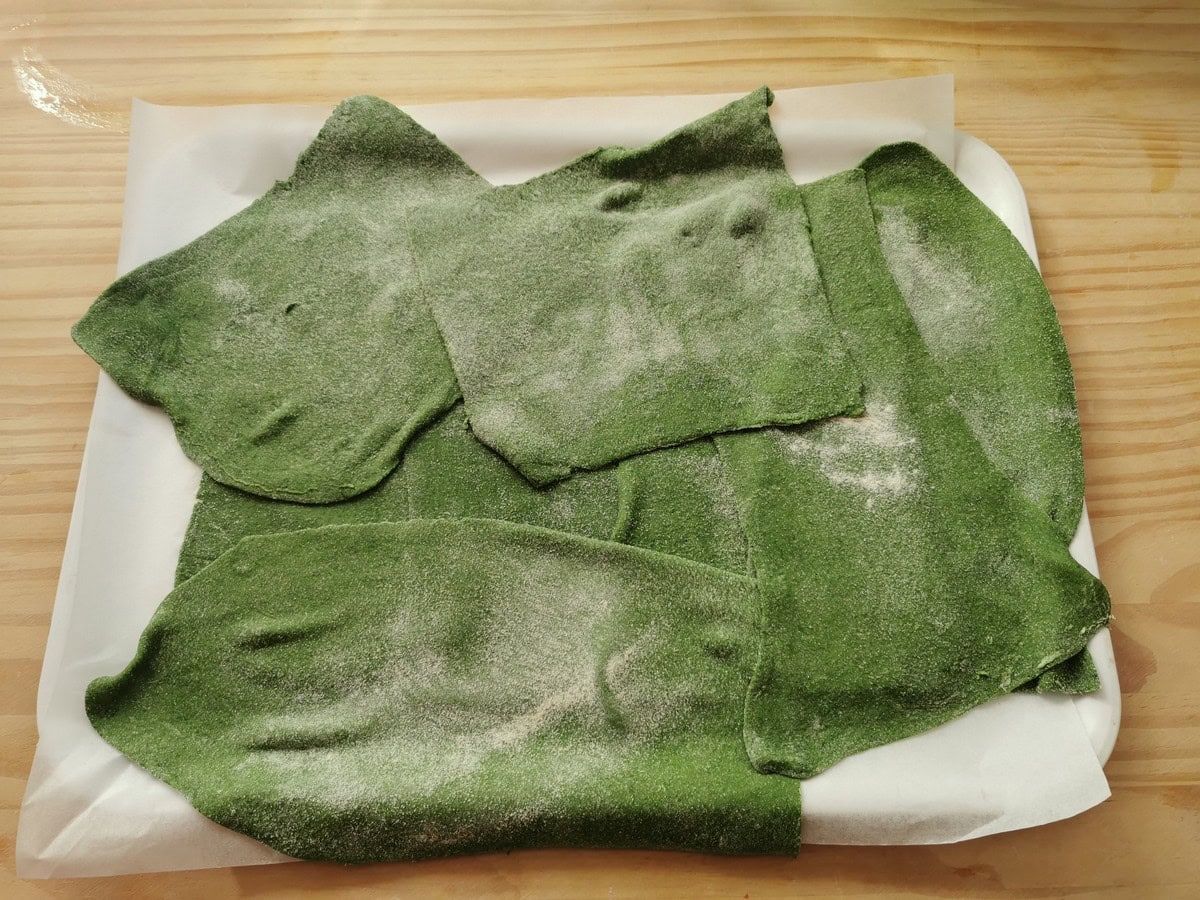
5) Finally, transfer the dough sheet to a floured work top and cut to the size you want, if necessary. Lay ready lasagne sheets on a flour dusted tray while you finish making them all and are ready to assemble your lasagne al forno with Bolognese.
How to assemble and bake your lasagne al forno.
Once your green pasta sheets, Bolognese sauce and béchamel sauce are all ready, it's time to assemble your lasagna.
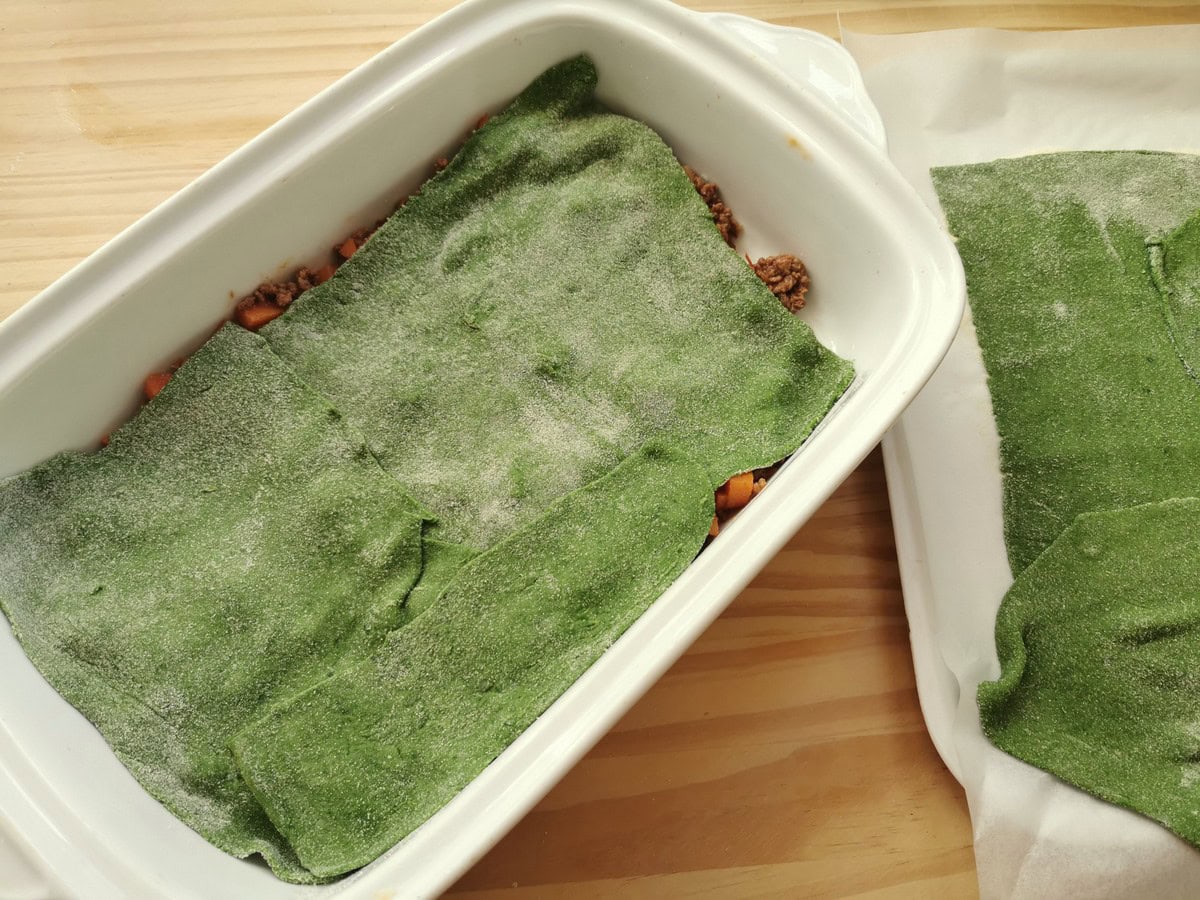
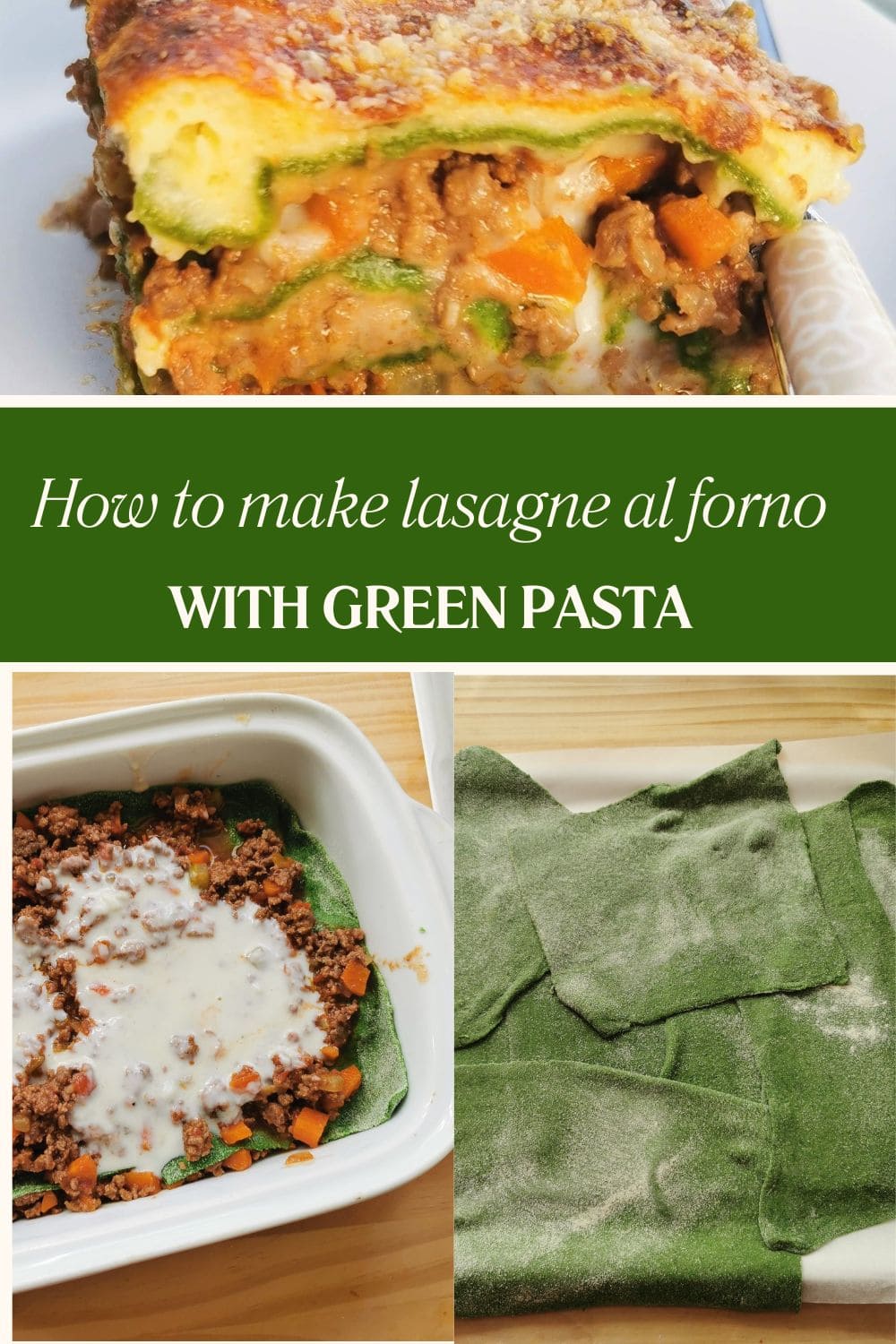
1) Spread a layer of Bolognese sauce over the bottom of a buttered rectangular oven dish. Then cover the sauce with lasagne sheets.
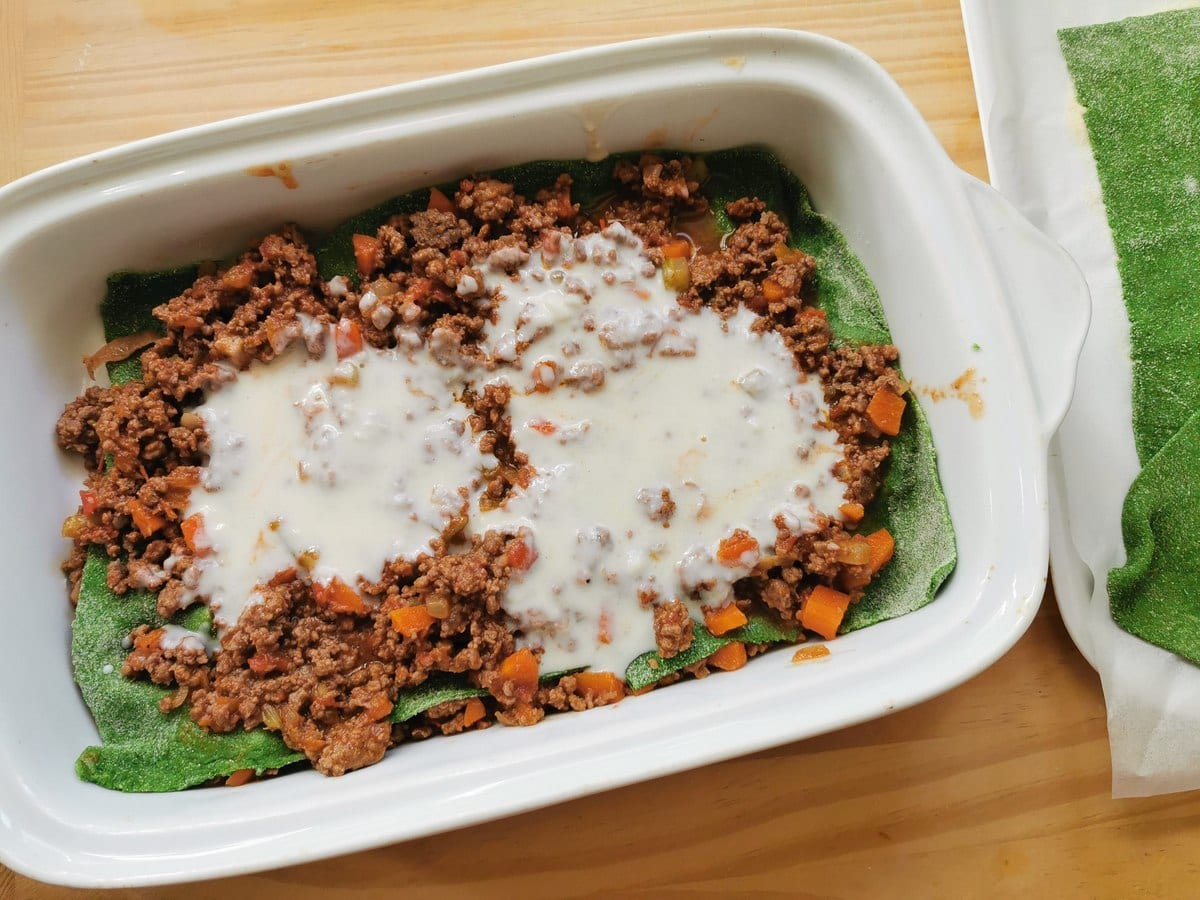
2) Make another layer of Bolognese sauce on top of the lasagne sheets. Add a thin layer of béchamel sauce and some grated Parmigiano Reggiano (parmesan cheese). Cover this layer with more lasagne sheets, then Bolognese, béchamel and grated cheese. Continue until you have 4-6 layers, depending on the size of your oven dish.
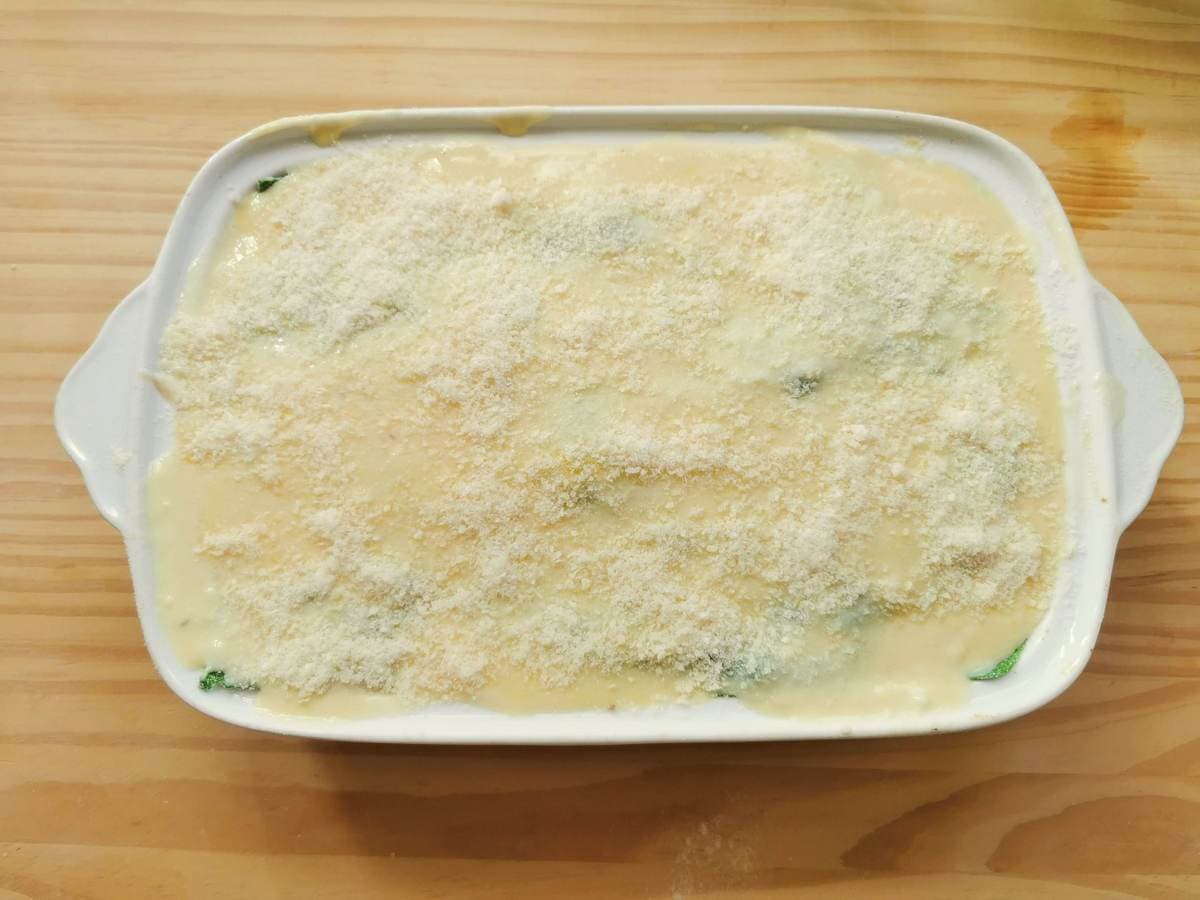
3) Cover the top of the last layer of green lasagne sheets with the rest of the béchamel and a generous sprinkling of Parmigiano.
4) Bake your lasagna in a preheated oven at 180°c (356°F) for about 30 minutes. If you want the top to be a little more golden brown, put the lasagna under the grill for just 1-2 minutes.
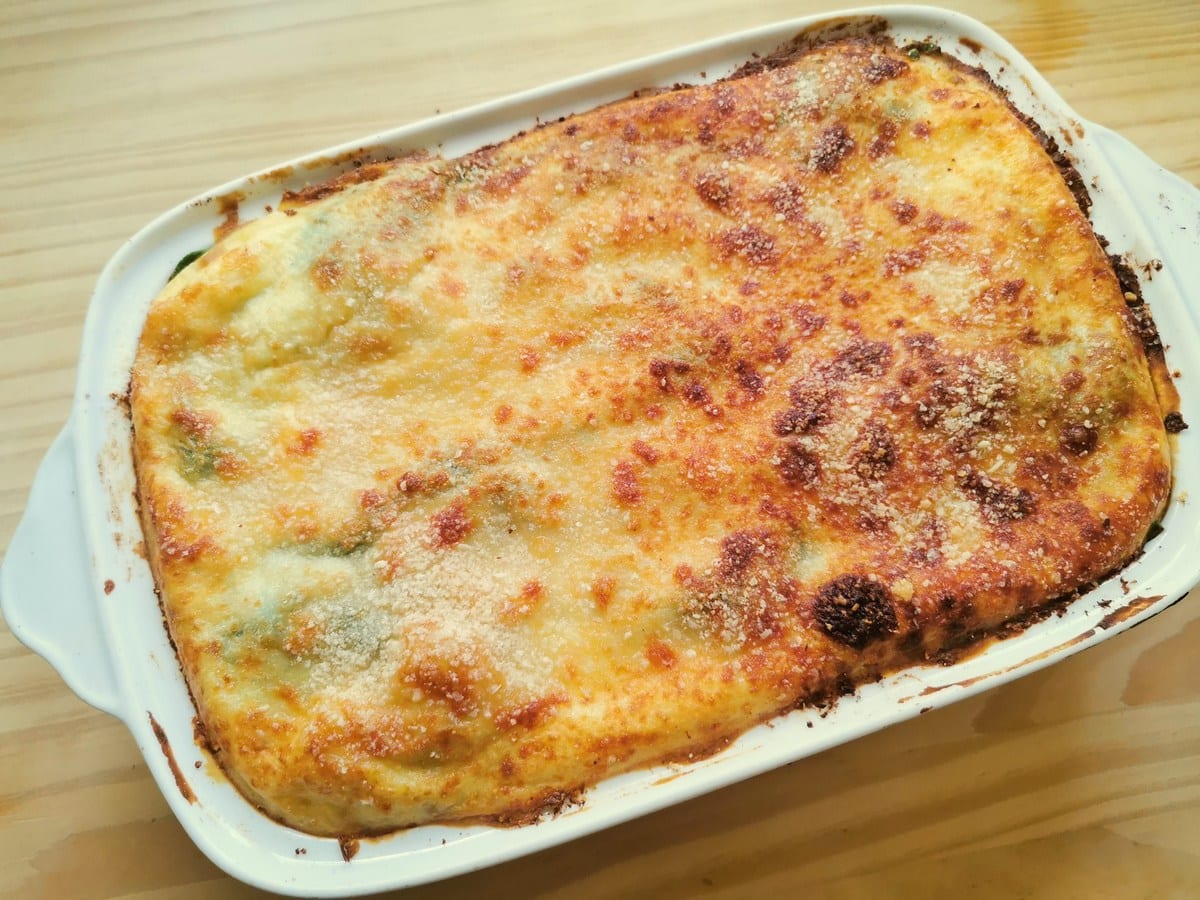
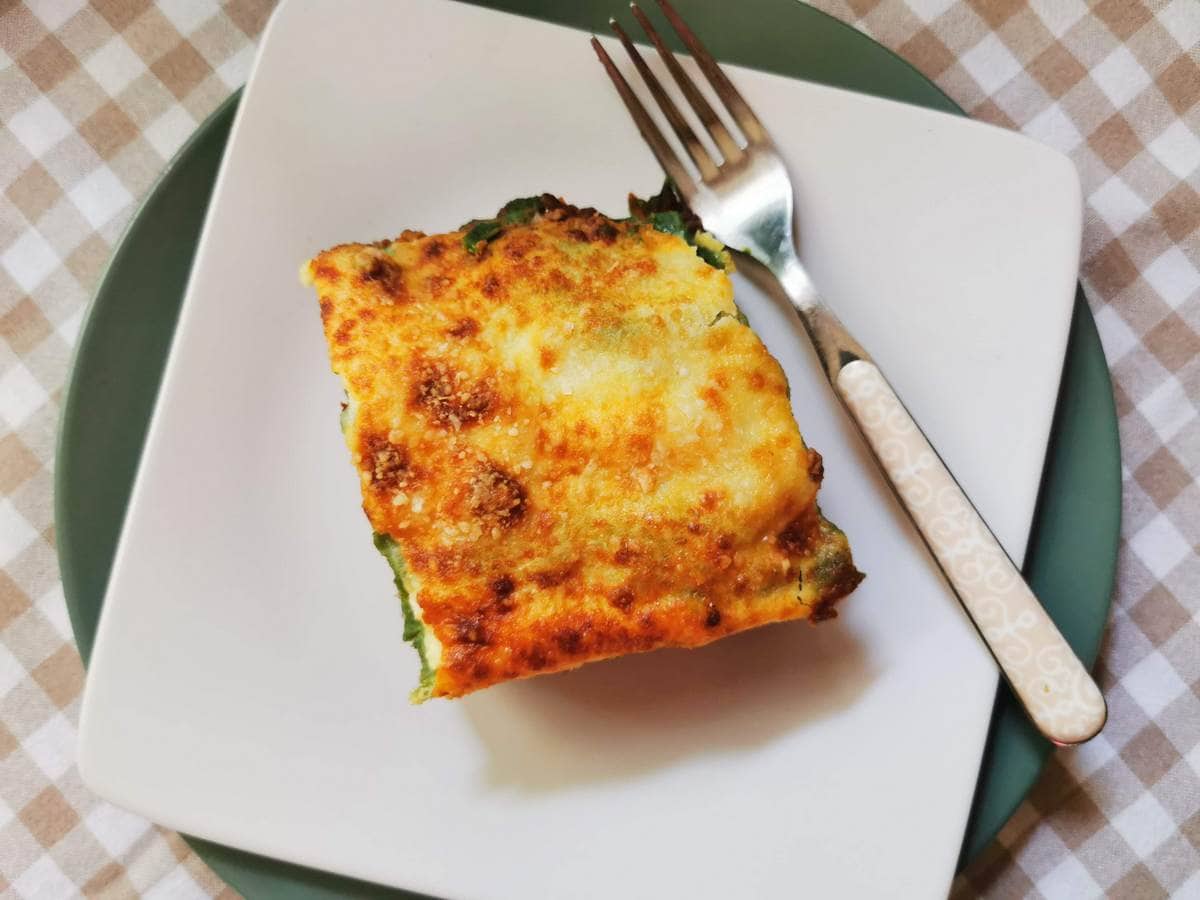
5) Let the baked lasagne al forno rest for 5-10 minutes before cutting and serving. The Italian Academy of Cuisine states that a perfect serving of lasagna remains 'in piedi', meaning it holds together well when portioned.
What to do with leftovers.
If you have leftover cooked lasagna you can keep it in the fridge for 3-4 days in an airtight container. Reheat covered in aluminum foil in the oven, or in the microwave until hot all the way through.
FAQs
As long as all the components (ragu, béchamel and pasta) are room temperature, you can keep an assembled but uncooked lasagna in the fridge for up to 24 hours before cooking.
Yes, you can keep an uncooked lasagna in the freezer for up to 3 months. Let it thaw in the fridge for 24 hours before baking. If you forget to defrost your lasagna, then add an extra 30-40 minutes to the cooking time and keep it covered with foil until the internal temperature reaches at least 70°c (160°F)
From pesto to vincisgrassi.
Lasagne al forno is made in other Italian regions too. However, they each add a local touch to the dish. In some areas, for example, the meat sauce is often replaced by mushrooms.
In Liguria, they make baked lasagna with pesto. Here in Veneto they use red radicchio from Treviso. Whilst in Umbria and Marche there is a particular version of lasagna al forno called vincisgrassi. For this they enrich the meat sauce the meat sauce with chicken or pork giblets.
The meat sauce is replaced by porcini mushrooms, truffles and pecorino cheese in the Apennine mountains. In Sicily, there is also an ‘alla Norma’ version, with eggplant. And last but not least here in Veneto, asparagus lasagna is a popular spring recipe.
Homemade is best!
You can make this lasagne al forno with store bought pasta and ready-made béchamel for a quicker meal prep. However, making your own pasta and béchamel will definitely have the best results and is so worth the effort.
Let me know what you think.
If you make this baked lasagne al forno with Bolognese recipe, I’d love to hear how it turns out and if you liked it. Please leave a comment here on the blog or on The Pasta Project Facebook page.
Looking forward to hearing from you!
Buon appetito!
NB This recipe was originally published in 2018 but it has been updated to include how to make homemade spinach pasta, new photos and new instructions.
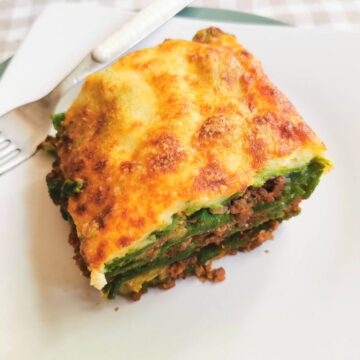
Lasagne al forno with Bolognese and green pasta sheets

Ingredients
For bolognese
- 3 tablespoon extra virgin olive oil
- 1 onion peeled and finely chopped
- 2 carrots washed and finely chopped
- 2 celery stalks washed and finely chopped
- 14 ounces ground beef or beef and pork mixed
- 6 ounces pancetta cut into cubes.
- 3.5 floz white or red wine ( I used white)
- 6 floz fresh whole milk (optional)
- 6 floz beef or chicken stock
- 14oz g tomato passata
- salt to taste
- pepper to taste
- 1 tablespoon tomato concentrate (optional)
For the béchamel (white sauce)
- 2.5 ounces all purpose flour or Italian '00' flour
- 2.5 ounces butter unsalted
- 1.5 pints fresh milk 750 ml (you may need more)
- 1 pinch salt
- ½ teaspoon grated nutmeg
For the pasta
- 14 ounces lasagne sheets ready made
- 2 large eggs
- 12 ounces Italian '00'; flour or all purpose flour
- 1.5 ounces cooked spinach chopped and puréed about 200g (7 ounces) raw.
- 1 tablespoon Olive oil
To finish the dish
- 3 ounces Parmigiano Reggiano freshly grated
Instructions
Make the bolognese (this takes 2-3 hours)
- Fry the peeled and chopped vegetables in a little olive oil with the pancetta cubes until the vegetables soften. (Some Italian chefs insist that the meat and vegetables be fried separately as they require different levels of heat) But I cooked them together.
- Add the ground beef to the vegetables and pancetta. Break the beef up with a wooden spoon and fry until nicely browned.
- Add the wine and continue stirring. When the alcohol has evaporated, add the passata, tomato concentrate (if using) and the stock. Mix everything together.
- Lower the heat and leave to simmer partially covered for about 2 hours, stirring occasionally.
- Add salt and pepper to taste.
- Add the milk, stir and continue to let the sauce simmer for another 30 minutes.
- If you think the sauce is too liquid you can remove the cover completely till it reduces. But if you are using fresh or uncooked pasta the sauce needs to be a little liquid.
Make the béchamel (white sauce)
- Melt the butter in a saucepan over low heat, incorporate the sifted flour and mix everything with a wooden spoon or whisk until you have a paste (roux)
- Cook the roux until it is golden, and at this point add the milk a little at a time, plus a pinch of salt and a ½ teaspoon of grated nutmeg. Continue to stir until the sauce reaches the consistency you want.
Cook the pasta
- If you are using dried pasta sheets partly cook them in boiling salted water. You may want to add a little olive oil to the water so they don't stick together or cook them one at a time!
Make green pasta sheets
- The first step to making the green pasta is to wilt the spinach in a pan. Then you need to drain it well and chop it. I usually squeeze the cooked spinach in a tea towel to get as much liquid out of it as possible. Once the spinach is chopped, then purée it in a food processor until smooth
- Sieve the flour into a bowl, add the eggs and the spinach, a pinch of salt and a tablespoon of olive oil. Beat the eggs with a fork and then mix the flour, eggs and spinach together until you have the beginnings of a dough. Next, use your hands to knead the dough in the bowl until it no longer sticks to the side of the bowl.
- Turn the pasta dough out onto a well-floured work top and knead for 10 minutes until the dough is soft and pliable. Then roll the dough into a ball, wrap it in plasticwrap (clingfilm). Let it rest for 30 minutes.
- Cut off about a quarter of the dough, flatten it slightly with your hands or a rolling pin, then pass it through your pasta machine 3 times through the widest setting. I fold the dough sheet into thirds the first 2 times I pass it through the widest setting. Then pass it through the next settings until the sheet is thin enough to make lasagne sheets with.
- On my machine the widest setting is 7. I passed it though 7 (3 times), then through setting 5, then 3.
- Finally, transfer the dough sheet to a floured work top and cut to the size you want for your oven dish. Lay ready sheets on a flour dusted tray until ready to make your lasagne al forno.
Finish the dish
- Then butter a rectangular baking dish and spread a thin layer of Bolognese sauce over the bottom. Cover the sauce with a layer of lasagne sheets, then cover them with a layer of sauce, some béchamel and a sprinkling of grated cheese.
- Then put another layer of pasta, then bolognese sauce, béchamel and cheese and so on until the ingredients are used up, leaving some béchamel for the final layer.
- Cover the last pasta layer with just béchamel sauce, grated cheese and some butter flakes.
- Bake your lasagne al forno in a preheated oven at 170-180 °c (338-356°F)for about thirty minutes. When the surface is golden and the pasta is cooked (check using a fork) remove from the oven. If using uncooked pasta it's a good idea to cover the dish with aluminium foil for the first 15 minutes as otherwise the top may get golden before the pasta is cooked.
- Allow the lasagne al forno to sit for 5-10 minutes before serving.
Notes
Nutrition
Have a look at these other Emilia-Romagna pasta recipes for more delicious pasta recipes like this one!
Art Johnson says
Great recipe - it's nice to find a recipe that use bechamel sauce rather than ricotta!
Jacqui says
Thanks for your comment Art. Béchamel is more traditional in Emilia-Romagna where lasagne with Bolognese comes from. Ricotta is used more in the South of Italy.
Dennis says
This turned out beautiful, I can't imagine it could be any better. I did a one third version for two and added two chopped Portobello mushrooms simply because they were approaching end of life. I'll do that next time as well. You have a new fan Jacqui.
Jacqui says
Thanks for your comment/review Dennis. I'm thrilled your lasagna turned out so well! A nice idea to add some mushrooms!
Gary says
Made 1/2 this recipe for my wife and I this weekend with the homemade noodles referenced in the recipe and it was fantastic!!! The wife claimed she hadn’t had Italian food like that since we were last in Italy (which has been way too long by the way)!! Do yourself a favor and make this for you and your family!! It will become your very favorite lasagna!!
Amber DiSabatino says
Most of my life I didn’t like lasagna. At all. The ricotta. The watery meat sauce. All of the heavy cheeses. This recipe redefined what lasagna is. Together, the homemade pasta, the meaty, rich ragù and the béchamel were out of this world. This brought me back to Bologna. Thank you! xx
Jacqui says
So happy to hear this recipe changed your opinion of lasagna! Ricotta is usually used in the South, particularly Naples. There they also add mozzarelle and Parmigiano, so lots of cheese. I like other types of lasagna but a well-made lasagna Bolognese is a thing of beauty (in my opinion!), especially when all the ingredients are homemade. Or as you put it 'out of this world'!
Tina says
I made this lasagna last night and it came out perfect, just delicious! I'm not Italian, but this is my new favorite bolognese sauce. I did add 5 cloves of minced garlic, and substituted 6 oz tomato paste + 12 oz beef stock for the passata.
I live in rural Alaska, and ricotta is not always available. So I was glad to find a lasagna recipe with bechamel. I prefer it over ricotta! I also added 2 sliced provolone cheese layers, which probably would have been better if it were mozzarella, but it worked.
It's very dry up here, so the lasagna sheets dried out quickly while I was making the bechamel sauce. They had a good bite & I don't think I will ever go back to store bought noodles.
Thanks for the recipe! I'm excited to try out more homemade noodle dishes!
Omar says
Hi Jacqui,
I'd made each of the components of Lasagne alla Bolognese al Forno enough times in the past to be confident in taking on the larger job of putting together what is, at bottom, just a casserole, albeit a complex and time-consuming one.
So, last week - Lasagne Week here at the house - I made each part (and many of THEIR parts) by hand, including Bolognese and besciamella sauces and, of course, fresh egg pasta.
As I planned, cooked, assembled and baked, I was cautious about salt, temperature, ratios of wet:dry, density, etc., because I intensely dislike wasting time, effort and resources.
Didn't matter.
When I cut into my gorgeous lasagne, I found that although its five layers were distinct, each pasta sheet had essentially melted into the sauces, and the texture of each bite was akin to lasagne made with mashed potatoes.
Two questions:
1. Is it possible that this is the authentic texture of Lasagne alla Bolognese al Forno, and that since I grew up on the Italian-American version of the dish and have never visited Bologna, I've just learned a new thing?
2. Since I cooked the dish covered for one hour - a mistake, as I was working from a recipe I'd previously pulled for baking a FROZEN lasagne - I simply cooked my pasta into oblivion?
Thanks in advance for your advice, and in general, for having done such a good job with The Pasta Project. I feel I owe you a meal, once I figure out how to cook.
Omar
Jacqui says
Hi Omar, thanks for your message. I'm so glad you like my pasta project! Re your lasagne. I definitely think cooking it for an hour covered was a mistake. Firstly the top won't turn a nice golden colour and secondly I usually bake it for 30 minutes in a preheated oven. Having said all that, I've had lasagne al forno here in Italy in which the pasta was pretty soft but not mushy. Fresh pasta does tend me be softer when baked than dried pasta. I'm sorry your lasagne didn't turn out well this time. I hope you'll give it another go!
julianne farmer says
In case I am not the only foolish person who didnt realize the oven temperature is stated in celsius not farenheit......it is celsius. Do not ruin your whole special lasagna like I did.
Jacqui says
Dear Julianne, once again I apologize for not stipulating oven temps are in celsius! Fahrenheit is only used in US and Canada so here we don't usually put it. But I will start to highlight that fact in some way. I feel so bad that your lasagna was ruined. I can imagine it took time to make!
Angelica Hill says
A simple way to highlight it is to include the abbreviation of the unit you're using (C for Celsius or F for Fahrenheit).
Fahrenheit-using folks who don't feel like doing the math/googling the conversion, the temp you need to preheat the oven to for this recipe is 320F.
Jacqui says
That's what I have started doing with new recipes Angelica! But will take me a little time to go though all the old baked pasta recipes to make sure they have the right info!Thanks for your input!
julianne farmer says
Just baked this lasagna with my homemade fresh pasta sheets . Recipe says to bake at 160 degrees for 30 minutes. I think the fresh pasta turned into mush. Does the temperature need to be corrected? I did not precook the pasta sheets but used right away as directed.
Toni says
This happened to me too: it's like the pasta disappeared into the dish, leaving my lasagne basically just a thick sauce. I did the fresh pasta as per the recipe on this site, didn't pre-boil. Perfectly edible, but no bite at all. What went wrong?
Jacqui says
Hi Toni, I'm sorry to hear the pasta for your lasagna was too soft. Unfortunately making homemade pasta isn't an exact science. Different things can effect the result. Some readers have had great success with this recipe and others sadly not. The thickness and consistency of homemade pasta can vary. If it's very thin it'll cook more quickly. If it's a bit wet, it'll get too soft while cooking. Your oven can also make a difference as can how liquid your Bolognese and béchamel are. If you plan to make this recipe again, I'd suggest cooking it faster at a higher heat.
Corey says
Jacqui,
Firstly, thank you kindly for all your wonderful efforts to help thousands of souls gain a deeper understanding of your beautiful country!
At the risk of sounding linear, is there a standardized means of communicating the thickness of the pasta sheets? I know pasta maker thickness settings differ, but this bit of information may taper some potential frustration. There are multiple variables that come to play in this arena....just looking for some extra guidance.
Thank you again so very much!
Jacqui says
Hi Corey, thank you for your comment! To be honest there's no hard and fast rule about the thickness of pasta sheets. I think most Italians do it instictively. There are recipes that say 1 or 2mm but measuring each sheet and getting it exact is tricky. Plus, not all pasta machines are equal. On mine the higher numbers are for thicker sheets and the lower for thinner. Personally, I roll them out till I can just see my fingers through them if I'm not going to preboil and a bit thicker if I am. Hope that helps.
Adam Betz says
I just stumbled upon this site today after looking for a lasagna recipe using fresh noodles. Your blog is very detailed and informative, and I'm looking forward to making this lasagna for my family tonight!
How far in advance can you assemble this dish? From my experience making lasagnas in the past, they are quite time intensive but I suspect that it would be fine if I made this in the morning / early afternoon, placed in the refrigerator, and then baked at dinner time.
Jacqui says
Hi Adam, thank you for your comment. I'm happy you like my blog! I usually make and bake but I think there are 2 ways you can prepare in advance (morning for evening). Assemble the whole dish with room temperature Bolognese and bechamel and keep in fridge covered in plastic wrap till ready to bake. Or make everything in advance Bolognese, bechamel and pasta and assemble just before baking. Keep Bolognese and bechamel in the fridge. Pasta sheets at room temperature.They will dry a bit but that's ok. Let me know how it turns out. Buon appetito!
Gary Weston says
My Italian grandfather (from Bari region of Emilia) always insisted on the ragû being slow cooked in an oven: it makes for a thick, jam-like consistency and utterly wonderful depth of flavour. He used chicken livers in the ragû too , and Italian sausage meat. The rest of your method is close to his. He was a boss!
Gary Weston says
I meant Bari THEN Emilia ...
Jacqui says
Hi Gary, thanks for your comment. I love the idea of slow cooking ragu in the oven. I've actually never done that. I have made ragu with chicken livers and sausage. I love adding sausage to ragu. It really adds to the flavour!! Sounds like your grandfather was a great cook!
Iain McCorquodale says
Ideally, how many layers would you have?
Jacqui says
Hi Iain. I usually end up with about 4 layers of pasta. However, some Italians make up to 8. It depends on how deep your dish is and how much sauce etc your put between the pasta layers and how thick the pasta sheets are.
Fred Nonterah says
Thanks for the history lesson Jacqui, never knew tomatoes weren’t grown in Italy until the 18th century. My wife is a big fan of lasagna and I’m she’ll love it, maybe I can surprise her with this recipe one day. Thanks for sharing!
admin says
Thanks so much for you comment Fred! I love that so many Italian dishes have a long history behind them. Makes eating them interesting! I'm sure your wife will love it! All the best from Verona! Jacqui
Kiki Johnson says
I make lasagna every single year for Christmas and during the year, I try out as many new recipes as I can to be able to surprise my family with a new twist each time. I will bookmark your recipe and try it next weekend! It looks SO good!
admin says
Grazie Kiki! Lasagna is popular in Italy at Christmas too. In fact, it's very often served on holidays and special occasions! I'm sure you'll love this version. It's really the original of what most of us make! Buon appetito from Verona. Jacqui
MakingHerstory says
Looks yummy!! Love ask the information as well!!
admin says
Thanks so much MakingHerstory! I'm happy you like the dish and the info! All the best from Verona! Jacqui.
Jyothi says
Anytime lasagna. Looks delicious!
admin says
Thanks so much Jyothi, Yes I'm with you. Lasagna any time! Best wishes from Verona, Jacqui
Bobbi | Bobbi's Kozy Kitchen says
YUM!! That looks SO good! Like, I wish I had it for breakfast today good 🙂
admin says
haha lasagne al forno for breakfast would be an unusual choice Bobbi, but why not! Regards from Verona! Jacqui
Stephanie says
I had no idea there was such a history behind lasagna! I like mine without meat and a lot of cheese. I’ve never heard of hard-boiled eggs in it, that would definitely be different!
admin says
Thanks for your feedback Stephanie. Yes, lasagne is a very ancient pasta here in Italy and so has a long history and many different versions apart from this one. There are a number of vegetarian lasagne al forno recipes which are delicious too. Here on the blog I have recipes for 2. Lasagne alla Norma and white lasagna with mushrooms and burrata. I'm sure you would like them! All the best from Verona! Jacqui
Amanda Wren-Grimwood says
I love a lasagne and I love this version with the proper ragu. So rich and comforting!
admin says
Thank you Amanda! Yes this is my absolute favourite way to make lasagne al forno. The ragu gives it such an awesome flavour! The ultimate comfort food! All the best Jacqui
Tristin says
I love all the different variations and customization ideas you give! Great recipe!!
admin says
Grazie Tristin. I do love the different ways Italians make their pasta dishes. Although Italy isn't a big country, each region has its own cuisine and it's so interesting to try different versions of popular dishes! And of course there's lots of room for creativity where pasta is concerned! Thank you for visiting. All the best from Verona! Jacqui
Brian Jones says
A good lasagne is a thing of great beauty and it is such a forgiving dish too with loads of room for reheating and scaling. Yours looks delicious!
admin says
I agree Brian, lasagne al forno is a divine combination of tastes that is hard to beat! And yes, it still tastes amazing reheated! All the best from Verona! Jacqui