
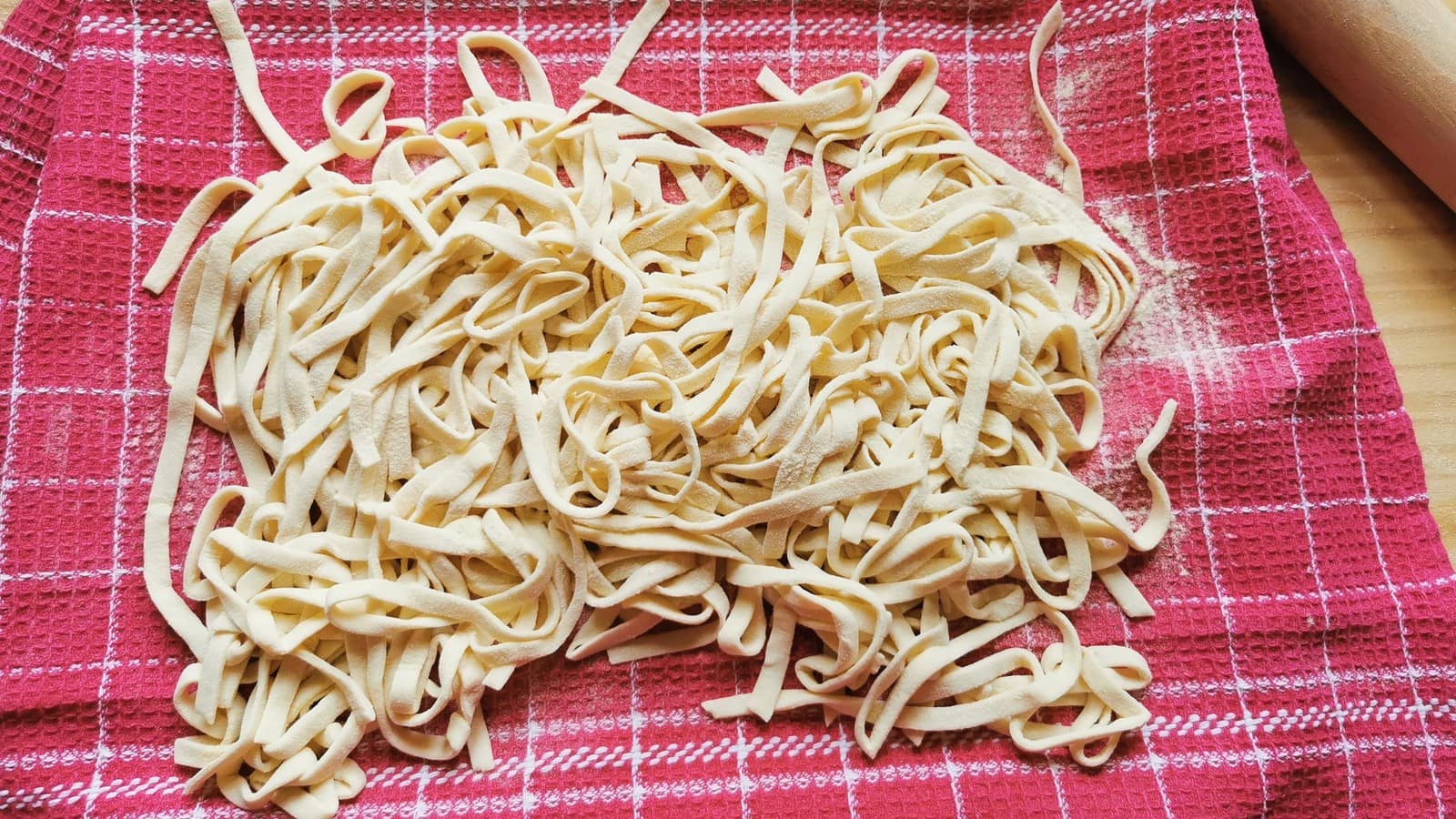
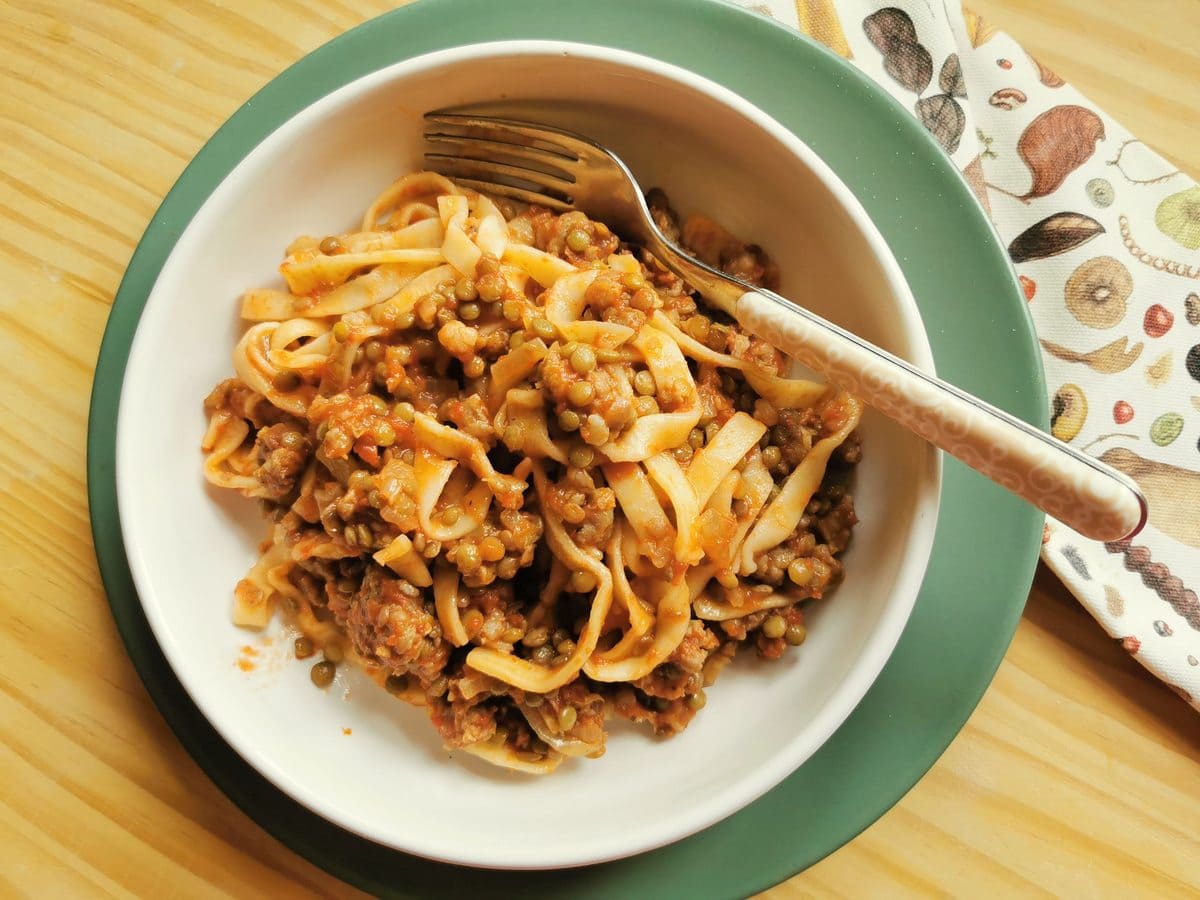
Strangozzi is a traditional pasta from Umbria, particularly the Foligno, Spoleto and Terni areas of Perugia province. It’s one of a number of flour and water pasta types that have been part of the region’s cuisine for centuries. Making homemade strangozzi pasta is easy. Delicious with well-known Umbrian dishes such as pasta alla Norcina, pasta with Umbrian lentils and sausage, and Umbrian pesto.
What is strangozzi pasta?
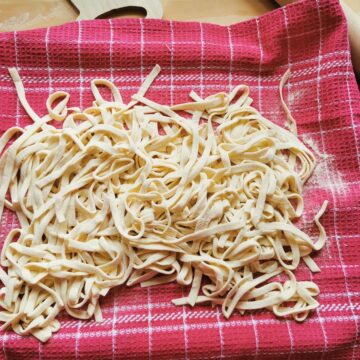
Strangozzi is a long, rectangular cut pasta ribbon typical of Umbria as well as other parts of central Italy; Marche, Lazio, and Abruzzo. This traditional flour and water pasta is also called stringozzi, strengozzi, or strongozzi depending on which region you are in! It looks similar to tagliolini but is thicker and contains no egg.
Other flour and water pasta from Umbria.
Fresh pasta is very popular and traditional in Umbria. It's a staple on feast days and for Sunday lunch, which is rarely eaten without homemade pasta.
There are many traditional Umbrian pasta shapes, almost all of which are egg-free, made with just water and flour. You don't need special equipment to make flour and water pasta. The only tools you need are a spianatora (pastry board), a lasagnolo (rolling pin), and some elbow grease!
For some shapes, like tagliatelle, strangozzi and penchi (like pappardelle), the dough is rolled out with a rolling pin, left to rest, and then cut into strips with a knife. Some shapes such as ciriole and manfricoli are then made by rolling the pasta strips between one’s hands to form chubby hand-rolled spaghetti like strings.
Other flour and water pasta types like umbricelli are made directly by hand by rolling small pieces of dough until they become long thick spaghetti. Umbricelli are almost identical to Tuscan pici and lombrichelli from parts of Lazio.
A little strangozzi history and legend.
According to Italian food historians, strangozzi or stringozzi pasta got its name because it resembles old fashioned leather shoelaces.
However, there is also a legend that during the rule of the Papal States, shoelaces were used to strangle members of the clergy. In fact, the word strangozzi is a play on the words "strangola" (strangle) and "gozzo" (goiter)!
A similar legend exists behind the origins of a type of pasta from central and Southern Italy called strozzapreti, literally priest stranglers or chokers, and Northern Italian gnocchi known as strangolapreti, meaning the same thing.
Since, these similar names exist in different parts of Italy, it seems that they were inspired by a certain animosity towards the clergy throughout the country, particularly among the peasant population. This anticlerical sentiment probably originated in the Middle Ages when much of Italy’s rural population were sharecroppers.
Under a system known as Mezzadria, farmers had to give up half their produce to landowners. Many landowners were priests as the Church owned a lot of the land. The priests often took more than their fair share of the farm produce (crops, eggs, chickens, vegetables, cattle etc). As a result, they left farming families struggling to cope.
What pasta sauces are served with strangozzi
Although strangozzi has very humble origins and started as a poor man’s pasta, today you can find it served throughout Umbria, both in homes and restaurants. Because it's made with simple ingredients, and has a rough, porous surface, strangozzi goes well with a wide variety of condiments. So much so that almost every Umbrian town offers its own specific sauces for it.
Some of the most well-known strangozzi recipes are..
Strangozzi with truffle: This is one of the most popular strangozzi combinations, even beyond Umbria. Typically, locals use Norcia truffles prized for their intense, aromatic flavor;
Strangozzi alla Norcina: A very famous pasta recipe often served with strangozzi comes from the town of Norcia. Pasta alla Norcina contains a sausage sauce made with onions, white wine, cream and optional truffles.
Strangozzi alla Spoletina: From Spoleto, this sauce features peeled tomatoes, seasoned with garlic, black pepper, parsley, and extra virgin olive oil. On my to-make list!
Over the centuries, the preparation of strangozzi has evolved into many variations, partly because the pasta shape allows for great experimentation. Other popular toppings for strangozzi are porcini mushrooms, asparagus, chili pepper, leek and speck, pork ragù, black celery, and others.
How to make homemade strangozzi pasta.
Handmade strangozzi requires rolling out a sheet of pasta dough, made from soft wheat flour, water, and, if desired, salt. The dough is then cut into strips approximately ¾ mm wide and approximately 30 cm long, similar to tagliolini.
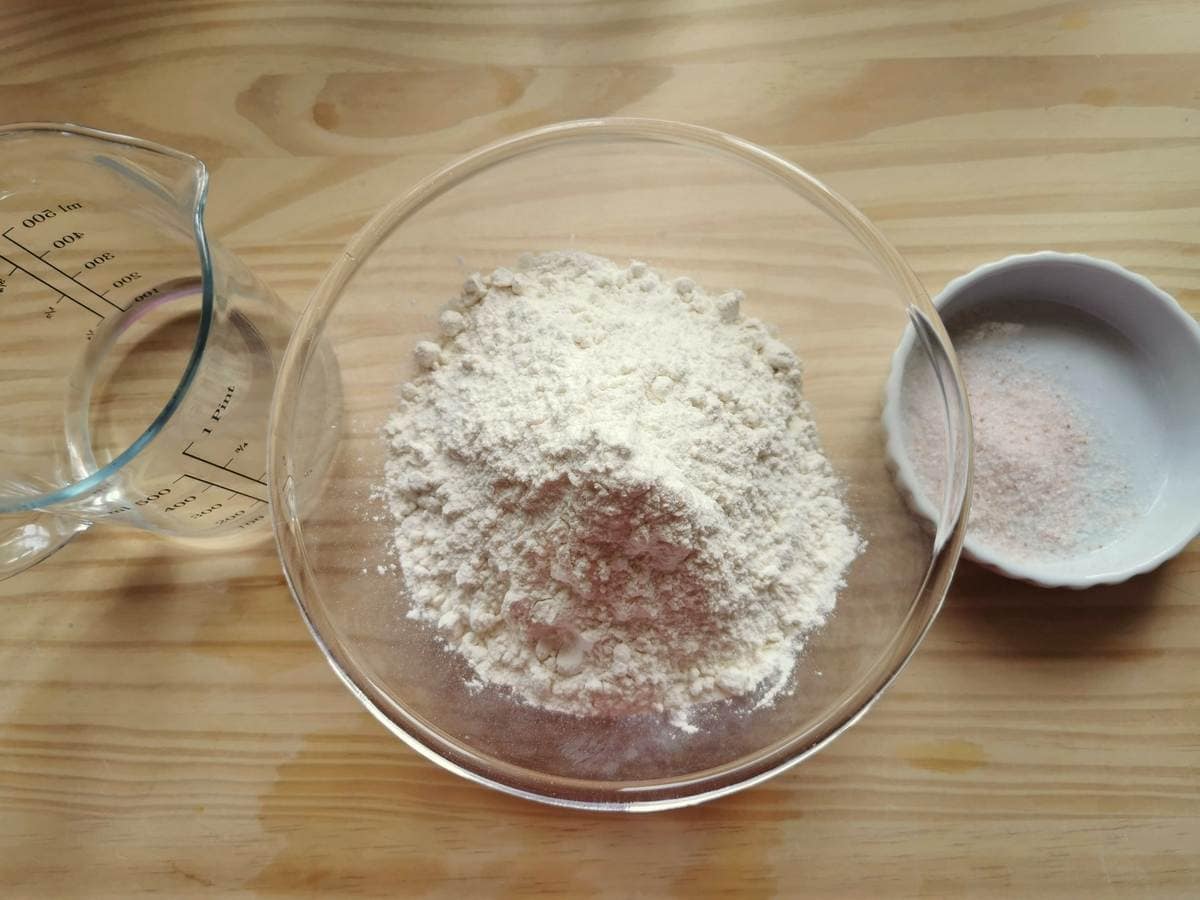
Ingredients
Italian 00 flour (or all purpose): Traditionally just Italian soft wheat flour but you can use a mixture of soft and semolina hard wheat flour for a rougher, chewier texture.
Water: Usually warm or room temperature, not cold.
Extra virgin olive oil: 1 tablespoon (optional, adds elasticity)
Salt: A generous pinch of salt for the dough.
Step by step Instructions
Make the Dough
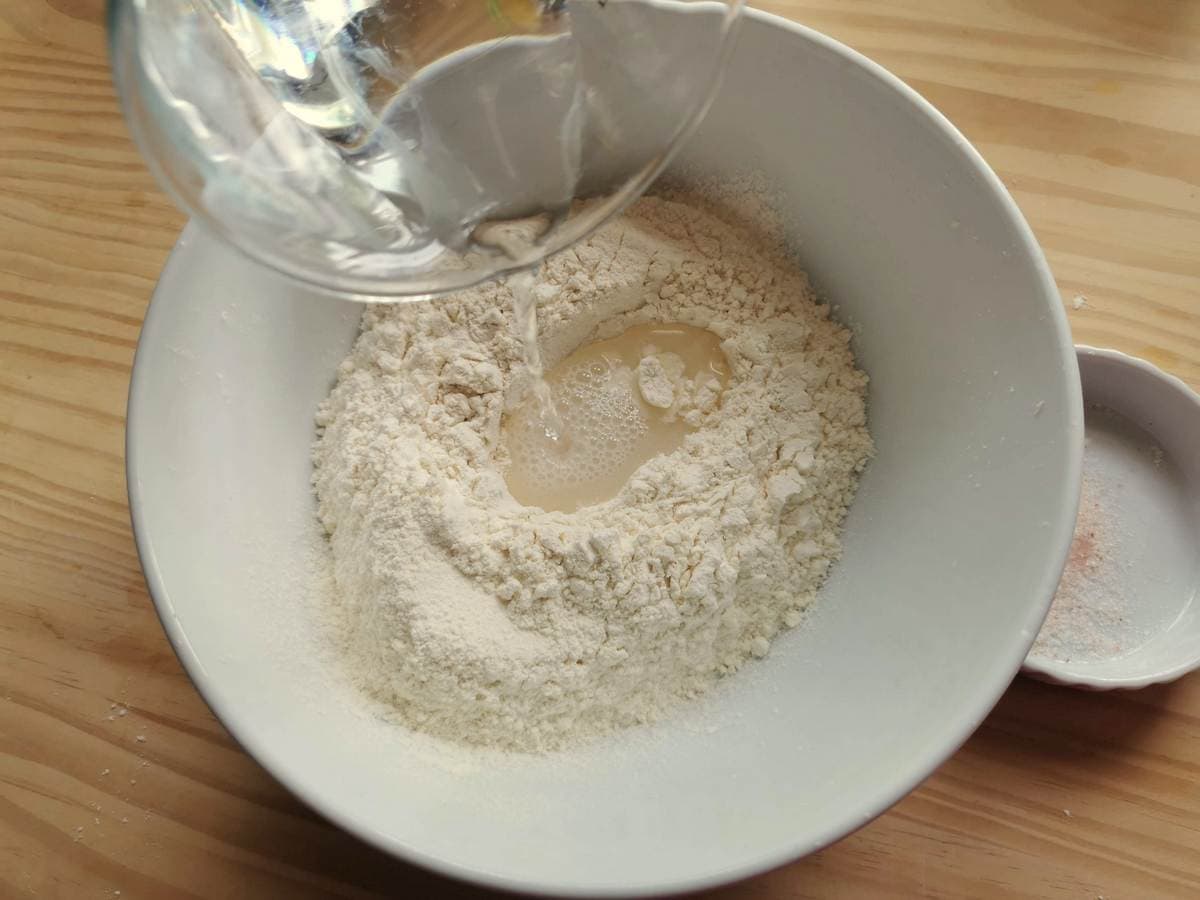
Step 1) Mound the flour on a clean wooden board or in a mixing bowl and make a well in the center. Add the salt, olive oil (if using), and pour the water into the center a little at a time.
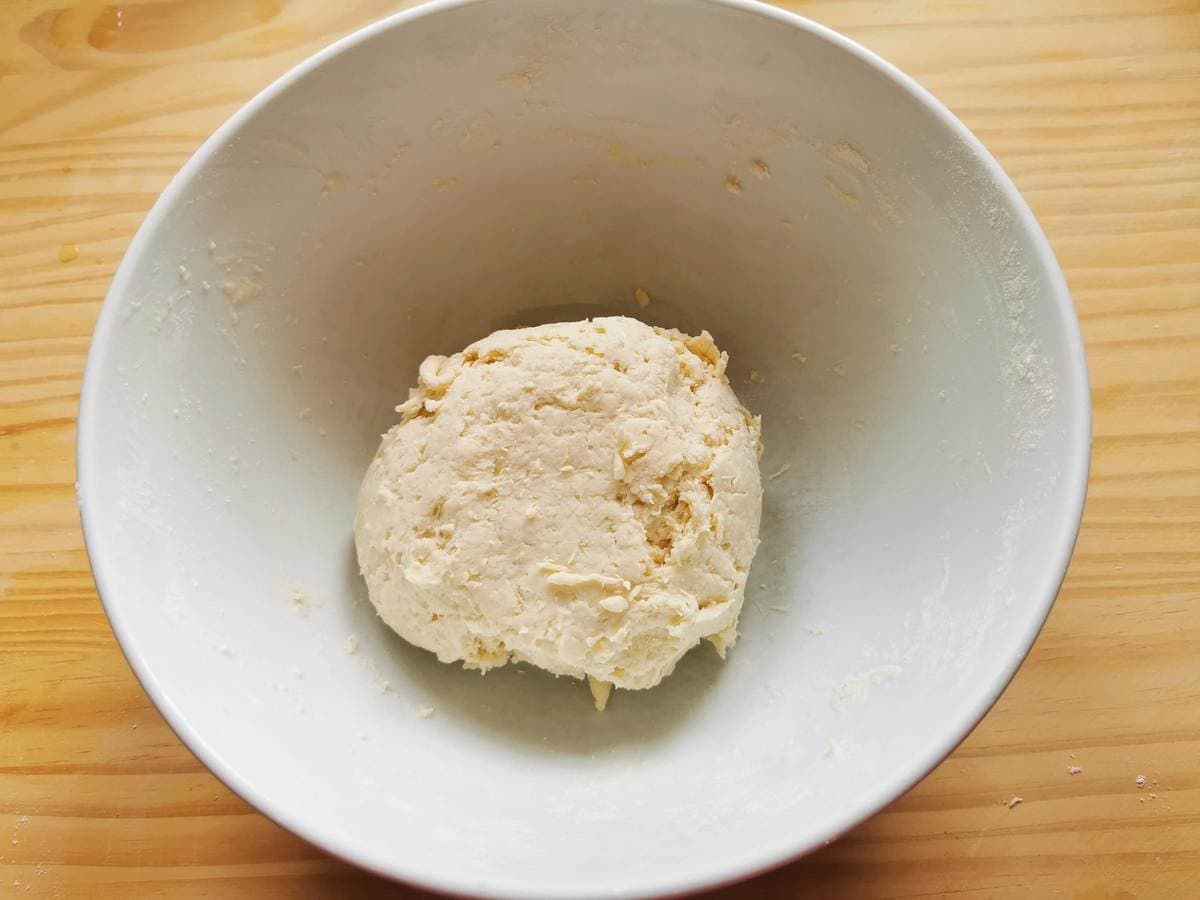
Step 2) Using your hands or a fork, gradually incorporate the flour into the liquid. Once it begins to come together, use your hands to knead it. If starting in a bowl, turn the pasta dough out on to a lightly floured surface once the dough can be formed into a ball.
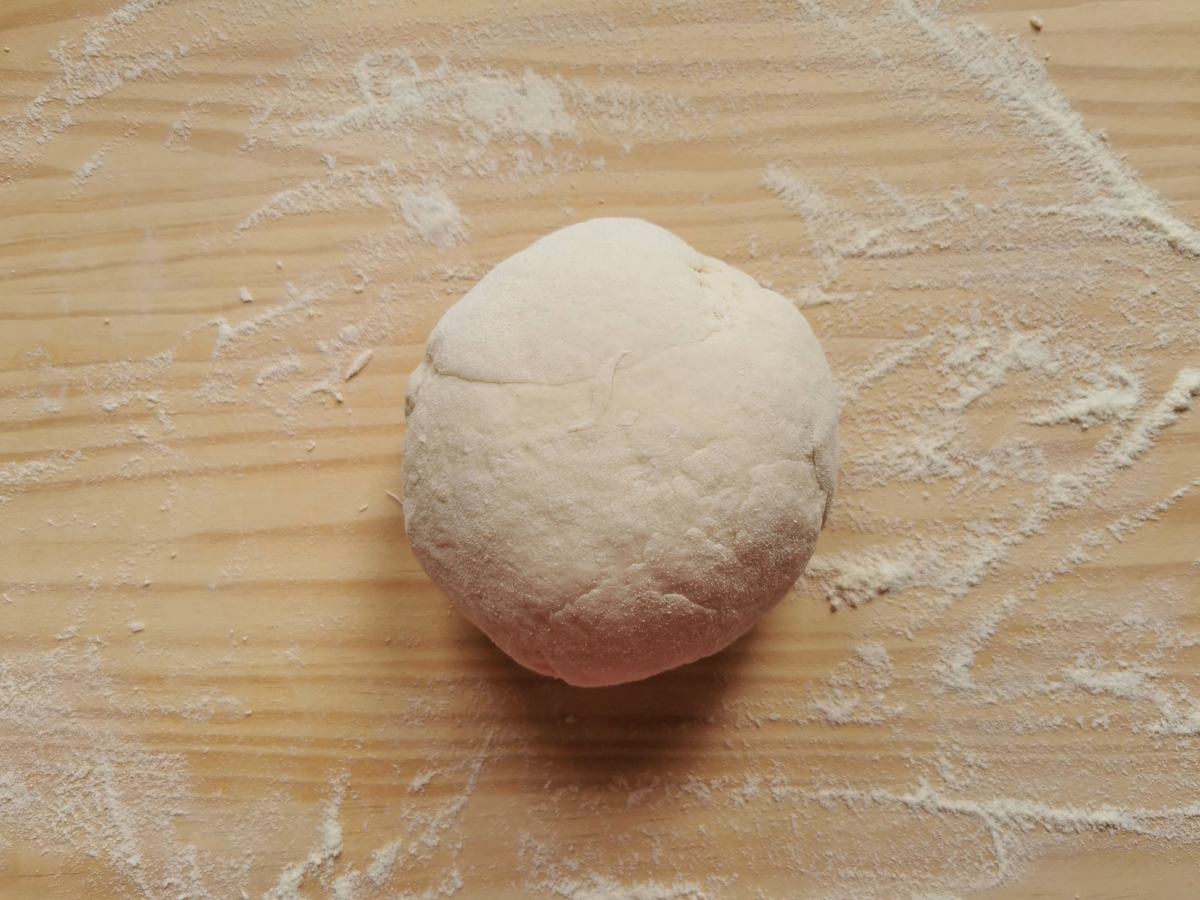
Step 3) Knead vigorously for 8-10 minutes until you get a smooth, firm, and elastic dough. Then, roll the dough into a ball and wrap it in plastic wrap and let it rest at room temperature for 30 minutes.
Roll and Cut
Step 4) Roll out one third of the dough using a rolling pin on a floured surface until it is roughly 2 to 3 mm thick (about 1/16 inch), about twice the thickness of tagliatelle. I use semolina flour for any dusting. You can also use a pasta machine to roll out the pasta sheets.
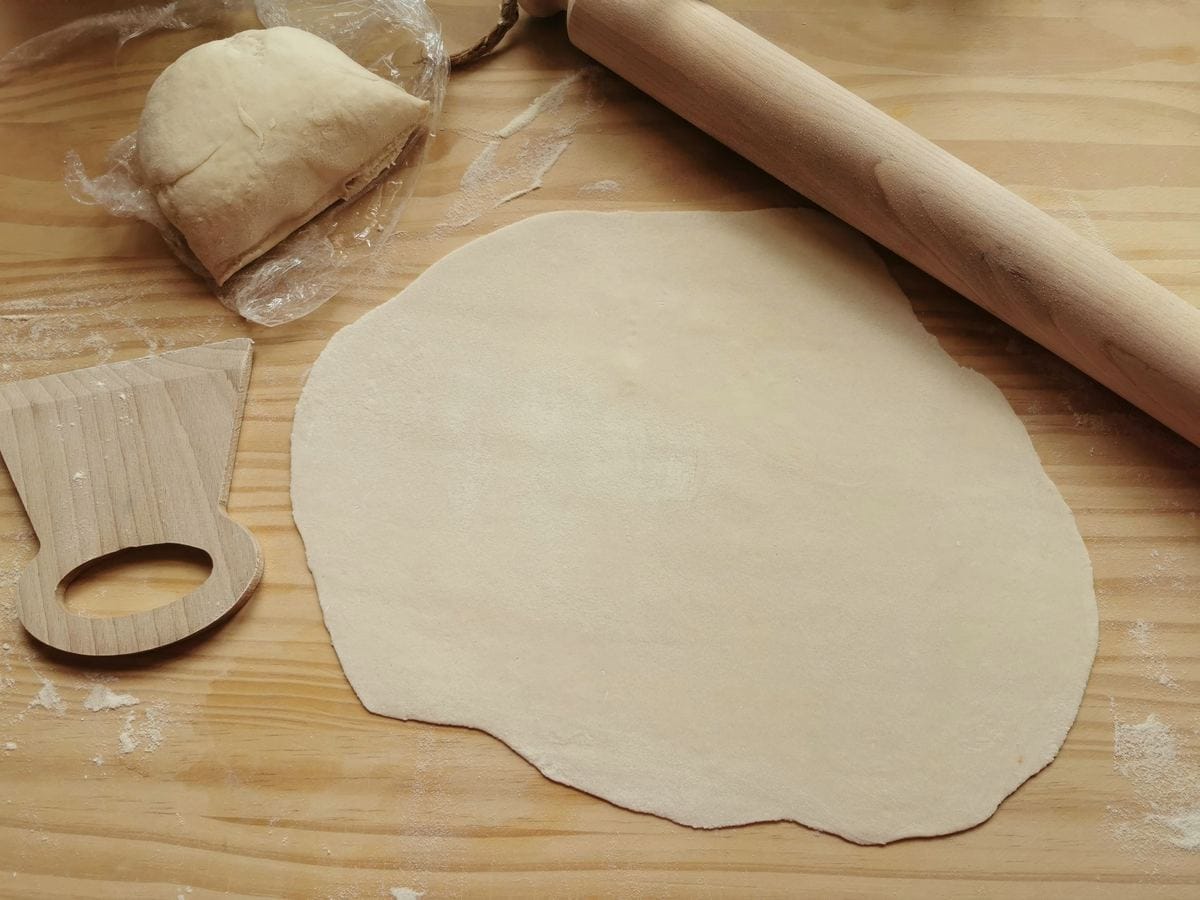
Step 5) Lightly dust the top of the sheet with flour (or fine semolina) to prevent sticking and cut it into a rectangle that’s about 30 cms (11-12”) in length.
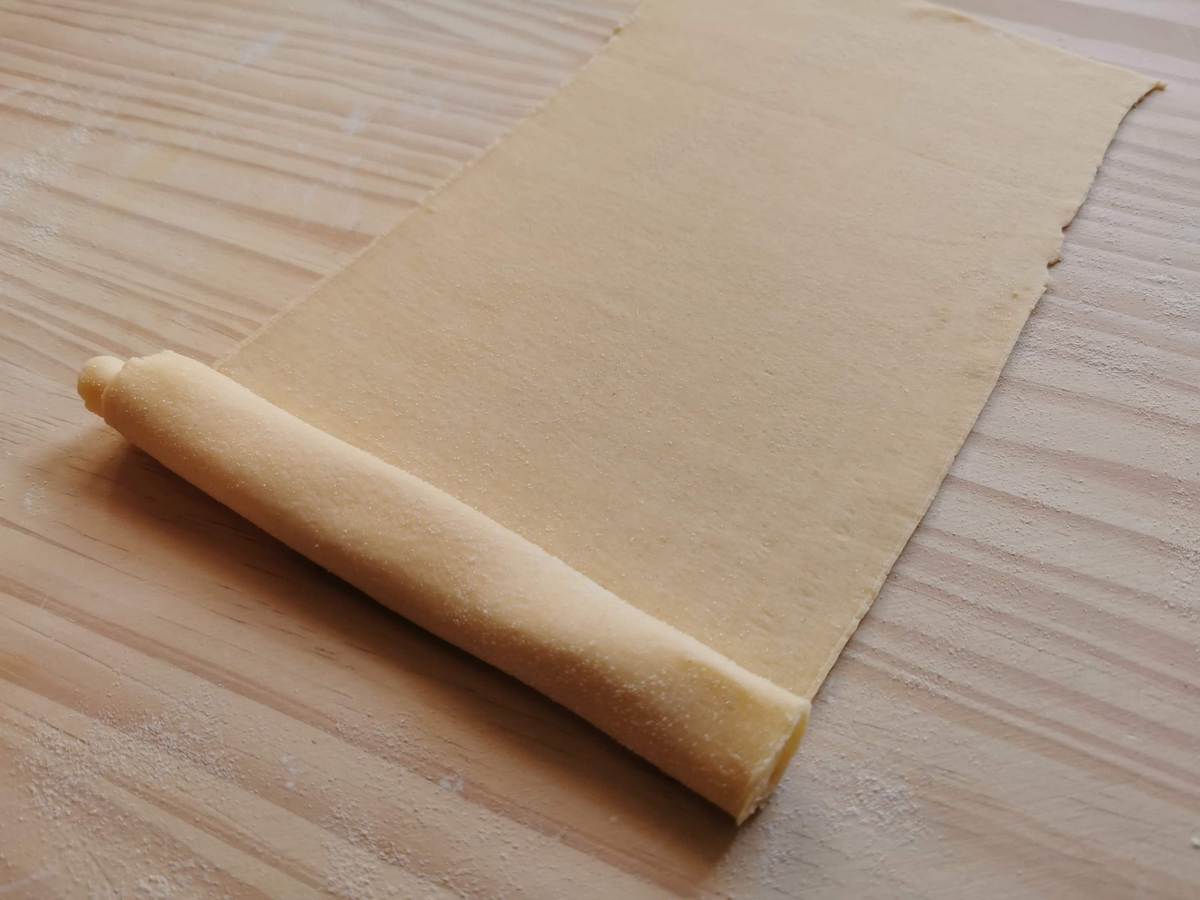
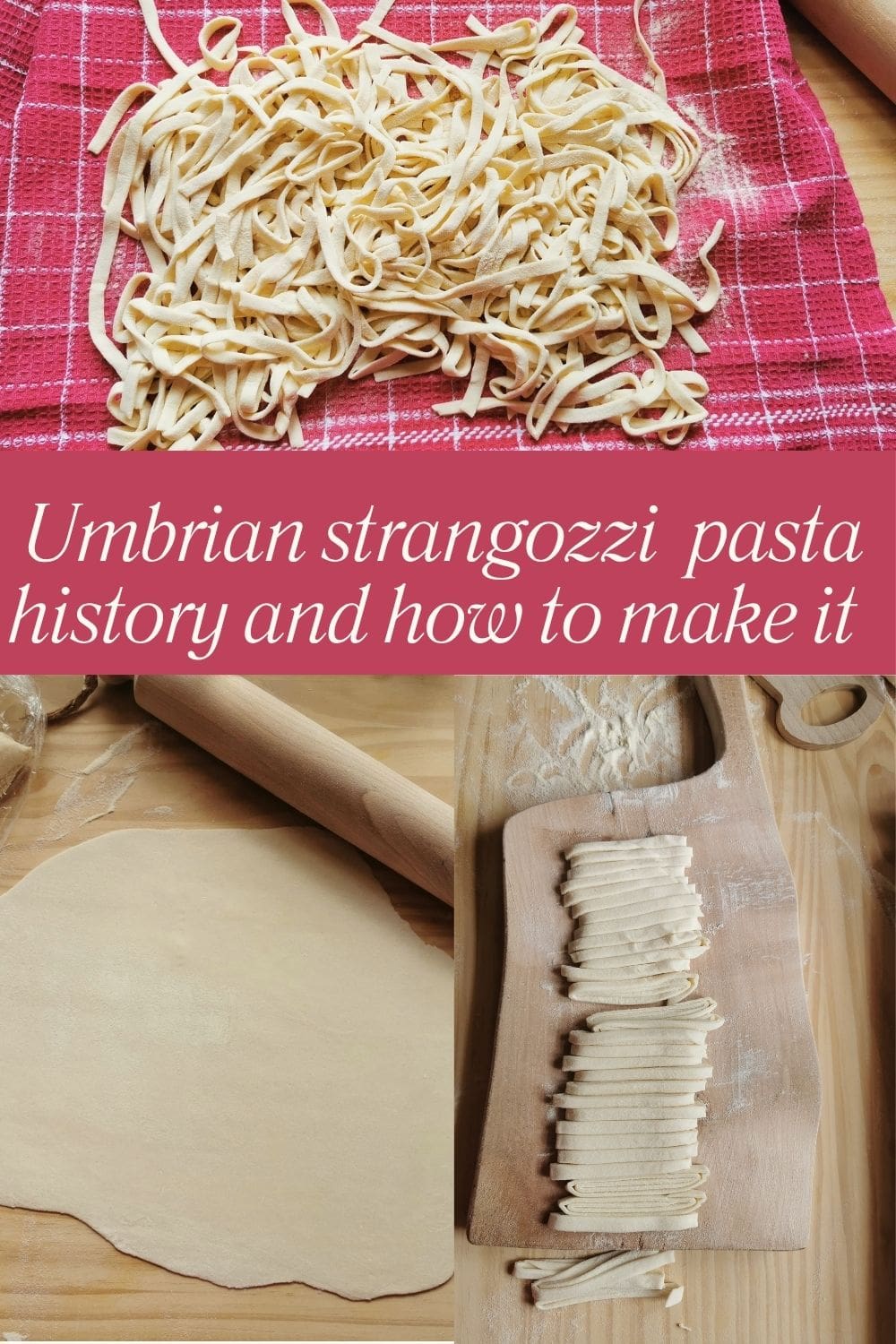
Step 6) Roll the dough up on itself. Then, using a sharp knife, cut the roll into thick ribbons about ⅜ inch (roughly 4 to 5 mm) wide.
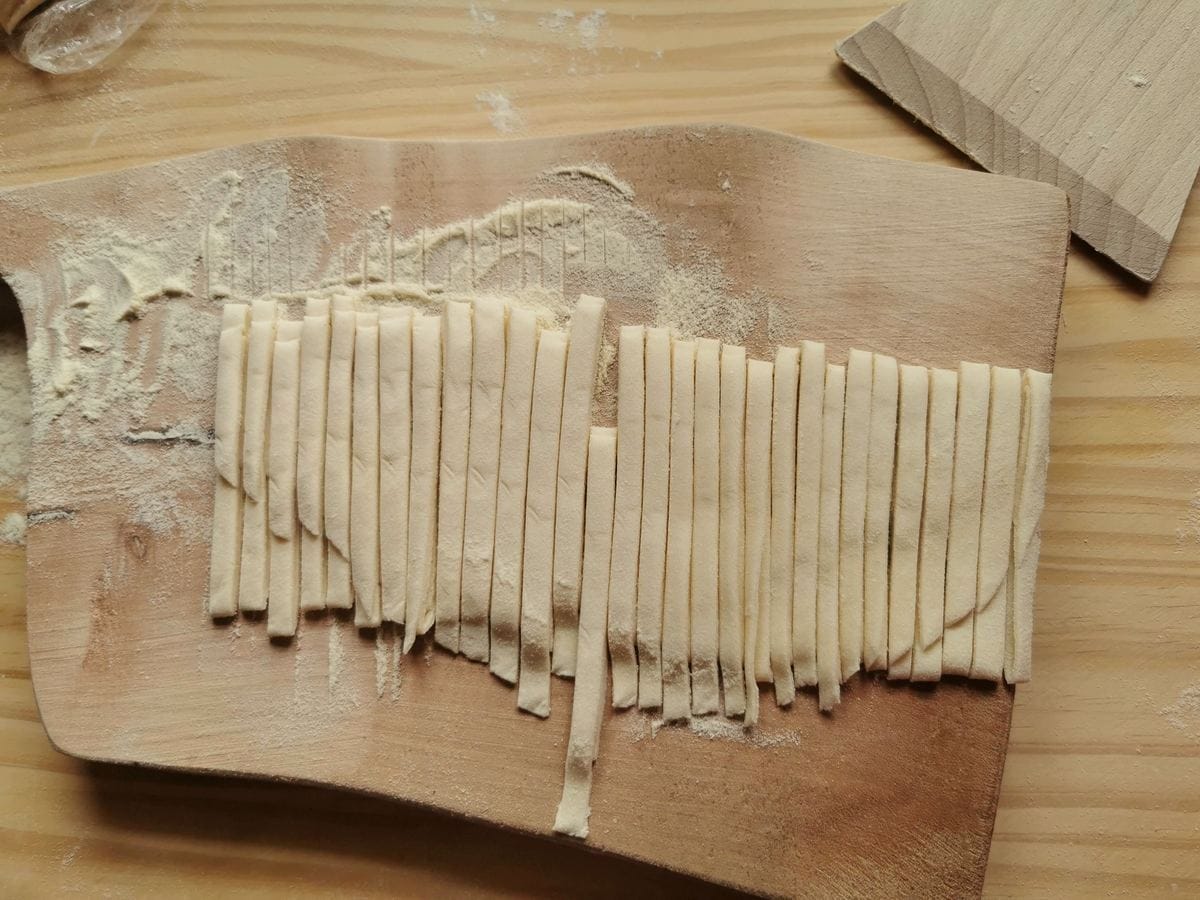
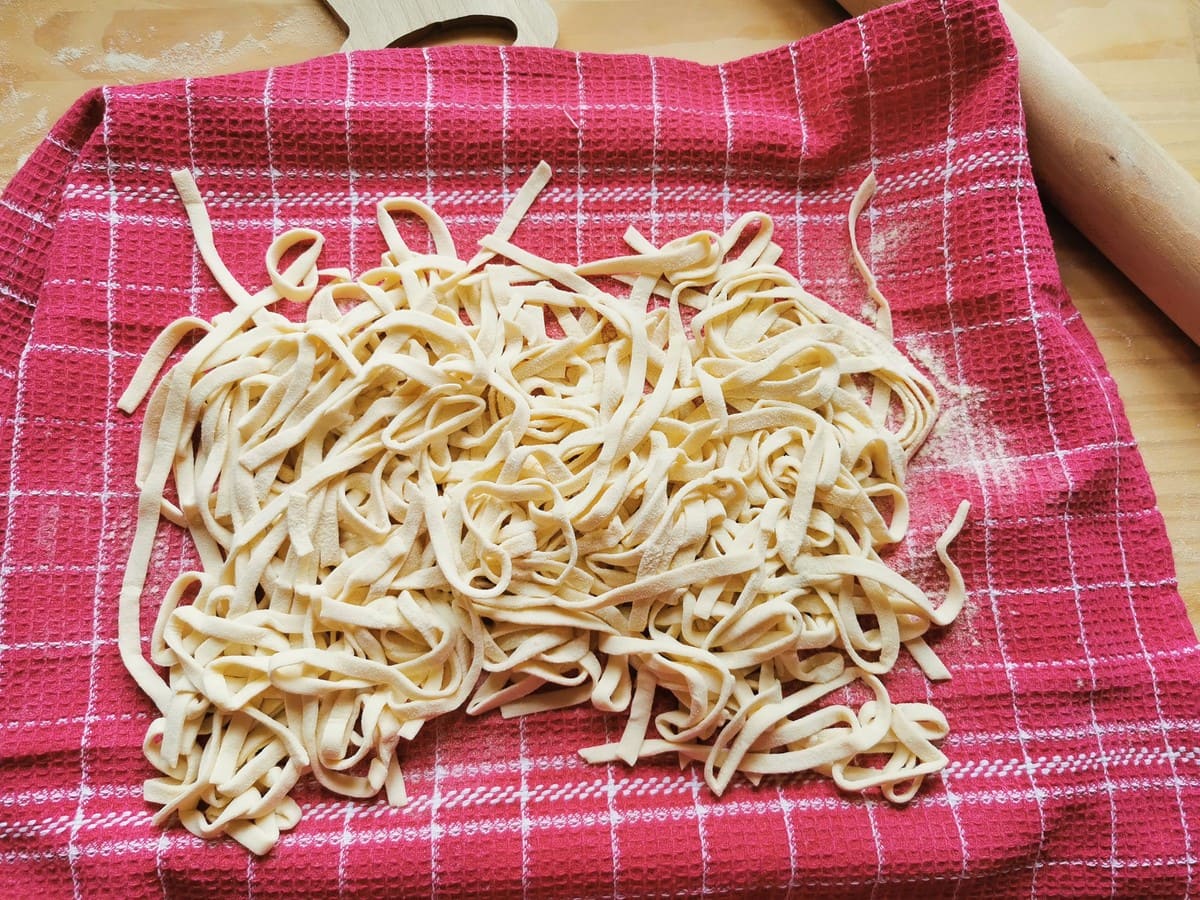
Step 7) Unroll the ribbons with your fingers so they loosen into long ‘flat’ spaghetti. Place the ready strangozzi on a flour dusted tray until you are ready to cook. Repeat with the rest of the dough.
Recipes for your homemade strangozzi pasta
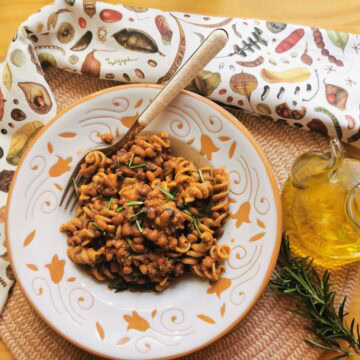
You can use your homemade strangozzi in Umbrian recipes like the sausage pasta alla Norcina mentioned above. Alternatively, use it instead of gluten-free pasta in pancetta pasta col rancetto or, in recipes with the region’s well-known legumes such as Lake Trasimeno beans or lentils, including my recently published strangozzi with lentils and sausage.
How to conserve your homemade strangozzi.
If you want to conserve your strangozzi pasta for another day, you can either freeze it in nests or let the nests dry out at room temperature.
To freeze: Place nests of strangozzi on a flour dusted tray. Place the tray in the freezer for about one hour and then transfer the pasta nests to sealed freezer bags. Cook from frozen.
To dry: Leave the pasta nests to air dry for 24-48 hours on a pasta drying tray or a flour dusted baking sheet. Once dry, carefully transfer to a tightly sealed air-tight container. The strangozzi will keep for 2-6 months.
Let me know what you think
If you do try making homemade strangozzi pasta, I’d love to hear what you think and how it turned out. Please, write a comment here on the blog or post a comment on the Pasta Project Facebook page.
Your feedback means a lot to me!
Buon Appetito!
How to make homemade strangozzi pasta from Umbria

Equipment
- 1 large bowl to start dough (optional)
- 1 Rolling Pin or pasta machine
- 1 sharp knife to cut pasta ribbons
- 1 pastry board or wood/marble work top.
Ingredients
- 10.5 ounces soft wheat flour Italian '00' flour or all purpose flour.
- 4-5 fluid ounces water warm or room temperature
- 1 pinch salt
- 1 tablespoon extra virgin olive oil. optional
Instructions
Make the dough
- Mound the flour on a clean wooden board or in a mixing bowl and make a well in the center. Add the salt, olive oil (if using), and pour the water into the center a little at a time.
- Using your hands or a fork, gradually incorporate the flour into the liquid. Once it begins to come together, use your hands to knead it. If starting in a bowl, turn the pasta dough out on to a flour dusted worktop once the dough can be formed into a ball.
- Knead vigorously for 8-10 minutes until you get a smooth, firm, and elastic dough. Roll the dough into a ball and wrap it in plastic wrap and let it rest at room temperature for 30 minutes.
Roll and cut
- Roll out one third of the dough using a rolling pin on a floured surface until it is roughly 2 to 3 mm thick (about 1/16 inch), about twice the thickness of tagliatelle. I use semolina flour for any dusting. You can also use a pasta machine to roll out the pasta sheets.
- Lightly dust the top of the sheet with soft wheat flour (or fine semolina flour) to prevent sticking and cut it into a rectangle that’s about 30 cms (11-12”) in length.
- Roll the dough up on itself. Then, using a sharp knife, cut the roll into thick ribbons about ⅜ inch (roughly 4 to 5 mm) wide.
- Unroll the ribbons carefully with your fingers so they loosen into long ‘flat’ spaghetti.Place the ready strangozzi on a flour dusted tray until you are ready to cook. Repeat with the rest of the dough.
Notes
Nutrition
Other flour and water homemade pasta recipes
- Homemade orecchiette with 6 recipes
- Southern Italian lagane pasta
- Homemade casarecce (2 ways)
- Homemade cavatelli pasta

Genevieve says
I love all of your homemade pasta recipes, they are so authentic. It's like having the perfect Italian cookbook at the ready!
Jacqui says
Thanks for your feedback Genevieve! I'm really thrilled you lve the recipes on The Pasta Project!
Shay says
This recipe is simple to follow, pasta making has never been so easy. Gives the authentic taste to pasta night!
Jacqui says
Thanks for your comment Shay! I agree this is such an easy pasta to make and so authentic!
Lauren says
This looks like such a fun pasta recipe to make from scratch. I love doing everything from scratch when I can so this will be a perfect challenge for me!
Jacqui says
This is a great pasta to make! Do let me know if you try it.
Alice says
There is nothing quite like the satisfaction of making your own pasta from scratch! This step-by-step guide makes rolling out this traditional eggless dough feel completely approachable. It holds onto hearty sauces beautifully and elevates a simple dinner into something special.
Sawyer says
So interesting to learn all about regional pasta varieties and shapes. Love that I could make it without my pasta maker! Really quite easy.
Jacqui says
I'm so glad you like discovering new pasta types Sawyer. There are so many here in Italy. This is definitely an easy one!
Rick says
It was so much fun trying this from scratch. The texture turned out great and it held the sauce really well.
Jacqui says
Thanks for your feedback Rick! Making this flour and water pasta from scratch really is fun and very rewarding!