

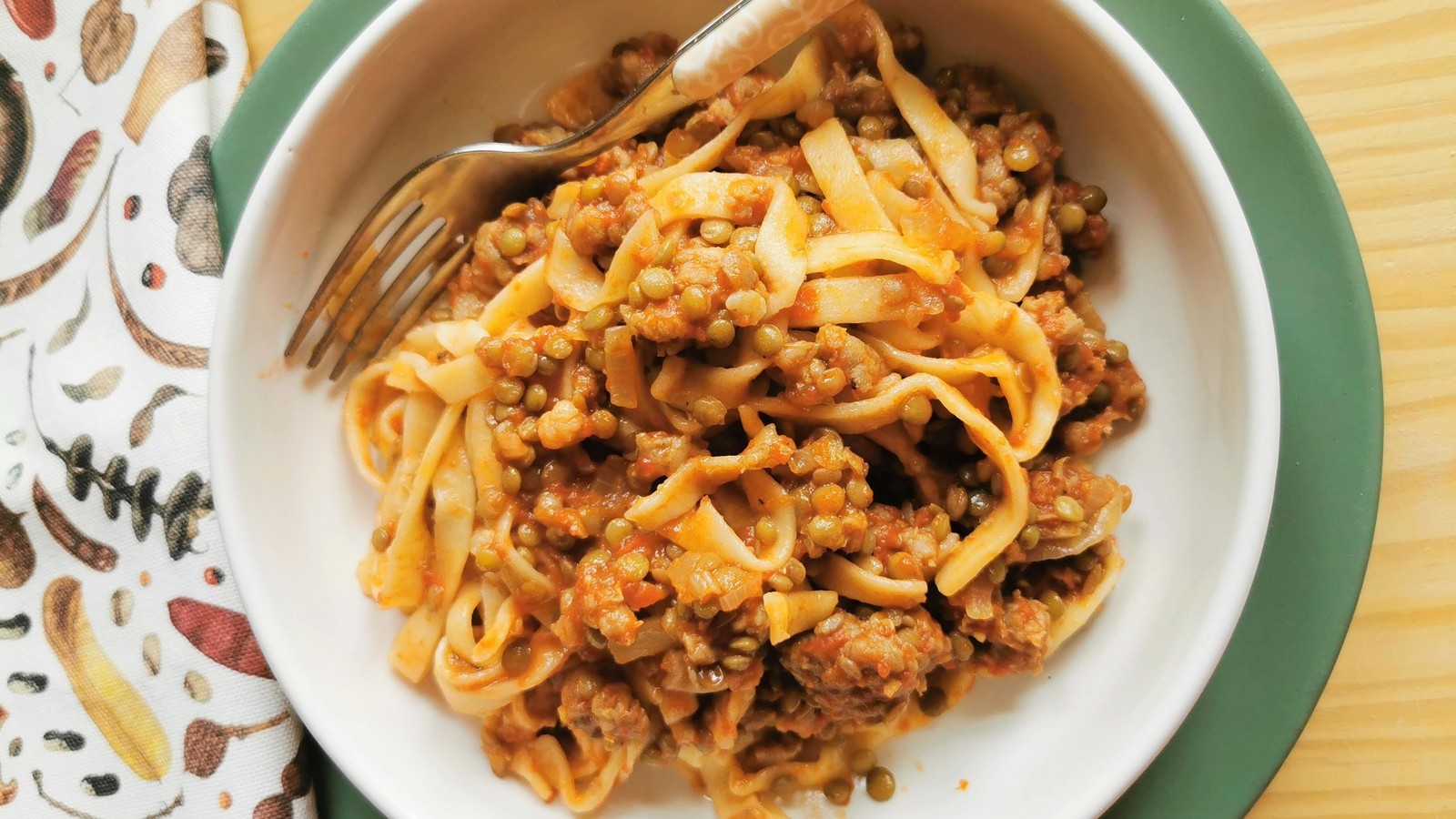
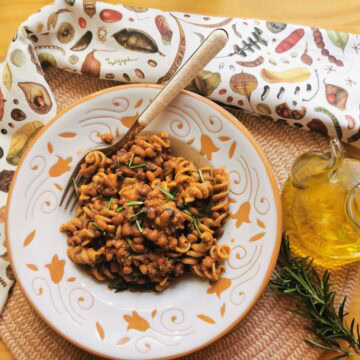
This lentil and sausage pasta recipe is full of traditional Umbrian ingredients. Typically made with homemade strangozzi pasta, Norcia sausages, Cannara onions and the region's organic mountain lentils, this rustic recipe is a must-try taste of authentic Umbrian cuisine.
What is Umbrian cuisine?
Often called the green heart of Italy, Umbria is a landlocked region in Central Italy. The local cuisine originates mostly from what Italians call ‘la cucina povera’, the poor man’s kitchen.
Most traditional dishes are made with ingredients that are either foraged or hunted in the woods or grains and legumes cultivated according to ancient traditions. The most popular meat is pork, pork products like sausages, and cured meats such as prosciutto crudo and salami.
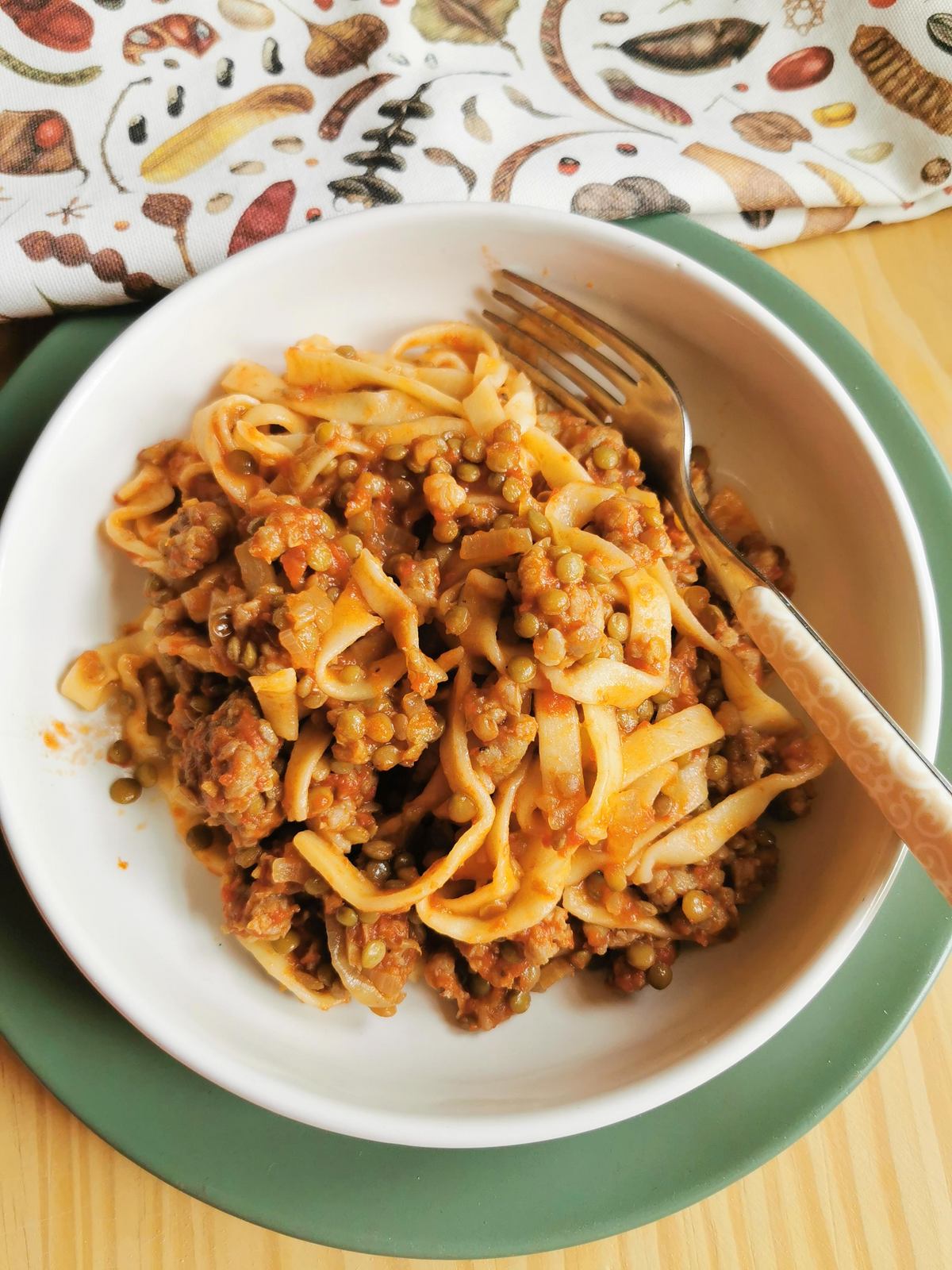
This Umbrian lentil and sausage pasta recipe is an example of how delicious simple peasant food can be. In the past, dishes like this would be made by farming families and other inhabitants of the rural areas using what they either foraged, produced or cultivated themselves or could buy locally.
Because it's so hearty and filling, this recipe makes a complete meal.
Main Ingredients and substitutions.
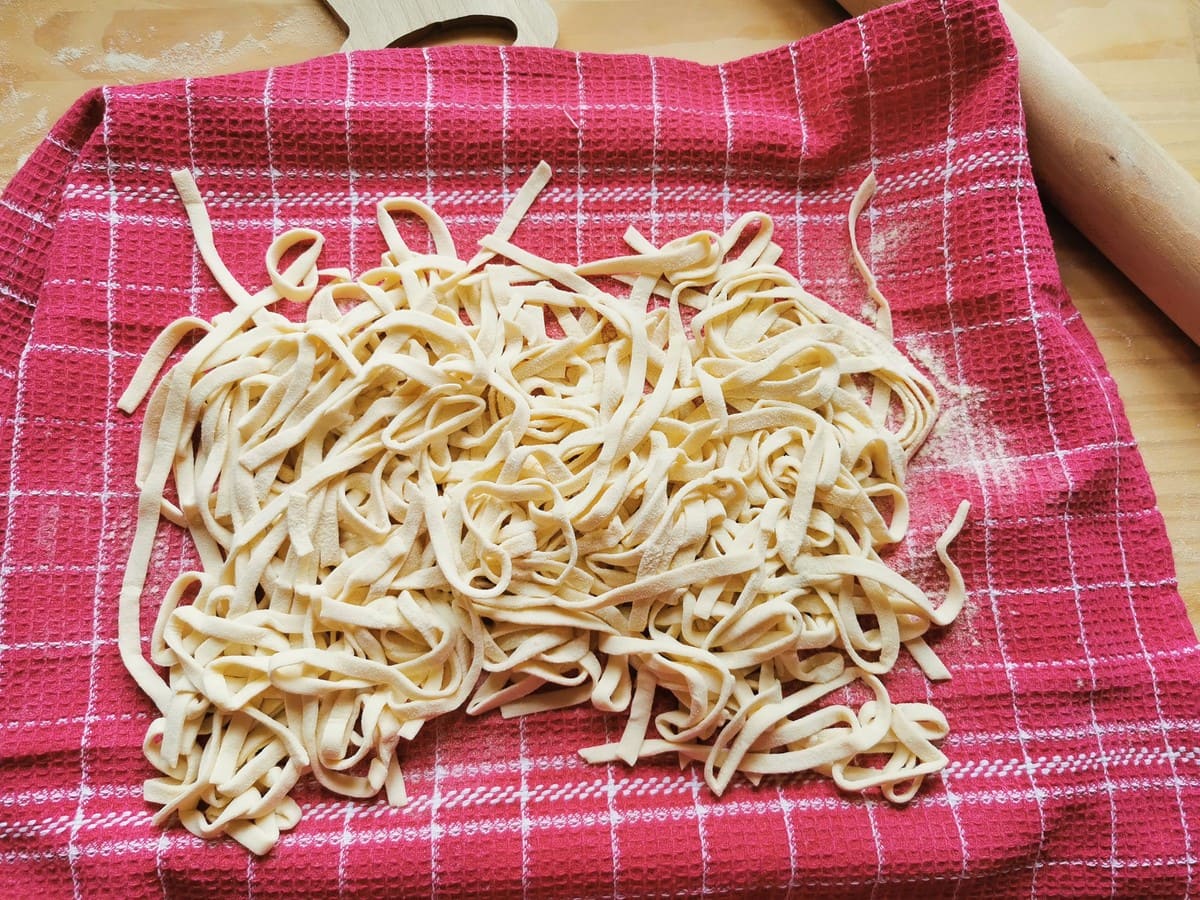
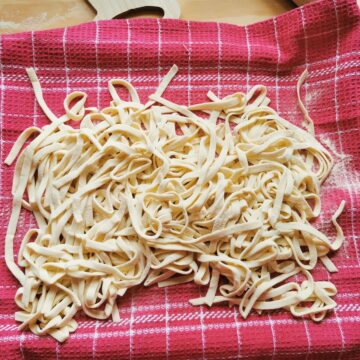
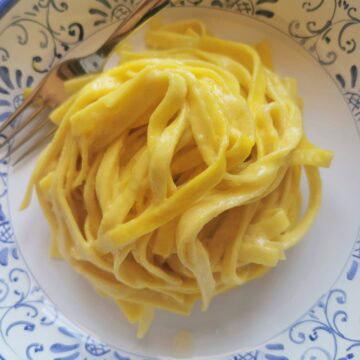
Strangozzi pasta: I made homemade strangozzi to pair with the lentil and sausage sauce. Like most typical Umbrian pasta types, strangozzi contains just soft wheat flour, a pinch of salt and water.
This is a rustic and hearty pasta that really goes well with the sauce. Of course, you can use other types of long pasta if you don’t want to make your own. I would recommend egg-less pasta to mimic the traditional rustic flavor of the original recipe.
Sauce ingredients.
Italian pork sausage: Umbria is well-known for its pork products, particularly those that come from the town of Norcia. The original sausage for this recipe is salsiccia di Norcia. These have a smooth, soft easy to crumble texture and are flavored with just salt, black pepper and garlic.
Unlike other Italian pork sausages, Norcia sausages don’t have fennel seeds in them. You can use other Italian sausages instead but for an authentic flavor preferably without fennel seeds. Norcia sausages are also a main ingredient in pasta alla Norcina.
Umbrian lentils: Umbrian cuisine makes a lot of use of legumes. The region is famous for its small lentils, called Colfiorito or Castelluccio lentils. These are tiny, green brown lentils similar to French puy lentils from the Puy region of France.
Umbrian lentils are famous for their naturally small size, thin tender skins, and rich, earthy flavor. Grown at high elevations in the Apennines, these lentils don’t need to be soaked and hold their shape perfectly when cooked. French puy lentils or other small Italian lentils make good substitutes.
Umbrian lentils are also the main ingredient of this lentil soup with pasta.
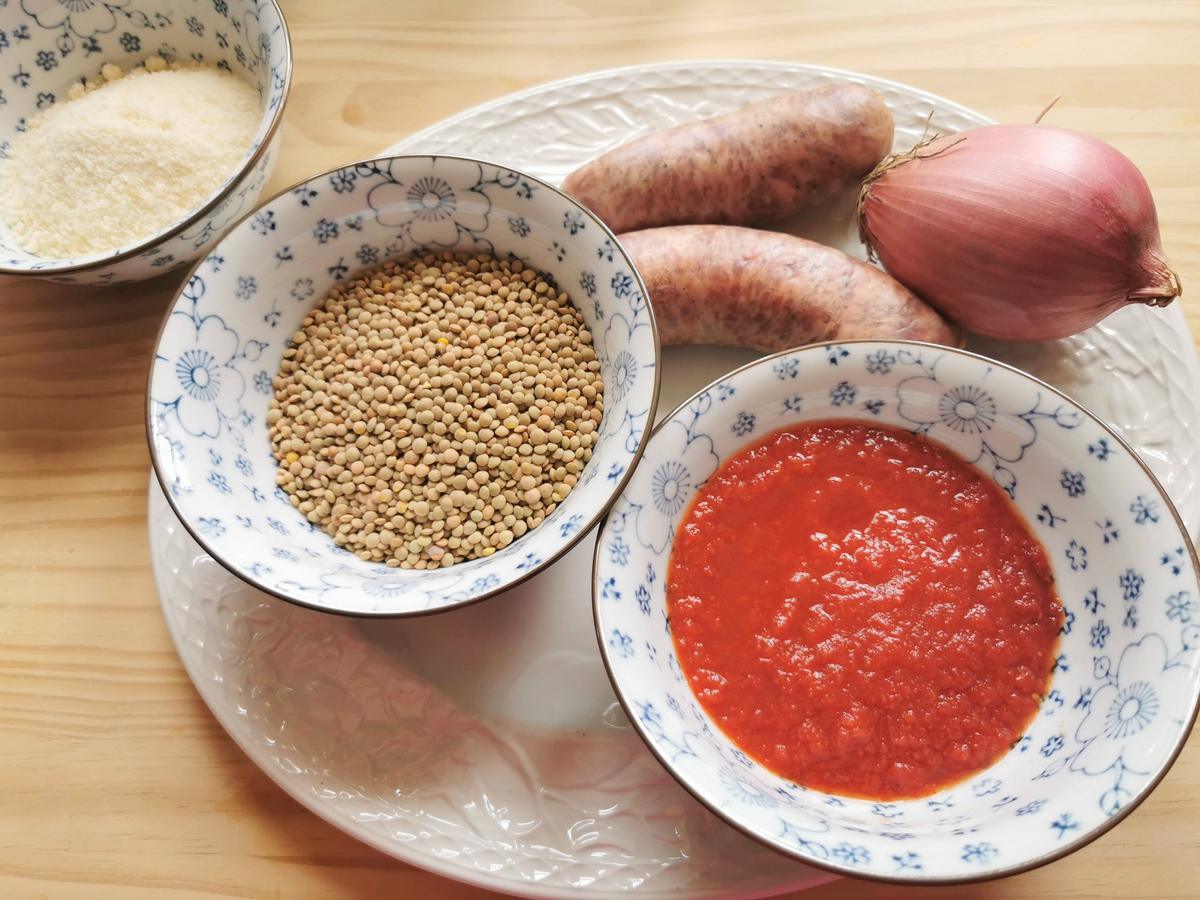
Cannara Onions: The recipe I followed called for onions from the Umbrian town of Cannara. Cannara onions are celebrated for their sweetness and high digestibility. They are cultivated in the mineral-rich, clay soil of the Umbrian Valley (Valle Umbra), a lush, fertile plain that stretches from Perugia to Spoleto.
Of course, outside of Umbria it’s difficult to find Cannara onions. I used another type of sweet red onion. You can also use a yellow onion if needs be. Cannara onions are also a main ingredient in this pasta alla cipollara from Umbria
Other ingredients.
Olive oil: As with many Italian recipes, the main ingredients in this lentil and sausage pasta recipe are sautéed in a little extra virgin olive oil. Extra virgin olive oil will add the best flavor but you can use a less expensive olive oil instead.
Tomato passata (tomato paste): This recipe calls for just a little passata (100g / ½ cup) as isn’t a tomato forward pasta sauce. You can use a smooth passata or a thicker rustic one which here in Italy we call passata rustica!
Parmigiana Reggiano: The cheese in this recipe is just for serving. Freshly grated cheese adds a nuttier and more buttery flavor. I don’t like to use ready grated parmesan.
Step by step instructions and tips.
If you are making strangozzi pasta, prepare it first by following the instructions in my homemade strangozzi post.
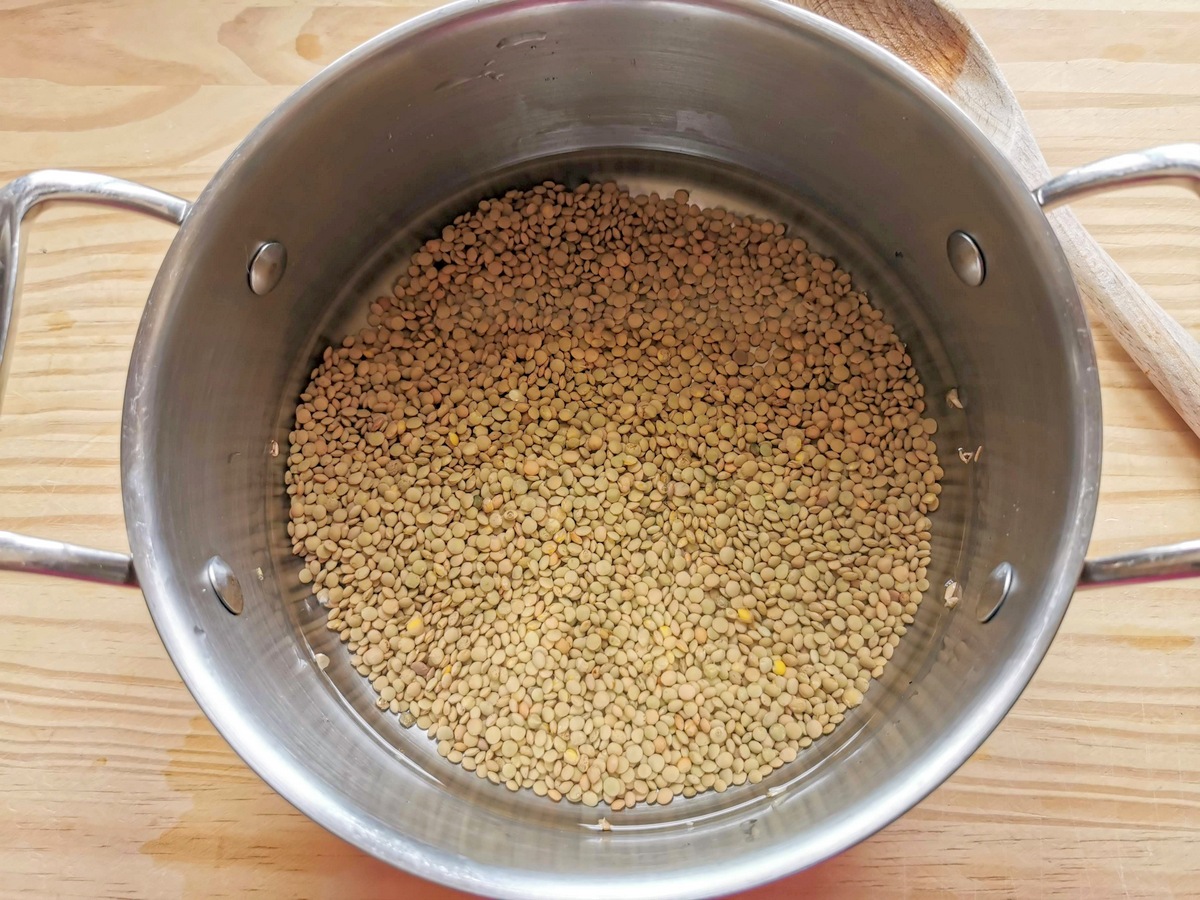
Step 2) Next, rinse the lentils to remove any stones or debris. Then cook them in plenty of lightly salted water until al dente. Then drain.
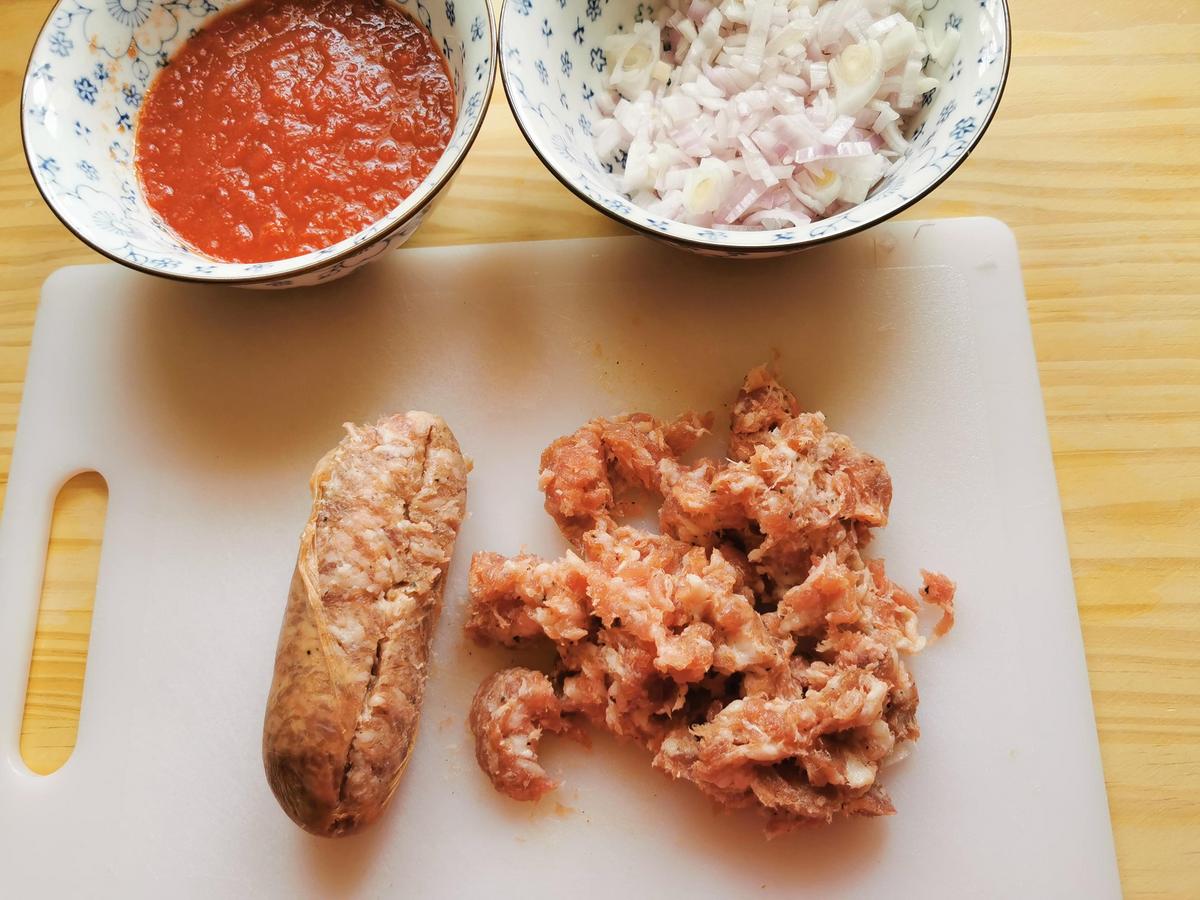
Step 3) While the lentils are cooking, remove the sausage meat from the casing and crumble it into small pieces. Peel and finely chop the onion.
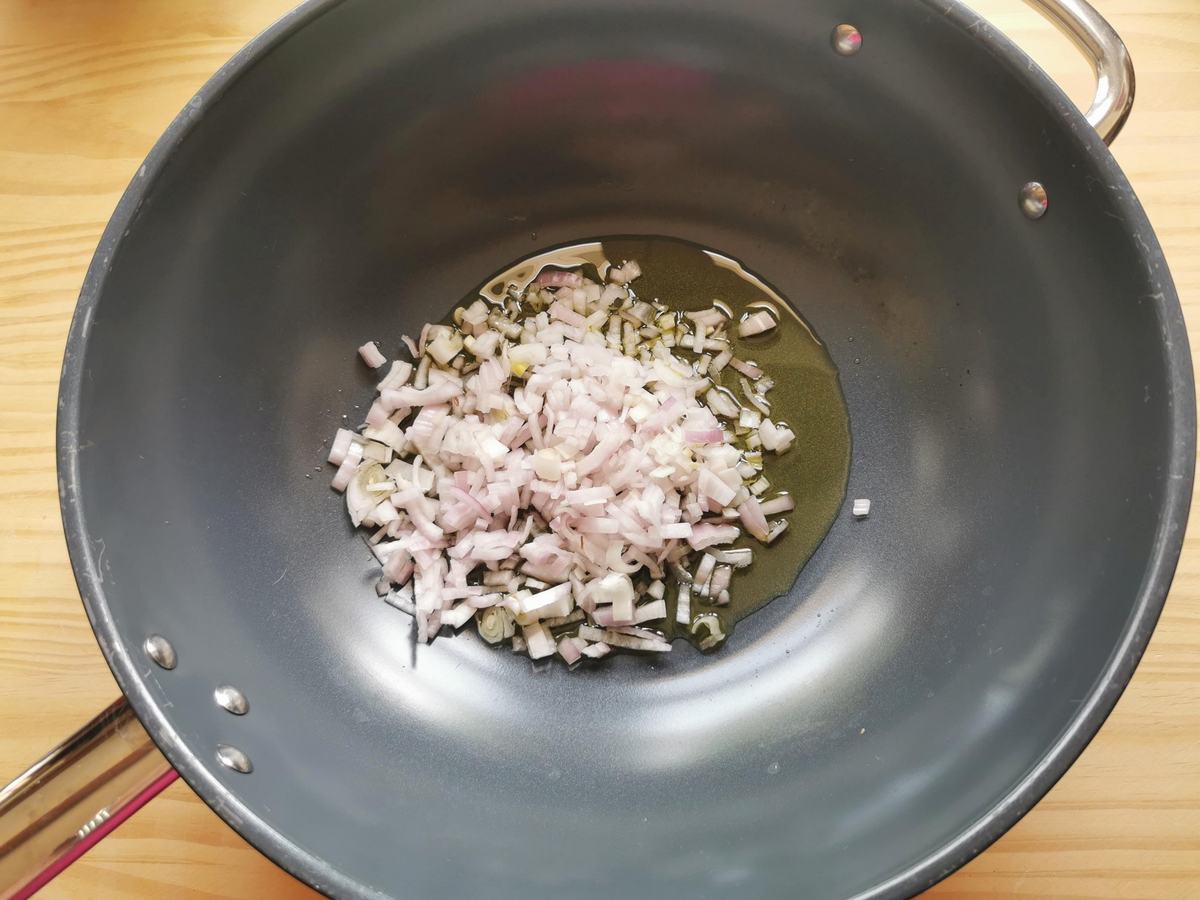
4) In a large pan, sauté the chopped onion in oil over a low heat for 5 minutes
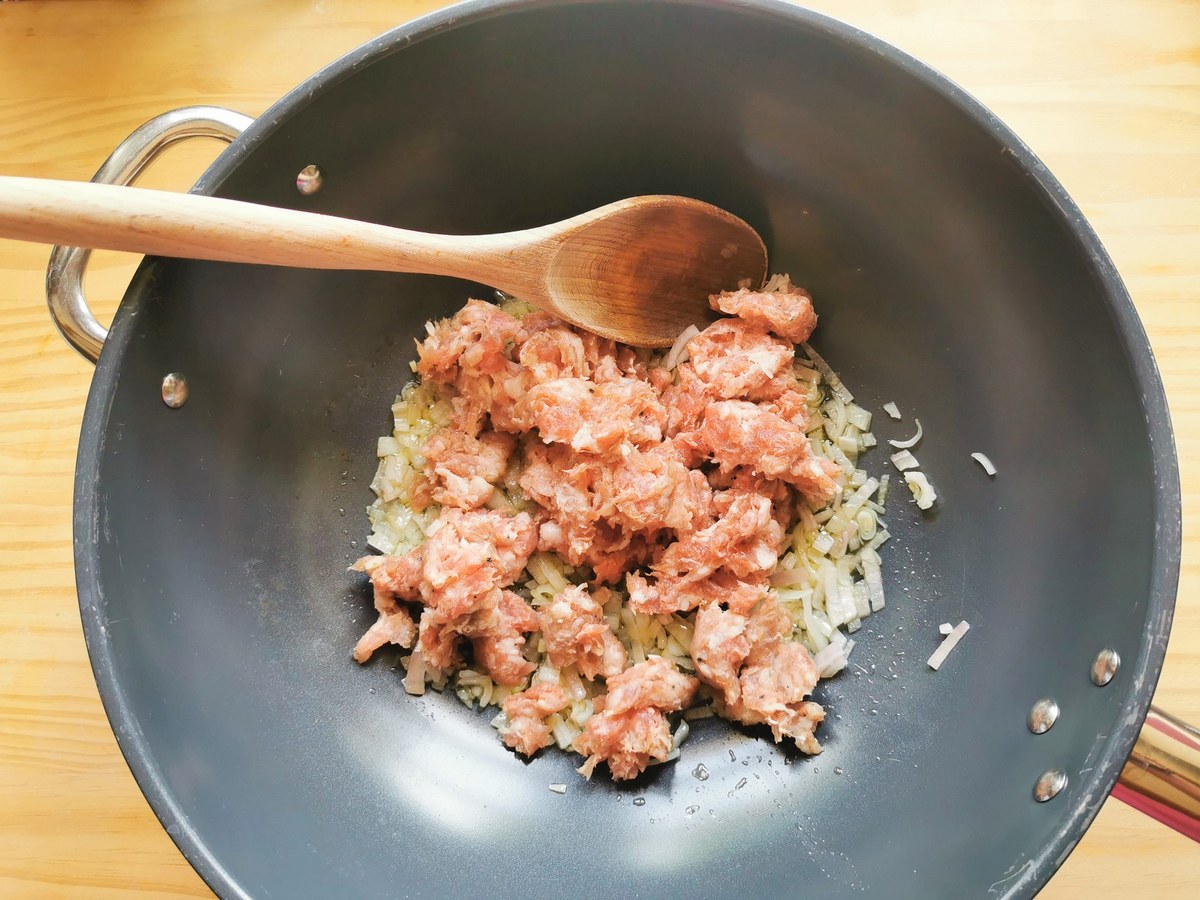
Step 5) Add the sausage meat and cook until just browned.
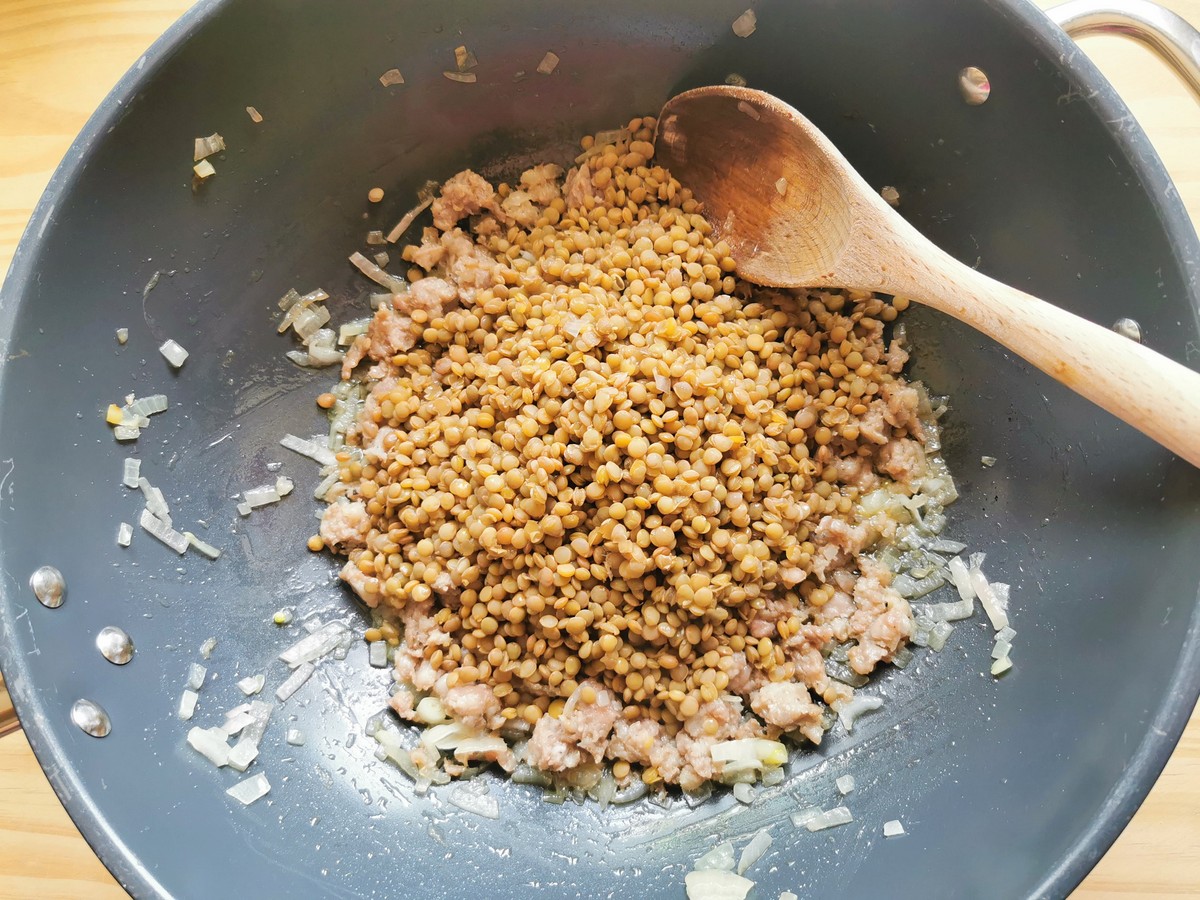
Step 6) Add the drained lentils and cook mixed with the sausage for 5 minutes over a medium heat.
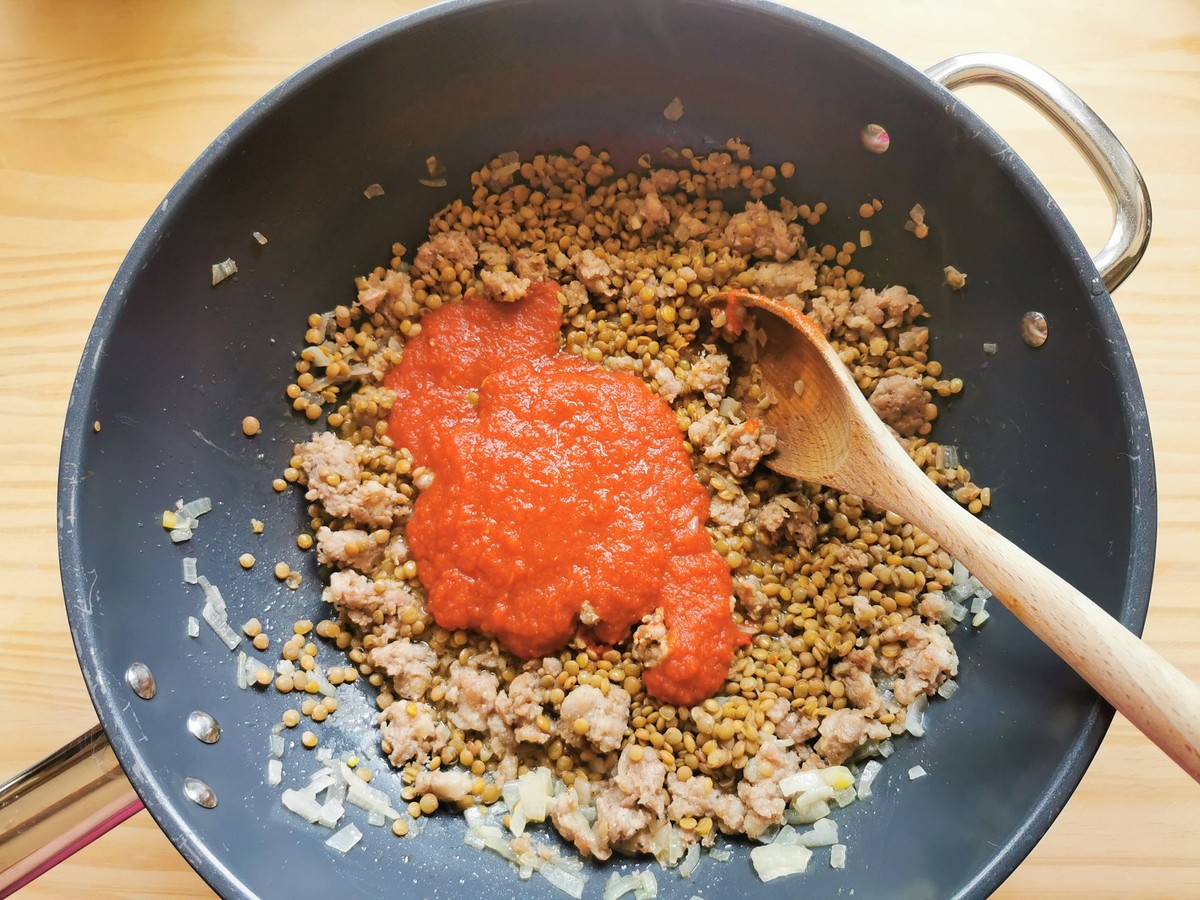
7) Add the passata and 3-4 tablespoons of water. Mix everything together and continue cooking over a lower heat for another 10 minutes, season with salt and pepper.
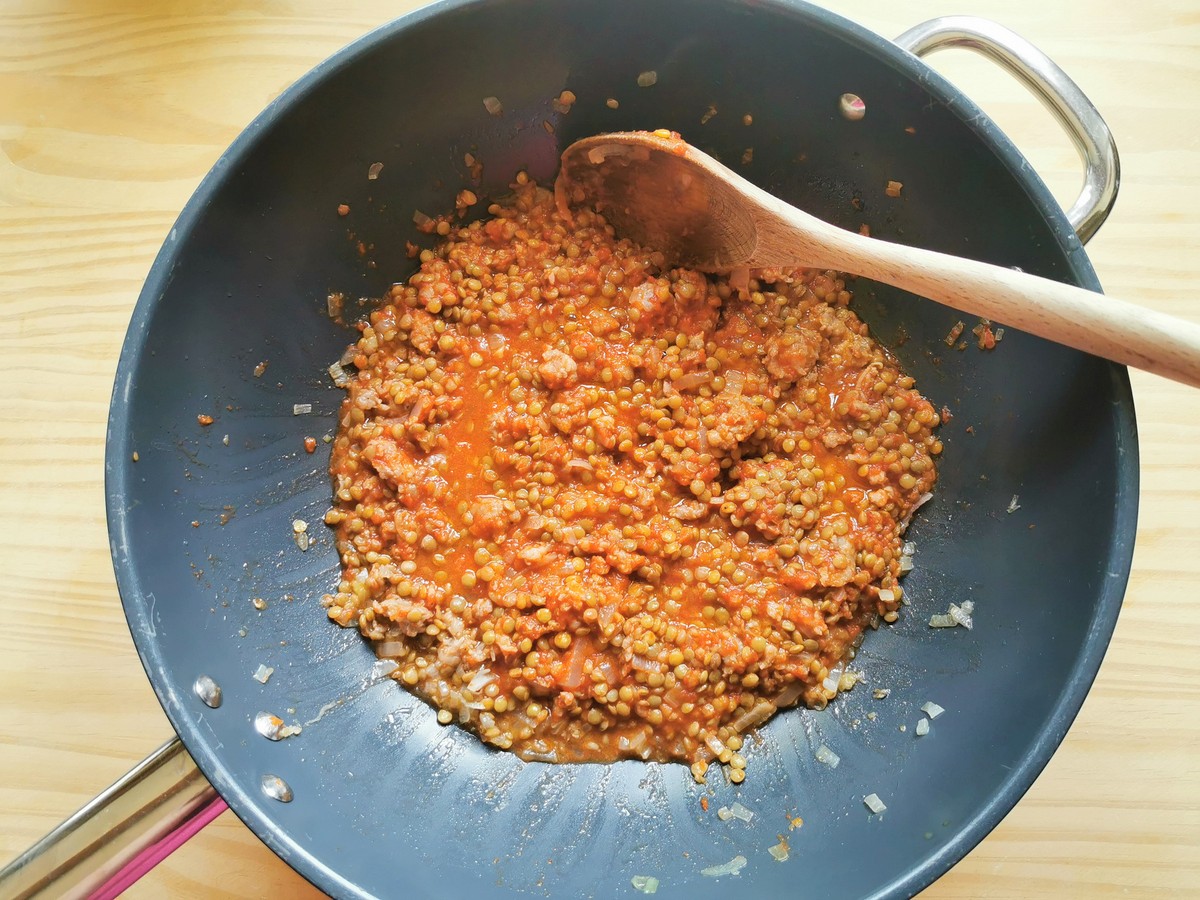
Cook the pasta and finish the dish.
Bring a large pot of salted water to a boil and cook the strangozzi until al dente. Save some of the pasta cooking water. Then, drain and add the pasta in the pan with the sauce
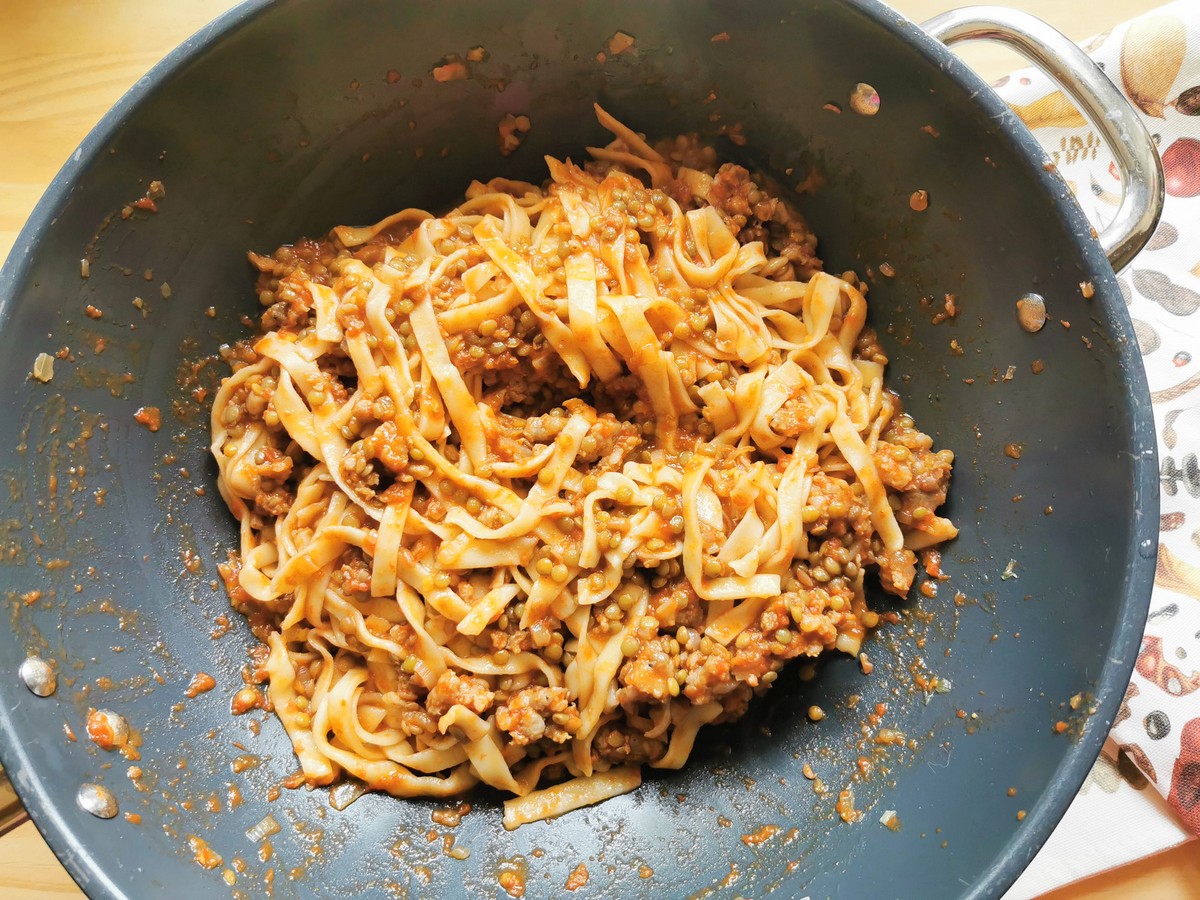
Mix everything together over a low heat for 5 minutes. If the sauce seems dry, pour in some of the pasta water. Finally, add some grated Parmesan cheese, and serve immediately.
What to do with leftovers.
If you have leftover lentil and sausage sauce you can keep it in the fridge in an air-tight container for 2 days. Alternatively, freeze it for up to 3-6 months. I wouldn’t recommend freezing sauce that has been mixed with cooked pasta as the latter may become mushy when thawed.
However, leftover pasta mixed with sauce can be kept in the fridge for up to 2 days and reheated in microwave or in a frying pan with some butter. I prefer to fry leftovers in butter until the pasta starts to crisp slightly!
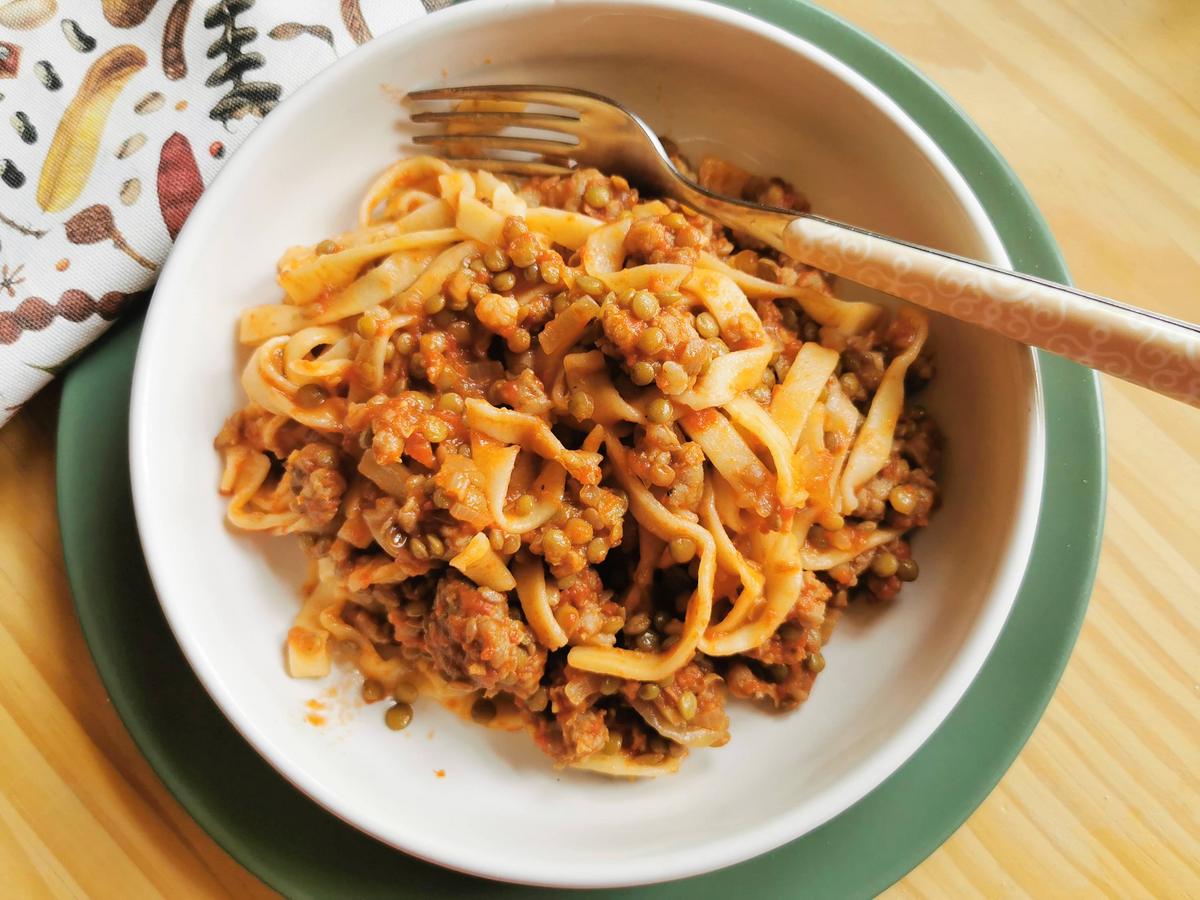
Let me know what you think.
This Umbrian lentil and sausage pasta recipe with homemade strangozzi is a fabulous example of Umbria's traditional rustic cuisine. It's made with simple ingredients that don't take long to prepare, even the pasta.
Different to what many consider as Italian food, this is a taste of an ancient cuisine that remains popular today. If you make this recipe, I’d love to hear how it turns out. Please write a comment here on the blog, email me or post a comment on the Pasta Project Facebook page.
Your feedback is really appreciated!
Buon Appetito!
Save for later.
If you want to save this recipe for later, you can print it, bookmark this page or save it to Pinterest. Or, make your own online recipe box by clicking the ❤️ in the lower right corner of your screen & following the quick and easy instructions!
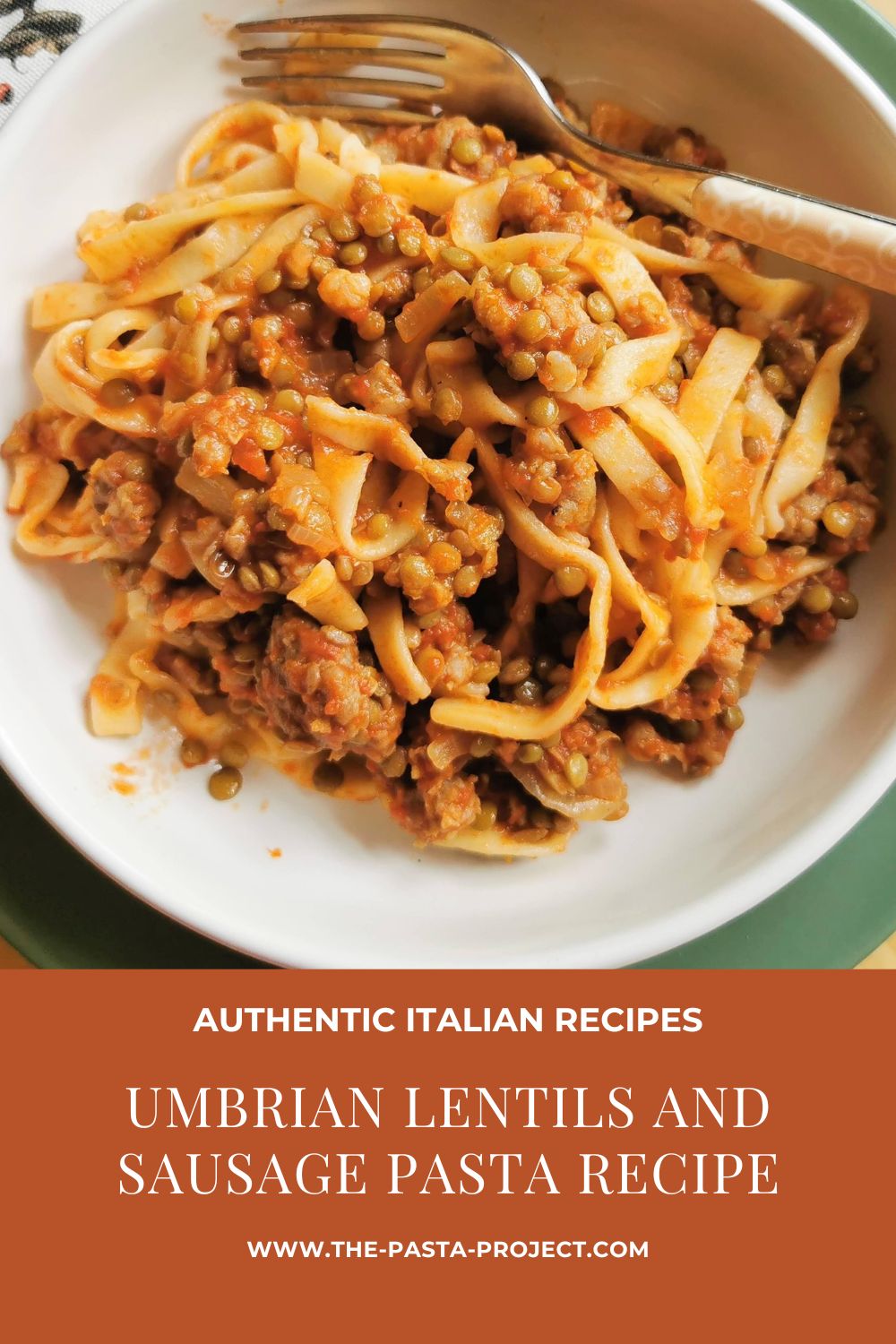
Umbrian lentil and sausage pasta recipe (with homemade strangozzi).

Equipment
- 1 large pot to cook pasta
- 1 large skillet to make sauce
- 1 chopping board to prepare onions and sausages
- 1 sharp knife
- 1 saucepan to cook lentils
Ingredients
For the strangozzi pasta
- 10.5 ounces Italian '00'soft wheat flour or all purpose flour
- 4-5 fluid ounces water
- 1 pinch salt
For the lentil and sausage ragu
- 3.5 ounces small green/brown lentils
- 2-3 Italian pork sausages
- 1 sweet red onion
- 2-3 tablespoons extra virgin olive oil.
- 3.5 ounces tomato passata
- salt for pasta and to taste
- freshly ground black pepper. to taste
- 2 ounces Parmigiano Reggiano freshly grated to serve
Instructions
Strangozzi pasta
- If you are making homemade strangozzi, follow the instructions on my homemade strangozzi post (link below).
Make the lentil and sausage ragu.
- Next, rinse the lentils to remove any stones or debris. Then cook them in plenty of lightly salted water until al dente. Then drain.
- Remove the sausage meat from the casing and crumble it into small pieces. Peel and finely chop the onion.
- In a large skillet, sauté the chopped onion in oil over a low heat for 5 minutes Add the sausage meat and cook until just browned.
- Add the drained lentils and cook mixed with the sausage for 5 minutes over a medium heat.
- Add the tomato passata and 3-4 tablespoons of water. Mix everything together and continue cooking for another 10 minutes on a lower heat ,Season with salt and pepper.
- Bring a large pot of salted water to a boil and cook the strangozzi until al dente. Save some of the pasta cooking water. Then, drain and add the pasta to the pan with the sauce.
- If the sauce seems dry, pour in some of the pasta water. Finally, add some grated Parmiggiano cheese, and serve immediately.
Laura says
This Umbrian lentil and sausage pasta is hearty, rustic, and full of rich, comforting flavor. A satisfying dish that feels both nourishing and delicious!
Jacqui says
Thanks for your feedback Laura! This traditional Umbrian pasta recipe really is a great example the region's hearty and rustic cuisine.
Belle says
This lentil and sausage pasta is such a hearty dinner recipe. It is absolutely restaurant-quality right here at home.
Jacqui says
Hi Belle, I'm really happy that you enjoyed this lentil and sausage pasta recipe. I agree, a restaurant quality hearty dinner recipe!
Pete says
Love the combination of lentils and sausage here. It feels rustic, filling, and packed with flavor.
Jacqui says
Hi Pete, thanks for your comment! We also love the lentil and sausage combination in this recipe. Definitely a very flavorful pairing!
Charlie says
OMG this is so good. I made this pasta recipe for my family and everyone was like wow!! SO delicious!
Jacqui says
Thanks for your review Charlie. I'm so glad you and your family enjoyed this hearty sausage and lentil pasta recipe. My family love it too!