
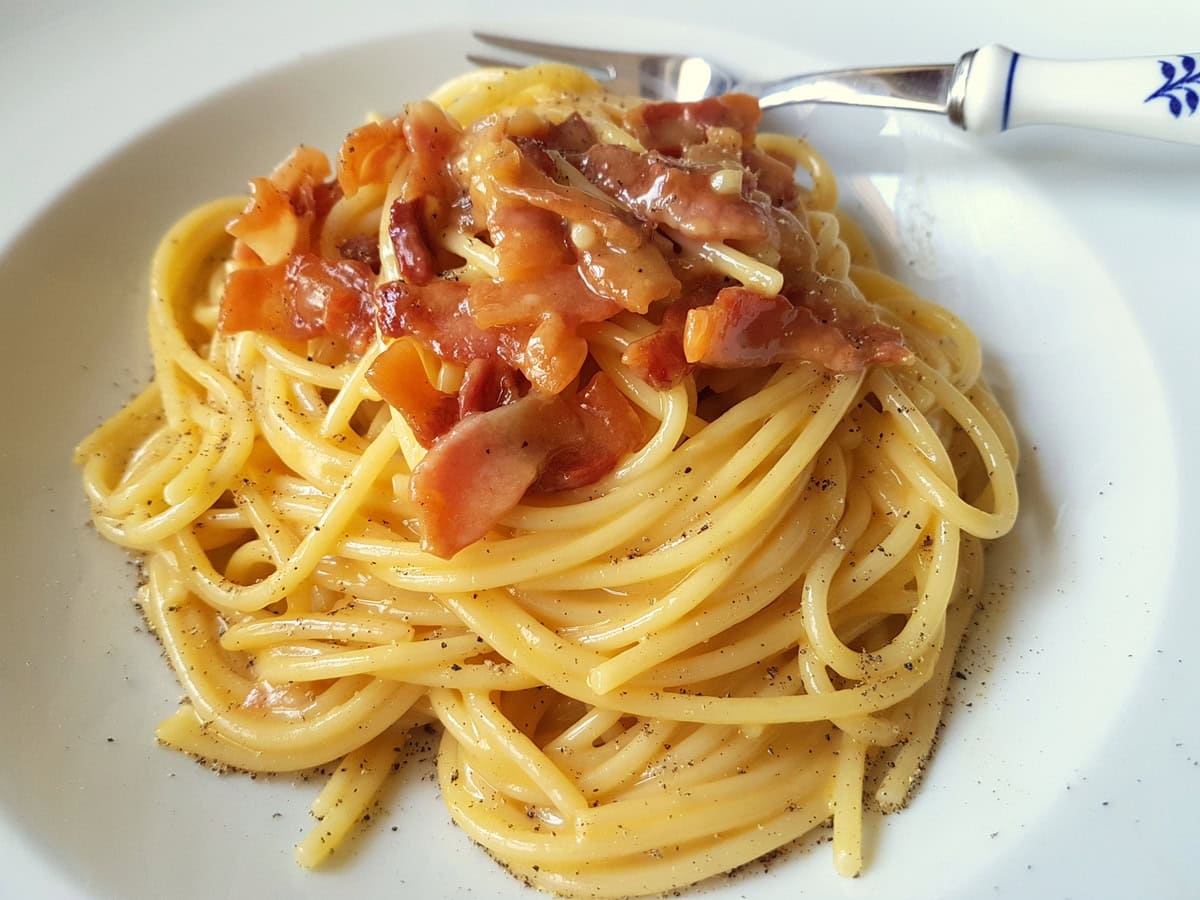
Spaghetti alla carbonara is probably 'the' most well known Italian pasta recipe. Well, maybe alongside spaghetti bolognese! And like spaghetti bolognese, it has been reinvented a thousand times outside of Italy. Of course, different versions of carbonara are good too. But the original authentic recipe really needs nothing added to it because it's delicious as is!

Some alternative alla carbonara history!
Like so many other Italian dishes, carbonara has a disputed history. The most commonly accepted theory is that it probably originated in or near Rome in the Italian region of Lazio. But how is the question!
First theory; It is believed that Umbrian coal men called ‘carbonari’ ate it themselves and introduced it to the Romans when they came to sell charcoal to them.
Theory no 2; It has also been said that carbonara was named for the ‘Carbonari’ a secret society in existence during the time of Italian unification (Dan Brown take note!)
Theory no 3, which I think has merit because carbonara recipes date only from the second war onwards, is that carbonara came from the demands of American soldiers stationed in Rome after the city’s liberation in 1944. Apparently, these soldiers supplied the Romans with bacon and eggs at a time when both were scarce.
How do Italians make spaghetti alla carbonara?
Whatever its origins, it's certain that alla carbonara has become a worldwide favourite pasta dish – although one that has many non-Italian versions!
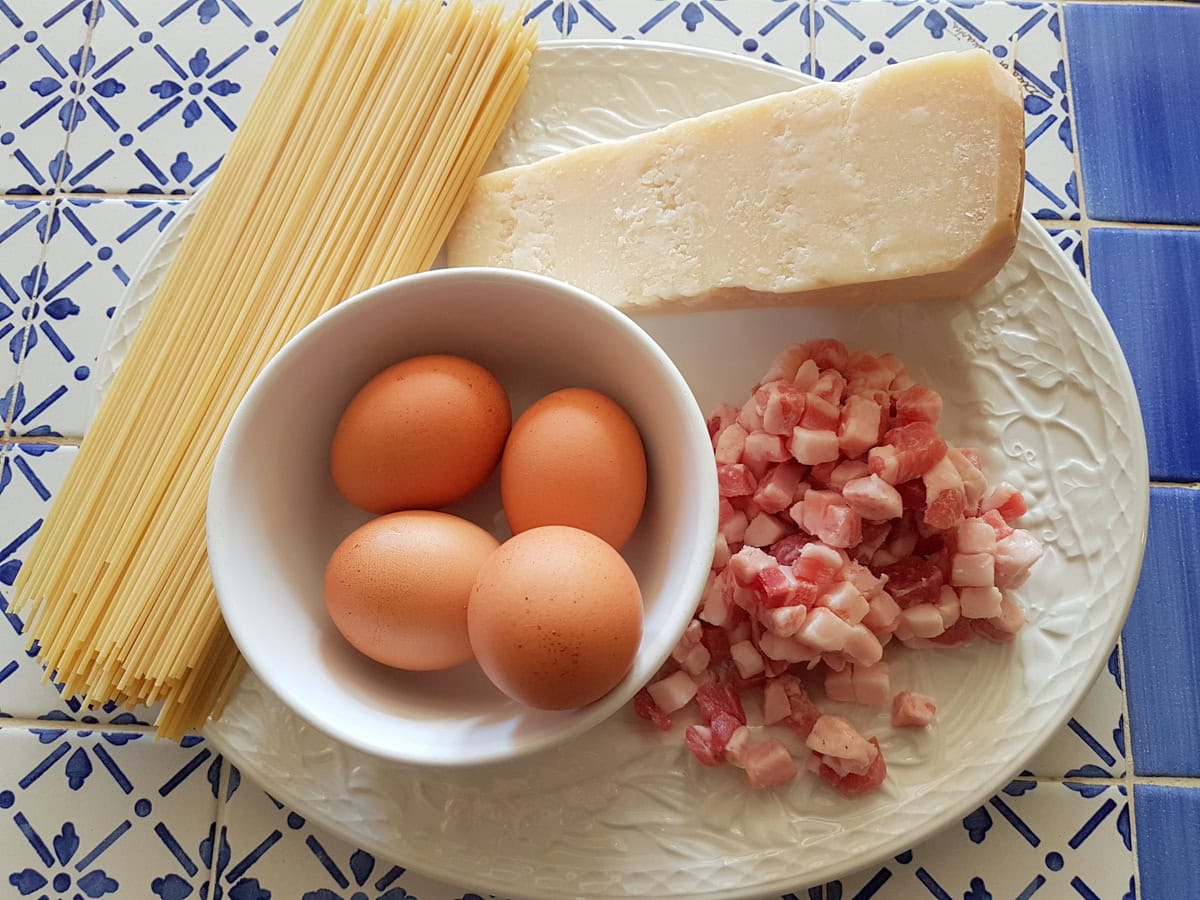
I have always called spaghetti carbonara ‘Italian bacon and eggs’ because basically that’s what it is; eggs, bacon, pasta, grated cheese and pepper. I think it’s the combination of bacon and eggs that makes this one of the most popular pasta dishes in the West, especially with the British and the Americans.
No vegetables! No cream!
Over time, traditional carbonara has been altered by the British, the Americans and others. I did a little experiment and searched through Instagram posts hash-tagged #carbonara. Needless to say, I found a zillion variations including ingredients such as cream (lots of cream, sometimes the pasta is swimming in it!), peas, leeks, broccoli, tomatoes and mushrooms.
It seems that these additions have become so common in America and England that it’s now considered the norm to make this dish with some kind of vegetable and cream. In Italy, it really isn’t!

Like many Italian pasta dishes, alla carbonara is a simple dish with few ingredients. But, it’s the quality of the ingredients and what you do with them that make the difference.
Carbonara ingredients.
Guanciale: The majority of chefs agree that 'true' pasta carbonara contains guanciale (cured pork cheek) and not bacon or pancetta. However, both make good substitutes if you can't find guanciale. Of course, the flavor will differ. Guanciale has a richer more intense flavor than pancetta. Guanciale renders quite a lot of fat so you don't need to cook it in olive oil.
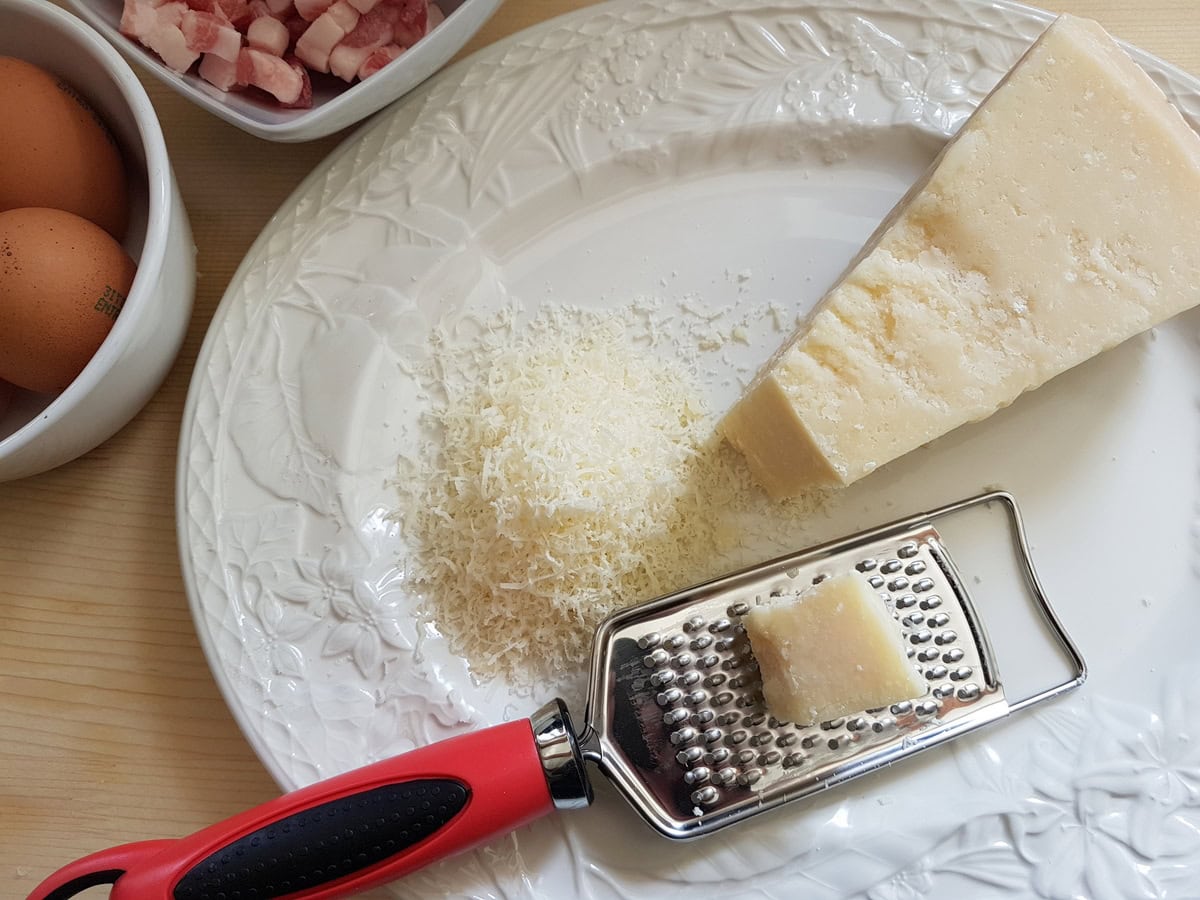
Pecorino Romano: Romans use their signature cheese, Pecorino Romano, for spaghetti alla carbonara. You can use Parmigiano instead if pecorino cheese isn't available but the flavor will be different. Pecorino is a hard cheese made from sheep's milk. It has a saltier and sharper flavor than Parmigiano (parmesan cheese). The latter is a cow's milk cheese which is quite nutty and sweet.
Eggs: Authentic spaghetti alla carbonara is made with egg yolks not whole eggs. The ratio is usually 1 egg per person plus an extra egg. So making carbonara for 4 calls for 5 eggs. Of course, it's possible to use whole eggs or a combination of whole eggs and yolks. However the 'sauce' is creamier and richer when you use just yolks.
Seasoning: Italians love to add a generous amount of freshly ground black pepper to their carbonara. Salt is used in the pasta water. But, less than normal as guanciale and pecorino are quite salty.
The pasta for carbonara.
Spaghetti is the usual pasta for alla carbonara. However, you can also use other long pasta like linguine, fettuccine and bucatini, or even rigatoni. In fact, Rigatoni is the second most popular pasta for carbonara in Rome.
Step by step instructions.
Preparation: Put a pot of water onto boil for the pasta. Add a little salt once it starts to boil and bring to a boil again. Cut off the rind of the guanciale and then cut it into cubes or strips.
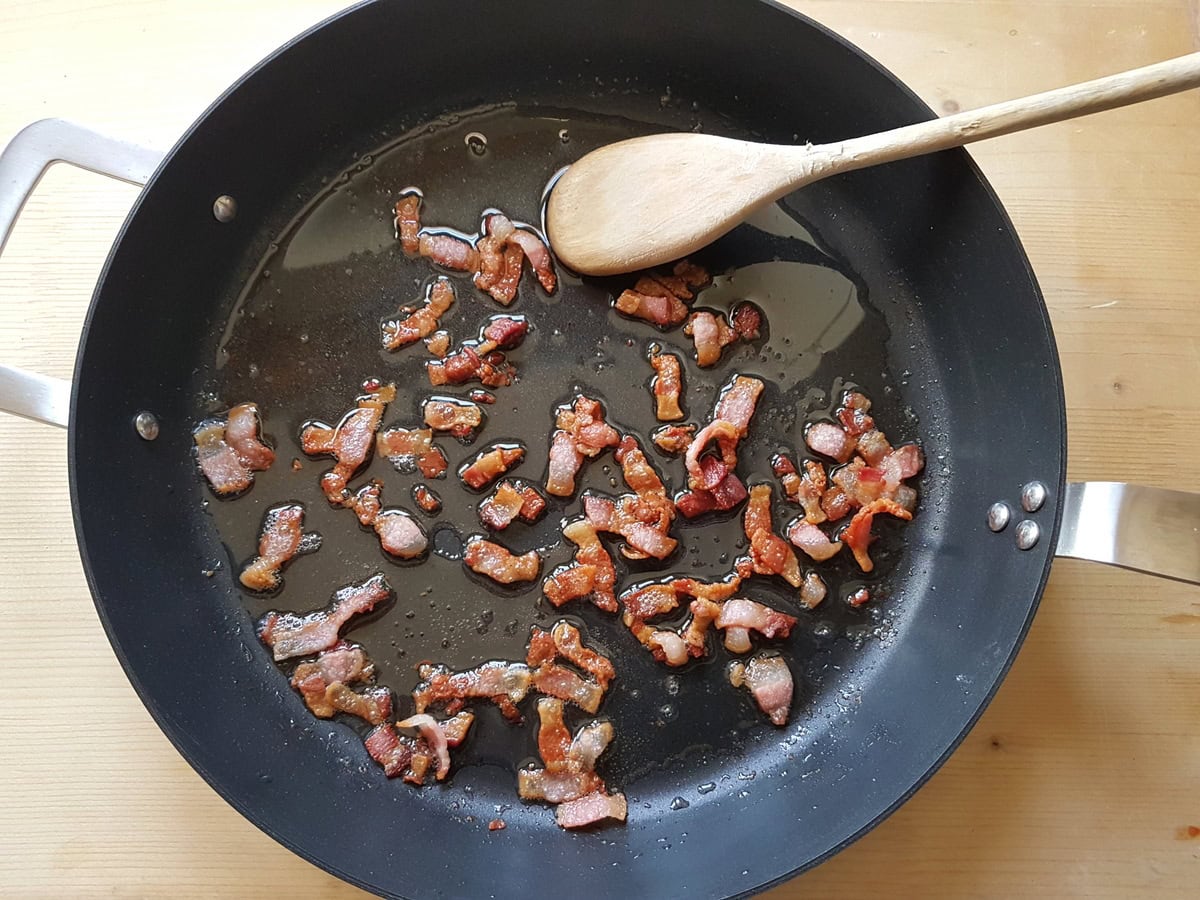
Step 1) Fry the guanciale in a large skillet over a medium heat until it becomes quite crispy. Guanciale renders a lot of fat so you don't need to use oil to cook it. Once it's crispy, remove the guanciale to a bowl lined with kitchen paper.
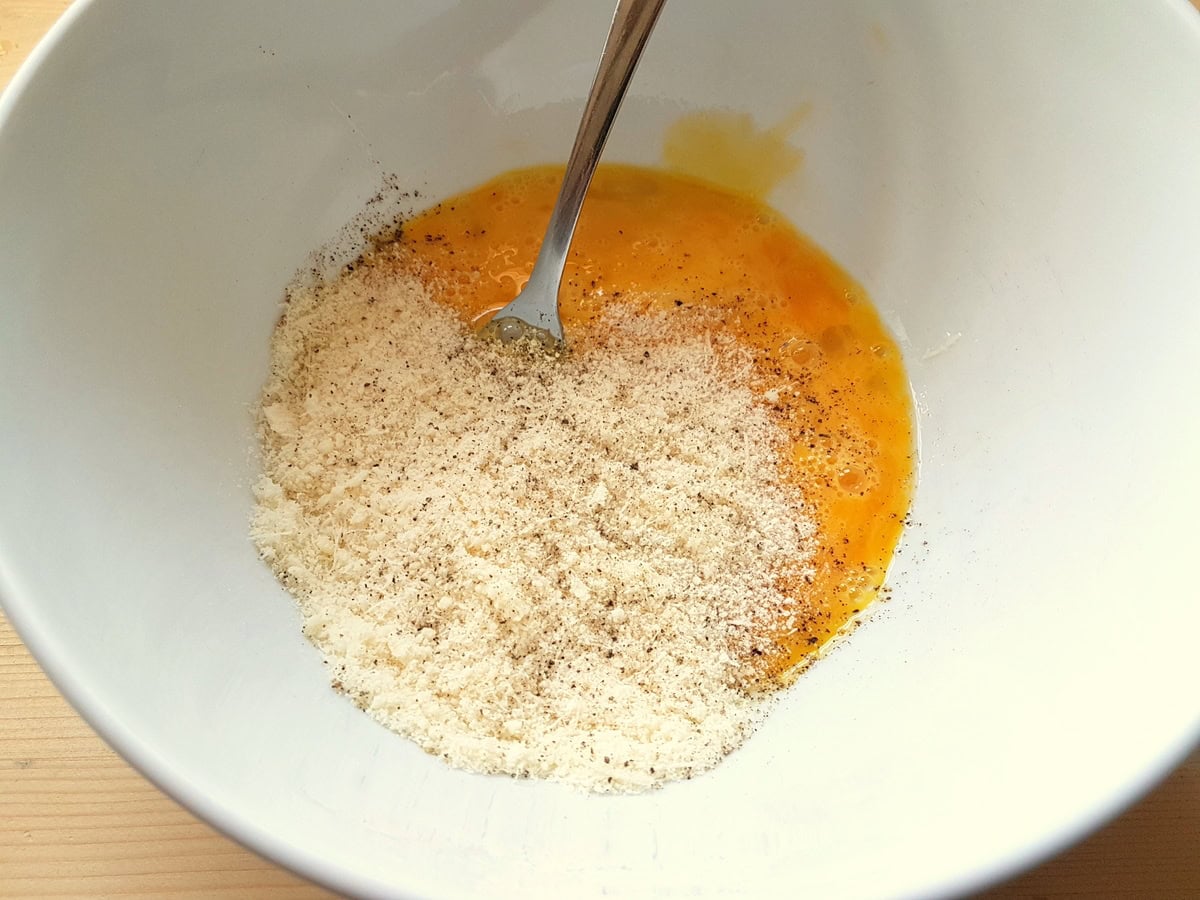
Step 2) Separate the egg yolks from the whites and put them in a large bowl. Beat the yolks until they are quite frothy, then add in the grated pecorino and some freshly ground black pepper. Beat everything together again before adding to the pasta.
Step 3) Cook the spaghetti until just short of al dente. Drain it and add it to the skillet where you cooked the guanciale after reheating the fat. Mix the drained pasta with the guanciale fat, add back most of the crispy guanciale and remove from the heat.
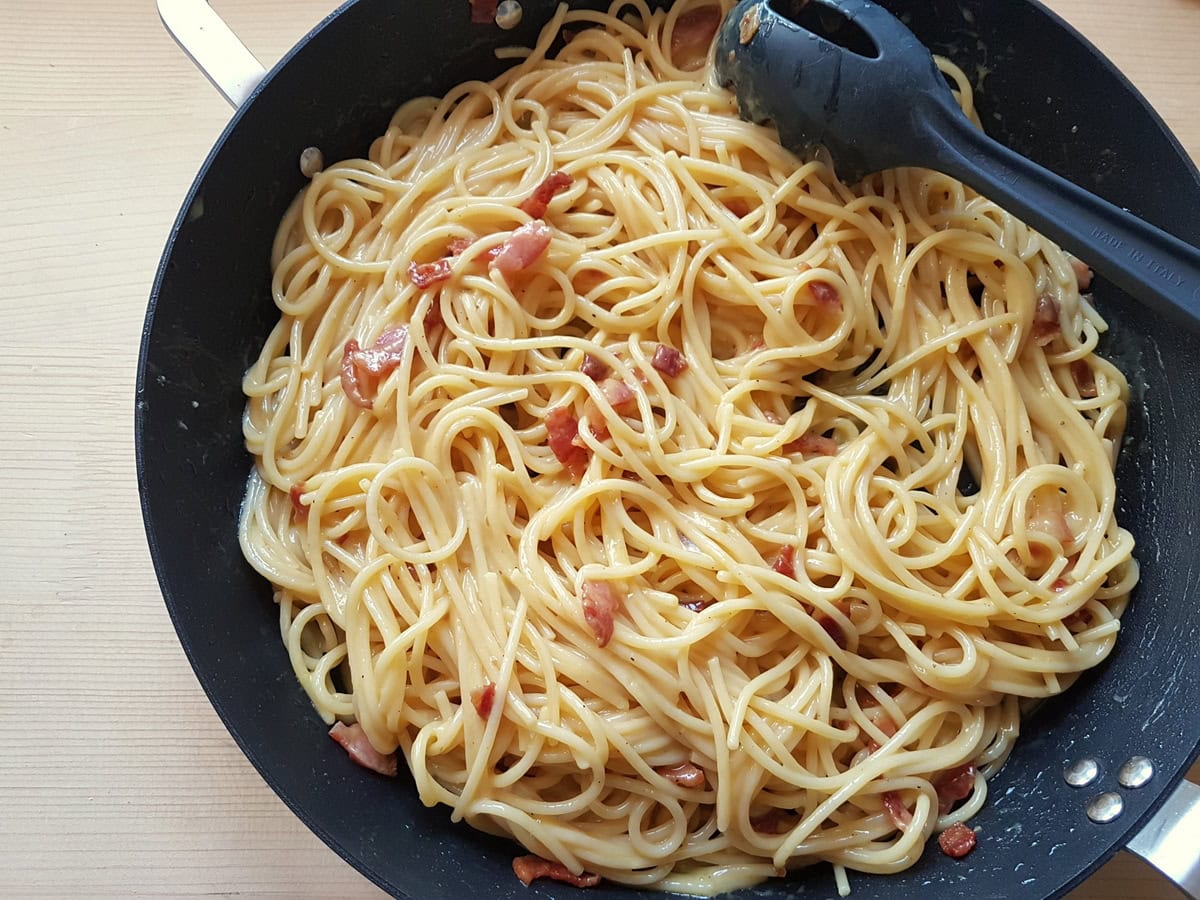
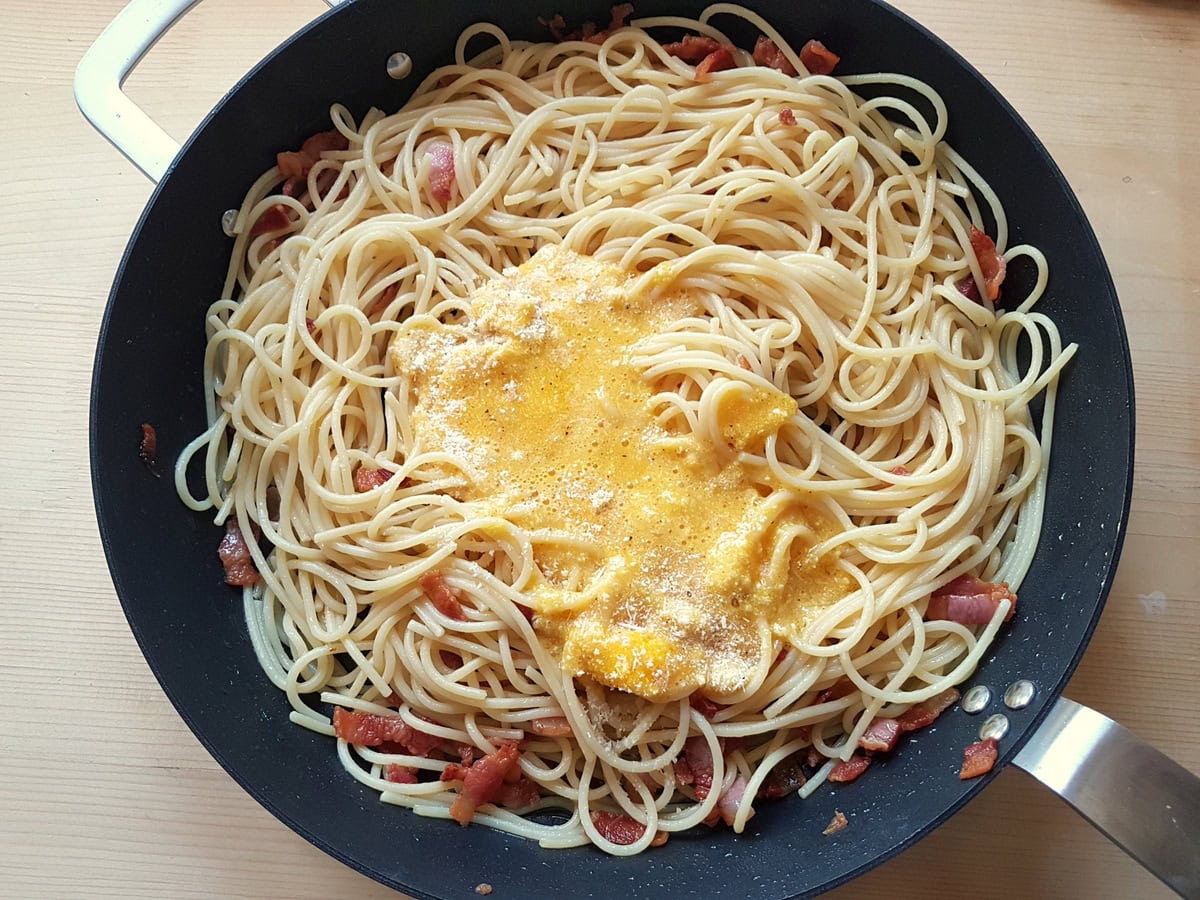
Step 4) Add the egg mixture to the spaghetti and guanciale. Mix everything together until the pasta is coated with the eggs and serve immediately.
Let me know what you think.
Even if you normally make your carbonara differently, it's worth trying it the Italian way! And, if you do try this classic Roman pasta dish, I’d love to hear what you think. Please write a comment here on the blog or post a comment on the Pasta Project Facebook page.
Your feedback means a lot to me!
Buon Appetito!
Other classic Roman pasta dishes to make.
- Pasta alla gricia
- Bucatini all'amatriciana
- Cacio e pepe
- Puntarelle pasta with burrata
- Romanesco broccoli pasta soup
- Pasta alla Papalina
(This recipe has been updated with new photos and text)
Save this recipe for later?
If you want to save this recipe for later, you can print it, bookmark this page or save it to Pinterest.
Spaghetti alla Carbonara

Ingredients
- 14 ounces spaghetti or spaghettoni You can also use rigatoni.
- 9 ounces guanciale (pork cheek) or pancetta (Italian bacon) cut into small cubes.
- 2 tablespoon olive oil (Don't use olive oil with guanciale)
- 5 egg yolks
- 7 ounces Pecorino Romano or Parmigiano
- freshly ground black pepper.
- salt for pasta
Instructions
- Put a pot of water on to boil for the pasta. Add a little salt once it starts to boil. Cook pasta a little less than al dente according to the instructions on the packet
- Meanwhile, fry the guanciale or pancetta until browned. (I use a little olive oil with pancetta but not with guanciale as it renders quite a lot of fat)
- Lightly beat egg yolks in a large bowl with the grated cheese and black pepper.
- When the pasta is ready, drain and add to the pan with the guanciale. Then mix well to coat the pasta. Take off the heat. Allow to cool slightly (so the egg won't be scrambled).
- Then add the egg and cheese mixture. Stir well to coat the pasta, but not too vigorously (you don't want scrambled eggs!). Serve immediately with more grated cheese and black pepper as required.
Notes
Spaghetti is the usual pasta, although linguine, fettucine, bucatini and rigatoni can also be used.
Nutrition
Pin for later
Sophia says
I love carbanara! This looks so delicious and easy. Thank you!
Linda says
I love reading the history of it and now I need to make one myself. Always love a simple pasta with fresh ingredients like this.
Amanda says
Looks like a fabulous recipe! Love this information you give about the history of the dish as well.
Beth Neels says
I find the history of dishes fascinating! I just love this traditional Carbonara!
Susan says
I will vicariously live in Italy through you Jacqui! While I come from an Italian heritage, we have American-ized many dishes. This sounds like a perfect carbonara. Delicioso!!
Danielle Wolter says
i love carbonara so much. i mean SO MUCH! it might be one of my favorite dishes ever. so much wonderful flavor. I def have to try out your recipe!
Stine Mari says
I was just going to say I saw this cute old Italian man making authentic pasta carbonara like this, and then I saw you embedded that exact video! He's the best. I haven't tried it yet, but I'm looking forward to it. I'm not a huge fan of the cream version, so I'm sure I'll like the authentic version much better. And also; I would've loved to read that Dan Brown book!
Sophie says
Very informative post. I may want to create a vegan version of it. Loved reading it!
Kelly Anthony says
This looks simply delicious. I'm excited to try an authentic carbonara recipe because I've been eating wrong all along.
Gloria | Homemade & Yummy says
One day I would love to visit Italy. Until then, being able to enjoy the foods of the world in your own kitchen is great. We are pasta lovers. This sounds delicious.
Brian Jones says
An absolute modern classic that tastes divine... I suspect like you that the WWII theory plays a huge part in the success of the Carbonara as a dish although suspect that in parts at least it was bubbling under the surface prior to that. But hey who knows, a huge part of the fun of food is arguing where it came from 😉
kim says
Such a yummy recipe! I love this one!
Cookilicious says
We too love a pasta for dinner on a weeknight! Its so convenient!
Lisa says
Wow, I just learned so much about Carbonara that I didn't know before! And no cream! I'll definitely need to try this with some gluten free spaghetti or zoodles.
Lisa | Garlic & Zest says
This is seriously one of my favorite Italian dishes. I only make it on rare occasions, but it looks like tonight might be one of them! Thanks!
Sandi says
I love the step by step directions...I can't wait to try this recipe!
Heidy L. McCallum says
Hello, from America! Hope your day is going well. I am enjoying reading your wonderful posts on Pasta and their authenticity. My family is from Italy and I totally agree that many recipes do get altered here in America. So glad to see some original Italian recipes. Normally I usually head my recipes as American-Italian due to that fact. I can't wait to run this by my mom and family. I bet they would enjoy it.
Veena Azmanov says
This is one dish my family relishes and this is perfect for me to try this weekend.
Noelle says
sometimes you just have to skip the veggies and this recipe was perfect without it! Thank you for sharing it was perfect.
Meghna says
We love carbonara & ate it in Rome for the first time. Your recipe is perfect Italian & absolutely delicious.