

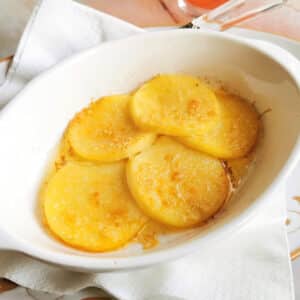
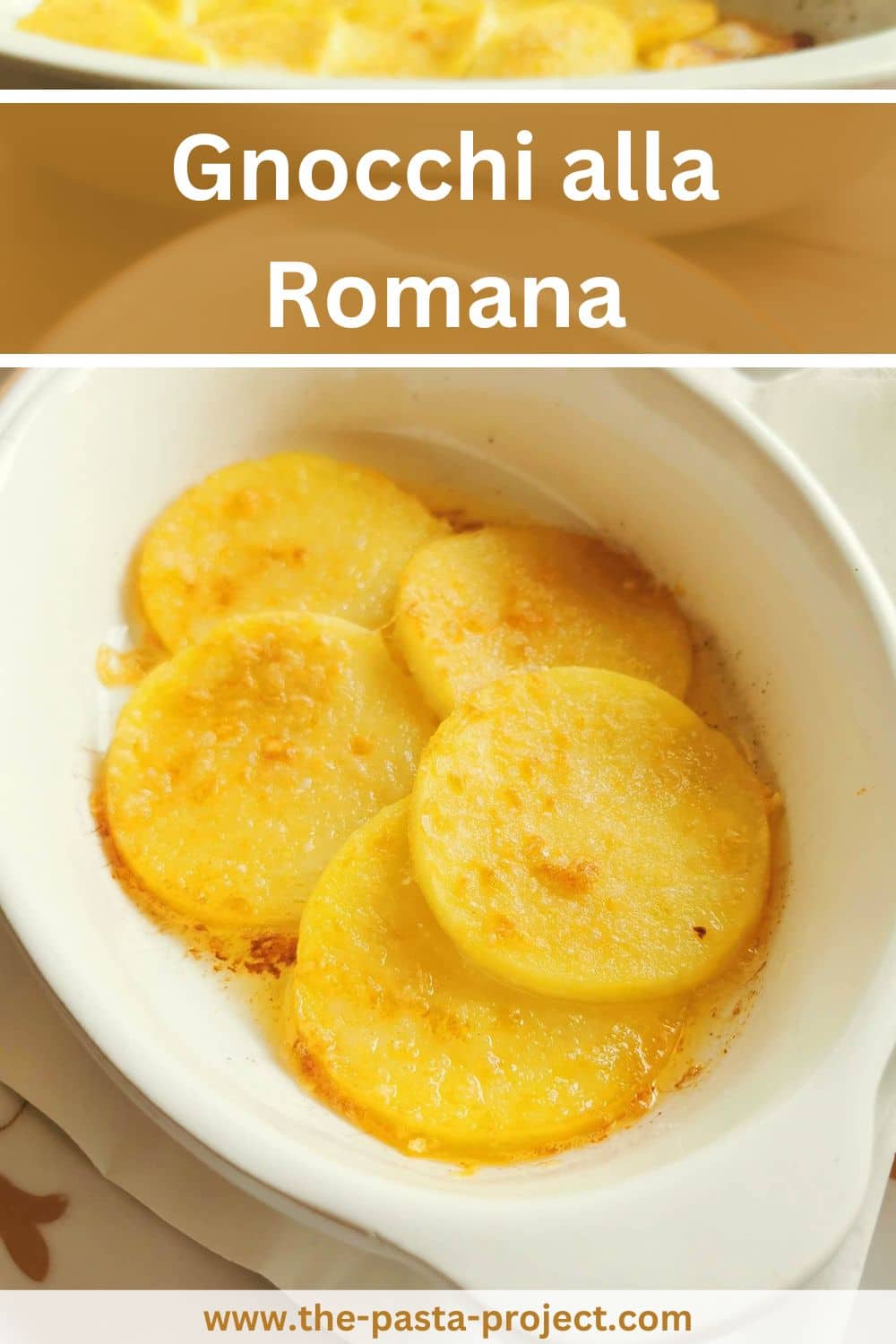
Gnocchi alla Romana is a traditional type of baked semolina gnocchi from Rome. These roman-style gnocchi are absolutely divine and a must-try if you have never had them! Make them in one big dish for all the family to tuck into or serve them in individual portions for an elegant starter or side dish.
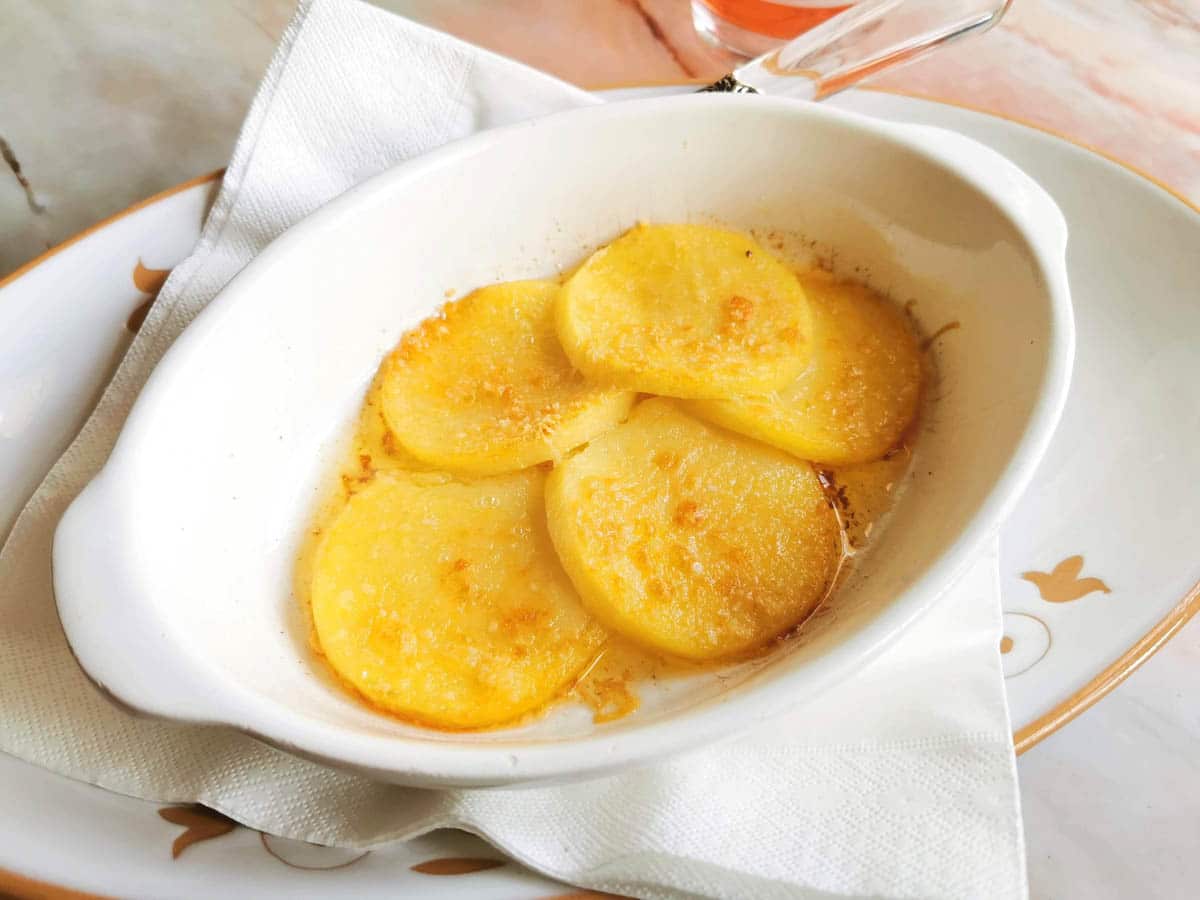
The first time I made gnocchi alla Romana, was actually the first time I had eaten them. However, it wasn’t the last! These baked semolina gnocchi have become a firm family favourite! I love traditional potato gnocchi, but they aren’t always very light.
In fact, many other gnocchi dishes are better eaten in the winter when we need and crave more substantial meals! Gnocchi alla Romana, on the other hand, can even be served as a starter. They are rich but light and a real melt in your mouth treat!
History
These semolina gnocchi are one of the most famous examples of pre-or non-potato gnocchi. They are very similar to the type of dumplings enjoyed in Ancient Rome, hence the name ‘alla Romana’ (Roman gnocchi).
Despite the fact that some people attribute the origin of these gnocchi to Piedmont because of the high butter content (which is not typical in Lazio cusine), they are a traditional dish in Rome and Lazio.
Alternative Ways to Serve Gnocchi alla Romana
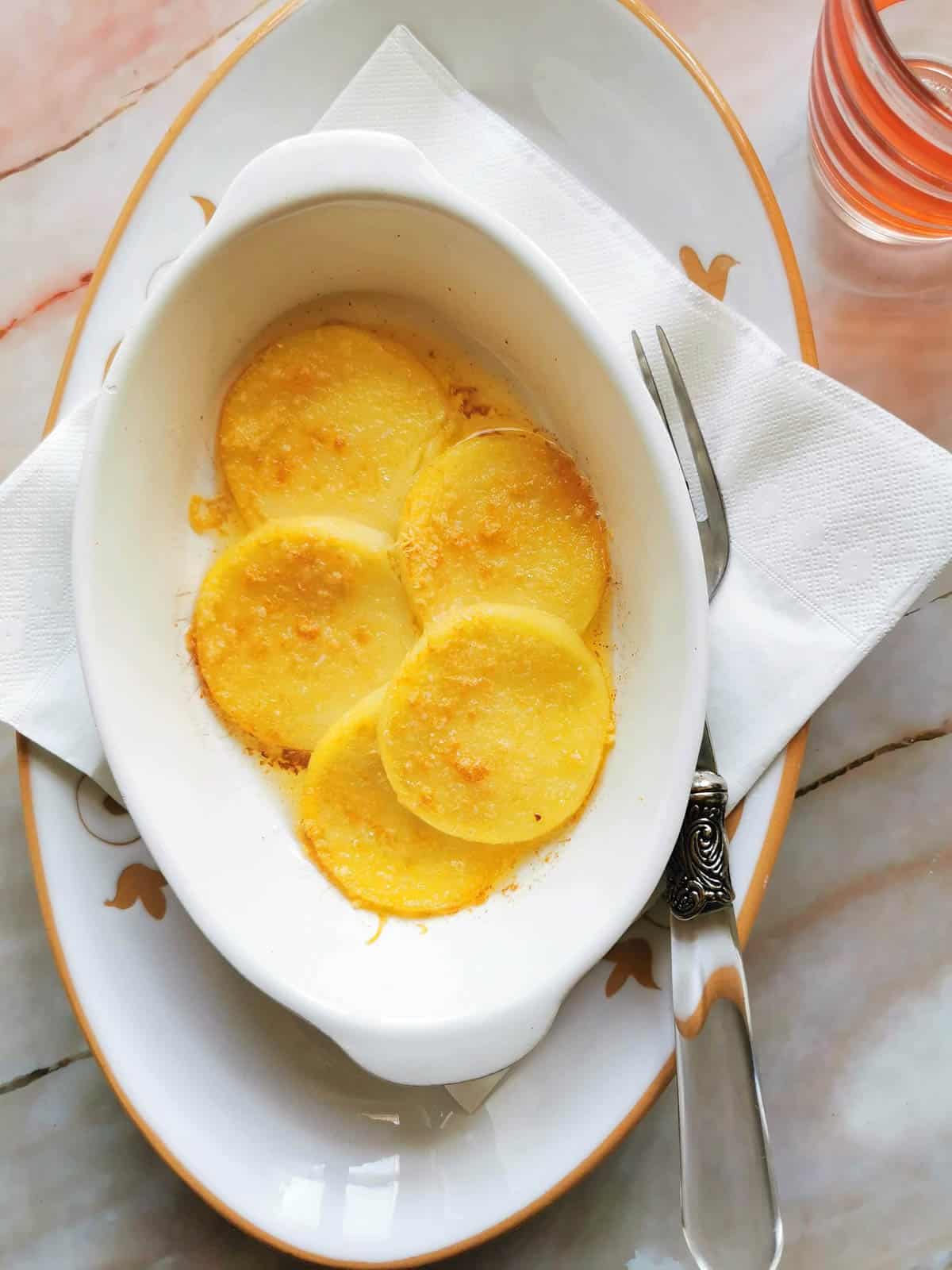
The classic Roman recipe uses a simple butter and cheese dressing. However, these gnocchi alla Romana can be served in other ways; such as with a bechamel sauce, a mornay sauce, a four cheese sauce or a sauce mixed with ham, bacon, pancetta or vegetables.
They can also be served 'alla Sorrentina' which means baked with tomato sauce, mozzarella and basil. Plus, you can put some chopped greens or herbs, such as spinach, nettle, chicory, basil etc. into the dough.
Traditionally, gnocchi alla Romana are shaped in circles. But, the dough can also be cut into squares or other shapes! So, if you’re making these with the kids, you can have some fun and cut them in different shapes! Actually, even without kids, you can get creative with the shape!
Ingredients
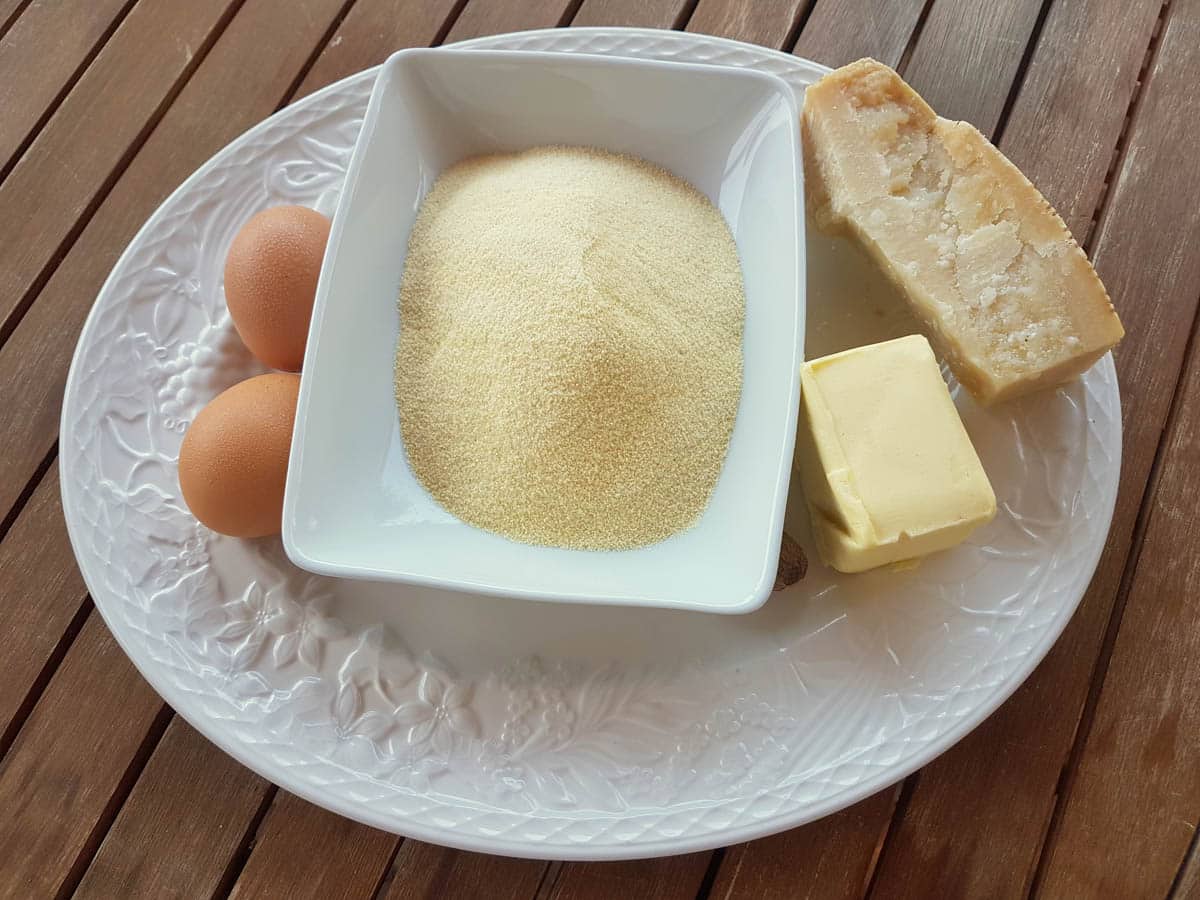
- Milk: This is the liquid for your semolina dough. You can use any type of milk; if you want a richer gnocchi use whole milk.
- Semolina: Semolina (semolina flour in US and semolino in Italy) gives the gnocchi their distinctive texture and flavor. Make sure to use high-quality semolina for the best results.
- Butter: Butter adds richness to the dough and also helps in browning the gnocchi in the oven. This recipe uses unsalted butter; if you use salted, you can slightly reduce the addition of salt in the recipe.
- Egg yolks: Egg yolks help bind the ingredients together and adds richness to the gnocchi.
- Parmigiano Reggiano: Parmigiano Reggiano (parmesan cheese) lends a rich, nutty flavor to the gnocchi.
- Pecorino Romano: Pecorino Romano is a salty, hard cheese made from sheep's milk. It adds a sharp, tangy flavor to the gnocchi. If you can't find it, you can substitute with additional Parmigiano Reggiano. Both Pecorino and Parmigiano contain animal rennet. Vegetarians will need to use a vegetarian cheese.
- Salt: Salt enhances the flavors of the other ingredients.
- Nutmeg: Nutmeg adds a subtle warmth and depth to the gnocchi. Use freshly grated nutmeg if possible; it's more flavorful than pre-ground.
Expert Tips
Here are my top tips to get you one step closer to gnocchi perfection.
- Cutting Circles: Using a wet cutter when cutting out the semolina dough circles can help prevent sticking, making the process much smoother. If you don't have a round cookie cutter, a glass of similar size will do the trick just as well.
- Stirring Vigorously: Once the semolina is added to the milk, it thickens rapidly. Switch from a whisk to a wooden spoon, and keep stirring vigorously to prevent lumps from forming.
- Make Ahead: Gnocchi alla Romana is a perfect make-ahead dish. If you have a busy day coming up, prepare the semolina dough a day ahead and refrigerate it overnight. You can then cut the semolina rounds and arrange the gnocchi when you're ready, making the final steps a breeze.
Step by Step Instructions
1) Begin by pouring the milk into a large saucepan, adding half the butter (cut into pieces), a pinch of grated nutmeg, and a pinch of salt.
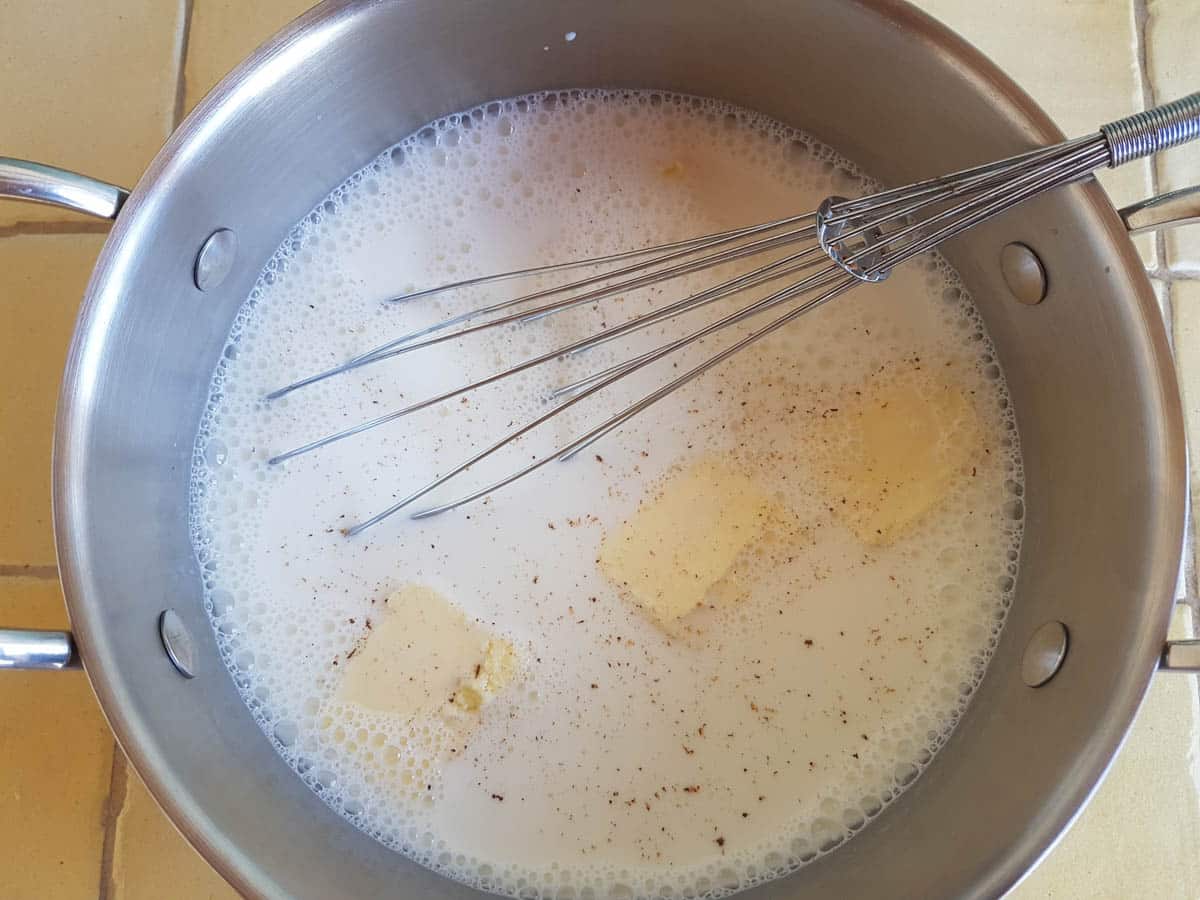
2) Bring the milk mixture to a simmer over a medium-high heat. Once the butter has melted, gradually add the semolina flour while whisking to prevent lumps from forming.
Note: Once you add the semolina the mixture will thicken quickily.
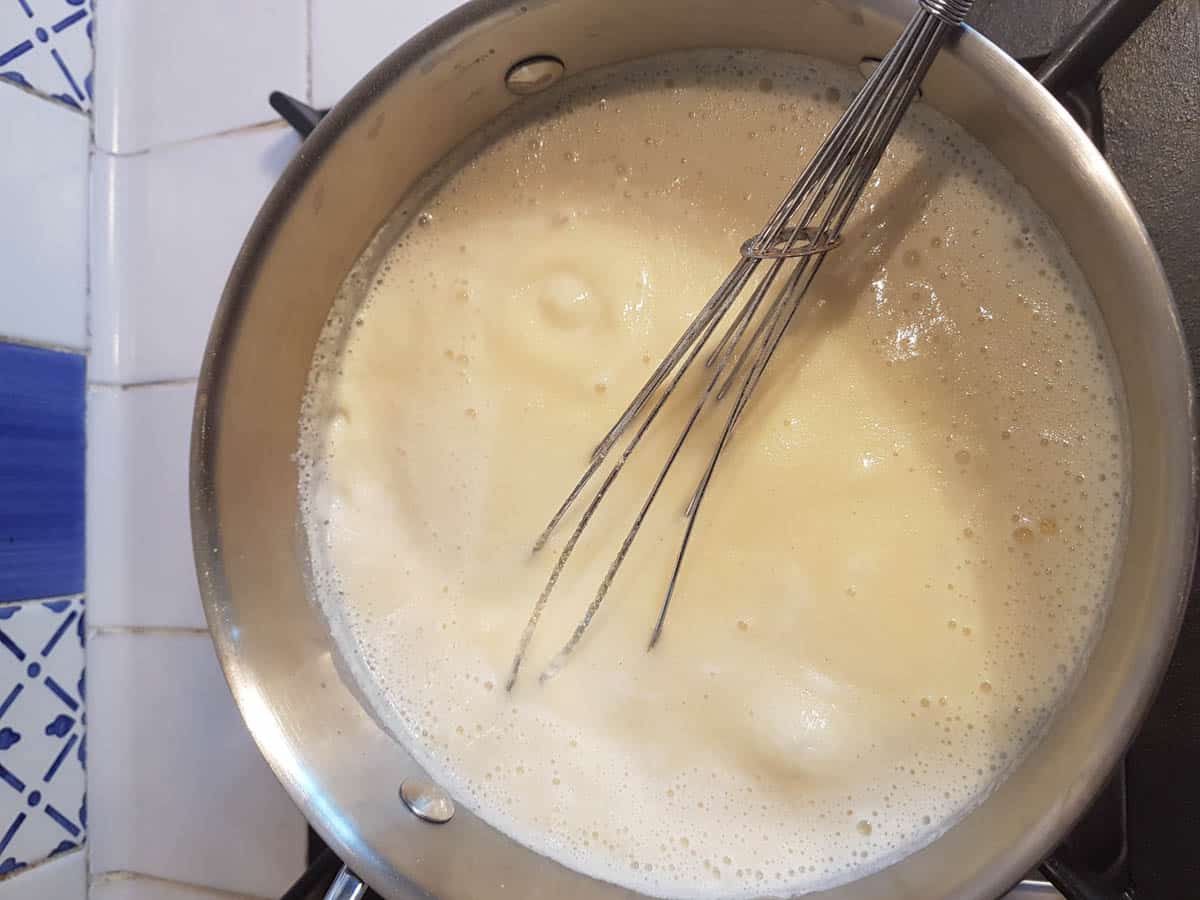
3) As the mixture thickens, lower the heat and switch to a wooden spoon and stir vigorously to prevent lumps forming.
4) Keep cooking the semolina until you have a very thick mixture which is quite stiff and elastic and begins to pull cleanly away from the sides of the pan (stirring all the time, of course)
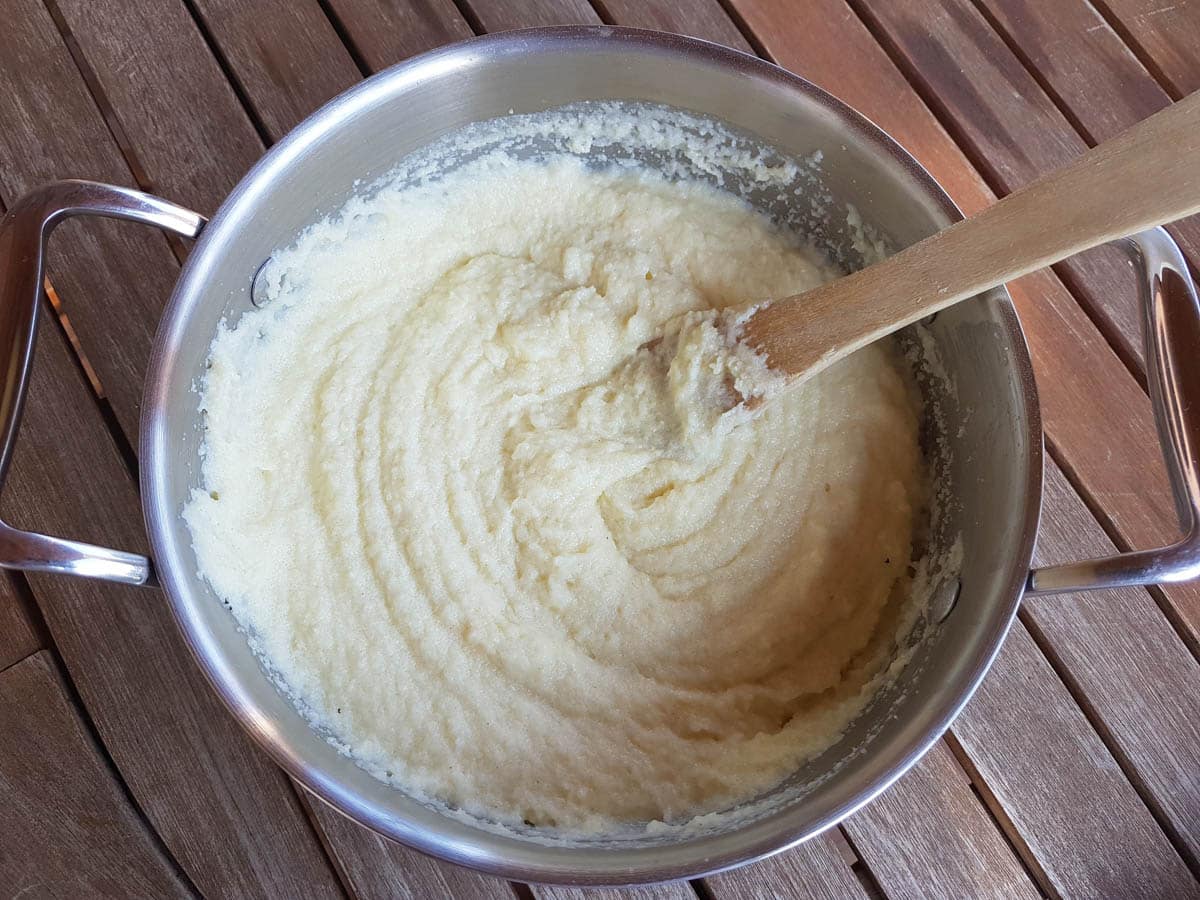
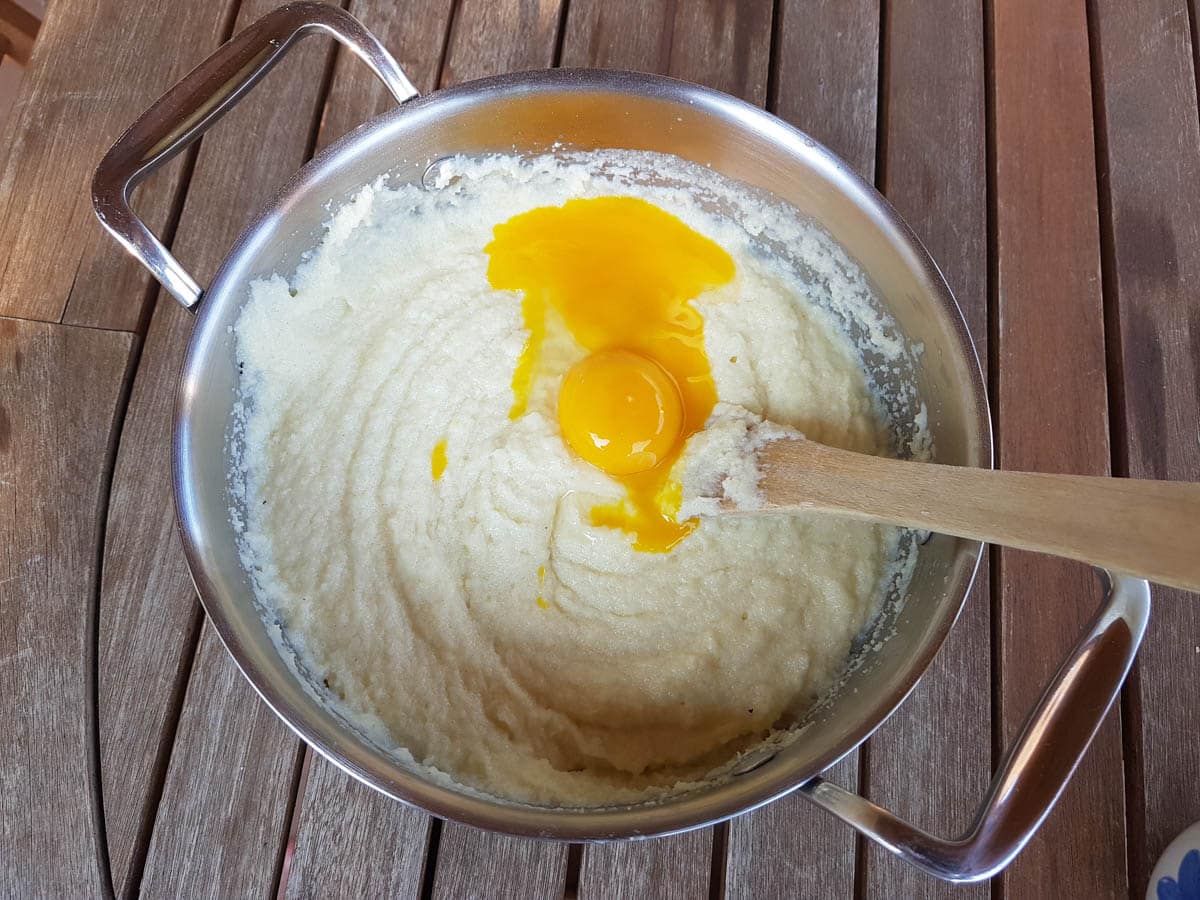
5) Remove the pan from the heat and mix in the egg yolk.
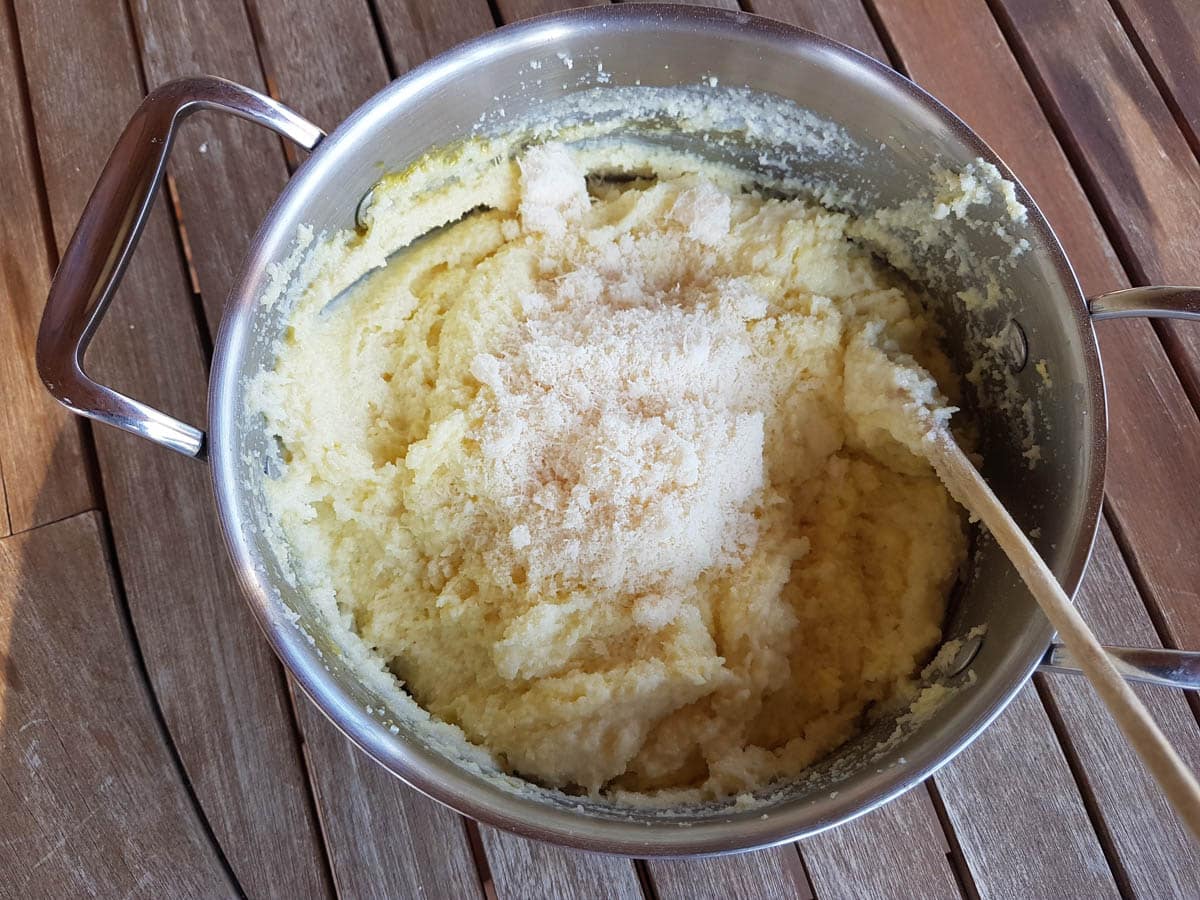
6) Once well combined mix in the Parmigiano Reggiano cheese.
7) Spread the hot dough out in an even 1 cm thick single layer on a buttered or oiled baking sheet or large rectangular Pyrex dish.
Cook's Tip: Wetting your hands or a rubber spatula with cold water can make this easier.
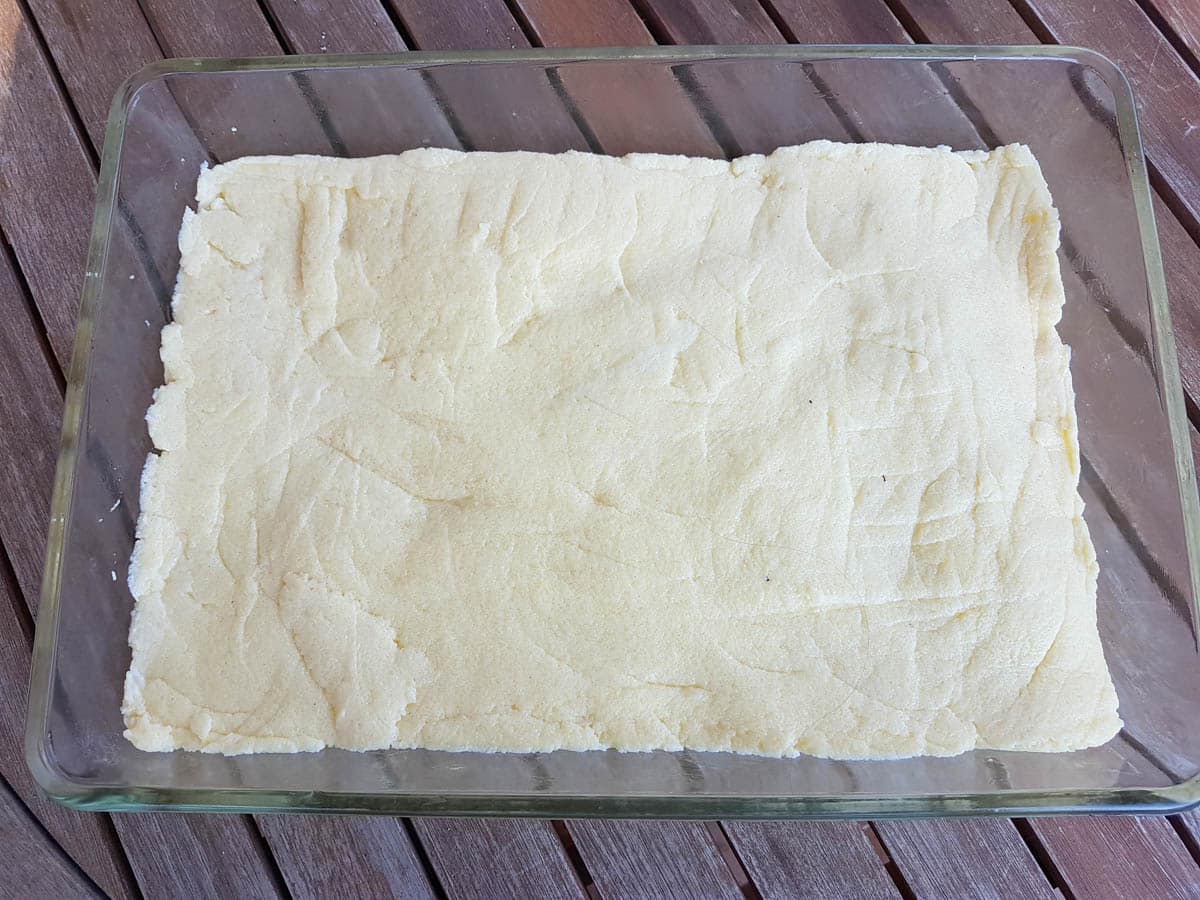
8) Allow the dough to cool at room temperature or in the refrigerator for about 30 to 40 minutes.
Note: Alternatively, you can prepare this a day ahead and refrigerate overnight.
9) Use a round 5-6cm cutter (or a glass or cookie cutter) to cut out circles of the semolina dough.
Tip: Slightly wet the tool with some water to prevent the dough from sticking.
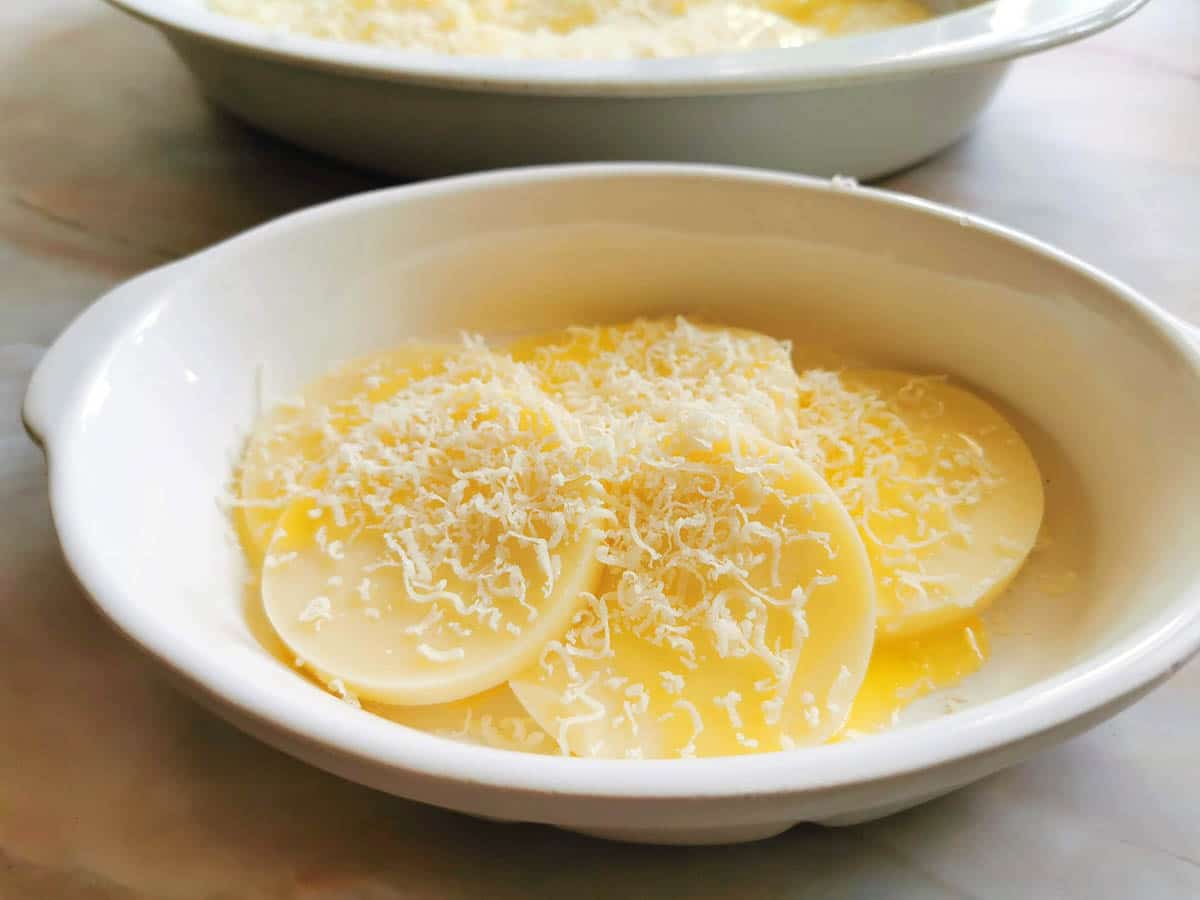
10) Arrange the semolina discs in slightly overlapping lines in a buttered or oiled baking or gratin dish.
11) Melt the rest of the butter in a saucepan. Let it cool slightly, then pour the melted butter over the semolina discs. Then, sprinkle over a generous amount of the grated Pecorino Romano cheese (or more Parmigiano Reggiano).
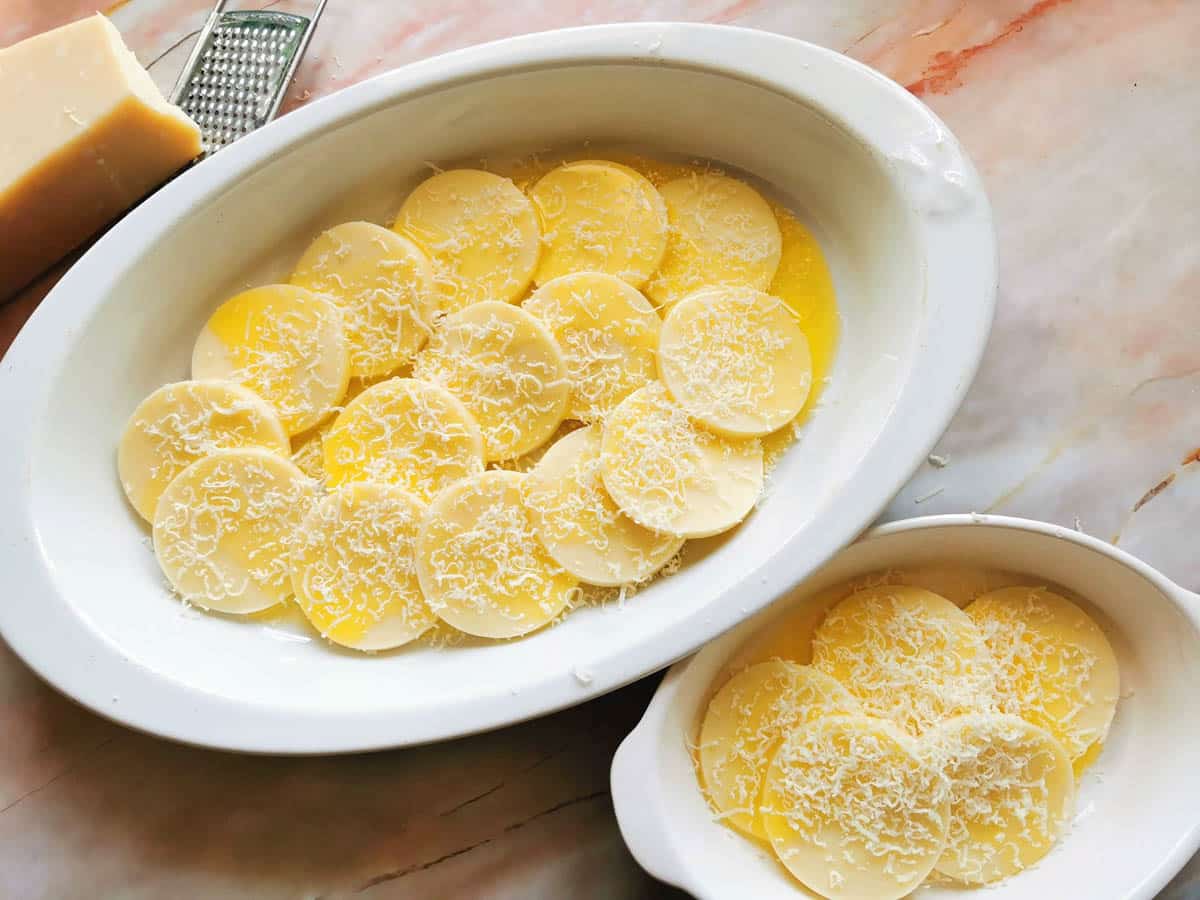
12) Bake in a preheated oven at 390°F (200°C) or under the grill until the gnocchi are golden brown.
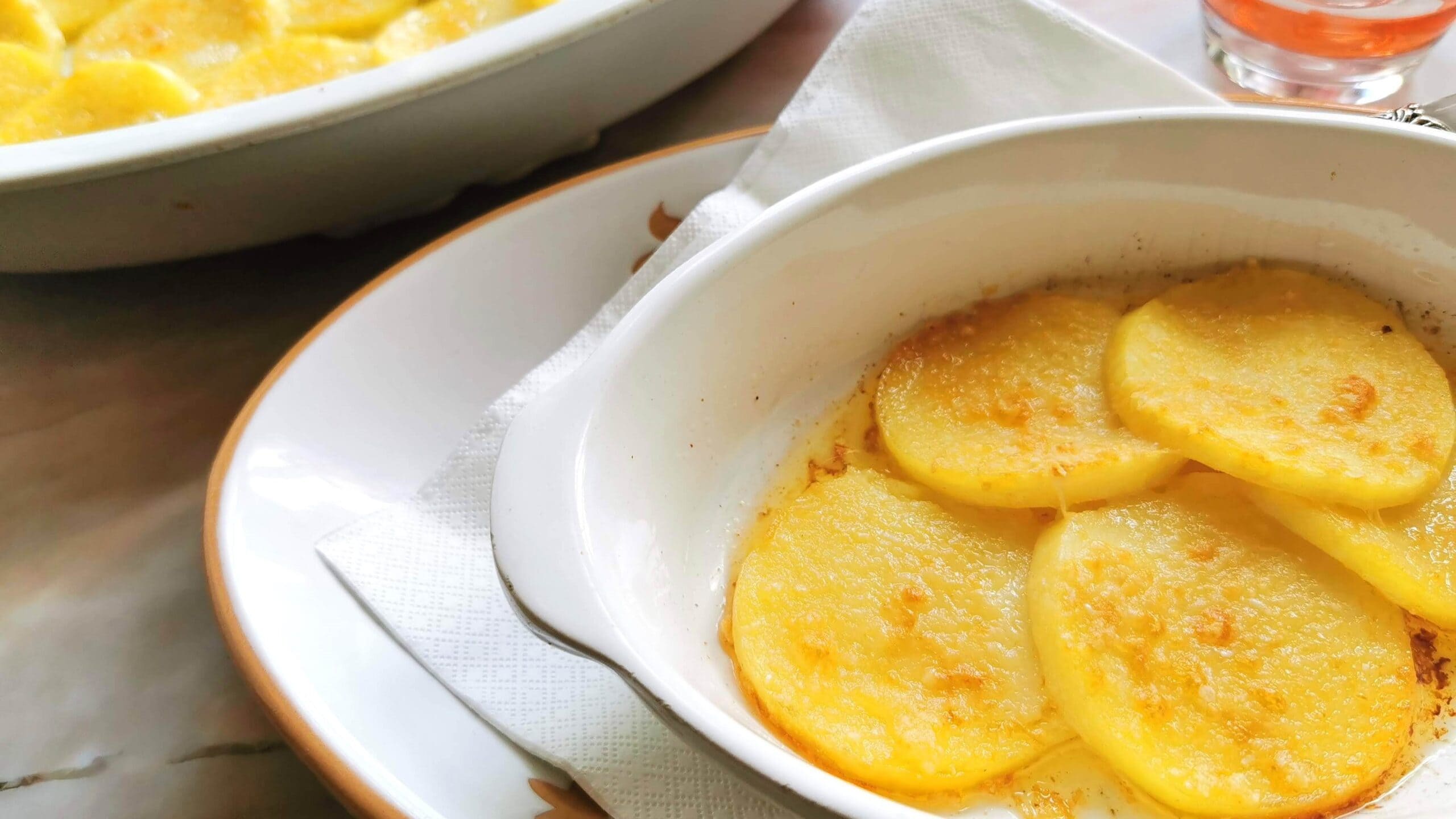
12) Let your semolina gnocchi rest for a few minutes, then serve in the baking dish.
Storage and Leftovers
This dish holds up well in the refrigerator and even the freezer.
- Refrigerator: Cool any leftover gnocchi alla Romana to room temperature. Once cooled, wrap the baking dish tightly with plastic wrap, or transfer the gnocchi to an airtight container. They will then stay fresh in the refrigerator for about 3-4 days.
- Reheating: When you're ready to enjoy the leftovers, you can reheat them in a preheated oven at 350°F (180°C) until heated throughout. Alternatively, you can heat them in the microwave, though the oven method will maintain a better texture.
- Freezer: If you want to store the gnocchi for a longer period, they can be frozen. Just ensure that they are cooled and transferred to a suitable freezer-safe container or bag. Properly stored, these gnocchi can last up to 6 months in the freezer. To reheat, thaw them in the refrigerator overnight before following the oven reheating instructions.
Neither Italian Parmigiano Reggiano or Pecorino Romano are vegetarian because they are made with animal rennet. Replace with vegetarian cheese to make your gnocchi alla Romana vegetarian.
Semolina flour outside of Italy is very similar to semolino in Italy. It's quite coarse and can also be used to make bread. Italian semola (rimacinata) is finely milled semolina flour, known as durum wheat flour in US. It's used to make Italian flour and water pasta, including dried pasta.
Other classic recipes from Rome.
- Spaghetti alla Carbonara the Italian way
- Pasta alla Papalina
- Cacio e Pepe
- Pasta alla Gricia
- Oxtail Ragu Pasta
- Spaghetti alla Checca
If you do try this gnocchi alla Romana recipe, I’d love to hear what you think. Please write a comment here on the blog or post a comment on the Pasta Project Facebook page.
Your feedback means a lot to me!
Buon Appetito!
Gnocchi alla Romana

Ingredients
- 34 fl oz milk
- 9 oz semolina
- 3 ½ oz butter
- 2 egg yolks
- 2 ½ oz Parmigiano Reggiano or vegetarian parmesan
- 2 oz Pecorino Romano or vegetarian cheese.
- salt a pinch
- nutmeg grated, a pinch
Instructions
- Begin by pouring the milk into a saucepan, adding half the butter (cut into pieces), a pinch of grated nutmeg, and salt.
- Bring the milk mixture to a simmer. Once the butter has melted, gradually add the semolina while whisking to prevent lumps from forming. Note: Once you add the semolina the mixture will thicken quickly.
- As the mixture thickens, lower the heat and switch to a wooden spoon and stir vigorously to prevent lumps forming.
- Keep cooking the semolina until the mixture becomes quite stiff and elastic and begins to pull cleanly away from the sides of the pan (stirring all the time, of course)
- Remove the pan from the heat and mix in the egg yolk. Once well combined mix in the Parmigiano Reggiano cheese.
- Spread the hot dough out in an even 1 cm thick layer on a buttered or oiled baking sheet or large rectangular Pyrex dish. Tip: Wetting your hands or a spatula can make this easier.
- Allow the dough to cool at room temperature or in the refrigerator for about 30 to 40 minutes.
- Use a round 5-6cm cutter (or a glass or cookie cutter) to cut out circles of the semolina dough. Tip: Slightly wet the tool with some water to prevent the dough from sticking.
- Arrange the dough circles in slightly overlapping lines in a buttered or oiled baking or gratin dish.
- Melt the remaining butter in a saucepan. Let it cool slightly, then pour it over the dough circles. Then sprinkle over a generous amount of the grated Pecorino Romano cheese (or more Parmigiano Reggiano).
- Bake in a preheated oven at 390°F (200°C) or under the grill until the gnocchi are nicely browned.
- Let the gnocchi rest for a few minutes, then serve in the baking dish.
Notes
- Some Italians shape the hot dough into a roll and roll it up in baking paper. When the dough is cooled they cut the roll into 1cm slices. This method produces no scraps but I think is harder to do!
- You can save the scraps of dough and deep fry them for a snack or to make a mini version of this dish. The scraps aren't uniform like the circles, but they can be rolled into croquettes and taste just as good as the gnocchi.
- Neither Italian Parmigiano Reggiano or Pecorino Romano are vegetarian. Replace with vegetarian cheese if required.
Nutrition
Pin for Later:
If you are interested in learning how to make homemade pasta and different types of gnocchi, check out my shop page for some great video online courses from my friends in Rome! Nothing beats learning to make pasta from Italians! Plus while you’re there why not order a copy of one of my pasta recipe cookbooks? They make great prezzies for pasta loving cooks.

Irene says
I have semolina flour that is meant for making pasta. Is this the correct semolina for gnocchi? It is marked as #1. Link to Webstaurantstore is very helpful but I still want to make sure. Thank you!
Jacqui says
Hi Irene, to make gnocchi alla romana Italians use a slightly coarse semolina flour called semolino rather than the fine semolina flour used for pasta (semola rimacinata). Semolina is also used to make a pudding in a number of European and Middle Eastern countries. It's usually just sold as semolina. However since all types of semolina flour are milled durum wheat, you could try using the semolina flour you have to make the gnocchi.
Michèle says
So easy and very yum. My toddler grandson loved this, me too. I used to make another version of this when my kids (now adults) were little, but this one works much better. A very satisfying supper dish when the snow is blowing wildly outside.
Thank you Jacqui.
Jacqui says
Thanks for your feedback Michele. Gnocchi alla Romana really are easy to make and so tasty. I'm pleased your grandson enjoyed it. This is also one of the few gnocchi dishes I like to make as a side dish instead of potatoes or polenta.
Amy says
Hello! I’m curious about a few things here. This seems a lot like Polenta? Is the main difference the wheat vs cornmeal? What do you think of using cornmeal for gluten free
Also, is “Cream of Wheat” (sold in Canada/US) the kind of semolina that can be used here?
Love your recipes and the associated stories. Thanks
Jacqui says
Hi Amy, I don't think these gnocchi made with cornmeal will have the same taste and texture of traditional gnocchi alla Romana. However, you can use half cornmeal (polenta) and half rice flour to get something similar that's gluten free. Cream of wheat which is made from wheat semolina can definitely be used.
MVU says
A few coments, semolino is not semolina flour, it's much coarser, equivalent to a Nº3 semolina and look similart to Polenta, I find it hard to find in the USA being the closest the Turkish semolina #3 or the Indian Soojit both made with Durum wheat, also the gnocchi must be much taller, 1.25" (or 4cm)
Jacqui says
Thanks for your comment but to be honest according to a number of sources I have used to clarify the info I give 'semolina' (Italian semolino) is often referred to in the US as 'semolina flour'. Please check out this link for more info https://www.webstaurantstore.com/blog/2924/semolina-flour.html. Also Italians usually make gnocchi alla Romana about 1cm thick. Here's an Italian recipe example https://ricette.giallozafferano.it/Gnocchi-alla-romana.html
Amy Liu Dong says
Wow! This looks yummy plus it's very enticing to the eyes! Many will love and enjoy this and kids definitely like what you've said. Thanks for sharing this with us.
Lathiya says
This is an interesting recipe and I loved the process of making it. It tasted delicious.
Liz says
My family loves gnocchi, but I'd never made this Roman version before. It was a huge hit!!!
Nicole says
This is the perfect family dinner to make together and then try something new we’ve never had!!