

Fusilli, also known as rotini in the United States, is a popular pasta type used in many recipes around the world. Most people have heard of this pasta; however, did you know there is actually a fusilli family?
What is Fusilli?
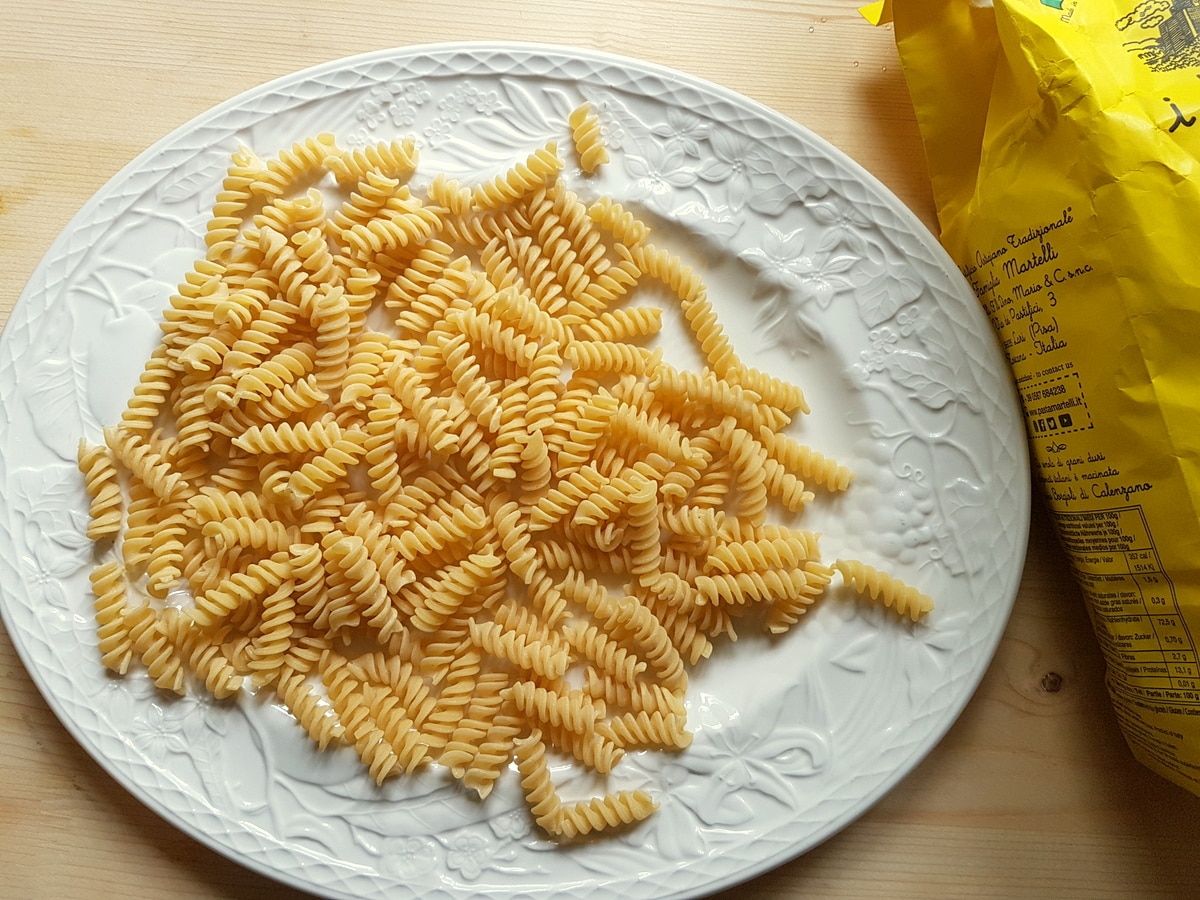
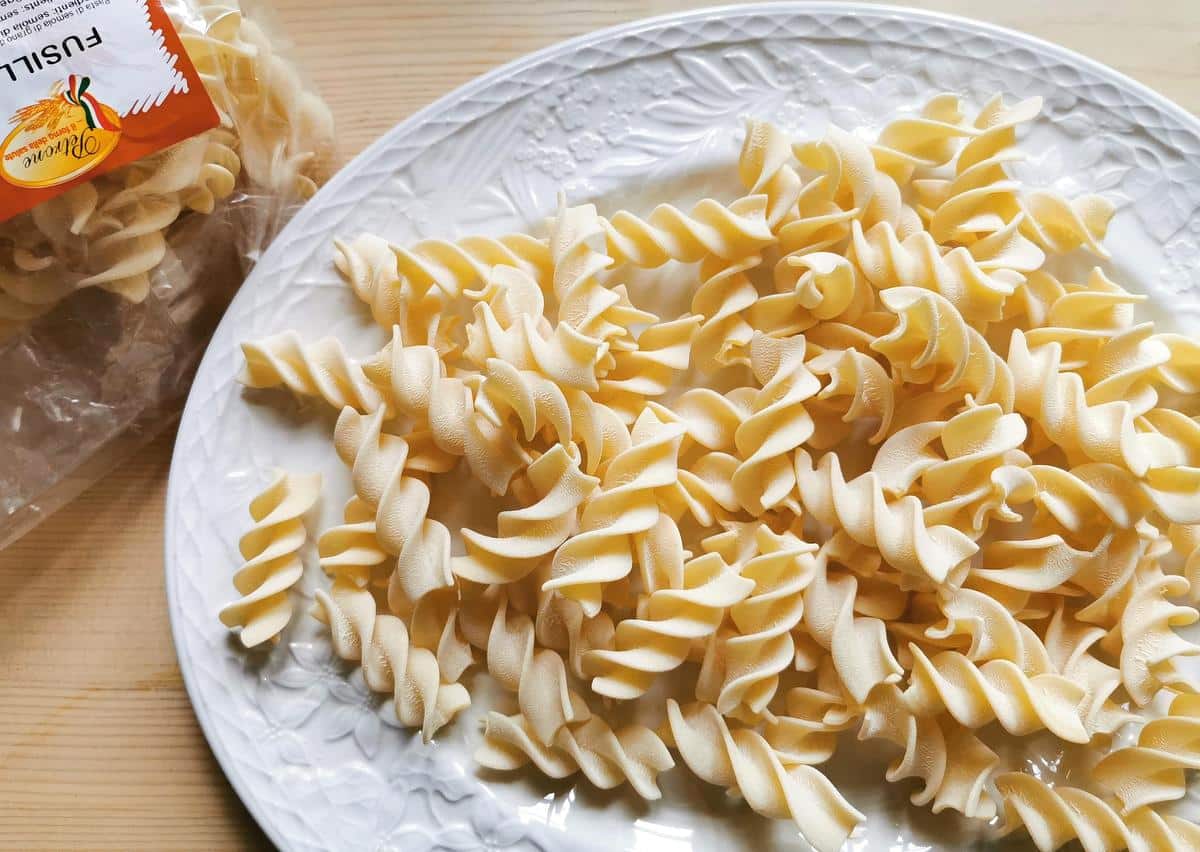
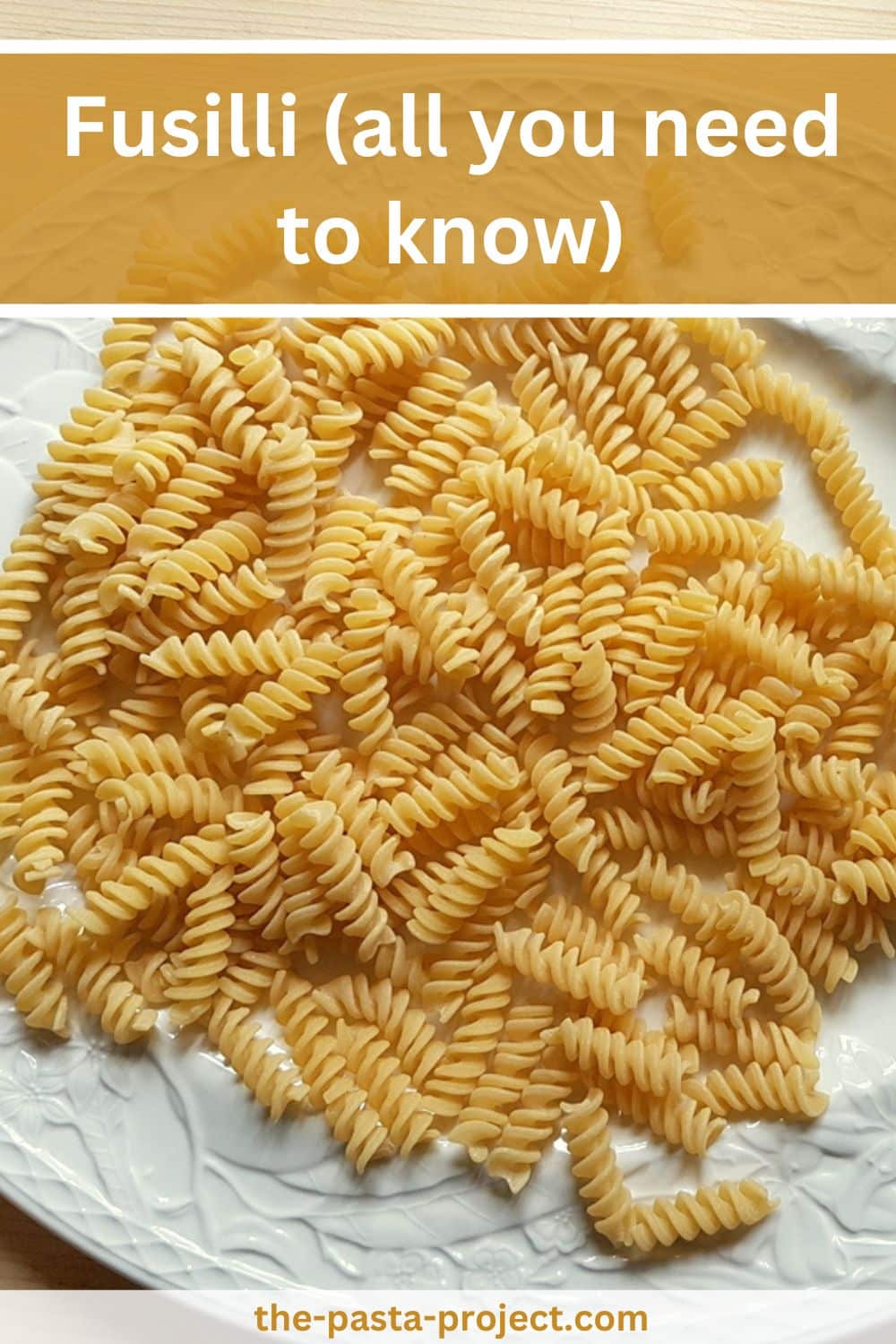
Fusilli is a type of pasta characterized by its spiral, corkscrew-like shape. Its distinctive form is excellent at trapping and holding sauces, making it a popular choice with many pasta sauces.
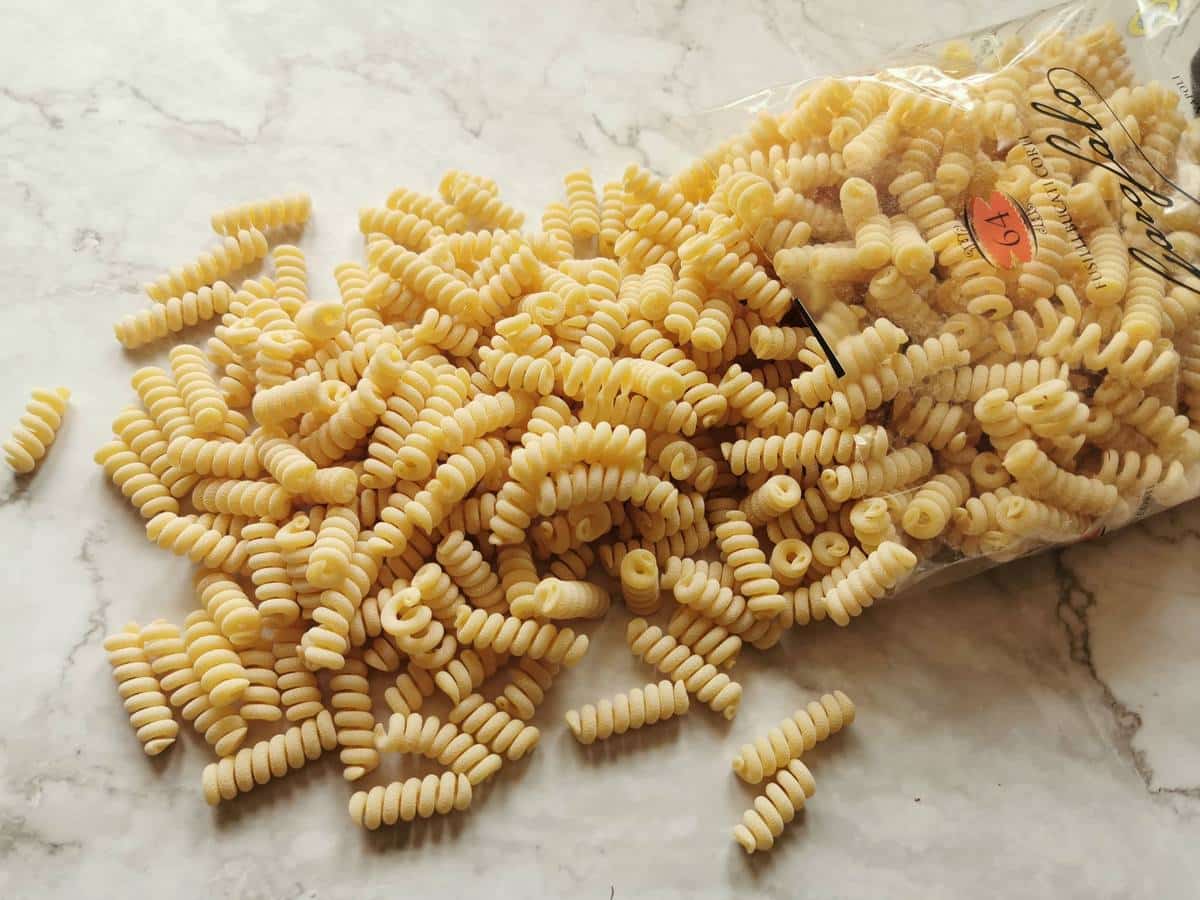
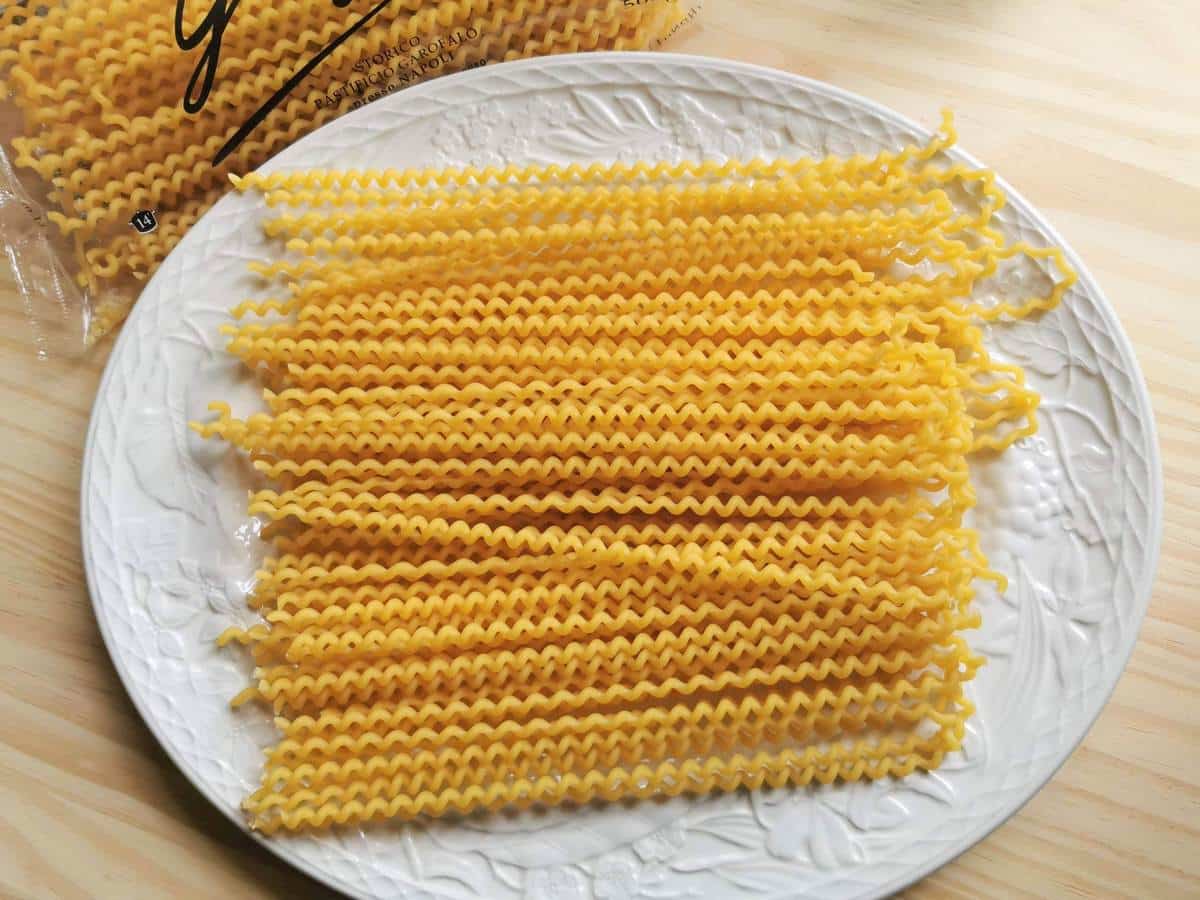
In Italy, there are actually several variations: the classic short spirals (Fusilli), the longer strands (Fusilli Lunghi), and the hollow versions (Fusilli Bucati). Plus, there is a giant version Italians call fusilloni.
History
The fusilli family has a rich history said to date back centuries to its handmade origins in Southern Italy . The name 'fusilli' derives from 'fuso', meaning spindle, as the original method involved wrapping pasta dough around a long needle or thin metal rod known as a ferro or ferretto.
This handmade tradition varies slightly from region to region and is still found in much of Southern Italy. However, traditional fusilli look quite different from the machine-made versions.
In some regions, the dough is wrapped around the ‘ferro’ by placing the ferro at an angle over one end of a pasta strand and rolling it in a way that the pasta wraps around the rod in a spiral shape.
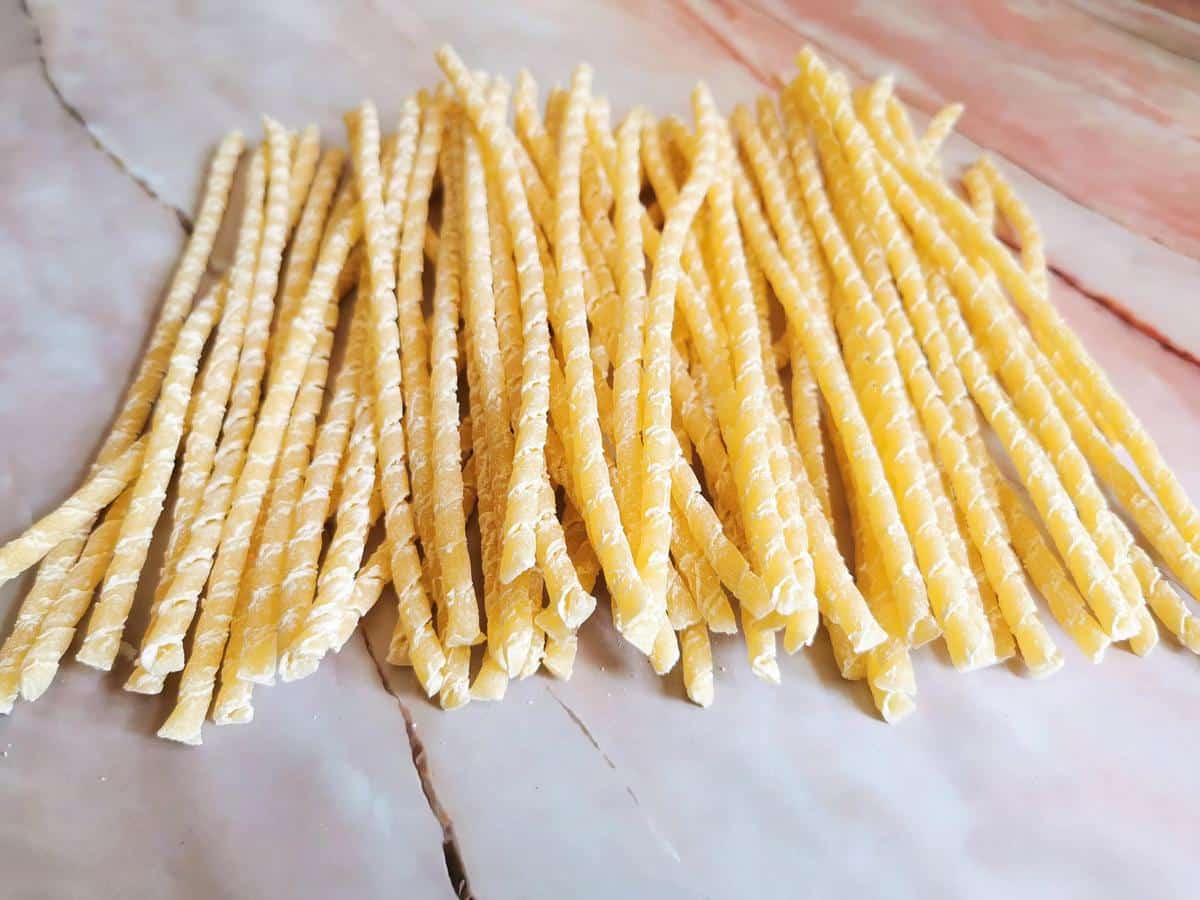
Sicilian busiate is traditionally made the same way. In fact, some food historians believe busiate is the oldest version of fusilli. It actually looks like long handmade fusilli, even when dried.
Other traditional Southern spiral fusilli are ‘fusilli Avellinesi’ from Campania, ‘fusilli Napoletani’ also from Campania and ‘fusilli ricci alla tricaricese’ from Basilicata.
In other places, the ferro is placed along the length of the pasta strand and then rolled with the pasta which flattens and spreads around the rod to form a thin hollow cylinder.
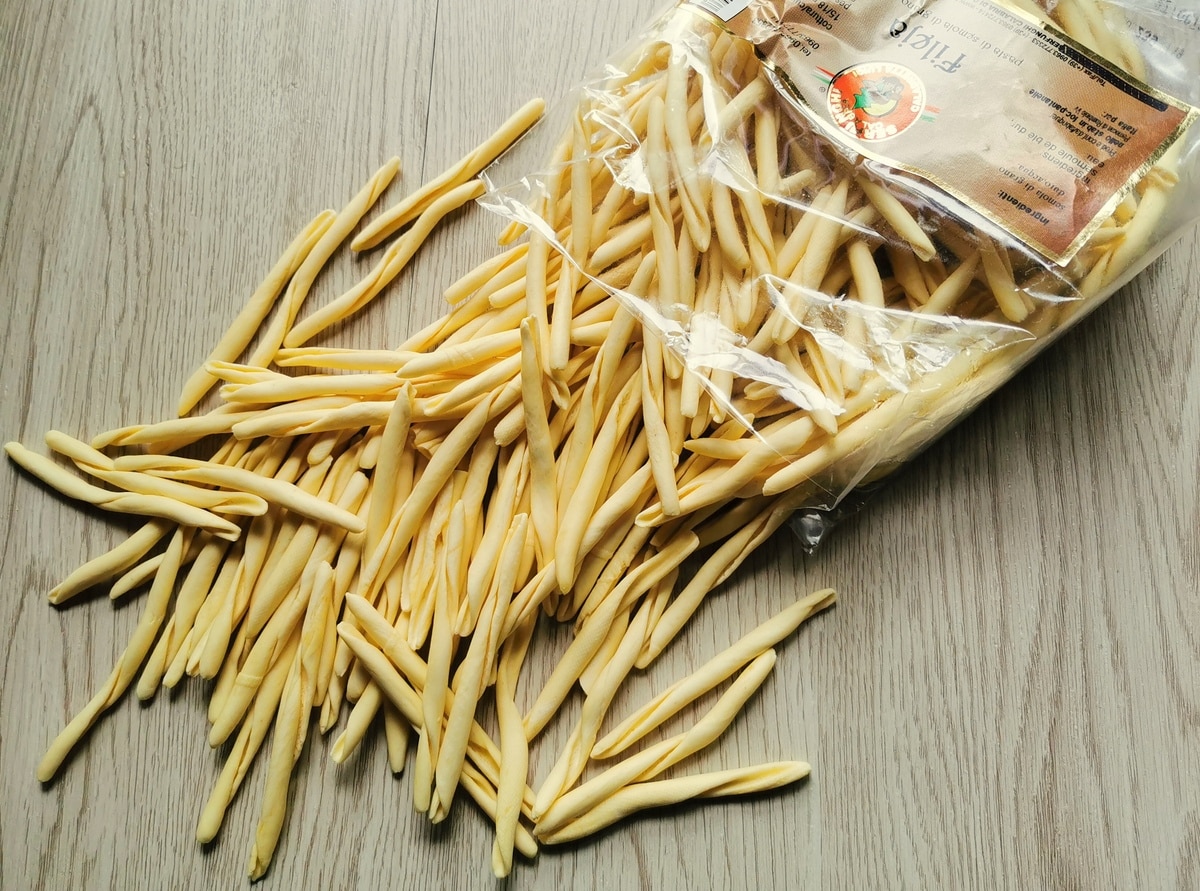
Once the pasta has spread to the required length, the ferro is then removed from the middle. This second type of pasta, which isn’t really a spiral, is referred to as maccheroni al ferro in some regions and fusilli in others! In some regions, this type of ‘fusilli’ can be up to 22 cm in length.
Traditional cylindrical fusilli include ‘fusilli cilentani’ from the Cilento region in Southern Campania, ‘fusilli Calabresi or fileja’ from Calabria and fusilli di Felitto also from the Cilento.
Industrialized Fusilli
Dried fusilli pasta didn't become industrialized until two Italian emigrants in New York, Guido and Aurelio Tanzi, developed the first machine to make it in 1924.
The introduction of industrial processing techniques subsequently enabled pasta makers to not only make the beautiful spiral fusilli found in most supermarkets today, but it also made it possible to make fusilli and other types of pasta hollow.
Other Names for Fusilli
Americans often call fusilli pasta "rotini", but the name rotini isn't used here in Italy. However, fusilli has many other names in different Italian regions.
Homemade fusilli is called 'strangolapreti' in some Italian regions, although some people consider strangolapreti (priest strangler) a distinctly different pasta type. In Abruzzo, Molise and Lazio they may refer to this pasta as 'ciufolitti'.
In Puglia, especially Bari, they call this pasta 'code di topo, meaning 'mouse tail' and in some Southern regions pasta makers sell dried fusilli as 'eliche', meaning screw or propeller.
Ingredients
Both dried and homemade fusilli is typically made from just two ingredients: durum wheat semolina flour and water. This combination is typical for Southern Italian pasta and results in a firm and elastic dough that holds its shape well.
For a richer variant, some homemade recipes incorporate eggs, adding a slightly softer texture and richer flavor to the pasta.
Preparation
Fusilli begins with mixing durum wheat semolina and water (or sometimes eggs) to form a dough.
For traditional handmade fusilli, this dough is then rolled into thin strips and carefully wound around a rod or spindle, known as a 'ferro', to create the characteristic spiral shape.
However, commercial fusilli pasta is made using extrusion machines, where the dough is pushed through molds, called dies, to achieve the desired spiral form.
Cooking Tips
When cooking dried fusilli, begin by bringing a large pot of salted water to a rolling boil. Gently add the fusilli to the water, stirring softly to ensure the spirals are separated and don't clump together. Dried fusilli takes longer to cook than fresh, usually around 9-12 minutes.
As the fusilli cooks, stir occasionally to maintain even cooking and prevent sticking. To get an 'al dente' texture, start checking the pasta for firmness after about 8 minutes. Test every 30 to 60 seconds to find that perfect balance where the pasta is firm to the bite yet cooked.
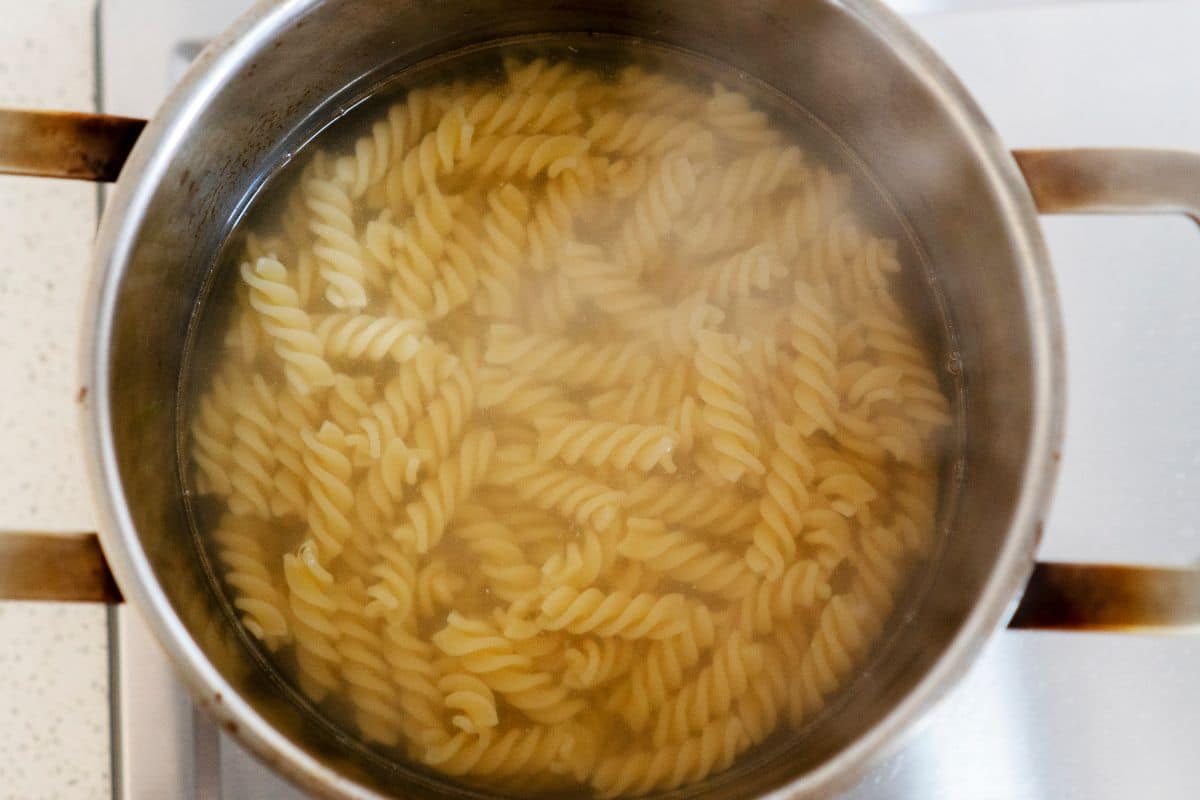
If you're working with homemade fusilli, the process is similar, but keep in mind that it cooks much faster. Fresh fusilli typically takes about 2-3 minutes to cook.
Storage
Fresh fusilli should be used soon after preparation. To store it, lightly flour the pasta to prevent sticking, and arrange it in a single layer on a baking sheet. Cover the sheet and refrigerate, where the fusilli can be kept for up to a day or two.
For extended storage, freezing fresh fusilli is a great option. Place the pasta in layers, separated by parchment paper, within an airtight container. Stored this way, fresh fusilli can last up to three months in the freezer.
On the other hand, dried fusilli requires storage in a cool, dry place, such as a pantry or kitchen cupboard. The shelf life of dried fusilli is typically long and can last years. However, it's best to refer to the expiration date indicated on the packaging for specific guidelines.
Variations and Substitutes
Beyond the classic short spirals, there's fusilli lunghi, which are longer and more ribbon-like, and fusilli bucati, known for being hollow in the center.
These variations not only add a unique texture to dishes but also pair differently with sauces.
Fusilli can also be made as colored pasta, which is achieved by infusing the dough with natural vegetable purees like spinach, beetroot or tomato. These colorful versions are not only aesthetically pleasing but also offer a subtle infusion of flavors.
For those with dietary restrictions, gluten-free fusilli is popular and is made from alternative grains such as rice or corn flour.
What do Italian eat fusilli with?
In Southern Italy, homemade fusilli is often eaten on Sundays or feast days with a meat or sausage ragu.
In the North, where commercially produced fusilli is more popular, it’s often eaten in pasta salads or with lighter creamy sauces, pesto and in vegetarian pasta dishes.
Fusilli is also delicious baked. It's really a pasta that goes with everything!
Fusilli vs Rotini: Is there a difference?
Fusilli and rotini are the same type of pasta, just with a different name. In Italy, the pasta is known as fusilli, while in the United States, it's often called rotini.
Conclusion
Fusilli is a widely recognized and loved pasta across the world. Its unique spiral shape makes it perfect for catching sauce, and this pasta pairs excellently with many pasta sauce recipes.
If you are ever traveling to Southern Italy and see homemade fusilli on the menu, it's definitely worth a try! However remember that the shape will vary, but it'll still be delicious.
Bon appetito
Want to see some fusilli recipes? Click on the link to go to the recipe!
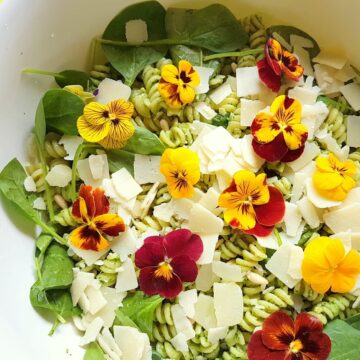
- Green pasta salad with edible flowers.
- Fusilli with olive pesto and tuna.
- Long fusilli with roasted pepper sauce.
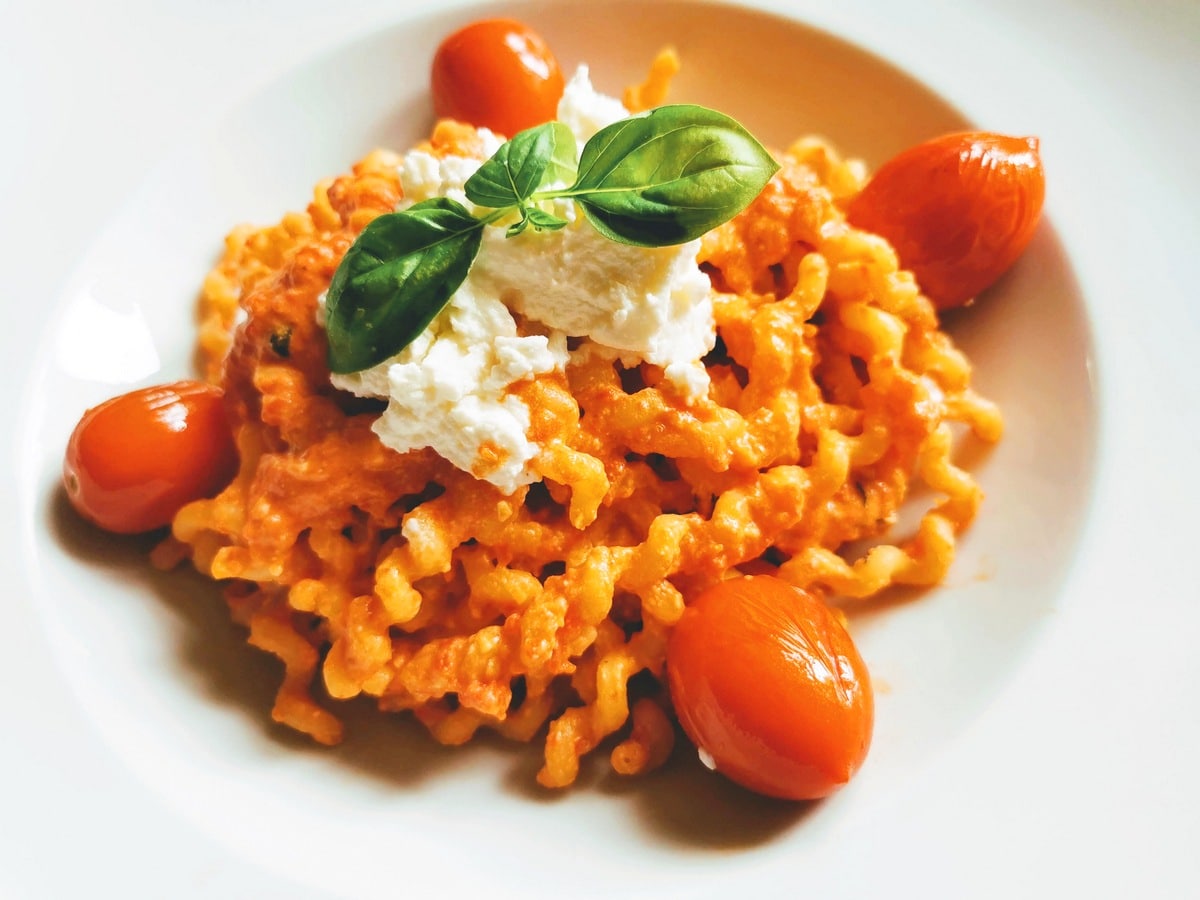
- Fusilli with tomatoes basil & burrata cream.
- Baked short fusilli bucati with mushrooms, gorgonzola & pancetta.
Pin for Later:
If you are interested in learning how to make different types of homemade pasta and different types of gnocchi, check out my shop page for some great video online courses from my friends in Rome! Nothing beats learning to make pasta from Italians!
Plus while you’re there why not order a copy of one of my pasta recipe cookbooks or checkout some recommended pasta making tools? All great prezzies for pasta lovers!
Ridehubnepal says
A wonderful deep dive into fusilli pasta. The cultural background and serving suggestions make this a must-read for pasta lovers!
Jacqui says
I so glad to hear you found this article about fusilli pasta interesting! So many Italian pasta types have a rich history and background.
KCinTX says
oops...in my previous comment, besides my typo (should be "visually") I mixed up which brand made which pasta I had in front of me...It's Barilla's *Rotini,* and Trader Joe's *Fusilli.*
Kind if ironic, given the discussion!
KCinTX says
Here in the US, we use both fusilli and rotini, but they are not the same thing. I have both in my pantry, and was just googling to figure out the difference. I read in several places that fusili is longer, looser spiral made by twisting a strand of pasta, while rotini is a shorter, tighter spiral, that is extruded that way.
Viduslly, this matches up with what's in my pantry, but TBH, they both look extruded to me! (Barilla Fusilli, Trader Joe's Rotini)
(FWIW, Barilla makes both rotini and fusilli)
Cheers!
Albert Bassano says
Thanks once again, Jacquie, for another very informative email. Two questions: (1) Where did you get that lovely "Pasta is Healthy" artwork? and (2) When you refer to recommended portions (7- to 100 grams, for example, is that dry weight or cooked?
Jacqui says
Hi Albert, I'm happy you found my newsletter interesting. I found the Pasta is Healthy online when search for related infographics. There are many. That particular one comes from this article which makes many points similar to what I wrote myself https://culturico.com/2019/01/18/pasta-is-healthy/. The weight for recommended portions 75-100g refers to dry weight.